
When navigating Technology, the collection of tools, methods, and concepts that drive modern digital innovation. Also known as Tech, it touches everything from finance to data security, shaping how we build and protect decentralized systems. In the crypto world, technology isn’t just buzz – it’s the engine behind faster transactions, safer coins, and more private trading.
One key breakthrough is Modular blockchain architecture, a design that separates execution, consensus, data availability, and settlement into distinct layers. This layered approach enables scalability while keeping security tight. Another hot topic is Crypto privacy, the set of techniques that hide transaction details from prying eyes, which directly challenges surveillance tools like Chainalysis. Together, these concepts show how Technology encompasses modular blockchain architecture and requires robust privacy measures to stay ahead of regulators.
Security threats also shape the tech landscape. A hash collision can break the trust model of any blockchain, prompting developers to adopt quantum‑resistant algorithms. Meanwhile, data structures such as the Merkle tree, a cryptographic tree that efficiently verifies large data sets (including its variant, the Merkle‑Patricia tree) decide how fast a node can confirm a transaction. These pieces illustrate that Technology influences blockchain security and leverages efficient data structures to improve performance.
Below you’ll find a curated set of deep‑dive articles that unpack each of these elements. We cover how modular designs are reshaping next‑generation chains, the arms race between privacy tools and surveillance, real‑world hash collision incidents, and a side‑by‑side comparison of binary Merkle trees versus Merkle‑Patricia trees.
Readers can expect clear explanations, practical examples, and forward‑looking insights that link theory to real deployment. Whether you’re a developer looking to choose a data structure, an investor tracking privacy trends, or just curious about how layered blockchains work, the posts below will give you the context you need to make smarter decisions.
Ready to dive into the specifics? Explore the articles and see how each technology piece fits into the larger puzzle of modern crypto and beyond.
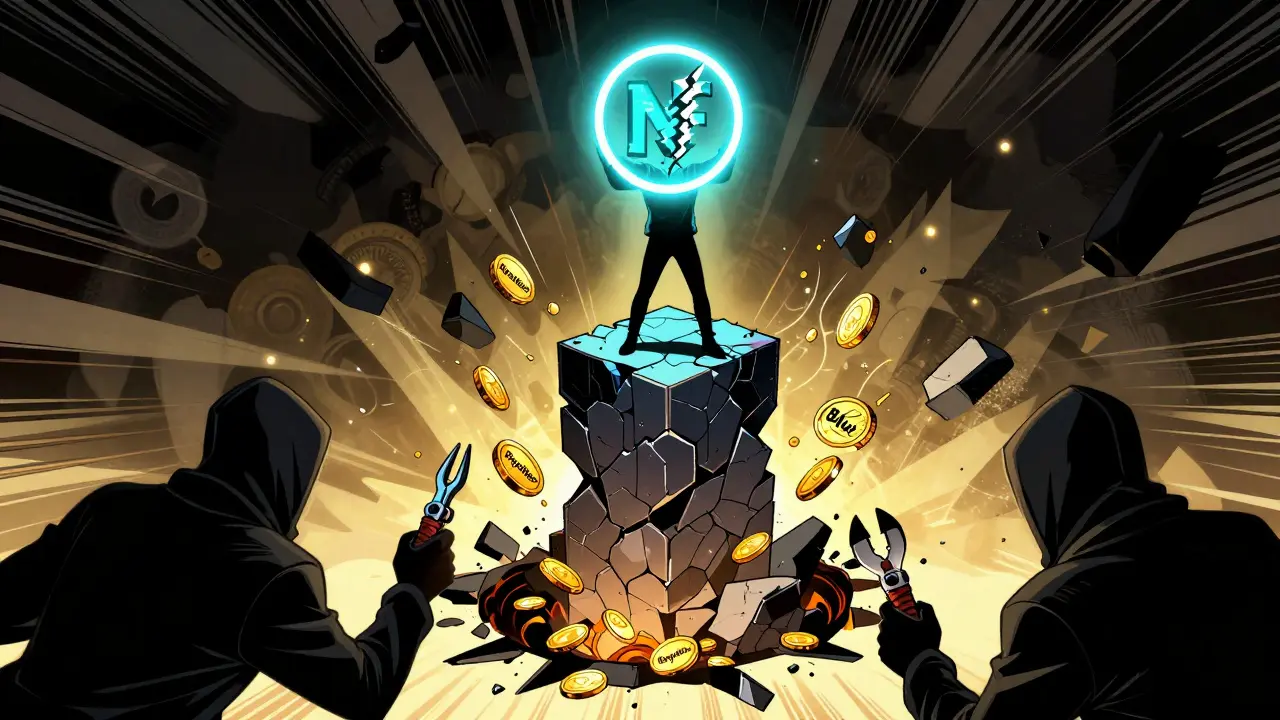
NFT royalty circumvention is undermining creators by allowing buyers and marketplaces to bypass automatic payments on secondary sales. Technical loopholes, optional standards, and rogue platforms have turned a promised income stream into a broken system.
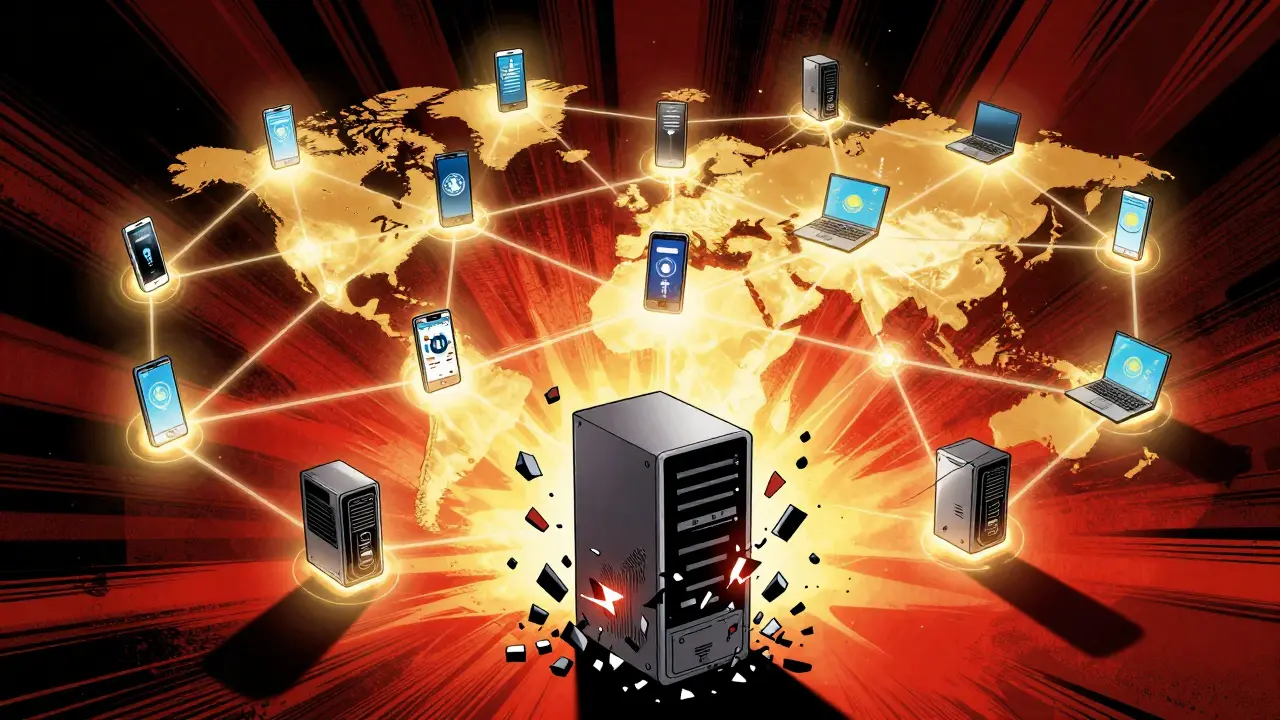
Blockchain uses peer-to-peer (P2P) networks instead of client-server because P2P eliminates central control, resists censorship, and distributes trust across all users. This architecture makes blockchain secure, transparent, and unstoppable.

Merkle Trees are evolving beyond blockchain transaction verification into stateless clients, proof-of-reserves, and quantum-resistant systems. Learn how they'll shape finance, identity, and supply chains by 2030.

Block headers secure the blockchain with cryptographic links, while block bodies store transactions. Understanding this split is key to grasping how blockchains stay tamper-proof and scalable.

Economic finality in Proof of Stake uses financial penalties to make blockchain transactions irreversible. Ethereum achieves this in 12.8 minutes by slashing billions in staked ETH if anyone tries to reverse a block.

Web3 gives users real ownership of digital assets, direct monetization, and control over data - without relying on big tech. It’s not perfect yet, but it’s already changing how people earn, share, and own online.

Smart contract wallets with account abstraction fix crypto's biggest pain points: lost seed phrases, gas fees, and poor UX. Learn how EIP-4337 makes self-custody easy and secure.

Blockchain identity authentication gives you control over your personal data, eliminates password hassles, and cuts verification times from days to seconds. It's secure, private, and already in use by governments and banks.

Blockchain healthcare data security gives patients control over their medical records using encrypted, decentralized ledgers. It prevents breaches, cuts fraud, and ensures data integrity - without relying on centralized databases.

Discover how NFT ticketing transforms live events by preventing fraud, enabling royalties, and turning tickets into lasting digital collectibles.

Explore how blockchain P2P technology grew from early file‑sharing ideas to modern interoperable networks, covering Bitcoin, Ethereum, scaling solutions, and future challenges.

Explore how modular blockchain architecture splits execution, consensus, data availability, and settlement into layers, boosting scalability and shaping the future of crypto.