
NFT Creator Earnings Calculator
How Web3 Changes Creator Earnings
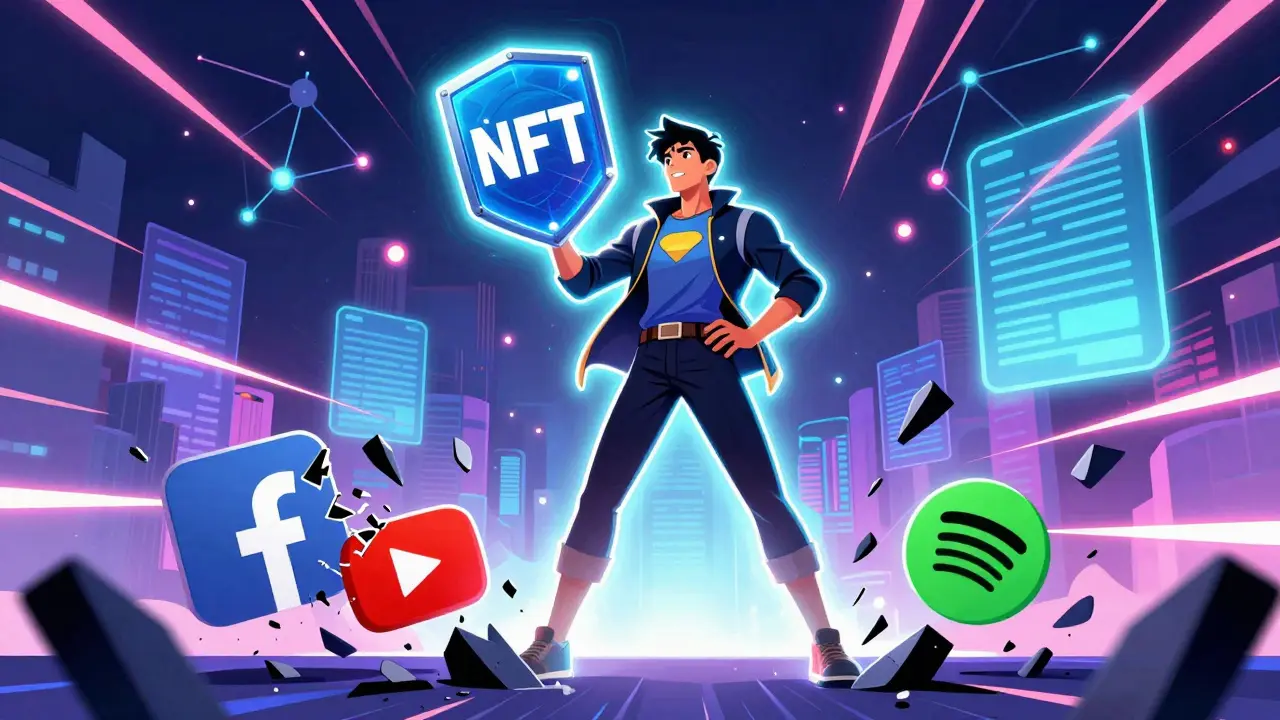
Traditional platforms take 85-90% of your earnings. Web3 platforms let you keep 90% of sales and earn royalties on every resale.
Imagine logging into a website and actually owning what you create - not just using it, but holding it like a physical thing you bought. No company can delete it. No algorithm can hide it. No middleman takes 90% of your earnings. That’s not science fiction. That’s Web3 - and it’s already changing how people interact with the internet.
Web3 isn’t just another tech buzzword. It’s the next version of the web, built on blockchain technology, where users aren’t products - they’re owners. While Web2 gave us social media, streaming, and cloud storage, it also gave us locked-in accounts, hidden algorithms, and zero control over our data. Web3 flips that. It gives you back power - over your identity, your money, and your digital stuff.
True Ownership of Digital Assets
In Web2, your digital items don’t really belong to you. That rare skin in your game? The NFT you bought? The digital art you paid for? If the platform shuts down - like Facebook’s Horizon Worlds did in 2022 - it vanishes. Your purchase? Gone. Your effort? Wasted.
Web3 changes that. When you buy an NFT on a blockchain like Ethereum or Polygon, you own it outright. It’s stored in your wallet - not on a server owned by a company. You control the private key. No one else can take it. That’s why people are selling Bored Apes for tens of thousands of dollars: they’re not just pixels. They’re verifiable, transferable assets.
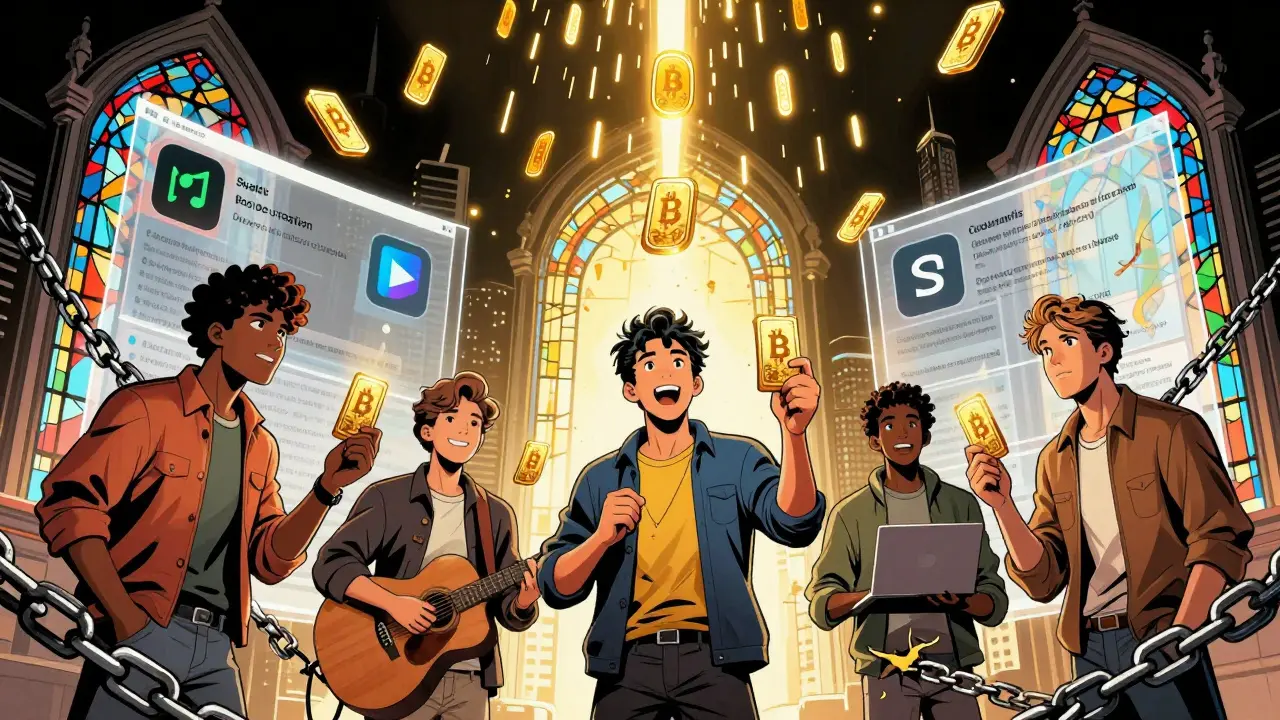
And it’s not just art. Your in-game items, music files, even your profile picture can be tokenized. If you create something - a song, a video, a 3D model - you can sell it directly. No YouTube or Spotify taking 85% of your revenue. On platforms like Sound.xyz, artists keep 90% of sales. And every resale? It’s recorded on-chain. You earn every time your work changes hands.
No More Middlemen - Direct Monetization
Web2 platforms profit from your attention. TikTok, Instagram, YouTube - they collect your data, sell ads, and pay creators pennies. In 2022, TikTok’s Creator Fund paid out $1 billion to 100,000 creators. That’s $10,000 each on average. Meanwhile, the Theta Network paid $15 million to 50,000 users in just one quarter for sharing bandwidth. That’s $300 per person - and every payment was transparent, instant, and direct.
Web3 removes the gatekeepers. You don’t need approval to monetize. If you provide value - whether it’s content, computing power, or even just watching an ad - you can get paid in crypto. No bank account needed. No waiting weeks for a payout. Transactions happen on the blockchain in minutes, often for less than a cent in fees thanks to Layer 2 networks like Polygon.
Some apps even pay you just for participating. Platforms like Gitcoin reward developers for open-source contributions. Others pay users for completing surveys or testing apps. These aren’t gimmicks. They’re new economic models - where users are stakeholders, not just consumers.
Transparency You Can Verify
How do you know if a company is being honest? In Web2, you can’t. You have to trust that Meta isn’t secretly selling your data. That Amazon isn’t hiding your reviews. That your favorite streaming service isn’t manipulating your feed to keep you hooked.
Web3 fixes that with public ledgers. Every transaction on Ethereum is visible on Etherscan. You can track every NFT sale, every token transfer, every smart contract interaction. No black boxes. No hidden rules. If someone claims to own a CryptoPunk, you can see its entire history - from the first sale in 2017 to the latest trade. That kind of proof doesn’t exist on Twitter, Instagram, or anywhere else in Web2.
This transparency builds trust without needing a brand name. You don’t need to believe a company’s marketing. You can verify everything yourself. That’s why people are using Web3 for things like voting, charity donations, and even land deeds - because the records can’t be altered.
Control Over Your Data
Facebook knows your friends, your habits, your location, your political views. Google tracks your searches, your location, your shopping habits. And you? You get nothing in return. Just a free service - while they sell your life to advertisers.
Web3 gives you control. Instead of handing your data to a central server, you store it in encrypted wallets or decentralized storage like IPFS. You choose who sees it - and when. Apps like Lens Protocol let you build a social profile that moves with you across platforms. No more starting over every time you switch apps.
Some apps even let you sell your data - on your terms. Want to share your fitness data with a health researcher? You can set a price. Want to let a brand know your preferences? You can get paid in tokens. It’s not about hiding your data. It’s about deciding who gets to use it - and how much they pay for it.
Resilience Against Shutdowns and Censorship
Remember when Twitter changed its rules and banned thousands of accounts overnight? Or when PayPal froze payments for content creators based on vague policies? These aren’t rare events. They’re standard in Web2.
Web3 apps run on decentralized networks. No single company controls them. Even if the original team disappears, the code keeps running. Decentraland’s virtual land still exists even if the company behind it collapses. Your NFTs? Still yours. Your tokens? Still tradable.
This resilience matters. In countries with strict internet controls, Web3 lets people store value and communicate without government interference. In places where banks freeze accounts, crypto wallets keep working. It’s not about rebellion - it’s about having a backup system for your digital life.
But It’s Not Perfect
Web3 isn’t magic. It’s still early. Most people struggle with wallets. Losing a seed phrase means losing everything - and 90% of new users don’t understand how to back them up safely. Gas fees used to be a nightmare - though they’ve dropped to pennies on networks like Polygon. Transactions still take 10-30 seconds, not instant like PayPal.
Support is limited. Only 37% of Web3 apps offer live chat. You’re often on your own - learning from Discord communities, Reddit threads, or YouTube tutorials. And regulatory uncertainty hangs over everything. Only 17 countries have clear rules for Web3. The EU’s MiCA regulation, starting in 2024, is a step forward - but most places still don’t know how to handle it.
And yes, scams exist. Fake wallets, phishing links, rug pulls - they’re real. But so are scams in Web2. The difference? In Web3, you’re responsible. That’s the trade-off. More control means more responsibility.
What’s Next?
Web3 is getting easier. WalletConnect 2.0 lets you link your wallet to any app with a QR code. Social logins let you sign up with Gmail or Apple ID - no seed phrases needed. Gasless transactions mean you don’t even need crypto to start. Companies like Polygon and Coinbase are making onboarding so simple, it feels like downloading an app.
Big brands are testing it too. Walmart sells NFT collectibles. Nike owns RTFKT, a digital sneaker brand. Even McDonald’s is experimenting with blockchain loyalty programs. These aren’t just marketing stunts. They’re signals that Web3’s benefits - ownership, transparency, direct value - are too powerful to ignore.
By 2025, experts predict 40% of consumer brands will use Web3 behind the scenes - even if users never see a blockchain. You’ll buy a shirt, and it’ll come with a digital twin you can resell. You’ll stream music, and the artist will get paid instantly. You’ll post a video, and you’ll earn every time someone shares it.
Web3 isn’t about replacing the internet. It’s about upgrading it - so the internet works for you, not the other way around.
Is Web3 only for tech experts?
No. While early Web3 tools were complex, today’s apps are designed for everyday users. You can sign up with your email, use a QR code to connect your wallet, and buy an NFT without knowing what a blockchain is. The learning curve is still there - but it’s shrinking fast. Most people get comfortable in 2-3 hours of hands-on use.
Can I lose my money in Web3?
Yes - but not because the system is broken. You can lose access if you misplace your private key or seed phrase. Unlike banks, there’s no “forgot password” button. That’s why backups are critical. Use a hardware wallet or write your seed phrase on paper and store it safely. Also, never click suspicious links. Scams target people who don’t verify URLs - not the blockchain itself.
Do I need to buy cryptocurrency to use Web3?
Not always. Many apps now offer gasless transactions, meaning you can interact with Web3 without paying fees upfront. Some platforms even let you earn crypto just by using them - like sharing bandwidth or completing tasks. But to own assets like NFTs or send tokens, you’ll eventually need a wallet with some crypto. Start small - even $5 is enough to try it out.
Is Web3 legal?
It depends on where you live. In the EU, the MiCA regulation (effective 2024) gives clear rules for crypto assets. In the U.S., rules are still being shaped. In some countries, crypto is banned. But owning a wallet or NFT isn’t illegal in most places - it’s just unregulated. Always check local laws before investing or using Web3 services.
What’s the difference between Web3 and blockchain?
Blockchain is the technology - a public, tamper-proof ledger that records transactions. Web3 is the system built on top of it: apps, wallets, tokens, and protocols that let users own and control digital experiences. Think of blockchain as the engine, and Web3 as the whole car. You need the engine to drive, but the car is what you actually use.
Will Web3 replace Facebook or YouTube?
Not entirely - but it’s already offering alternatives. Lens Protocol is a decentralized social network where your profile lives in your wallet. Audius is a music platform where artists keep 90% of earnings. These aren’t trying to copy Facebook. They’re building something better: user-owned, transparent, and fair. You might still use Facebook for memes - but for real value, Web3 is becoming the preferred choice.
Nicholas Ethan
December 16, 2025 AT 15:37Web3 is just capitalism with more steps and less regulation
Taylor Fallon
December 17, 2025 AT 18:26Imagine a world where your digital creations aren’t owned by corporations but are truly yours - not as a privilege granted by a platform, but as a right secured by code. This isn’t utopia. It’s the logical evolution of human autonomy in the digital age. We’ve spent decades surrendering our data, our attention, our labor - all for the illusion of convenience. Web3 doesn’t promise perfection. It promises accountability. And that’s revolutionary.
Ownership isn’t about having a JPEG. It’s about having sovereignty. When you hold the key to your asset, you’re not a user - you’re a steward. And that changes everything. The art, the music, the code - they become extensions of your will, not commodities leased from Silicon Valley.
Yes, wallets are confusing. Yes, gas fees were once absurd. But we didn’t start with smartphones either. We started with rotary phones and learned. This is the same. The tools are improving. The education is spreading. The desire for real ownership? That’s timeless.
Let’s not romanticize it. There are scams. There are idiots. There are people who think NFTs are just profile pictures. But the underlying architecture? It’s sound. It’s transparent. It’s immutable. And that’s more than we can say for any bank, social network, or streaming service we’ve trusted so far.
Web3 isn’t about replacing YouTube. It’s about giving artists a way out of the algorithmic gulag. It’s not about replacing Facebook. It’s about letting people build communities that don’t sell their souls for ad revenue. This isn’t tech. It’s ethics made executable.
And yes - you can lose your keys. But you can also lose your bank account to fraud. The difference? In Web3, you’re not begging for help. You’re responsible. And responsibility? That’s the foundation of freedom.
I’m not selling anything. I’m not mining crypto. I’m just tired of being treated like a data farm. If this is the future - I’m all in.
Kathryn Flanagan
December 19, 2025 AT 00:48I just started using Web3 last month and honestly it’s been a game changer. I made a little digital drawing and sold it for 0.05 eth and got paid right away. No waiting. No forms. No taxes taken out by some company I never heard of. I felt like a real artist for the first time. It’s not perfect, but it’s better than before. I’m learning every day and it’s not scary anymore. Just different.
Jeremy Eugene
December 19, 2025 AT 02:48The structural advantages of decentralized ownership are empirically demonstrable. The reduction of rent-seeking intermediaries in digital value chains represents a significant Pareto improvement in economic efficiency. However, the current user experience remains suboptimal for mass adoption due to cognitive load associated with key management and transactional latency. Regulatory ambiguity further impedes institutional integration. A balanced perspective acknowledges both potential and current limitations.
Kathy Wood
December 21, 2025 AT 01:10YOU’RE ALL BEING SCAMMED!!!
IT’S ALL A LIE!!
THEY’RE JUST SELLING JPEGS TO DUMB PEOPLE!!
WHY DO YOU TRUST CODE MORE THAN BANKS??
IT’S A PONZI!!
THEY’RE ALL RUG PULLS!!
YOU’RE ALL LOSERS!!
Rakesh Bhamu
December 21, 2025 AT 11:43From India, I’ve seen how Web3 helps small creators bypass traditional gatekeepers. A friend made a folk song and sold it as an NFT to someone in Germany - no middleman, no delay, no bureaucracy. The fees are low on Polygon, and the community is helpful. Yes, there are scams, but there are scams everywhere. The difference? In Web3, you learn fast. You get burned once, then you know better. That’s education, not exploitation.
It’s not about replacing Facebook. It’s about giving people in places like mine a real shot. No one here has a credit card, but we all have phones. Web3 meets us where we are. That’s powerful.
Kelly Burn
December 21, 2025 AT 20:04OMG like… Web3 is literally the next level of vibes 🌌✨
Think about it - your digital soul is stored on-chain, bro. Like, your NFT isn’t just art, it’s your quantum identity signature 🤯
And when you mint a track on Sound.xyz? You’re not just uploading - you’re activating a decentralized aura of value that auto-royalties itself across the multiverse 💫
Gas fees? Pfft. Layer 2s are the new chakra alignment. And forget passwords - your seed phrase is your spiritual key to the metaverse. It’s not tech. It’s transcendence.
Also, I got paid in $GAS tokens just for watching a 30-second ad. That’s not a job. That’s ascension.
Lois Glavin
December 22, 2025 AT 15:15I tried Web3 last year and was scared. Thought I’d lose everything. But I started small - bought a $5 NFT, used a wallet with a simple interface, wrote my phrase on paper and put it in a drawer. Now I earn a little every time someone shares my art. It’s not life-changing money… but it’s mine. And that feels good. No one’s taking it. No one’s hiding it. Just… mine.
Abhishek Bansal
December 22, 2025 AT 19:13So you’re telling me I should trust code written by some anonymous dev in a basement over my bank that’s insured by the government? LOL
Also, your ‘ownership’ means nothing if you can’t sell it to anyone. Who’s gonna buy your pixel art when the hype dies?
And why do you think the rich don’t just buy up all the NFTs and control everything? You’re not owning anything. You’re just the new peon.
Scot Sorenson
December 23, 2025 AT 11:32Oh wow, another one of you guys who thinks ‘decentralized’ means ‘magic fairy dust that fixes capitalism.’
Let me guess - you also think your Bored Ape is an investment and not a glorified Discord badge? You don’t own anything. You own a pointer to a JPEG hosted on IPFS - which someone could delete tomorrow if they wanted. The blockchain doesn’t protect your file. It just proves you once had a link.
And your ‘transparency’? Yeah, everyone can see your wallet. But that’s not freedom - it’s surveillance with extra steps. You’re not a stakeholder. You’re a data point in a ledger.
Web3 isn’t liberation. It’s just a new way to get fleeced by people who know how to code better than you.
JoAnne Geigner
December 24, 2025 AT 00:54I really appreciate how this post breaks things down - it’s so easy to get lost in the hype, but the truth is, Web3 is about giving people back what they’ve lost: dignity in their digital lives.
I used to feel invisible as a creator on YouTube. Now, I upload music to Audius, and people tip me in ETH. I don’t need a million views. I just need a few who care. That’s real connection.
And yes, I messed up my seed phrase once. I panicked. But I learned. Now I keep two copies - one at home, one with my sister. I’m not perfect. But I’m trying. And that’s what matters.
We’re all learning together. No one needs to be a genius to start. Just curious. And kind.
Anselmo Buffet
December 24, 2025 AT 20:00Web3 isn’t perfect. But it’s honest. You know what’s worse than a system that’s broken? A system that lies to you and calls it ‘free.’
I don’t care if it’s slow or confusing. At least when I lose something, I know why. No corporate PR team telling me it’s ‘for your safety.’
Just give me control. That’s all I ever wanted.
Patricia Whitaker
December 25, 2025 AT 12:15Wow. So you’re telling me that if I pay for something online, I should be able to keep it? That’s insane. Who even thought of that?
Also, NFTs? What a joke. My 5-year-old could draw that.
Joey Cacace
December 27, 2025 AT 04:30This is such a thoughtful breakdown - thank you for writing this. I’ve been hesitant about Web3 because of the noise, but your explanation made me realize it’s not about speculation. It’s about fairness. I just signed up for a wallet today. First step. Excited to learn more.
Sarah Luttrell
December 28, 2025 AT 11:02Oh wow, another American who thinks the whole world wants to live in their blockchain fantasy.
Most of us don’t care about NFTs. We care about food, medicine, and not getting bombed by drones.
Web3? More like Web-Elitist-3. You’re not building the future. You’re just making richer people richer while the rest of us watch.
Also, your ‘decentralized’ apps still run on AWS servers. LOL. You’re not fooling anyone.
PRECIOUS EGWABOR
December 28, 2025 AT 15:43Look, I’m not here to be a hater, but Web3 is just crypto with a new coat of paint. Everyone’s acting like this is the second coming when it’s just a gamble with more steps.
And don’t get me started on ‘ownership.’ You think you own an NFT? Nah. You own a URL that points to a file on a server owned by someone else. The blockchain doesn’t store your art. It stores a hash. Big difference.
It’s not freedom. It’s theater.
Vidhi Kotak
December 28, 2025 AT 16:05Web3 is still messy, but it’s growing up. I’ve helped three friends in my village set up wallets using QR codes. No seed phrases needed. They bought a small NFT of a local festival - now they get royalties every time someone resells it. It’s small. But it’s real.
People think it’s all about money. But for us, it’s about pride. About being seen. About not having to beg a platform for visibility.
It’s not perfect. But it’s ours. And that’s worth something.
Kim Throne
December 29, 2025 AT 20:03While the conceptual framework of user-owned digital assets is theoretically sound, the current implementation suffers from critical scalability and usability deficiencies. The average user lacks the technical literacy to safely manage private keys, and the absence of standardized recovery protocols introduces systemic risk. Furthermore, the environmental impact of proof-of-work chains, though mitigated on Layer 2s, remains a legitimate concern in global policy discourse. Adoption will require not only technological refinement but also pedagogical infrastructure.
Caroline Fletcher
December 31, 2025 AT 00:06They’re using Web3 to track us. You think your wallet is private? It’s just another way for the government to see where your money goes. And the ‘decentralized’ networks? All controlled by a few big players. You’re being watched. Always.
They want you to think you’re free. But you’re just a node in their new surveillance grid.
Heath OBrien
January 1, 2026 AT 08:01Web3? More like Web-Scam-3. I’ve seen people lose their life savings because they clicked a link. You think that’s freedom? That’s stupidity.
And why do you think these ‘artists’ are getting rich? They’re not. It’s the same old rich guys buying up NFTs and pretending it’s art. You’re just the sucker who buys the hype.
Wake up. This isn’t revolution. It’s a casino with better branding.
Taylor Farano
January 2, 2026 AT 12:45Let me guess - you also think your dog’s NFT portrait is an ‘asset class.’
Web3 isn’t ownership. It’s a tax write-off for venture capitalists who want to pretend they’re rebels.
You don’t own your NFT. You own a blockchain record that says you once had a link to a JPEG. That’s not ownership. That’s a receipt.
And you call this progress? We had better tech in 2010.
Kathryn Flanagan
January 3, 2026 AT 02:26I just wanted to say thank you to the person who said they started with $5. I did that too. Bought a $3 NFT from a kid in Brazil. He sent me a thank-you note. That’s the real win. Not the money. The connection.
Taylor Fallon
January 3, 2026 AT 08:32That’s exactly why this matters. Not the price tags. Not the hype. The human moment. The quiet exchange of value that doesn’t need a corporation to mediate it. That’s the quiet revolution.