
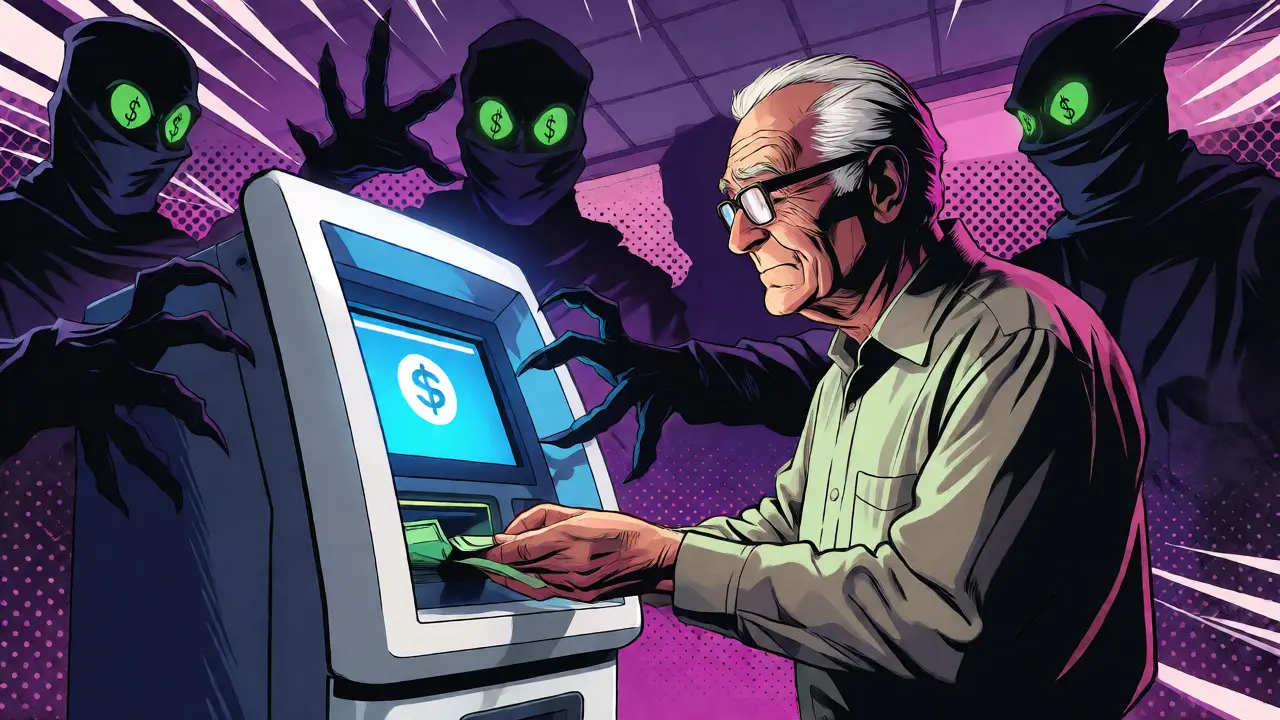
You walk into a convenience store, see a sleek machine promising instant access to digital money, and decide to buy some Bitcoin. It feels modern, secure, and easy. But for thousands of Americans in 2024, that simple transaction turned into a financial nightmare. The Crypto ATM is not just a gadget; it has become the primary weapon in a scam epidemic that drained $246.7 million from victims last year alone.
This isn't just about losing cash to a glitchy screen. It's about a systemic failure where technology moved faster than protection. The FBI’s Internet Crime Complaint Center (IC3) logged over 10,956 complaints related to these machines in 2024. That number represents real people-mostly seniors-who handed over their life savings because a scammer told them to "pay via Bitcoin" at the local kiosk. Once that money hits the blockchain, it’s gone. No bank reversal, no credit chargeback, no safety net.
Why Crypto ATMs Are a Magnet for Fraudsters
Traditional banks have layers of armor. If you wire money by mistake, you might get it back. If your card is stolen, you dispute the charge. Crypto ATMs strip away those protections. They are designed for speed and anonymity, which is great for enthusiasts but terrible for victims of social engineering.
Scammers love these machines for three specific reasons:
- Irreversibility: Blockchain transactions cannot be undone. Once the operator sends the coins to the scammer’s wallet, the deal is sealed.
- Anonymity: Unlike a bank transfer tied to an account name, crypto wallets can be pseudonymous, making it hard to trace who actually received the funds.
- Lack of Oversight: Many operators fail to meet basic Bank Secrecy Act (BSA) requirements. They don’t always verify who you are or monitor for suspicious patterns like a 70-year-old buying $5,000 in Bitcoin for the first time.
The Financial Crimes Enforcement Network (FinCEN), a bureau of the U.S. Treasury, issued a formal notice in August 2025 warning that this convenience is being exploited by transnational criminal organizations. These aren't just petty thieves; they are organized groups using crypto kiosks as money laundering hubs.
Who Is Getting Hit Hardest?
If you think this only happens to tech-savvy young adults, look again. FBI data reveals a stark demographic reality: more than two-thirds of crypto ATM fraud victims in 2024 were over 60 years old. That’s a 99% increase in complaints from this age group compared to previous years.
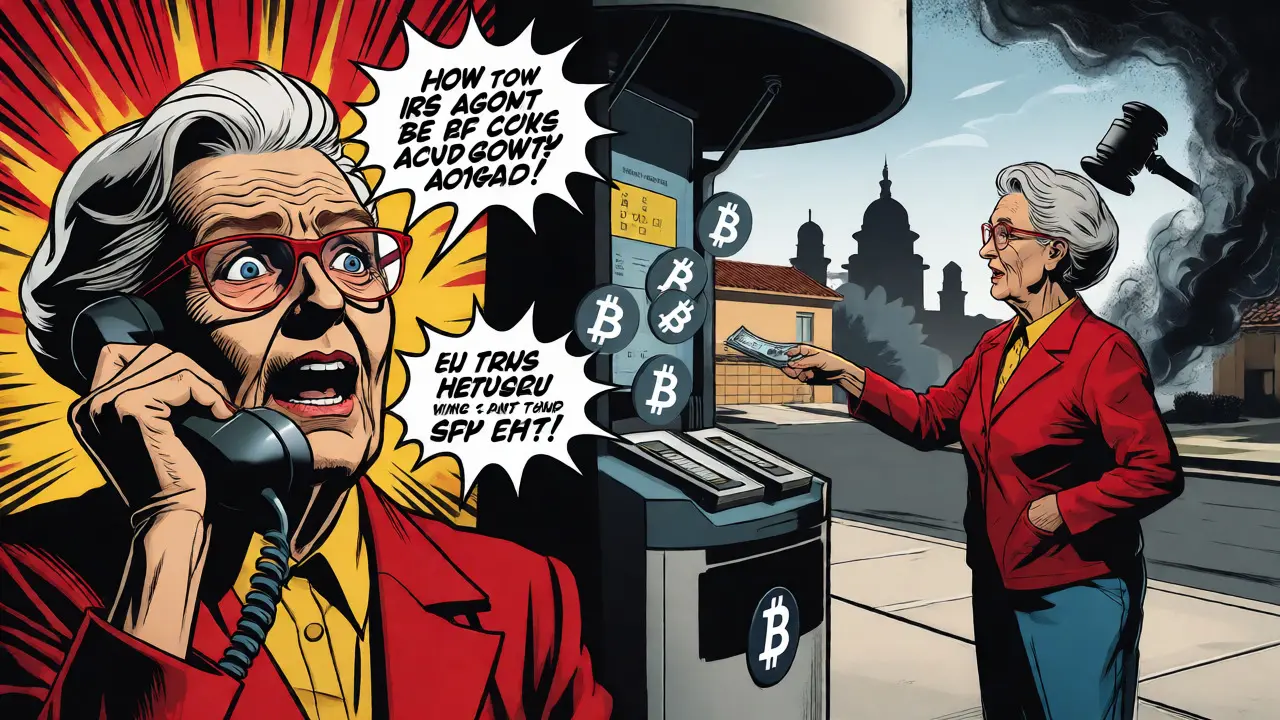
Why seniors? Scammers often use phone-based social engineering tactics. A caller pretends to be from the IRS, Medicare, or a utility company, claiming you owe back taxes or need to pay a fee immediately to avoid arrest or service cutoff. They instruct the victim to go to the nearest crypto ATM, buy Bitcoin, and send it to a provided address. The urgency and authority pressure prevent the victim from asking questions or checking with family.
| Metric | Data Point | Context |
|---|---|---|
| Total Losses (2024) | $246.7 Million | Reported by FBI IC3 |
| Primary Victim Age Group | Over 60 Years Old | Represents >66% of victims |
| Top Affected State | Arizona | $177 Million lost statewide |
| Complaint Volume | 10,956 Cases | Single year increase in reports |
Arizona serves as a grim case study. With approximately 600 crypto ATMs scattered across the state, residents lost $177 million in cryptocurrency fraud in 2024. In Scottsdale alone, police reported $5 million lost in just one year. Families in Peoria saw nearly $1 million vanish. This geographic concentration shows how physical proximity to these machines correlates with vulnerability.
Technical Vulnerabilities: It’s Not Just Human Error
While social engineering is the main driver, the machines themselves aren't always secure. Security researchers have found critical flaws in popular hardware. For instance, IOActive researcher Gabriel Gonzalez discovered severe vulnerabilities in the Lamassu Douro Bitcoin ATM. By creating a malicious file during the update process, an attacker could gain root access to the machine’s operating system.
This means someone with physical access-or even remote access if the software is poorly managed-could potentially manipulate the device. While most current scams rely on tricking the user rather than hacking the machine, these technical gaps add another layer of risk. If the software governing the transaction can be compromised, the trust model collapses entirely.
The Regulatory Crackdown: States Fighting Back
Federal action has been slow, but states are moving fast. Arizona recently passed the Cryptocurrency Kiosk License Fraud Prevention law, setting a precedent for other jurisdictions. Attorney General Mayes announced strict new rules aimed at curbing abuse.
Under this new framework:
- Daily Limits: New customers are capped at $2,000 per day. Existing verified customers can go up to $10,500.
- Mandatory Warnings: Operators must display clear, unavoidable warnings on the screen that users must acknowledge before proceeding.
- Refund Mechanisms: If a new customer reports fraud within 30 days, operators are required to issue full refunds, including fees.
AARP’s Nancy LeaMond noted that lawmakers across the political spectrum are eager to implement these "commonsense rules." Eleven states have already passed laws specifically targeting crypto ATMs, and at least 40 states introduced broader cryptocurrency legislation in 2025. The goal is to balance innovation with consumer safety, ensuring that the promise of decentralized finance doesn't come at the cost of basic security.
How to Protect Yourself (and Your Parents)
So, should you never use a crypto ATM? Not necessarily. But you need to change how you interact with them. Here is a practical checklist to avoid becoming a statistic:
- Never Pay Based on Phone Calls: If someone calls you demanding payment via Bitcoin, hang up. Legitimate government agencies do not accept crypto payments.
- Check the Operator: Look for signage indicating the machine is operated by a registered Money Services Business (MSB). If it looks sketchy or lacks contact info, walk away.
- Use Small Amounts First: Test the machine with a small purchase ($20-$50) before committing significant funds.
- Ask for Help: If you are older or less familiar with crypto, bring a trusted friend or family member to the transaction.
- Read the Receipt: Ensure you receive a printed receipt with the transaction ID. Take a photo of it immediately.
Remember, the design philosophy of these kiosks prioritizes accessibility over security. That feature is also the bug. When a stranger tells you to go to a specific store to buy Bitcoin for a "urgent" reason, treat it as a red flag. The $246 million lost last year wasn't due to market crashes; it was due to manipulation. Don't let your hard-earned cash disappear into a wallet you’ll never see again.
Can I get my money back after sending crypto through an ATM?
Generally, no. Cryptocurrency transactions are irreversible once confirmed on the blockchain. Unlike credit cards or bank wires, there is no central authority to reverse the transaction. However, under new laws in places like Arizona, operators may be required to refund new customers who report fraud within 30 days, but this depends on local regulations and the specific operator's compliance.
Why are seniors more likely to fall for crypto ATM scams?
Seniors are often targeted by social engineering schemes involving fake tax authorities or utility companies. Scammers create a sense of urgency and fear, instructing victims to pay immediately via crypto ATM. Additionally, many older adults may be less familiar with the irreversible nature of blockchain transactions and the lack of traditional banking protections.
What is the daily limit for crypto ATM purchases?
Limits vary by state and operator. In Arizona, for example, new customers are limited to $2,000 per day, while existing verified customers can spend up to $10,500. Other states may have different caps or no limits at all, so it is crucial to check local regulations before making large transactions.
Are crypto ATMs regulated like traditional banks?
No, crypto ATMs are largely unregulated compared to traditional banks. While they are technically considered Money Services Businesses (MSBs) and subject to the Bank Secrecy Act, enforcement has been inconsistent. Many operators fail to conduct proper Know Your Customer (KYC) checks or monitor for suspicious activity, leaving consumers vulnerable.
What should I do if I suspect I've been scammed?
Report the incident to the FBI’s Internet Crime Complaint Center (IC3) immediately. Also, contact the ATM operator directly, especially if you are within the refund window in states like Arizona. Keep all receipts and screenshots of the transaction. While recovery is rare, reporting helps track trends and may trigger regulatory action against the operator.