
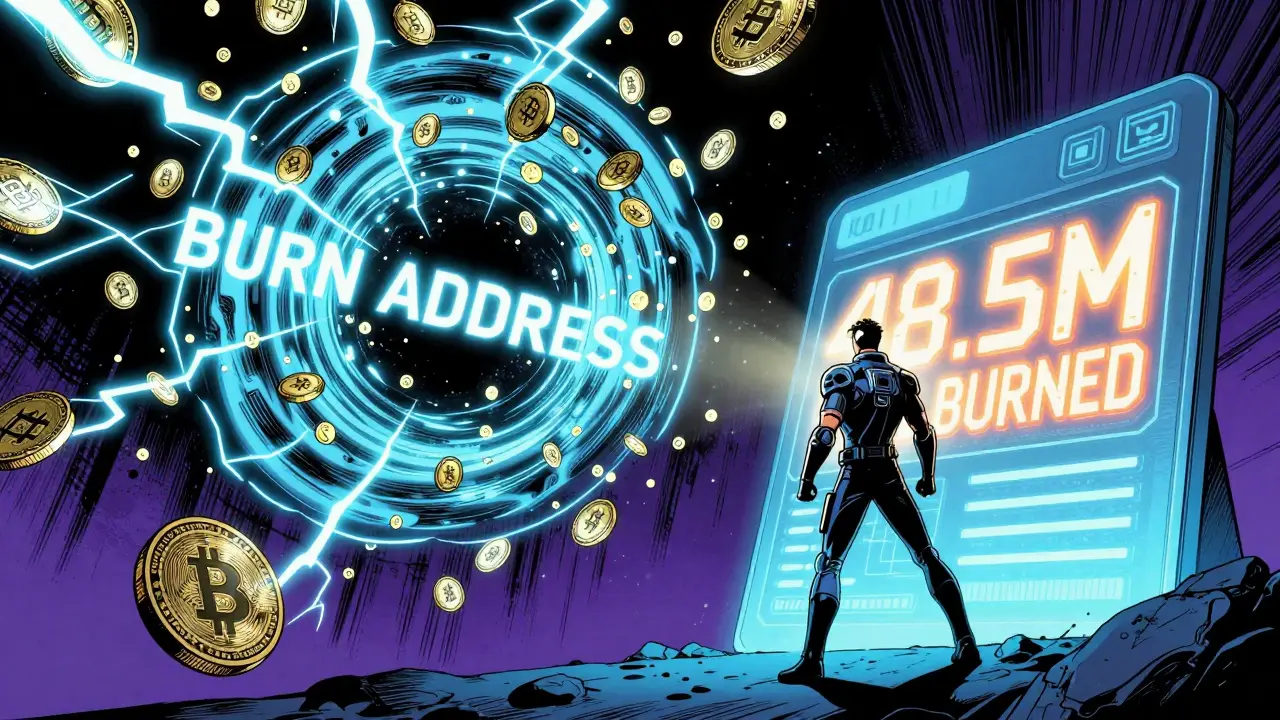
Token burning in cryptocurrency isn’t just a buzzword-it’s a real, measurable process that removes coins from circulation forever. Think of it like tearing up cash and throwing it into a fire. Except in crypto, it’s done digitally, permanently, and on the blockchain. The goal? To make the remaining tokens scarcer, which, in theory, makes them more valuable. It’s not magic. It’s math. And it’s happening right now, across dozens of major blockchains.
How Token Burning Actually Works
Every token burn follows the same basic rule: send coins to a wallet that no one can access. This is called a burn address. It’s not a secret address. It’s public, and anyone can see it. But here’s the catch-no private key exists for it. No one owns it. No one can ever move the coins out. They’re gone. Forever.Here’s how it happens in practice:
- A project team or smart contract decides how many tokens to burn.
- Those tokens are sent from active wallets to the burn address.
- The transaction is recorded on the blockchain-permanent, unchangeable, public.
- The total supply of the token is reduced by that amount.
For example, Binance burns BNB tokens every quarter. They take a portion of their profits, buy back BNB from the open market, and send it to the burn address. Since 2017, they’ve burned over 48.5 million BNB tokens-worth roughly $34.2 billion as of 2026. That’s not a rumor. It’s on the blockchain.
Manual vs. Automatic Burning: What’s the Difference?
Not all burns are created equal. There are two main types: manual and automatic.Manual burning is when a team decides when and how much to burn. Binance does this. They pick a date, usually every three months, and execute the burn. It gives them flexibility. If the market crashes, they might hold off. If the price spikes, they might burn more. But it also means you have to trust them. In 2020, KuCoin faced backlash because users couldn’t verify their burn amounts. Trust matters.
Automatic burning runs on code. Smart contracts trigger burns based on rules. Ethereum’s EIP-1559 is the best example. Every time someone sends ETH, a portion of the transaction fee gets burned. No human intervention. No room for manipulation. Since August 2021, over 4.2 million ETH have been burned-worth about $12.3 billion. The supply keeps shrinking, automatically, with every transaction.
Studies show automatic burns are more trusted. Crypto.com analyzed 127 burn events between 2020 and 2023 and found that tokens with automatic burns had 17.3% less price volatility after the burn. Why? Because everyone knows exactly when and how much will be burned. No surprises.
Does Token Burning Actually Increase Price?
This is the big question. Does burning tokens make them worth more?The answer isn’t yes or no. It’s: it depends.
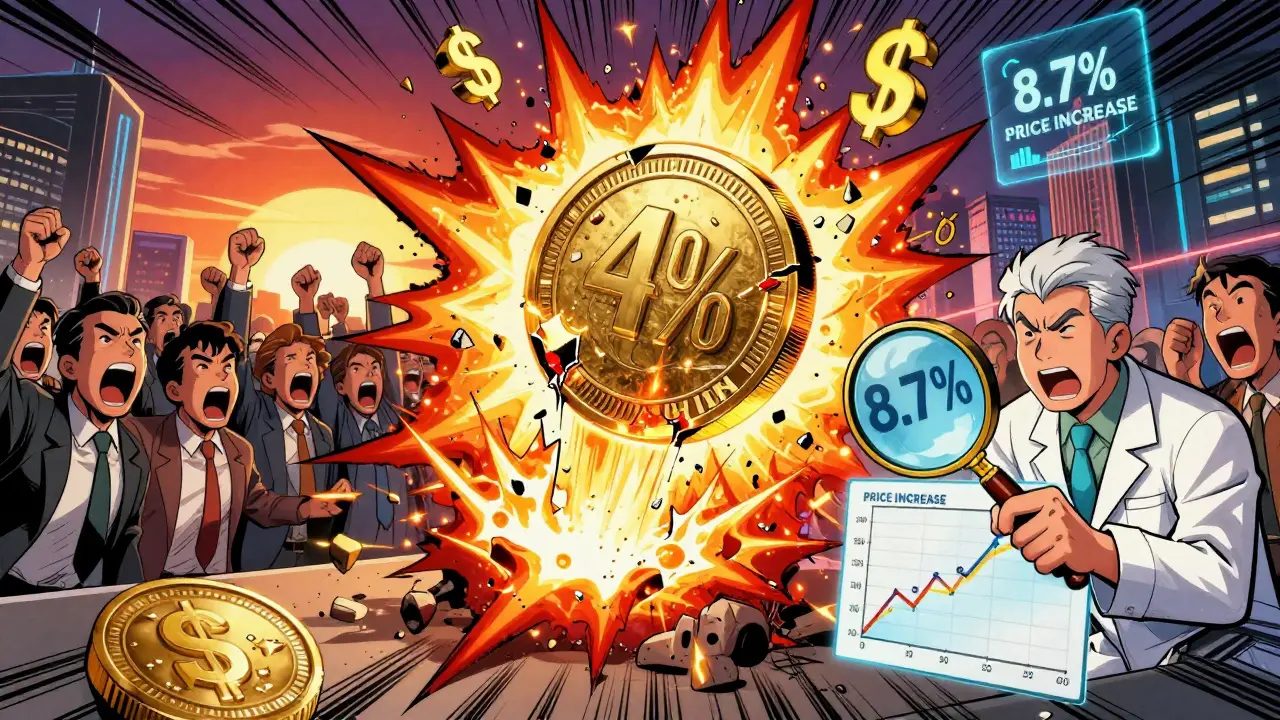
MIT researchers studied 214 burns across top cryptocurrencies. They found something clear: burns under 0.5% of total supply had almost no effect on price. But burns over 2%? Those correlated with an average 8.7% price increase over 30 days.
Take Shiba Inu in May 2021. The community burned 410 trillion SHIB tokens-about 4% of the total supply. The price jumped 230% in the next month. Was it the burn? Maybe. But it was also the hype, the media, the community energy. The burn just gave people a reason to believe.
On the flip side, TerraUSD (UST) had a burn mechanism too. When UST lost its $1 peg in May 2022, burning tokens didn’t help. Why? Because the problem wasn’t supply-it was lack of backing. Burning tokens can’t fix a broken model.
Dr. Garrick Hileman from Blockchain.com puts it simply: “Token burns can theoretically increase value through supply reduction, but the actual market impact depends heavily on the specific tokenomics.”
Who’s Doing It-and Why?
As of 2023, 78% of the top 100 cryptocurrencies use token burning. That’s up from 42% in 2020. It’s no longer a gimmick. It’s standard.- Binance (BNB): Quarterly burns funded by profits. Over $34 billion burned. A core part of their economic model.
- Ethereum (ETH): EIP-1559 burns transaction fees. Over 4.2 million ETH burned. Makes ETH deflationary under high usage.
- Ripple (XRP): Doesn’t burn, but locks tokens in escrow. Functions like a burn-removes supply from circulation.
- Paxos Gold (PAXG): Burns tokens when users redeem them for physical gold. Creates a real-world link between supply and asset value.
Even enterprise projects are jumping in. Deloitte’s 2023 survey found 63% of enterprise blockchain systems now include burn mechanisms. Why? Because investors demand transparency and scarcity.
Common Misconceptions and Pitfalls
There are a lot of myths floating around.Myth: Burning tokens always makes the price go up.
Reality: If demand doesn’t grow, burning just shrinks the pie. You end up with fewer tokens, but no more buyers. Price stays flat-or drops.
Myth: All burns are equal.
Reality: Burning 100 tokens out of 1 billion? Meaningless. Burning 10 million out of 50 million? That’s a 20% reduction. Huge difference.
Myth: You can burn your own tokens anytime.
Reality: You can, but only if the token’s smart contract allows it. Most retail users can’t burn tokens directly. It’s usually handled by the project or exchange.
And then there’s the technical risk. In 2020, Waves accidentally burned the wrong amount of tokens due to a coding error. They had to hold a community vote to fix it. That’s how fragile this system can be if not done right.
What’s Next for Token Burning?
Token burning is evolving. The next wave isn’t just about burning more-it’s about burning smarter.- Dynamic burns: Kadena’s blockchain adjusts burn rates based on network usage and price. More transactions? More burned. Price drops? Burn slows down.
- Conditional burns: VeChainThor only burns tokens when trading volume hits a certain threshold. No burn unless there’s real demand.
- Real-world asset integration: PAXG’s model-burn when gold is redeemed-is the future. It ties token supply to physical value, not speculation.
Gartner predicts that by 2025, 95% of new crypto projects will include token burning. But Dr. Aaron Wright from Cardozo Law School warns: “As token burning becomes ubiquitous, its marginal impact on value will diminish unless paired with genuine utility growth.”
That’s the key. Burning alone doesn’t create value. Utility does. A token that burns 5% of its supply every year but has no real use case? It’s just a shell. A token that burns 1% but solves a real problem, gets adopted by businesses, and has growing demand? That’s the real winner.
Final Thoughts
Token burning isn’t a silver bullet. It’s a tool. A powerful one, if used correctly. It reduces supply. It builds trust. It signals long-term thinking. But it can’t fix a broken project.If you’re holding a cryptocurrency that burns tokens, ask yourself: Is the burn meaningful? Is it automatic or manual? Is it tied to real usage? Is the project actually building something people need?
Don’t just chase burns. Chase value.
What is a burn address in cryptocurrency?
A burn address is a public wallet address with no private key. Once tokens are sent there, they can never be accessed or moved again. It’s like sending money into a black hole-permanently gone. Projects use these addresses to permanently remove tokens from circulation, reducing total supply.
Does token burning increase the price of a cryptocurrency?
It can, but only if the burn is large enough and demand stays strong. MIT research shows burns exceeding 2% of total supply often lead to price increases of around 8.7% over 30 days. Smaller burns, under 0.5%, usually have no measurable effect. Price changes also depend on market sentiment, adoption, and overall demand-not just supply reduction.
Can I burn my own cryptocurrency tokens?
Technically, yes-if the token’s smart contract allows it. But most retail users don’t have the tools or knowledge to do it safely. It’s usually handled by exchanges or the project team. For example, Binance burns BNB on behalf of users. If you try to send tokens to a burn address yourself, you risk losing them permanently with no way to recover them.
What’s the difference between token burning and locking tokens?
Burning removes tokens from circulation forever. Locking puts them in a wallet that can’t be accessed for a set period, but they’re still technically in existence. Ripple locks XRP in escrow-those tokens aren’t burned, they’re just frozen until released. Burning is permanent. Locking is temporary.
Are token burns regulated by governments?
As of 2026, no government has taken formal enforcement action against token burns. The U.S. SEC has warned that burns could be seen as unregistered securities offerings if used to manipulate prices-but so far, no cases have been filed. Most burns are treated as technical supply adjustments, not financial products.
Which cryptocurrency has burned the most tokens?
Binance Coin (BNB) holds the record. Since 2017, Binance has burned over 48.5 million BNB tokens, worth approximately $34.2 billion as of 2026. Ethereum follows closely, with over 4.2 million ETH burned through its EIP-1559 fee-burning mechanism since 2021.
Is token burning good for investors?
It can be, but only if the project has real utility and growing demand. Burning reduces supply, which may increase scarcity and price. But if the project fails to attract users or solve real problems, the burn won’t matter. Long-term investors should look for projects with transparent, consistent burns paired with strong adoption-not just marketing.
carol johnson
January 23, 2026 AT 06:28Steve Fennell
January 25, 2026 AT 03:52Catherine Hays
January 25, 2026 AT 23:29Roshmi Chatterjee
January 27, 2026 AT 17:03Tselane Sebatane
January 29, 2026 AT 16:19Jonny Lindva
January 30, 2026 AT 23:17Jen Allanson
February 1, 2026 AT 07:00Sara Delgado Rivero
February 2, 2026 AT 07:11Athena Mantle
February 4, 2026 AT 06:16Margaret Roberts
February 6, 2026 AT 04:10Harshal Parmar
February 6, 2026 AT 14:26Darrell Cole
February 7, 2026 AT 16:02Dave Ellender
February 9, 2026 AT 06:23Clark Dilworth
February 9, 2026 AT 14:12Brenda Platt
February 11, 2026 AT 11:54Barbara Rousseau-Osborn
February 11, 2026 AT 20:03Arnaud Landry
February 13, 2026 AT 15:45Mark Estareja
February 14, 2026 AT 07:39steven sun
February 15, 2026 AT 03:08Kevin Pivko
February 17, 2026 AT 01:51Mathew Finch
February 18, 2026 AT 13:01