
Most people think of cryptocurrency as a way to invest, trade, or send money. But Safe Haven (SHA) isn’t about making quick profits. It was built to solve a quiet, urgent problem: what happens to your crypto when you die?
Imagine you’ve been holding Bitcoin, Ethereum, or other digital assets for years. You’ve got private keys stored in a hardware wallet, passwords to exchanges, and maybe even encrypted files with backup phrases. Now, what if you’re in a car accident tomorrow? Will your spouse even know where to look? Can they access it without your help? Most can’t. That’s the gap Safe Haven was created to fill.
How Safe Haven (SHA) works
Safe Haven isn’t just another coin. It’s a system built around a token called SHA that helps you plan how your digital assets get passed on after death. Here’s how it works in plain terms:
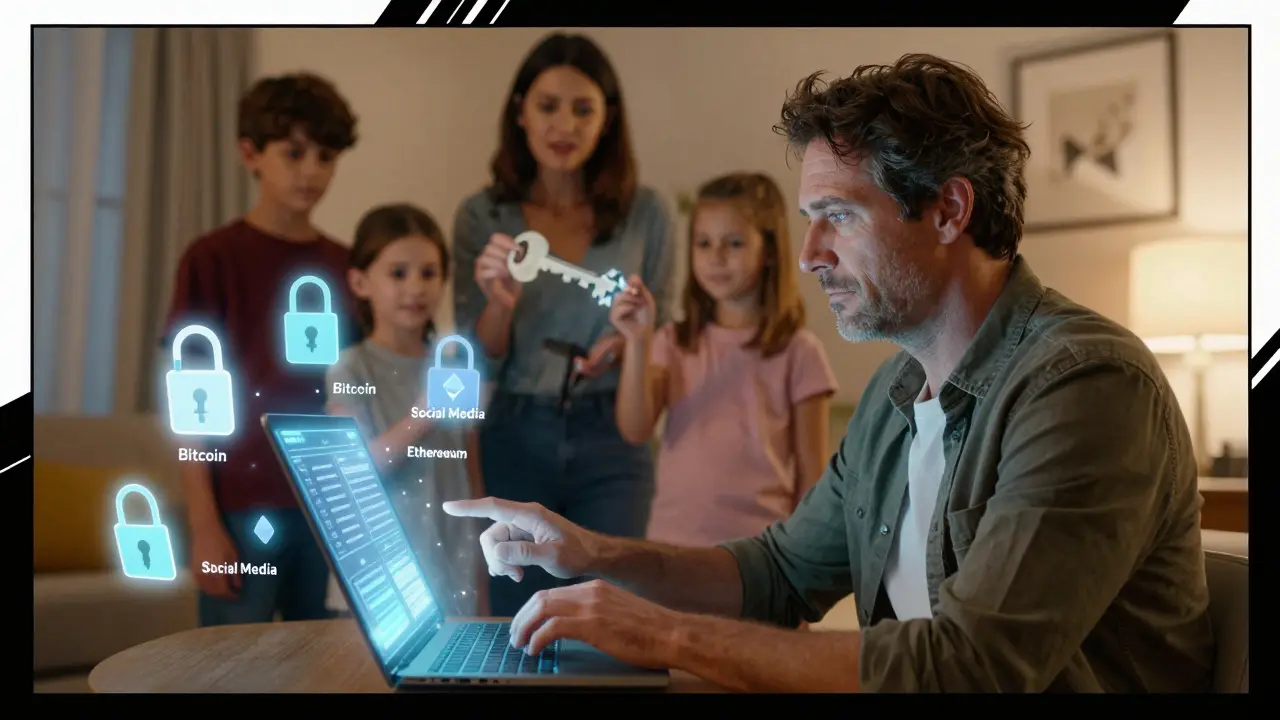
- You encrypt your crypto keys, exchange logins, social media passwords, and even digital wills using Safe Haven’s platform.
- You choose trusted people - say, your spouse, adult children, or a lawyer - to be your beneficiaries.
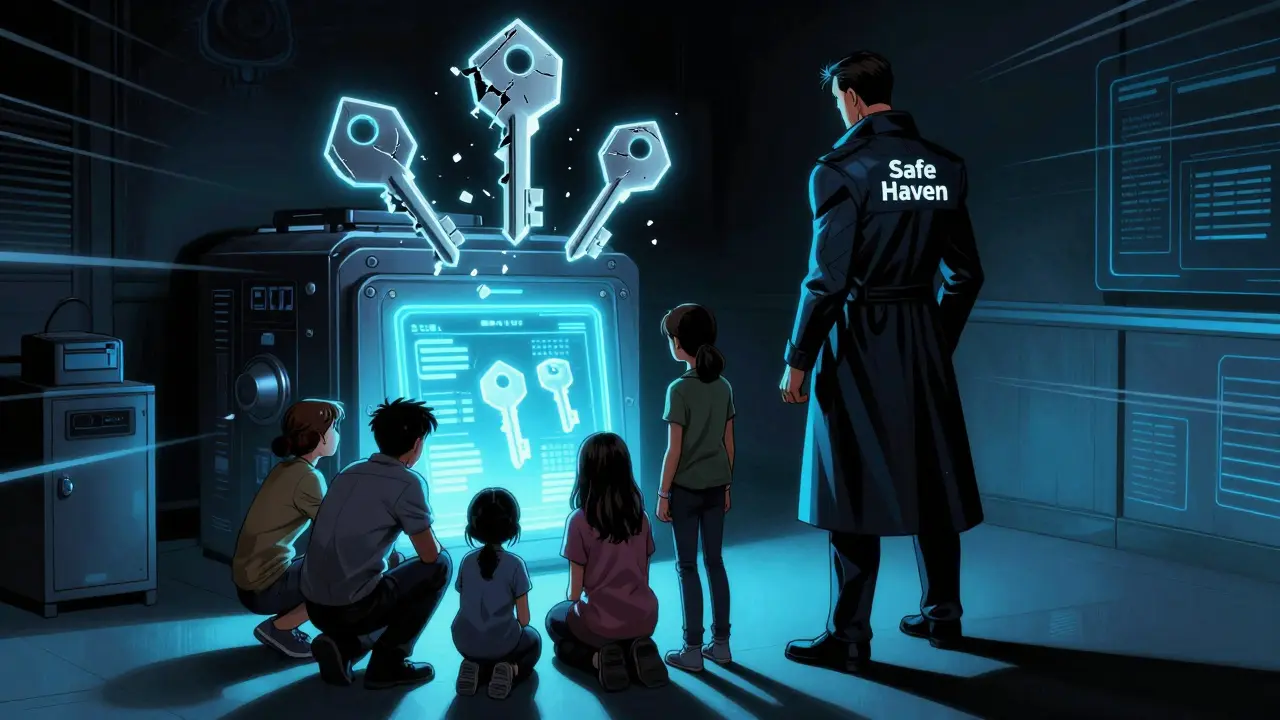
- You split access to your encrypted data into multiple shares. Let’s say you pick three people. You give each one a different part of the key.
- None of them can open your assets alone. All shares must be combined to unlock everything.
- When you pass away, your designated representatives trigger the release process. Only then do the shares become active, and only if all parties agree.
This isn’t magic. It’s cryptography. Think of it like a bank vault with five locks. You hold all five keys while alive. After you die, your heirs need all five keys to open it. If one key is missing - or if someone tries to sneak in early - they’re locked out. It prevents fraud, accidental access, and family disputes.
Why SHA is built on multiple blockchains
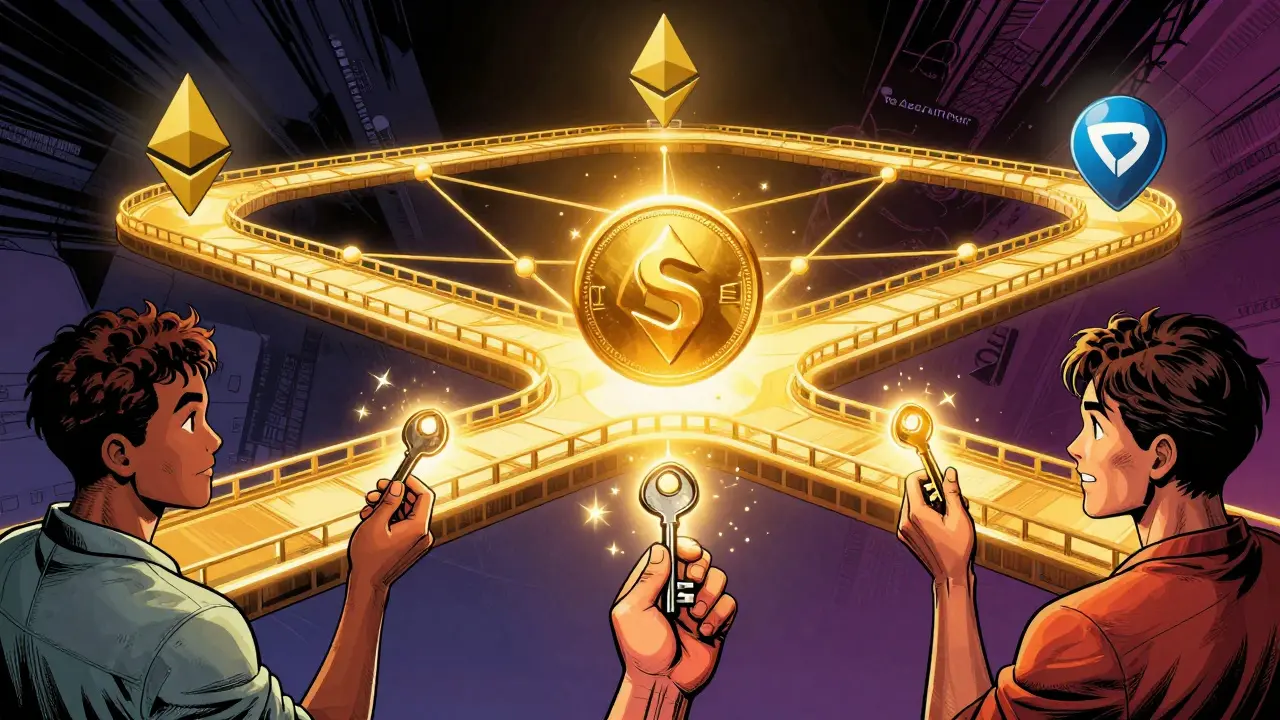
Safe Haven doesn’t lock itself to one network. The SHA token exists as:
- ERC-20 on Ethereum
- BEP-20 on Binance Smart Chain
- VIP-180 on VeChainThor
- And on Polygon
This isn’t just for show. It means you can hold SHA in whichever wallet you already use - Metamask, Venly, Binance Wallet, or Comet. You don’t need to learn new tools. If you’re comfortable with one blockchain, you can use SHA there.
There’s also SafeSwap, a tool that lets you move SHA between these chains. Need to move from Ethereum to Binance Smart Chain to trade? You can do it without leaving the Safe Haven ecosystem. That kind of flexibility matters when you’re dealing with inheritance - people use different platforms for different reasons.
SHA as a utility token, not just a store of value
SHA isn’t meant to be hoarded like Bitcoin. It’s the engine that powers Safe Haven’s services. To use the platform’s inheritance features, you need to hold or stake SHA. Here’s what you can do with it:
- Lock SHA to gain access to encrypted asset storage
- Use it to pay for digital estate planning tools
- Access ThorPay, a payment system built on SHA for everyday transactions
- Participate in governance decisions for the platform’s future
That’s why Safe Haven calls SHA “the lifeblood of the ecosystem.” You can’t use the service without it. That’s different from most coins, where holding them just means hoping the price goes up. With SHA, your tokens have a job - and that job is protecting your family’s digital future.
Market reality: Low volume, low adoption
As of March 20, 2026, SHA’s price sits between $0.00013 and $0.0001575. That’s down over 99% from its all-time high of $0.01705 in 2021. Its market cap is around $1.2 million, ranking it near #2500 on CoinMarketCap. The 24-hour trading volume? Sometimes less than $100.
That’s not a sign of failure - it’s a sign of niche adoption. Most people still don’t think about digital inheritance. Banks and lawyers handle estates the old way: paper wills, not smart contracts. But that’s changing. More people own crypto. More people die without clear plans. And more families are getting locked out of digital accounts.
SHA’s biggest challenge isn’t technology. It’s awareness. You won’t find it on Coinbase or Kraken. You’ll only trade it on decentralized exchanges like PancakeSwap (v2), and even then, it’s mostly paired with BUSD. Liquidity is thin. Slippage is high. It’s not built for speculators.
Who is Safe Haven for?
If you’re a crypto holder with:
- More than $5,000 in digital assets
- Multiple wallets or exchange accounts
- Family members who aren’t tech-savvy
- Concerns about hackers, scams, or accidental loss
Then Safe Haven is worth looking at. It’s not for day traders. It’s for parents, grandparents, business owners, and anyone who wants to make sure their digital legacy survives them.
There’s no guarantee SHA will grow in value. But if you care about what happens to your crypto after you’re gone - not just what it’s worth today - then this is one of the few projects designed with that exact goal in mind.
How to get started
Here’s what you need to do:
- Get a compatible wallet: Metamask or Venly work best for Ethereum, Binance Smart Chain, or Polygon.
- Buy SHA on PancakeSwap (v2) using BUSD or another stablecoin.
- Visit the Safe Haven platform and create your digital estate plan.
- Encrypt your data and assign shares to your beneficiaries.
- Store your recovery instructions somewhere safe - like a physical safe, lawyer’s office, or trusted family member.
Don’t forget: you’re in control until the day you die. No one else can touch anything. The system only activates after your death, and only if all your chosen people come together.
What makes Safe Haven different?
There are other crypto inheritance tools out there. Some use multi-signature wallets. Others rely on third-party executors. But Safe Haven is unique because:
- It’s built into a token - not just a service
- It requires cooperation from multiple people - not just one
- It works across blockchains - not locked to one
- It’s tied to real-world utility - not just speculation
It’s a rare example of blockchain being used to solve a deeply human problem, not just a financial one. And while adoption is slow, the need is real.
George Hutchings
March 20, 2026 AT 09:24Henrique Lyma
March 21, 2026 AT 05:40Grace van Gent-Korver
March 22, 2026 AT 04:16shreya gupta
March 22, 2026 AT 19:47Shreya Baid
March 24, 2026 AT 18:57Christopher Hoar
March 25, 2026 AT 05:33Robert Kunze
March 26, 2026 AT 00:23Heather James
March 26, 2026 AT 20:37Jesse Pals
March 27, 2026 AT 13:56Diane Overwise
March 28, 2026 AT 18:10Ann Liu
March 30, 2026 AT 09:10Dionne van Diepenbeek
March 30, 2026 AT 15:39Jerry Panson
March 31, 2026 AT 01:48Katrina Smith
March 31, 2026 AT 15:03Anastasia Danavath
April 2, 2026 AT 08:09anshika garg
April 3, 2026 AT 14:31