
You might have seen PayPal USD (PYUSD) pop up in your wallet or on news feeds. It looks like a cryptocurrency, but it doesn't bounce around wildly like Bitcoin or Ethereum. So, what exactly is it? Simply put, PYUSD is a digital version of the U.S. dollar that lives on the blockchain. It is designed to keep its value steady at $1.00, making it a safe harbor for payments and savings within the volatile crypto world.
If you use PayPal, this isn't just another speculative token. It is a bridge between the banking system you know and the decentralized finance (DeFi) ecosystem. But before you buy or hold any PYUSD, you need to understand how it works, who backs it, and whether it fits your financial goals. Let's break down the essentials without the jargon.
How PYUSD Works: The Basics
To understand PayPal USD, you first need to grasp the concept of a stablecoin. Unlike Bitcoin, which has no intrinsic value anchor, a stablecoin is pegged to a real-world asset-in this case, the U.S. dollar. When you hold one PYUSD, you are holding a digital claim worth exactly one U.S. dollar.
The magic behind PYUSD lies in its issuance process. It is not created by PayPal directly printing money. Instead, it is issued by Paxos Trust Company, a licensed trust company regulated by the New York State Department of Financial Services (NYDFS). Here is the step-by-step flow:
- Deposit: Approved entities (like PayPal) send actual U.S. dollars to Paxos.
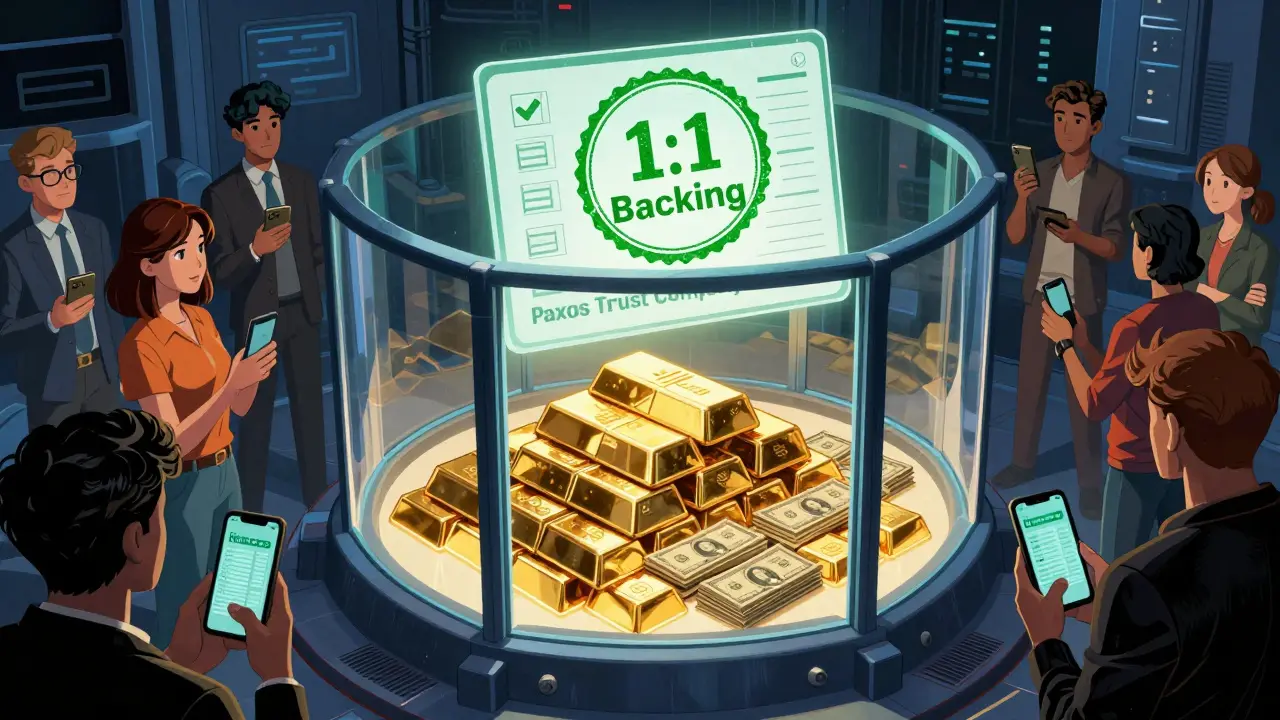
- Backing: Paxos holds these funds in secure custody, typically in FDIC-insured bank accounts or short-term U.S. Treasuries.
- Minting: Once the cash is secured, Paxos mints an equivalent amount of PYUSD tokens on the blockchain.
- Redemption: If you want your cash back, you send PYUSD to Paxos, they burn (destroy) the tokens, and release the underlying U.S. dollars to you.
This structure ensures that every single PYUSD in circulation is backed 1:1 by real assets. Independent accounting firm Withum LLP performs monthly attestations to verify this backing, providing a layer of transparency that many other stablecoins lack.
Why Use PYUSD Instead of Regular Dollars?
If PYUSD is just a dollar, why bother using it? The answer comes down to speed, cost, and access. Traditional bank transfers, especially international ones, can take three to five business days and incur high fees. PYUSD transactions settle on the blockchain in seconds, often costing less than a penny in network fees depending on the chain used.
Consider this scenario: You are traveling abroad and need to pay for a hotel. With a credit card, you face foreign transaction fees (often 3%) and dynamic currency conversion traps. With PYUSD, you can pay via PayPal’s 'Checkout with Crypto' feature. The transaction processes in about 2.7 seconds, and because the stablecoin is already pegged to the dollar, you avoid exchange rate volatility during the checkout process. For merchants, processing fees are lower-around 1.9% compared to the standard 2.9% + $0.30 for credit cards.
Additionally, PYUSD offers yield opportunities that traditional savings accounts cannot match. As of late 2025, holding PYUSD in your PayPal account earns an annual percentage yield (APY) of approximately 4%. While this may seem modest compared to high-risk DeFi protocols offering 8-10%, it provides a risk-adjusted return that beats most big-bank savings rates without exposing you to smart contract hacks or impermanent loss.

Network Compatibility and Fees
One common mistake new users make is assuming all cryptocurrencies live on the same network. PYUSD operates on multiple blockchains, which affects both where you can store it and how much it costs to move.
| Blockchain Network | Token Standard | Avg. Transfer Fee | Best For |
|---|---|---|---|
| Ethereum | ERC-20 | $0.15 - $2.50 | High security, DeFi integration |
| Solana | SPL Token | ~$0.00025 | Micro-transactions, speed |
| Arbitrum | ERC-20 (L2) | ~$0.02 | Cheaper Ethereum alternative |
| Stellar | Native Asset | ~$0.00001 | Cross-border remittances |
If you are sending PYUSD from your PayPal account to a personal wallet, ensure you select the correct network. Sending Ethereum-based PYUSD to a Solana address will result in lost funds. Always double-check the network selection before confirming any transfer outside the PayPal ecosystem.
PYUSD vs. Other Stablecoins
You might wonder how PYUSD stacks up against giants like USDT (Tether) or USDC (Circle). Each has distinct strengths.
USDT dominates the market by volume but has faced scrutiny over its reserve transparency. USDC is highly transparent and regulated but lacks direct integration with mainstream payment processors. PYUSD differentiates itself through utility. Because it is built into the PayPal infrastructure, you can use it to buy goods from millions of merchants instantly. You don’t need to convert PYUSD to fiat first; the merchant receives the value seamlessly.
However, PYUSD is not yet as widely supported across decentralized exchanges (DEXs) as USDC. If your primary goal is complex DeFi trading across niche protocols, USDC remains the king of compatibility. If your goal is everyday spending, saving, and easy on-ramping from traditional finance, PYUSD offers a smoother user experience.
Risks and Considerations
No financial product is without risk. While PYUSD is regulated and backed by cash equivalents, you should be aware of potential pitfalls.
- Centralization Risk: Unlike Bitcoin, PYUSD is controlled by Paxos and PayPal. They have the ability to freeze addresses if required by law enforcement or court orders. This contradicts the 'censorship-resistant' ethos of crypto but aligns with regulatory compliance.
- Smart Contract Risk: Although audited, the code powering PYUSD could theoretically contain bugs. However, the risk is mitigated by Paxos's conservative approach and regular audits.
- Regulatory Changes: The stablecoin landscape is evolving. New laws, such as the proposed Stablecoin Transparency Act, could impact how PYUSD operates. Stay informed on legislative updates.
- Platform Dependency: If you hold PYUSD exclusively within the PayPal app, you rely on their service availability. For true self-custody, consider moving funds to a hardware wallet like Ledger or Trezor, ensuring the wallet supports the specific network you are using.
How to Get Started with PYUSD
Getting your hands on PYUSD is straightforward if you already have a PayPal account. Here is a simple checklist to begin:
- Verify Your Account: Ensure your PayPal identity is fully verified to comply with KYC (Know Your Customer) regulations.
- Navigate to Crypto: Go to the 'Crypto' section in your PayPal dashboard.
- Select PYUSD: Choose 'Buy' and enter the amount in U.S. dollars.
- Fund the Purchase: Link a bank account or debit card to complete the purchase. Note that buying fees apply, so check the current schedule.
- Hold or Send: You can hold PYUSD to earn interest, send it to friends via Venmo/PayPal, or withdraw it to an external wallet for DeFi usage.
For those looking to use PYUSD externally, remember that you must bridge it to the appropriate network. PayPal currently supports withdrawals to Ethereum and Solana networks. Always start with a small test transaction to confirm receipt before moving larger amounts.
Is PYUSD safe to hold?
Yes, PYUSD is considered safe due to its 1:1 backing by U.S. dollars and short-term Treasuries held by Paxos Trust Company. Monthly attestations by Withum LLP verify these reserves. However, like any digital asset, it carries risks related to platform dependency and regulatory changes.
Can I use PYUSD to buy things online?
Absolutely. You can use PYUSD at any merchant that accepts PayPal. At checkout, select 'PayPal' and choose PYUSD as your funding source. The transaction converts seamlessly, allowing you to spend your stablecoin balance just like cash.
Does PYUSD earn interest?
Yes, holding PYUSD in your PayPal account currently yields an APY of approximately 4%. This interest is paid out in PYUSD, allowing your balance to grow slightly over time without the volatility associated with other cryptocurrencies.
What happens if Paxos goes bankrupt?
Paxos holds reserves in segregated accounts for the benefit of PYUSD holders. In the event of insolvency, PYUSD holders would have a claim on these underlying assets. However, legal processes can be slow. Diversifying your holdings and not keeping all your emergency funds in one stablecoin is a prudent strategy.
Can I transfer PYUSD to a friend's bank account?
Not directly. You must first redeem PYUSD for U.S. dollars within PayPal, which settles in your PayPal balance. From there, you can transfer the fiat dollars to your linked bank account. Direct crypto-to-bank transfers require intermediary services or bridges.