

Imagine sending money across borders without paying a fortune in fees, using a digital currency that doesn't swing wildly in value like Bitcoin. That is the promise of mCEUR, or Moola Celo EUR. It is not just another speculative token; it is a stablecoin designed to keep its value locked to the Euro while living on the Celo blockchain. If you are curious about decentralized finance but wary of volatility, mCEUR might be exactly what you have been looking for.
What Exactly Is Moola Celo EUR?
To understand mCEUR, you first need to grasp two things: stablecoins and the Celo network. A stablecoin is a cryptocurrency pegged to a real-world asset, usually a fiat currency like the US Dollar or the Euro. The goal is stability. When the Euro moves, mCEUR moves with it. Unlike Bitcoin, which can drop 10% in a day, mCEUR aims to stay at €1.00.
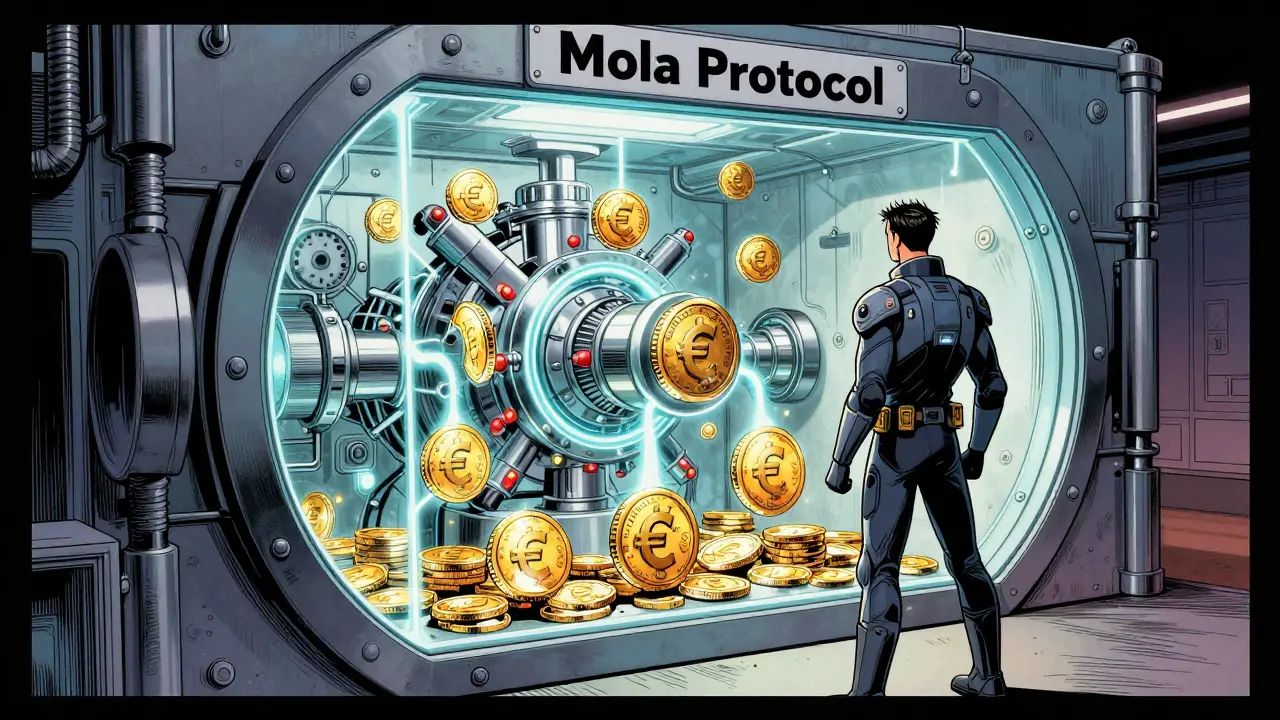
But where does it live? It lives on the Celo blockchain, a mobile-first platform optimized for everyday payments. Celo was built to make crypto accessible via smartphones, even using phone numbers instead of complex wallet addresses. mCEUR is part of the Moola protocol, which acts as a lending hub within this ecosystem. Think of Moola as a decentralized bank where you can lend your Euros to earn interest or borrow against them.
| Attribute | Value / Detail |
|---|---|
| Token Name | Moola Celo EUR (mCEUR) |
| Blockchain | Celo (Ethereum-compatible Layer-2) |
| Peg | 1 mCEUR ≈ 1.00 EUR |
| Type | Synthetic Stablecoin (Algorithmic/Lending-backed) |
| Primary Use | DeFi Lending, Borrowing, Mobile Payments |
| Transaction Speed | ~5 seconds finality |
| Avg. Fee | $0.0001 per transaction |
How Does mCEUR Maintain Its Value?
This is the tricky part. Traditional stablecoins like USDC hold actual Euros in a bank account to back every token. mCEUR works differently. It is a "synthetic" asset created through the Moola lending protocol. Here is how it functions:
- Collateralization: Users deposit other assets (like CELO tokens or cUSD) into the Moola protocol as collateral.
- Minting: Based on the value of that collateral, the system generates mCEUR. This ensures there is always enough underlying value to cover the synthetic Euros.
- Incentives: The protocol uses economic incentives to keep the price near €1.00. If the price drifts too high or too low, arbitrageurs step in to correct it, profiting from the difference while stabilizing the market.
This mechanism means mCEUR relies on the health of the Moola protocol and the broader Celo ecosystem rather than a single bank vault. It is clever, efficient, and keeps everything on-chain, but it requires trust in the code and the economic model.
Why Would You Use mCEUR Instead of Regular Euros?
If you are sitting in Berlin with a full bank account, probably you wouldn't. But consider these scenarios:
- Cross-Border Remittances: Sending money from Europe to Kenya or Brazil can be expensive and slow. With mCEUR and wallets like Valora, transactions complete in under 10 seconds for fractions of a cent. One user reported seamless transfers to family abroad, avoiding traditional wire fees.
- Earning Yield: Keeping Euros in a savings account might earn you 0.5% interest. Lending mCEUR on the Moola protocol could offer higher yields, depending on market demand for borrowing.
- Financial Inclusion: In regions where banking infrastructure is weak but smartphone usage is high, Celo’s phone-number-based addressing makes entering the financial system easier. You don’t need to memorize a 40-character wallet address.
The Risks You Need to Know
No investment is risk-free, and mCEUR has specific vulnerabilities you must weigh.
Liquidity Issues: mCEUR is niche. As of late 2023, its circulating supply was around 8.2 million units. Compare that to billions for USDC. Low liquidity means you might struggle to sell large amounts quickly without affecting the price. Converting mCEUR back to fiat Euros often requires multiple steps: swapping to cUSD, then bridging to Ethereum, then cashing out. It is not as simple as clicking "withdraw" on PayPal.
Regulatory Uncertainty: The EU’s MiCA regulation, effective in 2024, imposes strict rules on stablecoins, requiring full reserve backing. Since mCEUR is algorithmic/synthetic, it falls into a gray area. The Celo Foundation is engaging with regulators, but the legal status remains fluid. Always check the latest compliance updates before committing significant funds.
Ecosystem Dependency: mCEUR’s value is tied to Celo’s success. If Celo fails to gain users, mCEUR becomes less useful. Analysts note that regional stablecoins face an uphill battle against multi-chain giants like USDC, which work everywhere.
How to Buy and Use mCEUR
You cannot simply buy mCEUR on Coinbase or Binance directly. It is a DeFi-native token. Here is the typical path:
- Get a Celo-Compatible Wallet: Download Valora or use a non-custodial wallet like Celo Wallet. Set it up with your phone number.
- Acquire Base Assets: Buy CELO or cUSD (Celo Dollar) on a centralized exchange like Binance or Kraken. Transfer these to your Celo wallet.
- Swap on DEX: Use a decentralized exchange like UbeSwap within your wallet to swap CELO/cUSD for mCEUR. This process takes about 15-20 minutes for experienced users.
- Use in DeFi: Deposit mCEUR into the Moola protocol to earn interest, or use it as collateral to borrow other assets.
Pro Tip: Never send tokens to the wrong network. If you send ERC-20 tokens to a Celo address, they will be lost forever. Double-check the network selection during transfers.

mCEUR vs. Other Euro Stablecoins
How does mCEUR stack up against the competition? Let’s look at the big players.
| Feature | mCEUR | EURS (Stasis) | EURe (Monerium) |
|---|---|---|---|
| Blockchain | Celo | Ethereum, Polygon, etc. | Ethereum, Solana, etc. |
| Backing | Algorithmic/Collateralized | Fiat Reserves (Bank) | Fiat Reserves (Bank) |
| Speed | ~5 seconds | Depends on chain (15s - mins) | Depends on chain |
| Accessibility | Mobile-first (Phone #) | Wallet Address Required | Wallet Address Required |
| Best For | Celo DeFi & Emerging Markets | General Crypto Trading | Multi-chain DeFi |
mCEUR wins on speed and mobile accessibility within its ecosystem. EURS and EURe win on regulatory clarity and broad exchange support. Choose based on whether you prioritize ease of use on mobile or broad interoperability.
What Does the Future Hold for mCEUR?
The Celo Foundation is pushing hard for adoption. Partnerships with payment processors like Worldline aim to integrate mCEUR into point-of-sale systems across Europe by 2024. The upcoming "Baklava" upgrade promises better stablecoin mechanisms and cross-chain compatibility, which could solve some liquidity issues.
However, experts remain cautious. Delphi Digital rated mCEUR’s sustainability at 6.2/10, noting that niche stablecoins struggle against network effects. If Celo captures significant market share in Africa and South America, mCEUR could thrive. If not, it may remain a small, specialized tool for DeFi enthusiasts.
Is mCEUR safe to hold?
Safety depends on your risk tolerance. mCEUR is backed by collateral in the Moola protocol, not direct bank reserves. While the smart contracts are audited, algorithmic stablecoins carry higher risk than fully reserved ones like USDC. Only invest what you can afford to lose, and diversify your holdings.
Can I spend mCEUR at regular stores?
Currently, no. Merchant acceptance is limited mostly to the Celo ecosystem and specific pilot programs in Europe. For everyday spending, you would likely need to convert it to fiat first, which involves extra steps and fees.
What happens if the Euro crashes?
Since mCEUR is pegged to the Euro, its value in USD terms would drop alongside the Euro. However, within the Celo ecosystem, it would still maintain its purchasing power relative to other Euro-denominated assets. It does not protect you from fiat currency devaluation.
Do I need technical skills to use mCEUR?
Basic knowledge is required. You need to manage a crypto wallet, understand gas fees (though they are tiny on Celo), and navigate decentralized exchanges. It is more complex than using a debit card but simpler than managing private keys on Ethereum mainnet. Expect a 5-8 hour learning curve for beginners.
How does mCEUR compare to cUSD?
cUSD is pegged to the US Dollar, while mCEUR is pegged to the Euro. Both operate on Celo and use similar lending mechanics. Your choice should depend on your local currency preference and tax implications. Europeans typically prefer mCEUR to avoid forex conversion risks.