
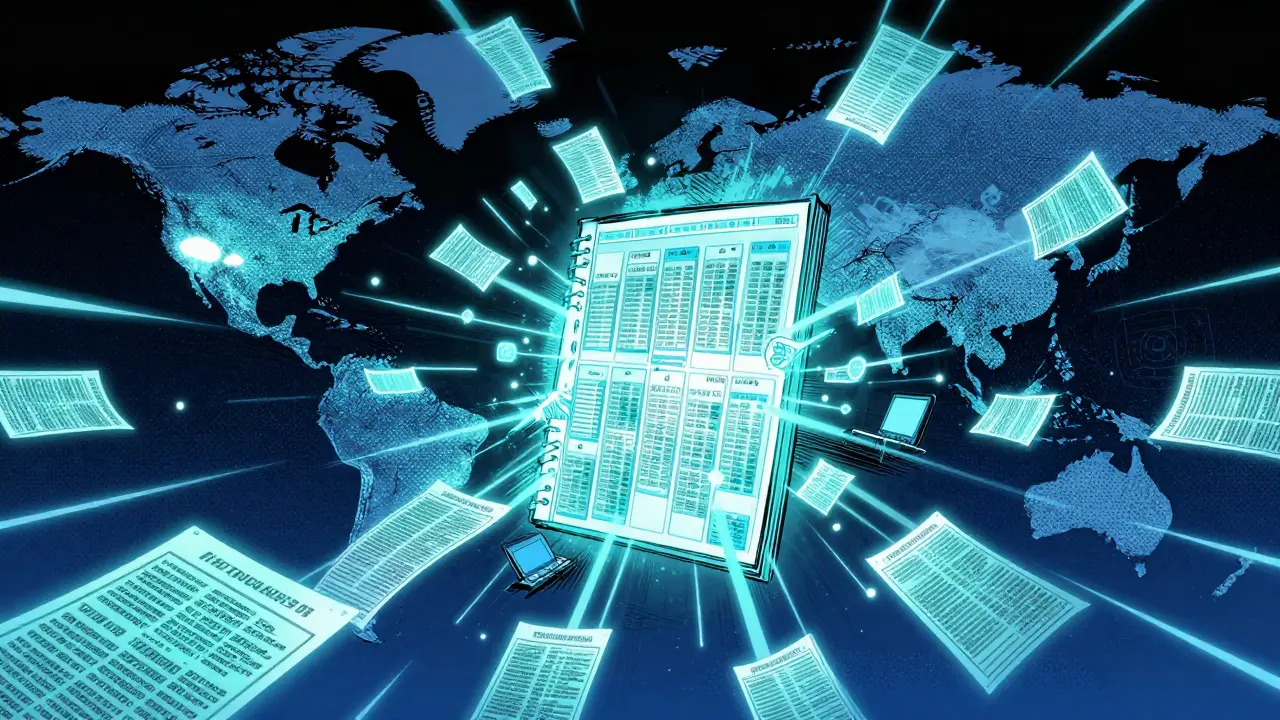
Imagine a world where you don't need a bank to prove you have money in your account or a government office to verify who owns a piece of land. Normally, we trust a central authority-a "middleman"-to keep the official record. But what if that record wasn't held in one giant vault, but was instead copied across thousands of computers globally, all updating in real-time? That is the core idea behind Distributed Ledger Technology is a digital system for recording transactions where data is replicated, shared, and synchronized across multiple network nodes without a central administrator. Also known as DLT, it removes the need for a trusted third party by letting the network itself decide what is true.
The Core Mechanics: How DLT Actually Works
At its heart, DLT is about synchronization. Instead of one master database, every participant (called a node) in a peer-to-peer (P2P) network keeps their own identical copy of the ledger. When a new transaction happens, it isn't sent to a central server; it is broadcast to the entire network.
For this to work without a boss in charge, the nodes use Consensus Algorithms is a set of mathematical rules that allow distributed nodes to agree on the single true state of the ledger . These algorithms ensure that if one node tries to cheat by changing a record, the other nodes will see that the data doesn't match their copies and reject the change. This creates a system where trust is shifted from a person or company to the math and code itself.
To keep everything secure, DLT uses cryptographic signatures. Every transaction is digitally signed, meaning only the owner of the asset can initiate a transfer, and once the network agrees the transaction is valid, it is etched into the ledger permanently.
DLT vs Blockchain: Are They the Same Thing?
You will often hear people use these terms interchangeably, but they aren't the same. To put it simply: all blockchains are distributed ledgers, but not all distributed ledgers are blockchains. Think of DLT as the broad category (the "parent") and blockchain as one specific way to build it (the "child").
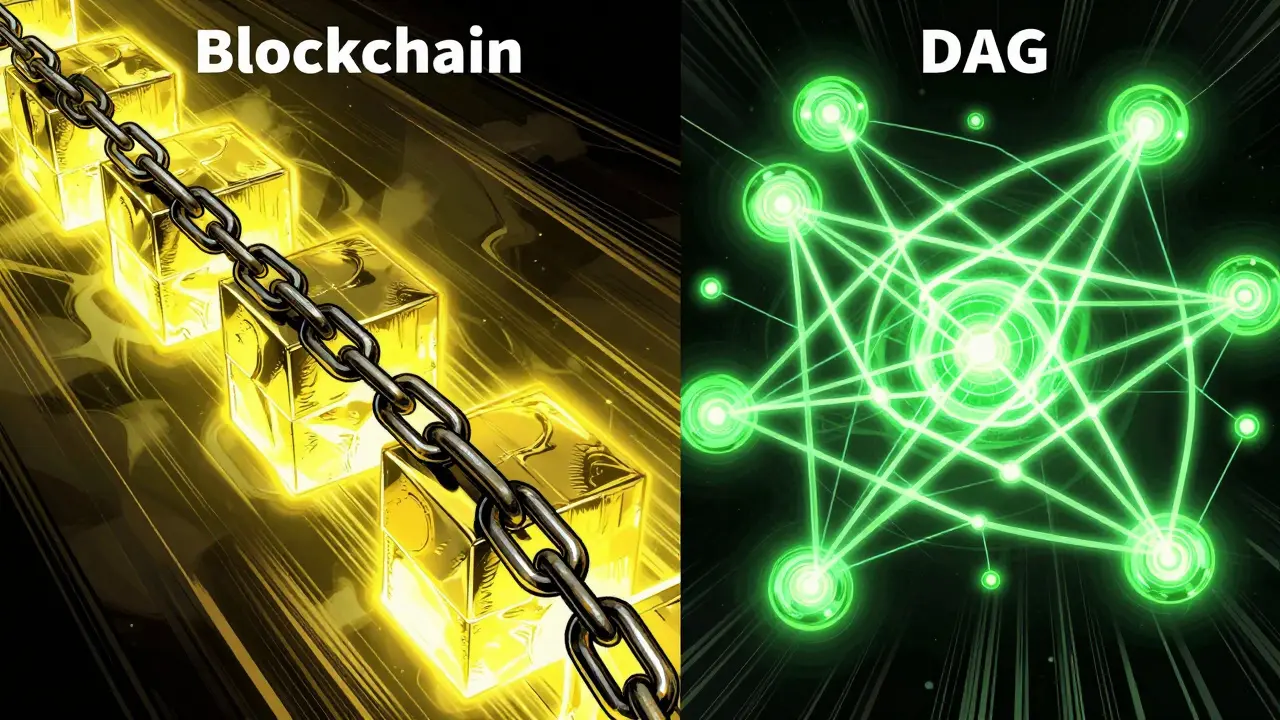
Blockchain is a specific type of DLT where transactions are bundled into blocks that are linked together in a chronological chain using cryptographic hashes . This "chain" structure is what makes blockchain so famous for its security and transparency. However, other DLTs exist that don't use blocks at all.
For example, some systems use Directed Acyclic Graphs is a data structure where transactions are linked to multiple other transactions instead of being grouped into blocks, allowing for faster processing (often called DAGs). In a DAG, there is no "block" to mine; instead, a new transaction must validate two previous ones to be accepted. This is why some non-blockchain DLTs can handle thousands of transactions per second, far outpacing early blockchain models.
| Feature | Blockchain | Non-Blockchain DLT (DAG) |
|---|---|---|
| Data Structure | Sequential blocks of data | Web of interconnected transactions |
| Consensus Method | Often uses mining (PoW) or staking (PoS) | Transaction-based validation |
| Speed/Scalability | Can be slow due to block times | Generally faster and more scalable |
| Energy Use | Can be high (specifically Proof of Work) | Typically very low |
Six Pillars of Distributed Ledger Technology
To understand why Distributed Ledger Technology is such a big deal, you have to look at the specific characteristics that make it different from a standard SQL database you'd find at a company.
- Decentralized: There is no "off switch." Because the ledger lives on hundreds or thousands of computers, taking down one server doesn't stop the network.
- Immutable: Once data is written and the network agrees on it, it cannot be deleted or edited. If you made a mistake and sent 10 tokens instead of 1, you can't "undo" the transaction; you have to create a new transaction to send the 9 tokens back.
- Append-Only: You can only add new information to the end of the ledger. You can't go back to page 5 and change a number.
- Distributed: The data is geographically spread across different countries and institutions, ensuring that no single government or entity can control the entire record.
- Shared: Every single node that maintains a full copy of the ledger sees the same truth at the same time.
- Programmable: Many DLTs allow for Smart Contracts is self-executing digital agreements where the terms are written directly into code and automatically trigger when conditions are met . This means you could set up a payment that only releases funds once a shipping company confirms a package has arrived at a warehouse.
Real-World Use Cases: Beyond Cryptocurrency
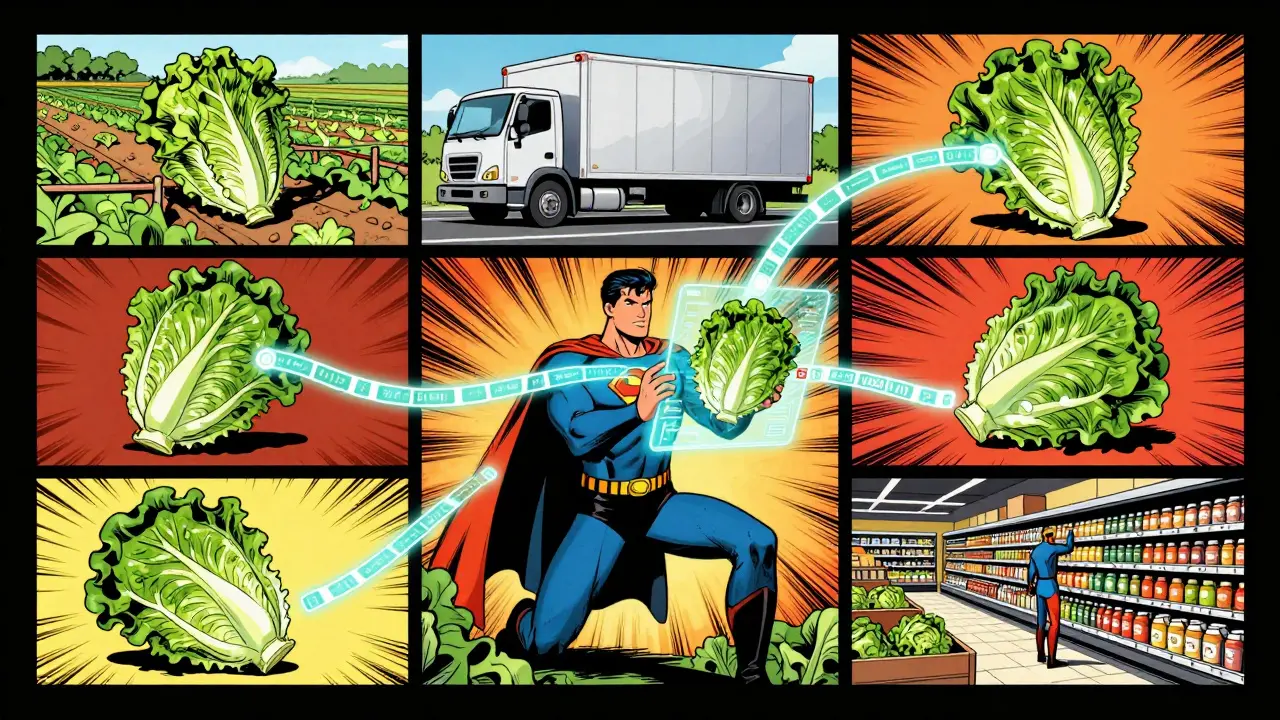
While Bitcoin is the first and most famous application of blockchain-based DLT, acting as a decentralized digital currency , the tech is now moving into the "real world." For instance, imagine a global supermarket chain. Tracking a head of lettuce from a farm in California to a store in New Zealand is a nightmare of paperwork. With DLT, every stop (farm, truck, warehouse, store) logs the movement on a shared ledger. If there is a salmonella outbreak, the store can trace the exact farm in seconds rather than weeks.
Financial institutions are also eyeing DLT to kill the "settlement period." Currently, when you buy a stock, it can take two days (T+2) for the ownership to actually transfer. A distributed ledger allows for near-instant settlement because the record of ownership and the payment happen simultaneously on the same shared network.
The Financial Stability Board (FSB) has specifically noted that DLT's ability to handle decentralized finance could fundamentally change how global regulation and governance work, potentially making the entire financial system more resilient to crashes caused by a single failing bank.
The Trade-offs and Implementation Hurdles
It sounds like a perfect system, but DLT comes with some heavy baggage. The biggest issue is the "Scalability Trilemma." This is the idea that it is incredibly hard to achieve security, decentralization, and speed all at once. If you want it to be super decentralized (thousands of nodes), it takes longer for everyone to agree on a transaction, which slows the system down.
Then there is the infrastructure gap. Running a global P2P network requires massive amounts of bandwidth and reliable hardware. Many companies find that the cost of setting up the network and training staff to manage cryptographic keys is higher than just sticking with a traditional database.
Lastly, there is the "Oracle Problem." A DLT is great at recording what happened on the network, but it doesn't know what happened in the physical world. If a smart contract is supposed to pay out when it rains in Wellington, the contract needs a reliable data feed (an Oracle) to tell it that it's raining. If the Oracle provides wrong data, the immutable ledger will permanently record a wrong outcome.
Is DLT the same as a database?
Not exactly. A traditional database is usually centralized, meaning one person or company controls it and can edit or delete data. DLT is a database that is spread across many different owners who must all agree before any change is made, and once a change is made, it generally cannot be undone.
Can you delete data from a distributed ledger?
In most standard DLT implementations, no. The technology is designed to be immutable. If an error is made, you must enter a "correcting" transaction that offsets the error, but the original mistake remains on the ledger for anyone to see as part of the audit trail.
Why is DLT considered more secure than a central server?
A central server is a "single point of failure." If a hacker crashes the main server or a fire destroys the data center, the whole system goes down. In a DLT, the data is copied across many locations. To "hack" the ledger, you would have to successfully attack a majority of the nodes simultaneously, which is computationally nearly impossible in large networks.
Does every DLT require mining?
No. Mining is specific to certain consensus mechanisms like Proof of Work (used by Bitcoin). Other DLTs use Proof of Stake, where users lock up tokens to validate transactions, or DAG structures where transactions validate each other, none of which require the energy-heavy mining process.
What is a public vs private DLT?
A public DLT (like Bitcoin) allows anyone to join the network and read the ledger. A private (or permissioned) DLT is restricted; only invited members can join or see the data. Private DLTs are common in corporate settings where companies want the efficiency of a shared ledger but need to keep their business secrets hidden from the general public.
What's Next?
If you're looking to get started with this technology, the best path depends on your goal. If you're a developer, look into Ethereum is a decentralized, open-source blockchain with smart contract functionality, allowing developers to build decentralized applications (dApps) and learn the Solidity language. If you are a business owner, start by auditing your supply chain to see where "information silos" exist-those are the areas where a distributed ledger could save you the most money by removing the need for manual reconciliation between partners.
Prachi Bhadarge
April 19, 2026 AT 08:58Oh wow, imagine actually needing a tutorial to tell you that DAGs are faster than blocks. Groundbreaking stuff here. 🙄
Michelle Stanish
April 20, 2026 AT 06:17I think banks are still better.
Trudy Morse
April 21, 2026 AT 06:44Trust is just a social construct anyway. Shifting it to math is the only logical evolution of our species. 🌌
Shantal Sanjur
April 22, 2026 AT 07:50Sure, "no off switch," until the government decides to regulate the internet gateways. Wake up people! They just want a more efficient way to track every single cent we spend in real-time so the social credit system can be fully automated. The Oracle problem isn't a bug, it's a feature for the people in charge to feed the ledger whatever lies they want while we're told it's "immutable." Typical corporate propaganda masquerading as tech innovation. 🙄
Joshua Salwen
April 22, 2026 AT 15:24Omg the way this post ignores the actual struggle of implementing a DAG is just... TRAGIC!! Like, do you even know how hard it is to maintain consistency across a web of transactions without a block height?? Totally ignoring the real pain of the dev community here!!! 😱
John and Lauren Busch
April 24, 2026 AT 11:47Fair point on the lettuce. 🤷♂️
Shannon Kelly Smith
April 25, 2026 AT 08:54This is a great starting point for anyone wanting to dive in! 🚀 Just remember that the community is the most important part of the ecosystem. Keep learning and stay curious! 💡✨
Adedamola Oyebo
April 26, 2026 AT 13:22The T+2 settlement is a massive bottleneck!! DLT solves this perfectly!!!
Mike Kempenich
April 28, 2026 AT 00:09It's definitely a challenge, but the potential for transparency in global logistics is too big to ignore. We'll get through the scalability trilemma eventually.
Saurav Bhattarai
April 29, 2026 AT 11:46Imagine thinking a simple blog post explains DLT. How quaint. Only a true amateur would find this "comprehensive." My country is already integrating these systems far more advancedly than these Western examples suggest. The arrogance of assuming Bitcoin is the only benchmark is just peak comedy. 💅
Kim Smith
May 1, 2026 AT 02:28It's really quite fascinating if you think about how we've always tried to find a way to agree on truth without a king or a priest, and now we're just using silicon and electricity to do the same thing in a digital space... it's almost like we're just automating our innate desire for collective harmony through a shared set of rules that no one can break because the math just doesn't allow it, which is kind of poetic when you laook at the history of human conflict over land and money. 🌿
Jeff Barlett
May 1, 2026 AT 19:42Actually, the "immutable" part is a total nightmare. Imagine a bug in a smart contract that drains a million dollars and you're just told "sorry, it's on the ledger now." Absolute madness. Who wants a system where mistakes are permanent? I'll stick to my centralized database where I can actually hit 'delete' when I screw up.
Kevin Lư
May 3, 2026 AT 10:00I don't know why people are so obsessed with this. Just use a spreadsheet. It's not that deep, guys. But hey, if you want to spend all your money on "tokens," go for it lol.
Gillian Kent
May 4, 2026 AT 00:06i think its cool how it can help farms in other countires too... though i always mispell the technical terms haha
Kaitlyn Wu
May 4, 2026 AT 02:09Let's keep the discussion focused on the technology and not the politics. The distinction between public and private DLT is the most important part for enterprise adoption.
nikki krinkin
May 4, 2026 AT 07:38I appreciate the clear breakdown of the differences between blockchain and DLT. It helps clear up a lot of the noise.