
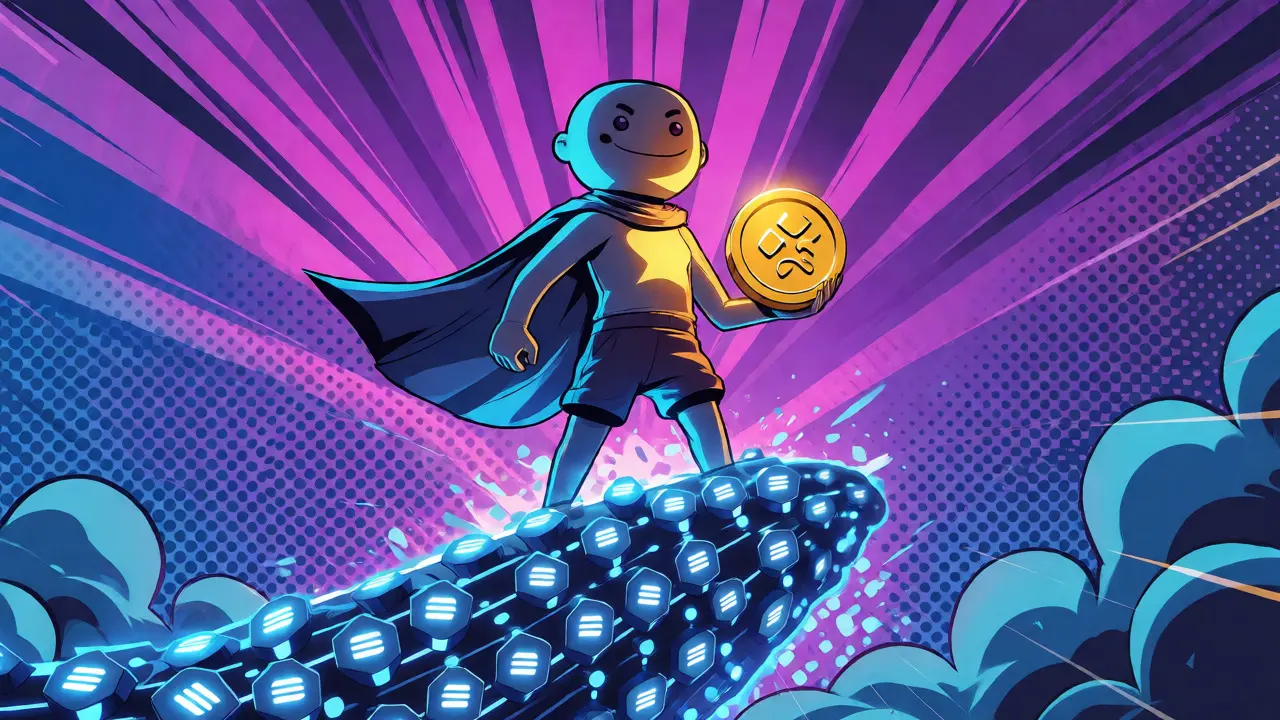
Imagine buying a lottery ticket that also donates to orphans. That’s the pitch behind AURA1000, a cryptocurrency token built on the Solana blockchain that mixes meme culture with charitable giving. If you’ve seen this ticker flashing across your portfolio app with a price tag of seven zeros and wondered if it’s a scam, a gem, or just noise, you’re in the right place. This isn’t Bitcoin, and it’s not trying to be. It’s a hyper-niche experiment in community-driven philanthropy wrapped in a Solana smart contract.
The Core Concept: More Than Just Numbers
AURA1000 positions itself as more than a speculative asset. The project narrative centers on "The Aura 1000 Story," featuring a character known as BoatKid. The lore describes BoatKid as a symbol of innocence whose identity was allegedly stolen by corporate greed. From this perceived injustice, the token emerged. While this sounds like classic meme-coin storytelling, the twist here is the financial structure attached to it.
Unlike typical tokens where profits go solely to developers or early investors, AURA1000 allocates a portion of trading activity to the Aura 1000 Orphan Donation Fund. The goal is straightforward: use blockchain transparency to track donations for orphaned and vulnerable children. Every transaction is visible on-chain, meaning supporters can theoretically verify where their money goes, rather than trusting a centralized non-profit’s annual report.
Technical Specs and Blockchain Infrastructure
Why Solana? The team chose the Solana network for its speed and low transaction costs. Ethereum gas fees would make micro-donations impractical, but Solana’s architecture allows for cheap, fast transfers. This makes it easier for small contributors to participate without losing significant value to fees.
- Total Supply: Approximately 999,999,014 tokens (often rounded to 1 billion).
- Circulating Supply: Nearly all tokens are circulating, reported at ~999.99 million.
- Network: Solana (SPL Token standard).
- Price Point: Extremely low, often cited around $0.000007145 USD, though data varies wildly across platforms.
This massive supply with a tiny unit price creates a psychological effect. Investors feel they own "millions" of coins, even if the total dollar value is negligible. It’s a common tactic in microcap markets to encourage volume through high token counts.

Market Reality: Liquidity and Volatility
Here is where the rubber meets the road. As of late September 2026, AURA1000 exists in a state of extreme market fragility. Data from major aggregators shows conflicting information. Some sources list a price of roughly $0.000007, while others show $0 or near-zero values. This discrepancy usually points to one thing: low liquidity.
| Metric | Status | Implication for Investors |
|---|---|---|
| Exchange Listings | Limited (Crypto.com, Binance preview) | Hard to buy/sell quickly; slippage risk is high. |
| Trading Volume | Minimal to Non-existent | Price charts may look flat or erratic due to lack of orders. |
| Data Consistency | Inconsistent (Launch dates vary) | Due diligence is critical; treat data with skepticism. |
| Community Size | Niche | Low social media buzz compared to top-tier memes. |
If you try to sell a large amount of AURA1000, you might crash the price because there aren’t enough buyers on the other side. This is the classic trap of microcap altcoins. You might see your portfolio grow by 100% one day, but realize you can’t cash out without moving the market against yourself.
The Charitable Angle: Transparency vs. Marketing
The project claims that a percentage of trading profits goes directly to orphan support. On paper, this is attractive. In practice, how do you verify it? The project emphasizes blockchain tracking. Since Solana transactions are public, anyone can inspect the wallet addresses associated with the donation fund. However, verifying that the funds actually reach specific charities requires cross-referencing off-chain data with on-chain movements.
Be cautious. Many projects use "charity" as a marketing hook without publishing audited financials. Look for regular updates from the core team showing receipts or direct links to beneficiary organizations. Without these, the charitable aspect remains a promise rather than a proof point.
Risks and Red Flags
Before you allocate any capital, consider these risks:
- Data Confusion: Sources disagree on the launch date (some say 2021, others 2025). This suggests poor documentation or potential rebranding issues.
- No Major Analyst Coverage: You won’t find detailed whitepapers or expert reviews from established crypto publications. It flies under the radar.
- Delisting Risk: With minimal volume, exchanges might delist the token if interest wanes further.
- Smart Contract Risk: While Solana SPL tokens are generally standardized, always check if the contract is verified on Solscan and if ownership has been renounced.
Who Should Buy AURA1000?
This isn’t for the serious investor looking for stable returns. It’s for two types of people:
- The Philanthropist Speculator: Someone willing to lose a small amount of money in exchange for the chance that their contribution helps a child, regardless of the token’s market performance.
- The High-Risk Gambler: A trader who understands that microcaps can spike 100x on pure hype, but accepts that they can also go to zero overnight.
If you need reliable yield or steady growth, look elsewhere. AURA1000 is a moonshot with a heart.
Is AURA1000 a scam?
Not necessarily a scam, but it is extremely risky. The lack of consistent data, low trading volume, and limited exchange presence suggest it is a niche project with low adoption. Always verify the smart contract address before purchasing.
Where can I buy AURA1000?
It is primarily traded on decentralized exchanges within the Solana ecosystem, such as Raydium or Jupiter. Some centralized platforms like Crypto.com may list it, but liquidity is often very thin there.
How does the donation fund work?
The project states that a percentage of trading profits and voluntary contributions are allocated to the Aura 1000 Orphan Donation Fund. These transactions are tracked on the Solana blockchain for transparency.
Why is the price so low?
The price is low because the total supply is huge (nearly 1 billion tokens). This is a common strategy in microcap coins to make individual units appear affordable, even if the market cap remains small.
Does AURA1000 have a roadmap?
Publicly available detailed roadmaps are scarce. The project focuses more on community engagement and charitable impact than traditional technical development milestones found in larger crypto projects.