
Buying a crypto token that promises to merge artificial intelligence with decentralized finance sounds like the future. But does AIvalanche DeFAI Agents actually deliver on that hype, or is it just another low-liquidity experiment? If you are looking at the ticker symbol AVAXAI, you need to understand exactly what you are buying before you click 'swap'.
Here is the short version: AVAXAI is a speculative token designed to let users create and trade AI agents on the Avalanche blockchain. It launched with high ambitions but has struggled with severe price volatility, extremely low liquidity, and a lack of verifiable user adoption. While the concept of tokenized AI agents is trending in 2025, this specific project carries significant risks that most retail investors overlook.
The Core Concept: What Are DeFAI Agents?
To understand AVAXAI, you first have to separate the buzzwords from the mechanics. The project positions itself at the intersection of DeFi (Decentralized Finance) and AI. They call this hybrid "DeFAI." The idea is simple: instead of manually executing trades or managing portfolios, you deploy an AI agent that does it for you. Then, because these agents are tokenized, you can own them, sell them, or even rent out their services.
According to press releases distributed in early 2025, the platform allows users to automate tasks like viral meme creation, GameFi optimization, and DeFi analytics. The team claims to integrate Deepseek AI technology with Avalanche’s infrastructure. This setup theoretically leverages Avalanche’s speed for low-latency transactions while using Deepseek for the actual decision-making logic of the agents.
However, there is a big gap between the marketing pitch and the current reality. As of mid-2026, there is no public whitepaper or detailed technical documentation available on official channels. Most information comes from press wires rather than open-source code repositories or peer-reviewed audits. You are essentially betting on a roadmap described in promotional materials, not a fully documented software product.
Tokenomics: The Supply and Sale Details
Let’s look at the numbers behind the token. AVAXAI operates as a dual-chain asset, existing as a BEP-20 token on BNB Chain and an equivalent contract on the Avalanche C-Chain. Both contracts share the same address: 0x8c8d2a7d8d9CF26F5ee1BbFc0bA56e93F4A4A7aC.
The total supply is fixed at 1 billion tokens. Here is how that supply was initially allocated during its Q1 2024 ICO:
- Total Supply: 1,000,000,000 AVAXAI
- Initial Circulation: ~491.75 million (49.175%)
- Public Sale Allocation: 23.72% (237.23 million tokens)
- ICO Price: $0.0026 per token
- Fundraising Goal: $100,000
The fundraising goal of $100,000 is notably small for a project claiming to build an entire ecosystem. For context, major competitors in the AI-crypto space often raise tens or hundreds of millions. This modest initial capital suggests a lean operation, which might mean agility, but also implies limited resources for long-term development and marketing.
Price Performance and Liquidity Crisis
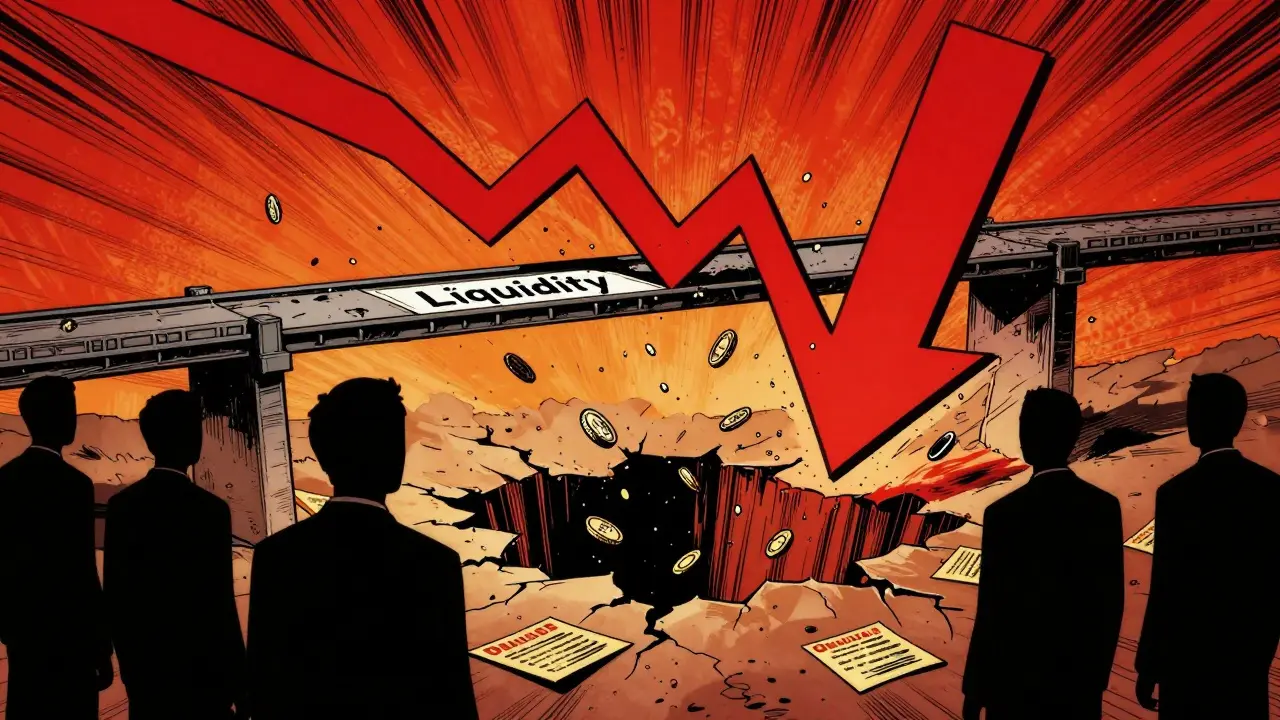
This is where things get tricky for potential buyers. The price action of AVAXAI tells a story of rapid depreciation. When the token launched at $0.0026, the fully diluted valuation (FDV) was around $2.6 million. However, historical data from late 2023 showed the price crashing to approximately $0.00012-$0.00013. That represents a drop of roughly 95% from the ICO price.
More concerning than the price drop is the liquidity. Trading volumes have consistently hovered under $250,000 per day across all major trackers. On some days, volume dipped below $150,000. Why does this matter? Because low liquidity means high slippage. If you try to sell a significant amount of AVAXAI, you will likely crash the price yourself, ending up with far less money than the market quote suggests.
| Project | Market Cap Rank | Primary Focus | Liquidity Status |
|---|---|---|---|
| AVAXAI | #4078+ | Tokenized AI Agents | Very Low (<$250k/day) |
| Fetch.ai (FET) | Top 200 | Autonomous AI Agents | High |
| SingularityNET (AGIX) | Top 200 | AI Marketplace | High |
Compare AVAXAI to established players like Fetch.ai or SingularityNET. Those projects have market caps in the hundreds of millions and deep liquidity pools on major exchanges. AVAXAI ranks outside the top 4,000 cryptocurrencies. This disparity isn't just about popularity; it reflects a fundamental difference in investor confidence and utility verification.
Risks You Must Consider Before Buying
If you are considering adding AVAXAI to your portfolio, you need to be aware of three critical risk factors that go beyond normal crypto volatility.
1. Anonymous Team and Jurisdiction
The founding team remains anonymous. Their operational headquarters are listed as Kingstown, Saint Vincent and the Grenadines. While this jurisdiction is common for crypto startups due to favorable regulations, anonymity makes accountability nearly impossible. If the project fails or if there are issues with smart contract security, there is no one to sue or hold responsible.
2. Lack of Verifiable Utility
Despite claims of enabling users to "monetize AI Agents," there are no public metrics showing active users, revenue generation, or successful agent deployments. Community sentiment on Telegram and Twitter shows mild curiosity but frequent complaints about selling difficulties. Users report "huge slippage" when trying to exit positions, indicating that the buy-side interest vastly outweighs the sell-side liquidity.
3. Regulatory Uncertainty
With no clear legal documentation or whitepaper, the regulatory status of AVAXAI is unclear. As governments worldwide tighten rules around AI and digital assets, projects without transparent compliance frameworks face higher scrutiny. The dual-chain deployment (BNB and Avalanche) might be an attempt to hedge against regional restrictions, but it doesn't solve the core issue of unverified claims.

How to Interact with AVAXAI (If You Choose To)
If you decide to proceed despite the risks, here is how the technical interaction works. Since AVAXAI is not listed on major centralized exchanges like Coinbase or Binance, you must use decentralized swaps.
- Set Up MetaMask: Ensure your wallet supports both Ethereum-compatible networks (for BNB Chain via BSC Swap) and Avalanche C-Chain.
- Add the Contract: Manually add the token by pasting the contract address:
0x8c8d2a7d8d9CF26F5ee1BbFc0bA56e93F4A4A7aC. Do not trust random links from social media; always verify the address on CoinGecko or CoinMarketCap. - Check Slippage Tolerance: Due to low liquidity, you may need to set a high slippage tolerance (10-15%) to execute trades. Be aware that this means you could receive significantly fewer tokens than expected.
- Start Small: Never invest more than you can afford to lose completely. Given the 95% decline from ICO prices, further drops are entirely possible.
Remember, interacting with low-cap tokens requires a higher level of crypto literacy. You are not just buying a coin; you are navigating thin order books and unverified smart contracts.
The Future Outlook: Is There Any Hope?
The AI-blockchain sector is growing. Reports from 2023 valued the niche at over $1.2 billion, with 127% growth in market cap. AVAXAI aims to ride this wave by offering a unique angle: individual agent ownership rather than general AI access. The February 2025 press release announcing Deepseek integration suggests the team is still developing.
However, viability depends on execution. With only a few thousand social media followers and minimal community engagement, gaining traction against giants like Fetch.ai will be incredibly difficult. The project has enough runway from its initial $100,000 raise to continue operations for a while, but without a surge in user adoption or exchange listings, liquidity could dry up entirely.
For now, AVAXAI remains a high-risk, speculative asset. It fits the profile of a "moon shot"-potential for massive gains if the tech works and users adopt it, but equally likely to go to zero if liquidity vanishes or the team abandons the project. Treat it accordingly.
Is AVAXAI a safe investment?
No, AVAXAI is not considered a safe investment. It has experienced a 95% price drop from its ICO value, suffers from extremely low liquidity, and lacks a verified team or comprehensive technical documentation. It should only be viewed as a high-risk speculation.
Where can I buy AVAXAI?
AVAXAI is not available on major centralized exchanges. You must use decentralized wallets like MetaMask to swap for it on BNB Chain or Avalanche C-Chain using the contract address 0x8c8d2a7d8d9CF26F5ee1BbFc0bA56e93F4A4A7aC. Always verify the address on trusted trackers like CoinGecko.
What is the total supply of AVAXAI?
The total supply of AVAXAI is fixed at 1 billion tokens. Approximately 49% were in circulation at launch, with 23.72% allocated to public sale participants during the ICO.
Who created AIvalanche DeFAI Agents?
The team behind AIvalanche is anonymous. Their operational headquarters are listed in Kingstown, Saint Vincent and the Grenadines. No individual founders or key developers have been publicly identified or verified.
How does AVAXAI compare to Fetch.ai?
Fetch.ai is a much larger, more established project with a top-200 market cap ranking and high liquidity. AVAXAI is a micro-cap token with a ranking below #4000, focusing specifically on tokenizing individual AI agents rather than providing broad AI services. Fetch.ai offers significantly lower risk and higher stability.