

You’ve probably seen the name Afrostar pop up in your feed or heard it mentioned in crypto forums. It promises to be the "united digital currency of Africa," aiming to simplify trade and remittances across the continent. That’s a bold vision. But when you dig into the actual numbers, the picture gets complicated. As of mid-2026, Afrostar (ticker: AFRO) is trading at fractions of a cent with almost no daily volume. Is this the future of African finance, or just another speculative token riding on a good story?
To figure out where Afrostar really stands, we need to look past the marketing hype. We’ll break down what the token actually does, how its economics work, and whether it makes sense for your portfolio right now.
The Core Concept: What Is Afrostar?
On paper, the idea solves real problems. Sending money across borders in Africa can be expensive and slow due to fragmented banking systems. Afrostar claims to fix this by acting as a common medium of exchange. Beyond payments, the official website describes Afrostar as more than just a coin-it’s an ecosystem. This includes plans for a centralized exchange, a peer-to-peer (P2P) platform, a copy-trading community, and an NFT marketplace.
However, there is a big gap between the plan and the current reality. While major exchanges list the token for informational purposes, Afrostar is not listed on large centralized venues like Binance’s main spot market. Instead, it lives primarily on decentralized exchanges (DEXs). This means if you want to buy or sell AFRO, you’re likely interacting directly with liquidity pools rather than a traditional order book. For many beginners, this adds a layer of complexity and risk that isn’t always obvious at first glance.
Tokenomics: How the Economics Work
If you’re new to crypto, "tokenomics" might sound like jargon. It simply refers to how a token’s supply and rewards are structured. Afrostar uses a model popularized by other DeFi projects: it is deflationary and offers reflections.
- Total Supply: One quadrillion (1,000,000,000,000,000) AFRO tokens. This is a massive number, which is why the price per token is so small.
- Circulating Supply: Most data aggregators currently report this as 0. This doesn’t mean the tokens don’t exist; it usually means they haven’t been formally verified as circulating on those specific platforms, or they are locked in contracts. This makes calculating a standard "market cap" impossible, so investors look at Fully Diluted Valuation (FDV) instead.
- Reflections: This is the key hook for holders. When anyone buys or sells AFRO, a portion of the transaction fee is automatically redistributed to all existing wallet holders. You earn more AFRO just by holding it, without needing to stake manually.
This mechanism sounds great because it rewards patience. But there’s a catch. Reflections depend on trading volume. If nobody is buying or selling, no fees are generated, and no rewards are distributed. Given Afrostar’s current trading activity, these rewards are likely microscopic for most holders.
Market Reality: Price, Volume, and Liquidity
Let’s talk numbers, because they tell a different story than the whitepaper. As of July 2026, Afrostar is considered a micro-cap asset. Here is what the data shows across major trackers like CoinGecko, CoinMarketCap, and LiveCoinWatch:
| Metric | Value / Status |
|---|---|
| Price Range | $0.0000000025 - $0.000000031 USD |
| 24-Hour Volume | $0 - $28 USD (Extremely Low) |
| Fully Diluted Valuation (FDV) | ~$2.5 Million - $4.9 Million USD |
| Blockchain | BNB Smart Chain (BSC) |
| Liquidity Source | PancakeSwap (Decentralized Exchange) |
Notice the 24-hour volume. On some days, it’s literally zero dollars. On others, it’s less than thirty bucks. In the world of crypto, liquidity is oxygen. Without it, you can’t easily enter or exit a position. If you tried to sell a significant amount of AFRO today, you would likely crash the price because there aren’t enough buyers in the pool to absorb your sale. This is known as slippage, and it’s a major risk for micro-cap tokens.
The FDV gives us a better sense of total value. Even if every single one of those quadrillion tokens were in circulation, the entire project would only be worth around $3 million. Compare that to Bitcoin or Ethereum, which have valuations in the hundreds of billions. This puts Afrostar firmly in the "high-risk speculation" category, not "stable investment" territory.
Safety and Security: Is It Legit?
When a project launches with such high ambitions but low initial traction, skepticism is healthy. Let’s look at the security measures in place.
Afrostar claims to have passed a smart contract audit by TechRate. An audit is like a safety inspection for code; it checks for bugs or vulnerabilities that hackers could exploit. Passing an audit is a good sign, but it’s not a guarantee of success. It just means the code was clean at the time of review.
Another common fear in crypto is a "rug pull," where developers drain the liquidity and disappear. To counter this, early community discussions indicated that the team locked their funds for six months and the liquidity pool until 2023. Since we are now in 2026, those locks have expired. However, the fact that the token still exists and trades suggests the team hasn’t abandoned it completely. Still, the lack of ongoing, verifiable lock-ups for current liquidity means you should always check the latest contract status yourself before buying.
Community sentiment remains mixed. On forums like Reddit, you’ll find two camps: supporters who believe in the African unification narrative and skeptics who view it as a marketing-heavy scheme with little utility. This polarization is typical for niche DeFi tokens. There is no institutional analyst coverage from major banks or financial firms, which reinforces its status as a retail-only play.
How to Buy Afrostar (AFRO)
If you decide the risk-reward ratio works for you, here is how you actually acquire the token. Remember, since it’s not on major centralized exchanges, you need to use a decentralized approach.
- Set Up a Wallet: You need a non-custodial wallet that supports BNB Smart Chain. MetaMask or Trust Wallet are popular choices. Make sure you can add custom networks.
- Get BNB: Buy BNB (Binance Coin) on a major exchange like Binance or Coinbase. Transfer this BNB to your personal wallet address on the BNB Smart Chain network. Do not send it to the wrong network, or you will lose it.
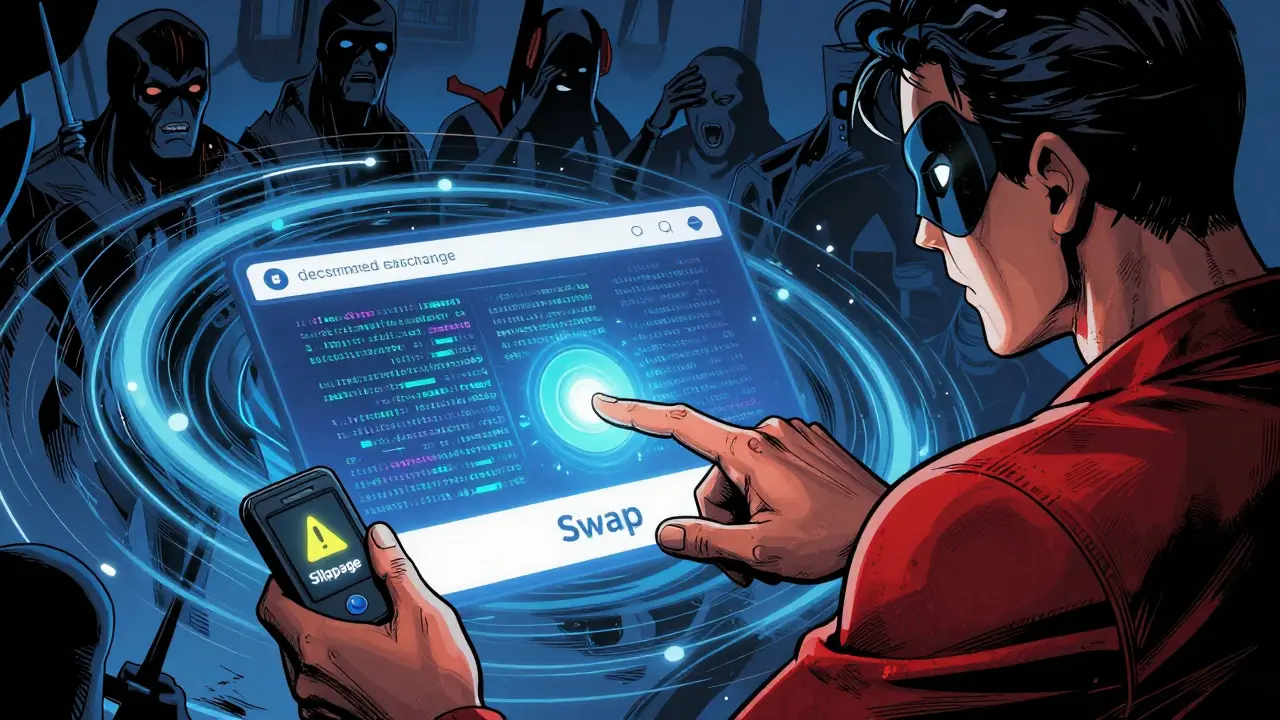
- Connect to PancakeSwap: Go to the PancakeSwap website (the primary DEX for BSC tokens). Connect your wallet.
- Find the Contract Address: Never search for "AFRO" by name alone, as scammers can create fake tokens with the same name. Copy the official contract address:
0x2f4e9c97aaffd67d98a640062d90e355b4a1c539. Paste this into the swap interface. - Swap: Swap your BNB for AFRO. Be aware of the slippage tolerance. Because the token is volatile, you may need to set a higher slippage percentage (e.g., 5-10%) for the transaction to go through, but this also increases the chance of a bad deal.
Future Outlook: Can It Succeed?
Predictions for Afrostar vary wildly. Some algorithmic forecasters suggest a potential increase of over 260% by the end of 2027, pushing the price toward $0.000000015. But remember, starting from a base near zero makes percentage gains look impressive even if the absolute dollar value remains tiny.
For Afrostar to achieve its goal of becoming Africa’s unified currency, it needs three things that it currently lacks: widespread adoption, deeper liquidity, and regulatory clarity. Cross-border payments are heavily regulated. If Afrostar wants to handle real remittances, it will eventually need to comply with Anti-Money Laundering (AML) and Know Your Customer (KYC) laws in multiple countries. There is no public information suggesting the project has secured these licenses yet.
Until then, Afrostar remains a speculative experiment. It serves as a case study in how blockchain technology *could* solve regional financial fragmentation, but it hasn’t proven it *can* do so at scale. For investors, it represents a high-upside, high-downside bet. You might see significant returns if the ecosystem gains traction, but you could also lose your entire investment if liquidity dries up further.
Is Afrostar (AFRO) a scam?
There is no definitive proof that Afrostar is a scam in the legal sense. The smart contract has been audited by TechRate, and the project has maintained a presence since 2021. However, it exhibits many characteristics of high-risk speculative assets, including extremely low liquidity, vague circulating supply data, and polarized community reviews. Always treat it as a high-risk investment.
Where can I buy Afrostar tokens?
Afrostar is not listed on major centralized exchanges like Binance or Coinbase. You must buy it via decentralized exchanges (DEXs) on the BNB Smart Chain, primarily PancakeSwap. You will need a crypto wallet (like MetaMask) and BNB to pay for gas fees and perform the swap.
What is the total supply of AFRO?
The total and maximum supply of Afrostar is 1,000,000,000,000,000 (one quadrillion) tokens. Due to this massive supply, the price per individual token is extremely low, often displaying as decimals near zero.
Does holding AFRO give me rewards?
Yes, Afrostar uses a "reflection" mechanism. A portion of transaction fees from buys and sells is automatically distributed to all wallet holders. However, because trading volume is very low, the actual amount of rewards received is likely negligible for most users.
Is Afrostar available on Ethereum?
No, Afrostar is a BEP-20 token native to the BNB Smart Chain (formerly Binance Smart Chain). It is not natively available on the Ethereum network, though bridging services might theoretically allow movement, it is designed for BSC.