
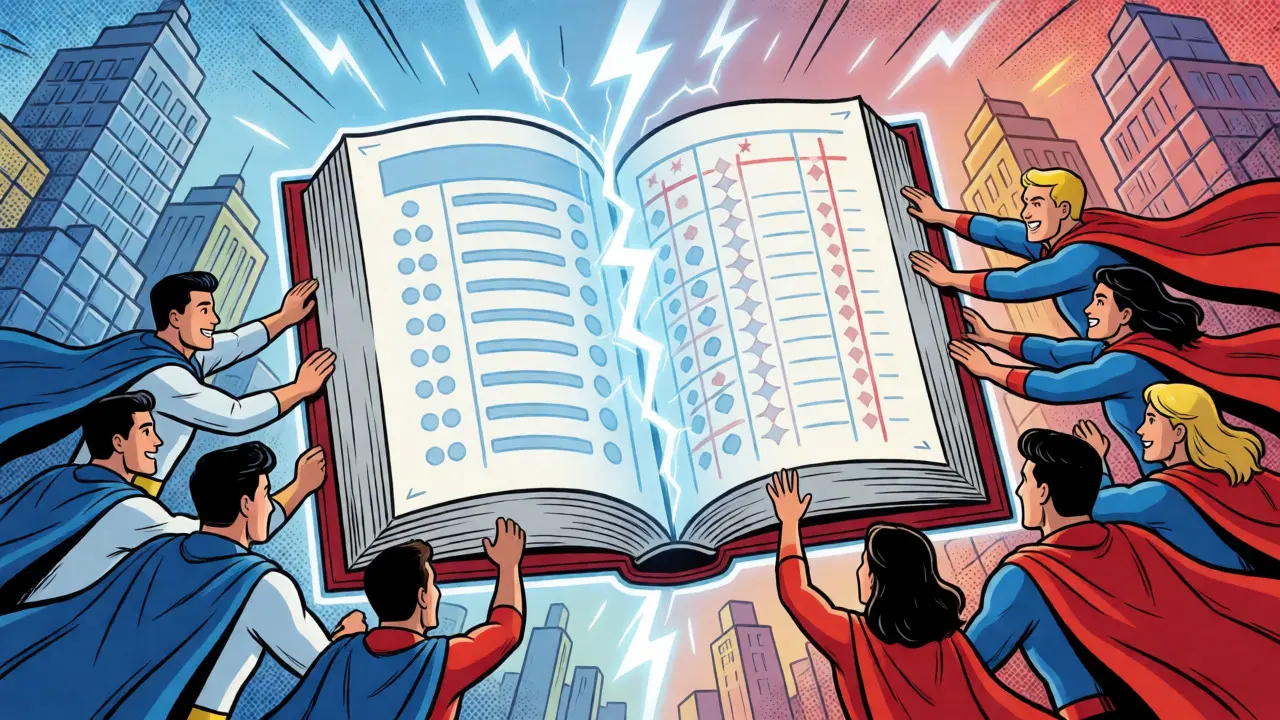
Imagine you're playing a multiplayer video game, and halfway through the session, half the players decide the rules for jumping should change. The other half disagrees. Now you have two separate games running on different servers. That’s essentially what a blockchain fork is: a split in the digital ledger where the community can't agree on how to update the protocol. It sounds chaotic, but it's actually the primary way decentralized networks evolve without a central boss telling everyone what to do.
If you've ever held Bitcoin or Ethereum and suddenly found yourself with "free" coins appearing in your wallet, or if your favorite crypto network suddenly changed its fee structure overnight, you witnessed a fork. These events aren't just technical glitches; they are pivotal moments that define the future of money and technology. Let's break down exactly what happens when a blockchain splits, why communities fight over code changes, and whether these forks help or hurt your portfolio.
The Core Concept: How a Ledger Splits in Two
At its heart, a blockchain is a shared history book. Every transaction is a line entry. For this book to work, everyone holding a copy must agree on what the next page says. This agreement is called consensus. When developers propose a change to the rules-say, making transactions faster or cheaper-nodes (the computers validating the network) need to upgrade their software to accept the new rules.
A fork happens when this upgrade isn't universal or when the new rules fundamentally clash with the old ones. If some nodes run the new code and others stick to the old code, the network splits into two paths. One path follows the old rules; the other follows the new. Both chains exist simultaneously, sharing the same history up until the moment of the split, known as the fork block. After that point, they diverge completely. Transactions on one chain don't automatically appear on the other.
Soft Forks vs. Hard Forks: What’s the Difference?
Not all forks are created equal. The difference lies in backward compatibility. Think of it like updating an app on your phone. If the update works with older versions of iOS or Android, it's smooth sailing. If it breaks everything for older phones, you have a problem. In blockchain terms, we call these Soft Forks and Hard Forks.
A soft fork is a backward-compatible update. Imagine tightening security rules at a bank. You add a new rule that says "signatures must be more complex." Old clients that don't know about the new rule still see valid transactions because they were already strict enough. New clients enforce the stricter rule. Because old software still accepts the blocks produced by new software, the network doesn't split permanently. Everyone stays on one chain, provided a majority of nodes upgrade. Segregated Witness (SegWit) on Bitcoin was a famous soft fork that increased capacity without splitting the coin.
| Feature | Soft Fork | Hard Fork |
|---|---|---|
| Compatibility | Backward compatible | Not backward compatible |
| Chain Status | Single chain continues | Two separate chains emerge |
| Upgrade Requirement | Majority upgrade needed; old nodes still validate | All nodes must upgrade or be left behind |
| Risk Level | Lower risk of permanent split | High risk of community division |
| Example | Bitcoin SegWit | Ethereum Merge, Bitcoin Cash |
A hard fork, however, is irreversible. It changes the protocol in a way that makes previously invalid blocks valid, or vice versa. If you don't upgrade your software, you literally cannot recognize the new blocks. You get stuck on the old chain. This often leads to two distinct cryptocurrencies existing side-by-side. The original chain keeps its name, while the new one might take a new name, like Bitcoin Cash did when it split from Bitcoin in 2017.
Why Do Communities Split? The Human Element
Code doesn't fork itself; people make decisions. Most forks stem from ideological disagreements about what a blockchain should prioritize. There are usually three main drivers:
- Scalability Disputes: Should we increase block size to handle more transactions (like Bitcoin Cash), or keep blocks small and use secondary layers (like Lightning Network)? This was the core conflict in the 2017 Bitcoin wars.
- Security Fixes: Sometimes a bug is discovered that threatens the entire network. The Ethereum DAO Hack of 2016 is the prime example. A hacker drained $50 million worth of ETH. The community had to choose: leave the hack alone (preserving "code is law") or rewrite history to return the funds (prioritizing user protection). They chose the latter, creating Ethereum Classic (ETC) for those who disagreed.
- Governance Philosophy: Who decides upgrades? Is it miners, developers, or token holders? When a group feels ignored by the current leadership, they may fork off to create a network aligned with their vision.
It’s rarely just about tech specs. It’s about values. One faction might value decentralization above all else, resisting any change that centralizes power. Another might value speed and user experience, willing to compromise decentralization for performance. When these groups can't find middle ground, a fork becomes the democratic exit strategy.
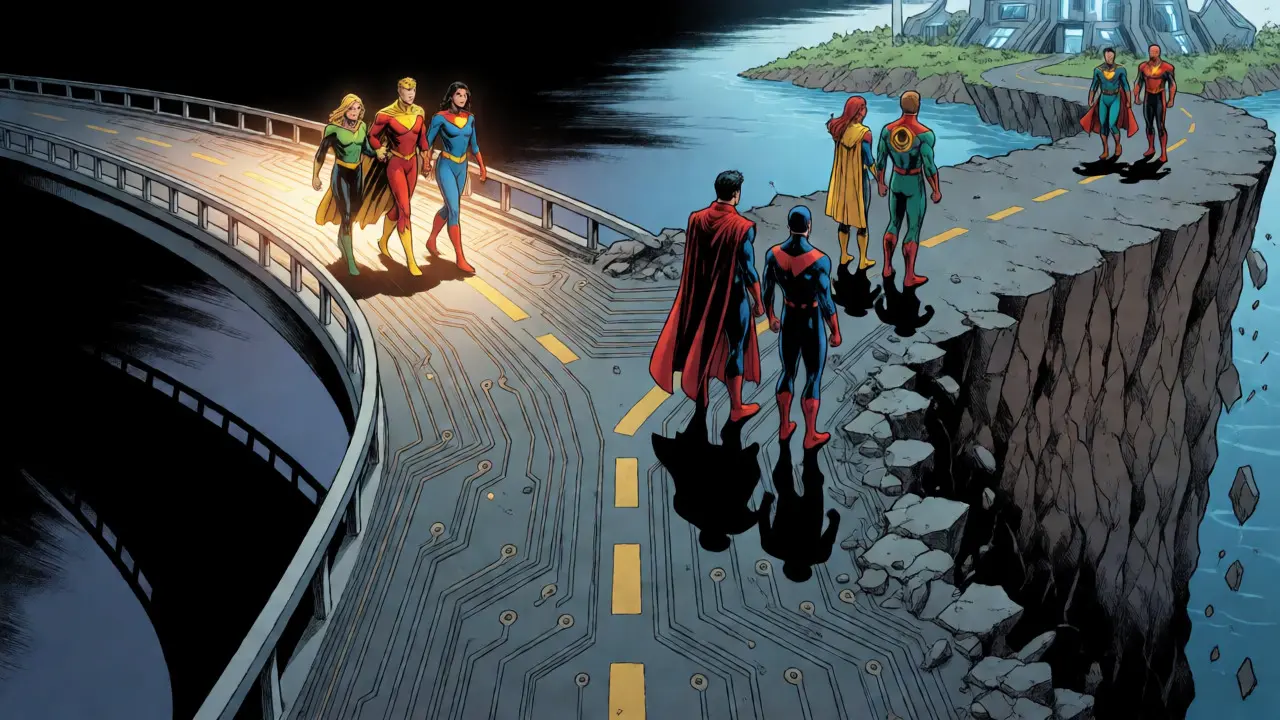
The Four Stages of a Fork Implementation
Forks don't happen overnight. They follow a structured lifecycle, much like a political campaign followed by a legislative vote.
- Identification & Proposal: Developers or community members spot a problem or opportunity. They draft an Improvement Proposal (BIP for Bitcoin, EIP for Ethereum). This document outlines the technical changes and the rationale.
- Review & Testing: The proposal goes through rigorous scrutiny. Testnets (simulation environments) allow developers to try out the changes without risking real money. Bugs are hunted down. Community forums buzz with debate. Miners and node operators signal whether they intend to support the change.
- Consensus Building: This is the critical phase. If key stakeholders (miners, validators, exchanges) agree to activate the fork at a specific block height, the date is set. If consensus fails, the fork might be delayed or abandoned.
- Activation & Divergence: At the predetermined block number, nodes running the updated software start following the new rules. Nodes that didn't upgrade continue on the old rules. From this point forward, the chains are separate. Exchanges then decide which chain(s) to list, influencing market value.
Real-World Examples That Shaped Crypto History
You don't need to look far to find impactful forks. They are woven into the fabric of major networks.
The Ethereum Merge (2022): This wasn't a contentious split but a planned evolution. Ethereum switched from Proof-of-Work to Proof-of-Stake. It reduced energy consumption by 99.9%. While it didn't create a new coin, it was technically a massive hard fork because the underlying consensus mechanism changed entirely. Validators who didn't upgrade would have been orphaned on a dead chain.
Bitcoin Cash (2017): Frustrated by slow transaction times and high fees, a group of miners and developers pushed to increase Bitcoin's block size from 1MB to 8MB. The result was a hard fork creating Bitcoin Cash (BCH). Today, BTC and BCH trade independently, serving different use cases despite sharing identical history up to August 2017.
Ethereum Classic (2016): As mentioned earlier, this fork preserved the original chain after the DAO hack. It stands as a testament to the principle that blockchain history should never be altered, even to correct catastrophic errors.
What Happens to Your Coins During a Fork?
This is the question every holder cares about. Generally, if you hold coins in a self-custody wallet (where you control the private keys) during a hard fork, you end up with both the original coins and the new forked coins. For example, if you held 1 BTC before the Bitcoin Cash fork, you likely received 1 BCH as well.
However, timing matters. You must have your coins in a compatible wallet at the exact block height of the fork. If your coins are on an exchange, it depends on the exchange's policy. Some credit users automatically; others require manual claims; some ignore minor forks entirely. Always check your provider's announcements.
Be cautious of scams. Scammers love forks. They create fake tokens with names similar to legitimate forks (e.g., "Bitcoin Gold Plus") and trick users into sending funds to claim non-existent rewards. Never send money to "claim" a fork. Legitimate forks appear in your wallet automatically or via a secure claim process on the official site.
The Future: Are Forks Becoming Less Contentious?
Early crypto history was full of violent, headline-grabbing forks. Recent trends suggest maturity. Networks are adopting formal governance processes, reducing surprise splits. Layer-2 solutions (like Rollups on Ethereum) allow experimentation without touching the main base layer, lowering the stakes of every upgrade.
Moreover, modular blockchain architectures are emerging. Instead of upgrading the whole system, projects isolate changes to specific components. This reduces the blast radius of updates. While hard forks will always exist as a tool for major pivots, the era of frequent, chaotic community splintering seems to be fading. Networks are learning that stability attracts institutional investors, and constant fragmentation scares them away.
Forks remain essential. They prove that no single entity controls a decentralized network. If the majority wants a change, the network adapts. If they disagree, the network offers a choice. It’s messy, sometimes confusing, but ultimately resilient.
Do I lose my coins if I don't upgrade my wallet during a hard fork?
No, you don't lose your original coins. However, you won't receive the new forked coins unless your wallet supports the new chain and you sync properly. If you keep using outdated software, you'll be stuck on the minority chain (if it survives) and unable to transact on the main upgraded network.
Is a soft fork safer than a hard fork?
Generally, yes. Soft forks are backward-compatible, meaning older nodes can still validate new blocks. This reduces the risk of a permanent network split. Hard forks require universal adoption to avoid creating two competing chains, which introduces more complexity and potential market volatility.
Can a fork reverse transactions?
A standard fork does not reverse past transactions; it creates a new branch from a specific point. However, a rare type called a "reorg" (reorganization) can temporarily undo recent blocks if a longer chain emerges. This is different from a permanent protocol fork and usually affects only the last few minutes of transactions.
Why do exchanges delist forked coins?
Exchanges delist forked coins if they lack liquidity, have weak security, or suffer from replay attacks (where transactions on one chain accidentally execute on the other). If a forked community fails to gain traction or maintain developer support, the coin may become worthless, prompting exchanges to remove it to protect users.
What is a replay attack?
During a hard fork, both chains share the same history. Without protection, a transaction sent on Chain A could be broadcast to Chain B and executed there too, spending your coins twice. Many modern forks implement chain IDs or replay protection mechanisms to prevent this issue.