

Most people think DAOs are just about crypto wallets and smart contracts. But the real magic happens when a group of strangers - thousands of them, spread across the globe - agree on what to do next. No CEO. No boardroom. Just code and votes. And that’s where DAO voting mechanisms come in. They’re not just a feature; they’re the heartbeat of every decentralized organization. Without them, a DAO is just a wallet with a fancy name.
Let’s cut through the noise. There are eight main ways DAOs vote. Each one solves a different problem. Some stop whales from taking over. Others make sure quiet members still have a voice. A few even use markets instead of ballots. If you’re part of a DAO - or thinking about joining one - you need to know how these systems actually work. Not the hype. Not the whitepaper jargon. The real mechanics.
How Linear Voting Fails (And Why It Still Exists)
The simplest system is linear voting: one token, one vote. It sounds fair. But it’s not. If someone holds 51% of the governance tokens, they own the DAO. That’s not decentralization. That’s a dictatorship with blockchain wallpaper.
This isn’t theoretical. In 2023, a single wallet controlling 68% of a major DeFi DAO pushed through a treasury spend that wiped out $80 million in community funds. The rest had no power to stop it. That’s linear voting in action. It’s fast. It’s simple. And it’s dangerously easy to manipulate.
Yet, many DAOs still use it. Why? Because it’s easy to build. No fancy math. No complex contracts. Just a basic smart contract that counts tokens. But simplicity here comes at a cost: real power imbalance. If you’re a small holder, your vote doesn’t matter. Not because you’re not engaged. Because the math says you’re irrelevant.
Quadratic Voting: The Math That Stops Whales
Enter quadratic voting. This isn’t just a tweak. It’s a complete rewrite of the rules.
In quadratic voting, your voting power doesn’t scale linearly. It scales with the square of your commitment. Want to cast 1 vote? That costs 1 token. Want to cast 2 votes? That costs 4 tokens. 3 votes? 9 tokens. 10 votes? 100 tokens.
The effect? A whale can’t just buy up votes. To swing a major decision, they’d need to spend exponentially more than everyone else combined. Suddenly, it’s cheaper for 100 people to each cast 3 votes (costing 9 each = 900 total) than for one whale to cast 30 votes (costing 900 tokens).
This system doesn’t just limit power - it reveals intensity. If you really care about a proposal, you’ll pay more. If you’re lukewarm, you’ll vote lightly. It turns voting from a binary yes/no into a spectrum of conviction.
But it’s not perfect. The biggest risk? Fake identities. If someone creates 100 fake wallets, they can game the system. That’s why serious implementations now require identity verification - something that clashes with the original promise of anonymity in crypto. It’s a trade-off: fairness over secrecy.
Conviction Voting: Let Time Decide
What if voting power wasn’t about how many tokens you had, but how long you’d stood by your vote?
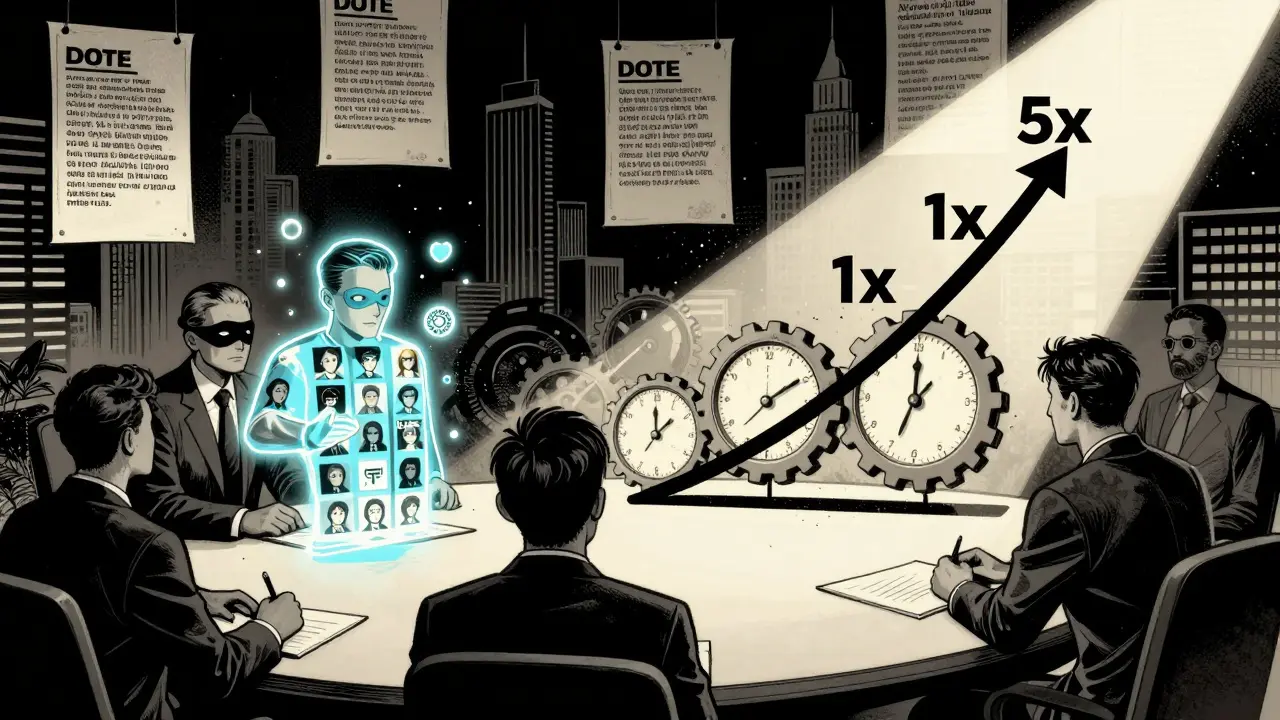
That’s conviction voting. Your vote doesn’t count right away. It builds. The longer you keep your vote unchanged on a proposal, the more power it gains. It’s like a slow-burning fuse. After 7 days, your vote might be worth 2x. After 30 days? 5x. But if you flip your vote? The clock resets. All your accumulated power vanishes.
This system kills vote brigading. No more last-minute token buys to swing a vote. No more coordinated attacks. If you want to influence a decision, you have to stick with it. You have to believe in it.
It also rewards patience. A retail investor who holds tokens for months ends up with more influence than a trader who bought in the day before the vote. That’s the opposite of how traditional markets work - and that’s the point.
One DAO using this system reported a 60% drop in controversial proposals after switching. Why? Because people stopped voting on impulse. They started thinking. They started talking. And the proposals that passed? They had real, sustained support.
Liquid Democracy: Delegate, Don’t Do It All
Not everyone has time to read every proposal. Not everyone understands the technical details of a protocol upgrade. That’s where liquid democracy comes in.
This system lets you delegate your vote to someone else - a developer, a researcher, a trusted community member. You don’t lose your voice. You just outsource the heavy lifting. And if you change your mind? You can reclaim your vote at any time.
It’s like voting for a representative in Congress - but with a kill switch. And it works surprisingly well. In one DAO with 12,000 members, 83% of votes were delegated. But only 12 people held more than 100 delegated votes. That’s not centralization. That’s efficiency.
But here’s the catch: delegation can become power concentration. If three people get 70% of all delegated votes, you’ve just created a new elite. The system only works if people can easily switch delegates. If the platform makes it hard to change, you’ve built a feudal system.
When You Need Security, Not Speed: Multisig Voting
Not every decision should be up to the whole DAO. Some things are too risky. Treasury withdrawals. Protocol upgrades. Emergency fixes.
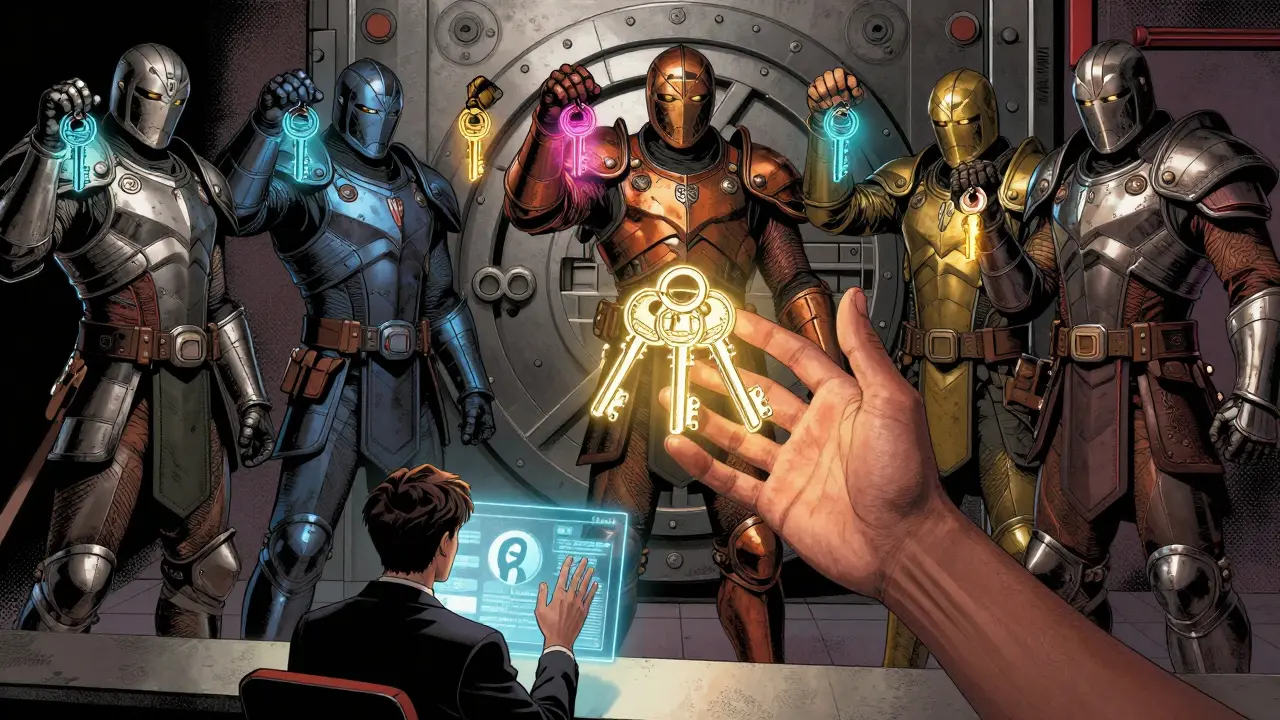
That’s where multisig voting shines. Instead of a majority vote, you need multiple signatures - say, 4 out of 7 key holders - to execute a proposal. These key holders are often core contributors, not random token holders.
It’s not democratic. But it’s secure. A single compromised wallet won’t drain the treasury. A rogue developer can’t force a bad upgrade. It adds friction - and that’s the point.
Many DAOs use this as a safety net. Routine decisions? Use quadratic or conviction voting. Critical decisions? Lock them behind multisig. It’s hybrid governance in practice.
Quorum Rules: The Participation Trap
A DAO can’t make a decision if no one shows up. That’s why many systems require a quorum - a minimum number of votes - before a proposal can pass.
For example, a DAO might require 20% of all tokens to vote before any change takes effect. Sounds fair. But what if no one votes? The DAO freezes. Urgent fixes get delayed. Projects stall.
One DAO had a 25% quorum rule. For six months, they couldn’t approve a simple bug fix because only 18% of token holders voted. The community was split. No one wanted to be the first to vote. So nothing happened.
Quorum rules are meant to protect against low-engagement votes. But they can become paralysis engines. The best systems combine quorum with fallbacks: if quorum isn’t met after 14 days, the proposal auto-approves with a simple majority. It’s not perfect. But it’s better than a standstill.
Hybrid Systems: The Real-World Standard
No DAO uses just one voting method. Real-world DAOs mix and match.
Here’s how a typical one works:
- Routine updates (e.g., changing a social media post): Simple majority with conviction voting - time-based, no quorum.
- Treasury spending: Multisig + quadratic voting. You need both approval from core team and community support.
- Protocol upgrades: Quadratic voting with a 30-day voting window and 15% quorum. High stakes, high scrutiny.
- Community events: Liquid democracy. Delegates handle it.
This isn’t theoretical. DAOs like Gitcoin, Aave, and Moloch use exactly this model. They don’t try to be perfect. They try to be practical.
What’s Next? AI, Privacy, and Cross-Chain Voting
The next wave of DAO voting isn’t about better math. It’s about better context.
Imagine an AI that reads every proposal, summarizes it in plain English, and suggests how your voting history might align with it. Or a system that lets you vote anonymously using zero-knowledge proofs - so no one knows how you voted, but everyone can verify your vote was valid.
And then there’s cross-chain voting. Right now, if you hold tokens on Ethereum and Polygon, you have to vote twice. Soon, you’ll vote once - and your vote will count across chains.
The goal isn’t more complexity. It’s more fairness. More participation. More trust.
Final Thought: Voting Is a Signal - Not a Weapon
DAO voting isn’t about winning. It’s about alignment. The best systems don’t just count votes. They measure conviction. They reward patience. They protect the quiet voices as much as the loud ones.
If you’re a token holder, don’t just vote because you’re told to. Vote because you care. And if you don’t care? Delegate. Or stay out. Either way, the system works better when people aren’t just clicking buttons - they’re making choices.
What is the most common DAO voting system?
The most common system is linear voting - one token, one vote - because it’s simple to implement. But it’s also the most vulnerable to whale dominance. Many newer DAOs are shifting toward hybrid models, combining quadratic voting for major decisions with multisig for security-critical actions.
Can I vote anonymously in a DAO?
Yes - in most cases. Traditional DAO voting doesn’t require identity. But systems like quadratic voting that prevent Sybil attacks often require some form of identity verification to ensure one person isn’t creating multiple wallets. This creates tension between privacy and fairness.
Why does quadratic voting cost more for extra votes?
It’s designed to make bulk voting prohibitively expensive. If you want 10 votes, you need to spend 100 tokens (10²). This stops whales from overwhelming the system while letting small holders express strong opinions. A person with 10 tokens can cast 3 votes (costing 9), which gives them real influence without needing to own a large stake.
Do I need to be technical to use DAO voting?
Not anymore. Most DAOs now use user-friendly dashboards where you can vote with a few clicks. Conviction and quadratic voting still require understanding how they work - but you don’t need to code. Educational guides, tooltips, and community forums help bridge the gap.
What happens if I don’t vote?
Nothing. Your tokens don’t expire. You don’t lose anything. But if you don’t vote, someone else does. In systems with quorum requirements or delegation, your silence gives power to others. Voting isn’t mandatory - but it’s how you shape the future of the organization you’re part of.
Austin King
March 8, 2026 AT 01:15Jesse VanDerPol
March 9, 2026 AT 16:49Jeffrey Dean
March 10, 2026 AT 09:34Megan Lutz
March 11, 2026 AT 01:48Ian Thomas
March 11, 2026 AT 20:22Denise Folituu
March 12, 2026 AT 07:41jack carr
March 12, 2026 AT 19:59jay baravkar
March 13, 2026 AT 02:15jonathan swift
March 13, 2026 AT 11:03Brian T
March 14, 2026 AT 22:37Josh Moorcroft-Jones
March 14, 2026 AT 23:14Nick Greening
March 15, 2026 AT 20:32Nash Tree Service
March 17, 2026 AT 10:51Bryanna Barnett
March 19, 2026 AT 08:22Datta Yadav
March 19, 2026 AT 18:02Jane Darrah
March 19, 2026 AT 22:22Issack Vaid
March 21, 2026 AT 16:51Shawn Warren
March 22, 2026 AT 02:11Jackson Dambz
March 22, 2026 AT 23:11Eva Gupta
March 24, 2026 AT 20:18Lydia Meier
March 26, 2026 AT 01:53