
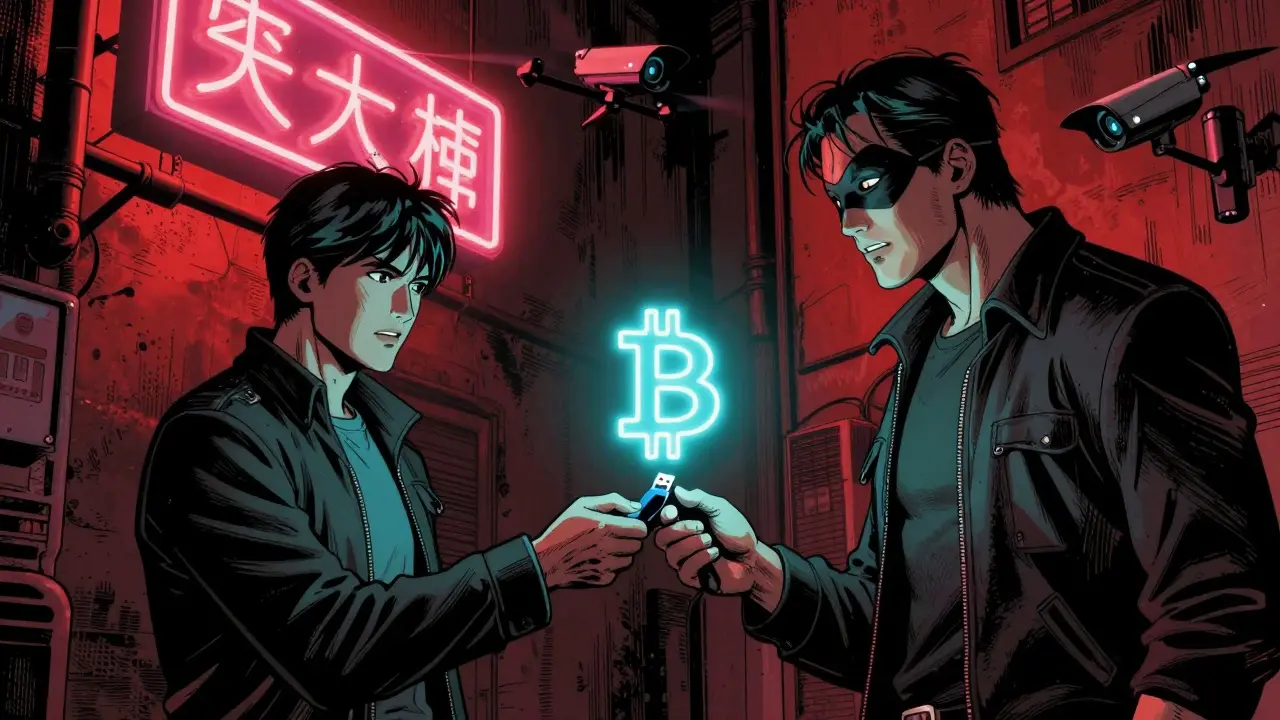
When you can’t legally buy Bitcoin in your own country, how much more would you pay for it? In places where crypto is banned, people don’t just stop using it-they find ways around the rules. And when they do, prices jump. Not because Bitcoin suddenly became more valuable, but because the risk of getting caught adds a hidden tax. This isn’t speculation. It’s basic economics: less supply, higher risk, and no oversight = higher prices.
What Happens When Crypto Is Banned?
In China, the government didn’t just shut down mining farms in 2021. In May 2025, they made it a crime to even hold Bitcoin or Ethereum. No more wallets. No more exchanges. No more peer-to-peer trades. Violators face fines, asset seizures, and even jail time. The state’s answer? The digital yuan. A currency they control, track, and monitor. But people still want Bitcoin. So they find ways to get it-through hidden networks, encrypted apps, and trusted contacts who move coins across borders. Afghanistan’s ban is even stricter. Since the Taliban took over in 2022, they’ve declared crypto haram-forbidden under Islamic law. Da Afghanistan Bank and FinTRACA actively shut down traders, arrest individuals, and seize hardware wallets. Yet, reports from border regions show people still trade crypto in cash, using smuggled USB drives and unregistered SIM cards. Why? Because inflation is out of control, and the Afghan afghani is losing value every day. Bitcoin, even illegally, becomes a lifeline. Egypt arrested 112 people in 2025 for crypto-related offenses. Nigeria seized $38 million in crypto assets linked to cybercrime. South Africa suspended 12 crypto firms for failing AML checks. These aren’t just enforcement actions-they’re signals. When the government says "no," people still ask "how?" And when they do, the price goes up.Why Do Premiums Form?
Think of it like buying medicine in a country where it’s illegal. You don’t go to a pharmacy. You go to someone you know, who knows someone else, who got it from overseas. That person takes a risk. They might get raided. Their house might be searched. Their bank account frozen. So they charge more. Not because the medicine costs more to make-but because the danger is real. The same logic applies to crypto in banned countries:- Supply is limited-no licensed exchanges, no ATMs, no easy access. If you want Bitcoin, you need a middleman.
- Risk is high-traders face arrest, fines, or worse. That risk gets baked into the price.
- Liquidity is low-few buyers, fewer sellers. That means wider spreads. You might pay 15% more to buy, and get 20% less when you sell.
- Trust is everything-you don’t trade with strangers. You trade with someone who’s been vetted. That network has value. And it costs extra.
How Do People Actually Buy Crypto When It’s Illegal?
You won’t find a website advertising "Buy Bitcoin in China-25% Premium!" Underground markets don’t work like that. They’re quiet. Personal. Often built on word-of-mouth. Here’s how it works in practice:- Peer-to-peer cash trades-Someone in Guangzhou meets a trader in Shenzhen at a coffee shop. They swap cash for Bitcoin sent to a cold wallet. No KYC. No traceable bank transfer.
- Telegram and Signal groups-Private channels with 50-200 members. Traders post offers: "1 BTC, $68,000, cash only, Shenzhen." Buyers reply with a code. No names. No IDs.
- Gift cards and prepaid cards-Buyers pay in Amazon or Apple gift cards. Sellers convert them to crypto on offshore platforms. The gift card gets marked up 10-15% to cover conversion risk.
- Monero and Zcash-These privacy coins are in high demand. They’re harder to track. In banned markets, Monero often trades at a 10-25% premium over Bitcoin because it’s safer.
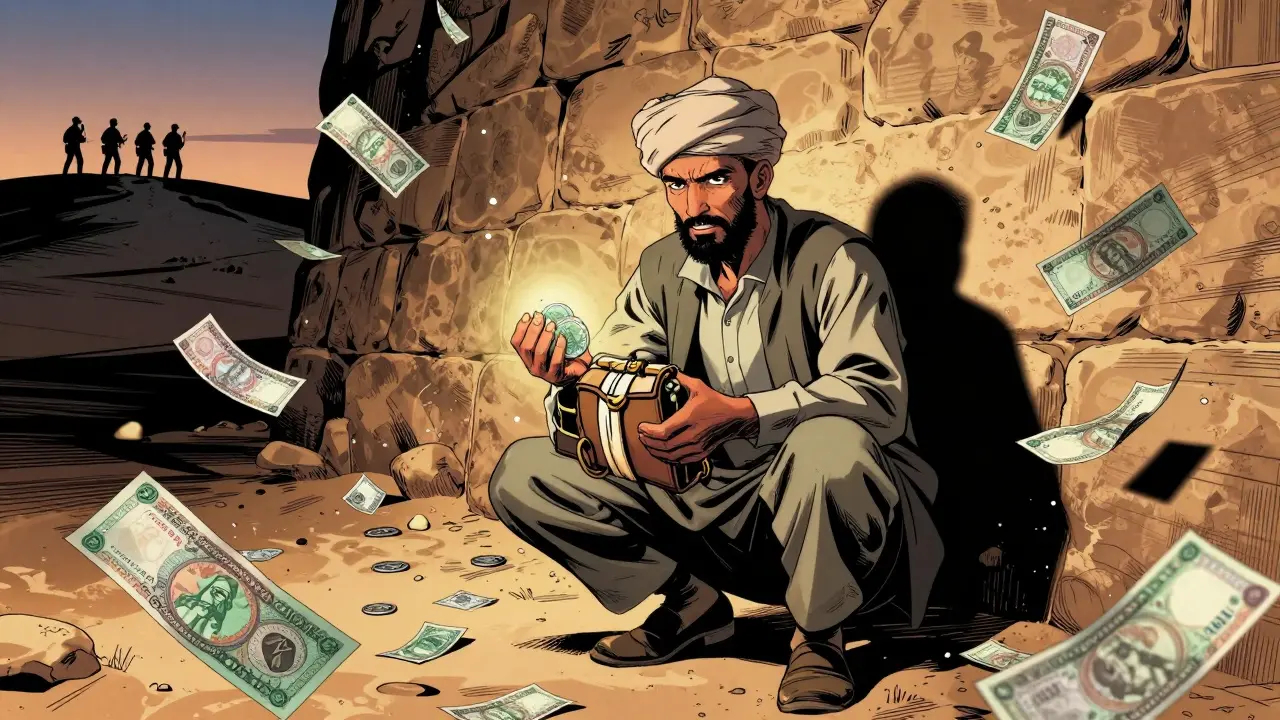
- Border arbitrage-A trader in Nepal buys Bitcoin in India (where it’s legal), crosses into Tibet with a USB drive, and sells to someone in Lhasa. The price difference? Up to 30%.
Who’s Driving the Premiums?
It’s not just individual buyers. It’s a whole ecosystem.- Traders-They’re the middlemen. They take cash, move coins, and charge for the risk. Some are small-time. Others run organized networks.
- Exchangers-People who convert crypto to local currency. They’re the ones who pay the highest premiums because they need to move value out fast.
- Smugglers-They transport hardware wallets, SIM cards, or USB drives across borders. In places like Myanmar or Laos, this is a full-time job.
- Corrupt officials-In some countries, police or customs officers take bribes to look the other way. That’s a hidden cost too-money that gets siphoned off, raising prices for everyone else.
What About Decentralized Exchanges?
DEXs like Uniswap or PancakeSwap are supposed to be censorship-resistant. But here’s the catch: you still need to get fiat in and out. And that’s where the bottleneck is. If you’re in Egypt and you buy Bitcoin on a DEX, you still need to convert it to cash. But your bank won’t touch crypto-related transfers. So you turn to someone who does. That person charges you 15% to cash out. Suddenly, your "decentralized" trade has a 15% tax. Privacy coins help. Monero can be sent without revealing sender or receiver. But even Monero isn’t magic. If you try to cash out $10,000 in Monero in a country with surveillance, you’ll get flagged. So you break it into smaller chunks. You use multiple wallets. You wait weeks. That delays your access. And delays cost money.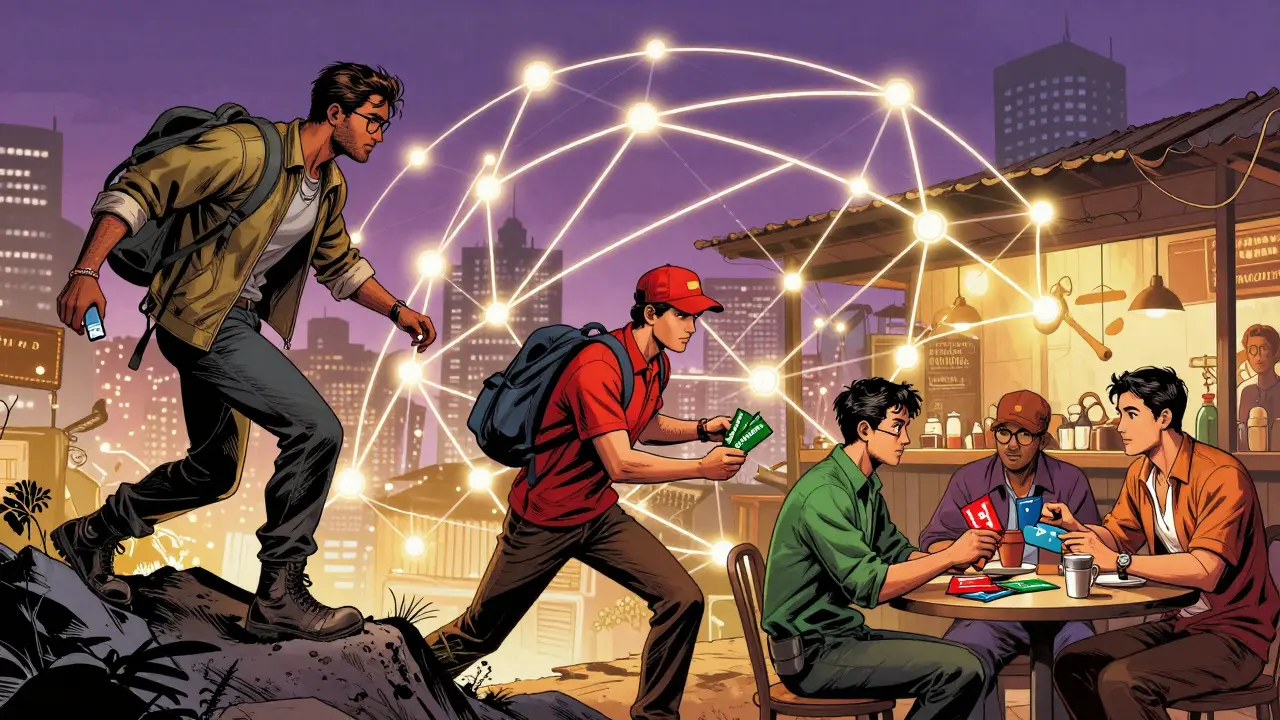
Is This Going to Last?
Governments keep tightening. China’s digital yuan rollout is accelerating. Afghanistan’s ban is absolute. Egypt and Nigeria are ramping up arrests. Meanwhile, the Financial Action Task Force (FATF) is pushing 99 countries to enforce crypto regulations by 2026. But here’s the irony: the more they ban, the more they drive innovation underground. The more they surveil, the more people use privacy tools. The more they arrest, the more trust shifts to personal networks. In the long run, bans don’t kill crypto. They just make it more expensive, more dangerous, and more decentralized. And that’s exactly what the people who need it most want.What’s the Real Cost?
The premium isn’t just a number on a screen. It’s the price of freedom. In China, a person might pay 30% extra to hold Bitcoin because they don’t trust the government’s money. In Afghanistan, it’s 40% to protect their savings from hyperinflation. In Nigeria, it’s 25% because the banking system is broken. This isn’t about speculation. It’s about survival. The underground market isn’t a flaw in the system. It’s a response to it. And until governments offer real alternatives-stable, accessible, trustworthy financial tools-people will keep paying the premium.Is it illegal to buy crypto in countries with bans?
Yes. In countries like China, Afghanistan, and Egypt, owning or trading cryptocurrency is explicitly illegal. Violations can lead to fines, asset seizures, or criminal charges. However, enforcement varies. In some areas, authorities focus on large-scale operators, while individuals trading small amounts may go unnoticed-though the risk remains.
How much higher are crypto prices in banned countries?
Premiums range from 5% to 40%, depending on enforcement, liquidity, and risk. In highly restrictive countries like China or Afghanistan, premiums can reach 30-40% due to extreme risk and limited access. In countries with weaker enforcement, premiums may be closer to 5-15%. These premiums reflect the cost of bypassing bans, not the intrinsic value of the cryptocurrency.
Do privacy coins like Monero trade at higher premiums?
Yes. Privacy coins such as Monero and Zcash often trade at 10-25% higher premiums than Bitcoin or Ethereum in banned jurisdictions. Their anonymity features reduce the risk of detection during transfers, making them more desirable-even if they’re less widely accepted. This demand drives up their price relative to more traceable assets.
Can decentralized exchanges (DEXs) help avoid bans?
DEXs let you trade crypto without a central authority, but they don’t solve the fiat problem. You still need to convert crypto to local currency-and that’s where most bans hit hardest. Banks block crypto-linked transactions, and cash-out methods are risky. So while DEXs help with trading, they don’t eliminate the premium tied to moving money out of crypto.
Are there any safe ways to buy crypto in banned countries?
There are no legally safe ways in countries with full bans. Any method involves some level of risk. People use cash trades, peer-to-peer networks, or gift cards to reduce exposure, but no method is risk-free. Authorities in banned jurisdictions actively monitor digital activity, and even small transactions can be traced if not done with extreme caution.
Why don’t we see official data on these premiums?
Because underground markets operate in secret. Participants don’t report prices. No exchange tracks them. No government collects the data. All we have are estimates from investigators, journalists, and former traders. Without transparency, precise numbers are impossible-but the trend is clear: bans create price distortions.
Kevin Thomas
January 31, 2026 AT 09:02Man, this is wild. I used to trade crypto in Venezuela back in '21 when the bolivar was collapsing. Paid like 35% extra just to get BTC through a guy who drove from Colombia with a USB taped to his leg. No bank, no app, just sweat and fear. This isn't speculation-it's survival. And honestly? I respect the hell out of people doing this.
Bitcoin isn't money here. It's a passport.
Jack Petty
January 31, 2026 AT 18:28THEY KNOW. They *know* banning crypto makes it more valuable. That’s the whole fucking point. Central banks don’t want you to have an exit strategy. They want you trapped in their digital prison with your digital yuan or your CBDC. This isn’t a market-it’s a rebellion. And the premium? That’s the sound of freedom charging interest.
They’re not stopping us. They’re funding us.
Brianne Hurley
February 1, 2026 AT 22:53Ugh. I just can’t with this whole ‘crypto as human right’ nonsense. You’re literally risking jail time for a speculative asset? If your country’s economy is that broken, maybe try… I dunno… moving? Or getting a job? Or not being so lazy you think magic internet money will fix your life?
Also, Monero? So 2017. I’m not even mad. Just… disappointed.
Dylan Morrison
February 2, 2026 AT 01:04It’s beautiful, honestly. 💛 People aren’t buying Bitcoin because it’s ‘the future.’ They’re buying it because their government took their future away. In Afghanistan, a mom trades her last gold bangle for 0.01 BTC so her kid can eat next month. That’s not speculation. That’s love. That’s courage.
They’re not breaking the law. They’re rewriting it-with their lives.
William Hanson
February 2, 2026 AT 03:43This post is just crypto bros romanticizing crime. People aren’t ‘resisting oppression’-they’re gambling with their freedom. And guess what? Most get caught. Their phones get seized. Their kids get taken away. Stop glamorizing stupidity.
Also, Monero premium? Yeah, because it’s a magnet for drug dealers. You want to be associated with that?
Lori Quarles
February 2, 2026 AT 22:02YES. This is why I got into crypto. Not for the moon. Not for the hype. But because I saw what it did for my cousin in Nigeria. She was getting paid in Naira that lost 40% value in 3 months. She started trading BTC through WhatsApp. Now she sends money to her sister in Ghana. No bank fees. No delays. Just… freedom.
They call it illegal. I call it justice.
Steven Dilla
February 3, 2026 AT 17:54My uncle in Laos used to smuggle USB drives across the Mekong. Carried them in his socks. Paid 20% over market. Said it was cheaper than paying off the border guards. One time, he got caught. They took his bike. He came back two weeks later with a new one and a smile.
They think they’re stopping people. But they’re just building better networks.
And honestly? I’m proud of them.
josh gander
February 4, 2026 AT 05:53Let me tell you something-this isn’t just about money. It’s about dignity. When your government tells you what you can and can’t own, you don’t just comply. You adapt. You find a way. You build a network. You trust someone you’ve never met in person but know won’t screw you over because they’ve got kids too.
That’s not a market. That’s community.
And yeah, it costs more. But what’s the cost of living under a system that treats you like a criminal for wanting to protect your savings? I’ll pay the premium. Every. Single. Time.
Akhil Mathew
February 4, 2026 AT 22:32Interesting. In India, crypto isn’t banned, but the tax code is so punishing (30% + TDS) that people use P2P with UPI to avoid reporting. Premiums are low-maybe 5-8%-but the real cost is the paperwork. Still, people do it. Because trust > bureaucracy.
Also, gift card arbitrage is huge here. Apple cards from Dubai to Delhi. 12% markup. Works like a charm.
Tom Sheppard
February 6, 2026 AT 20:45My buddy in Canada just flew to Colombia with a cold wallet in his shoe. Bought BTC, flew back. Said it was cheaper than the 15% fee his bank charged for crypto withdrawals. Honestly? That’s the future. Decentralized. Personal. Human.
They can ban it. But they can’t ban the will to be free.
And honestly? I’d do the same thing.
Jerry Ogah
February 7, 2026 AT 00:02Oh my god. This is so disgusting. People are risking their freedom for a digital token? What’s next? Smuggling NFTs in socks? This isn’t rebellion-it’s mental illness. You’re not a hero. You’re a sucker. And your ‘freedom’ is just a fucking meme.
STOP GLORIFYING CRIME.
Elizabeth Jones
February 7, 2026 AT 00:28I’ve studied economic sanctions for over a decade. What we’re seeing here isn’t unique. It’s textbook. When you restrict access to a scarce good, black markets emerge. The premium isn’t irrational-it’s rational. The risk premium is priced in. The liquidity discount is baked in. The trust premium? That’s the real innovation.
It’s not crypto that’s revolutionary. It’s human resilience.
Pamela Mainama
February 8, 2026 AT 14:53My cousin in Pakistan pays 25% extra. Uses a guy who works at the airport. Swaps cash for BTC on a burner phone. Said he’d rather pay 25% than lose his savings to inflation. Simple. Smart. No drama.
They don’t need a manifesto. Just a way out.
Edward Drawde
February 9, 2026 AT 09:17LOL. You think this is new? In the 90s, people smuggled cigarettes and alcohol. Now it’s Bitcoin. Same thing. Criminals. Risk-takers. Losers. The government wins. They get to arrest people. Look tough. Meanwhile, the real problem? Broken economies. Not crypto.
Richard Kemp
February 9, 2026 AT 11:17just read this on my lunch break and i cried a little
not because of the money. because of the people.
they’re not buying btc to get rich.
they’re buying it so they don’t starve.
Will Pimblett
February 11, 2026 AT 03:41Oh, so now it’s ‘freedom’? Next you’ll tell me the Taliban are just misunderstood entrepreneurs. Look, I get it-people are desperate. But this isn’t a Robin Hood story. It’s a Ponzi with bullets.
And Monero at 25% premium? That’s not innovation. That’s a red flag waving in a police station.
Christopher Michael
February 11, 2026 AT 22:39Let’s not forget: this entire underground economy exists because of failed monetary policy. Central banks printed trillions. Inflation exploded. People lost faith. Crypto didn’t cause this-it exposed it.
And guess what? The people who need it most? They’re not on Twitter. They’re not on Reddit. They’re in back alleys, in refugee camps, in villages with no banks.
They’re the real pioneers.
Parth Makwana
February 12, 2026 AT 13:58From a macroeconomic standpoint, the premium is a direct function of transactional friction. In high-risk jurisdictions, the bid-ask spread widens due to asymmetric information, liquidity constraints, and enforcement uncertainty. The premium is not irrational; it is an equilibrium price under constrained optimization. Additionally, the use of privacy coins represents a Pareto improvement in risk-adjusted utility for end-users.
Also, Monero’s hash rate is still 1/10th of Bitcoin’s. That’s not a feature-it’s a vulnerability.
Elle M
February 14, 2026 AT 02:21So what? You’re telling me because some country is ‘oppressive,’ we should celebrate people breaking the law? What’s next? Smuggling vaccines? Selling guns? This isn’t freedom-it’s anarchy. And I’m sick of you guys pretending criminals are saints.
China has the right to protect its currency. End of story.
Rico Romano
February 16, 2026 AT 01:34Look, I’ve read the paper. I’ve analyzed the data. The premium is a textbook example of a shadow market equilibrium under state suppression. But here’s the real issue: you’re all romanticizing this like it’s some underground rave. It’s not. It’s a mess of smugglers, corrupt cops, and desperate people getting scammed by ‘traders’ who vanish with their cash.
And Monero? Please. It’s a tool for oligarchs and drug lords. Not ‘freedom fighters.’
Crystal Underwood
February 16, 2026 AT 11:26THIS IS WHY WE CAN’T HAVE NICE THINGS.
People are dying because of this. Arrests. Families torn apart. Kids losing parents. And you’re out here calling it ‘resistance’? No. It’s selfish. It’s reckless. It’s a cult. You think you’re helping? You’re just feeding the machine.
And Monero? Oh my god. You’re literally enabling crime. Wake up.
Raymond Pute
February 17, 2026 AT 10:09Okay, but let’s be real-this whole ‘crypto as human right’ narrative is just the latest Silicon Valley fantasy. You know what’s actually happening? The people who can afford to pay 30% premiums? They’re not the poor. They’re the tech-savvy elite who have friends in high places, encrypted phones, and offshore accounts.
The real victims? The guy in Lhasa who gets scammed by a fake trader and loses his life savings. He doesn’t have a Telegram group. He doesn’t have a VPN. He just has a USB drive and a prayer.
So yeah. Premiums? Sure. But let’s not pretend this is egalitarian. It’s not. It’s just capitalism with a side of martyr complex.
josh gander
February 18, 2026 AT 06:39I get what you’re saying, Raymond. And you’re not wrong-the system’s rigged. But here’s the thing: the guy in Lhasa? He’s not trying to get rich. He’s trying to feed his family. And if the only way is to pay 30% extra to someone who’s risking jail? He’ll do it. No hesitation.
That’s not elitism. That’s love.
And yeah, some get scammed. But most? They learn. They build trust. They pass the knowledge down. That’s how underground economies survive. Not because they’re perfect. But because they’re human.