
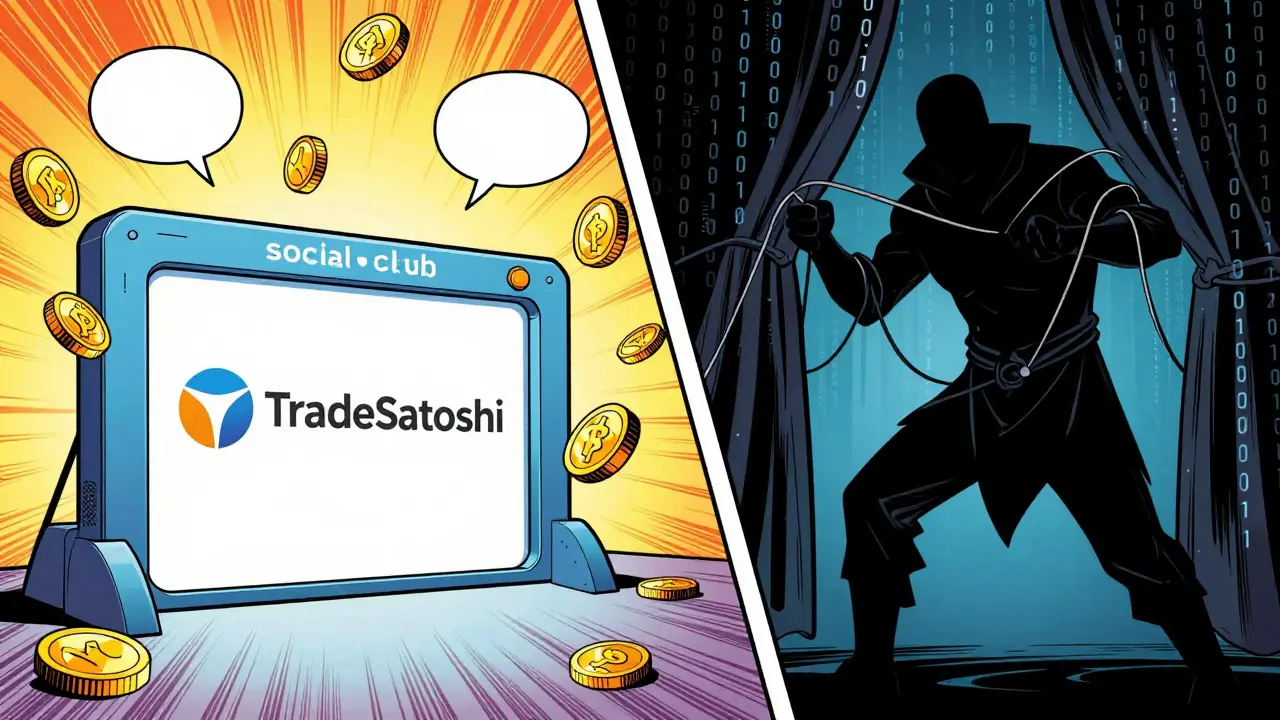
Imagine waking up to find your digital wallet empty and the website where you stored your life savings simply gone. For thousands of users, this wasn't a nightmare-it was reality when TradeSatoshi is a defunct UK-based cryptocurrency exchange that operated from 2015 until its abrupt collapse in late 2019. Also known as a multi-currency platform, it once attracted beginners with low entry barriers, only to end in a wave of fraud allegations and lost funds.
The Rise and Fall of TradeSatoshi
Launched in 2015, TradeSatoshi positioned itself as a friendly gateway for people new to the world of Cryptocurrency. While giants like Coinbase were focusing on institutional trust and regulatory compliance, TradeSatoshi went for the "social" angle. They integrated a chat system that let traders mingle and make friends, creating a community vibe that felt more like a social club than a financial institution.
For a while, this worked. New users loved the low trading limits, which meant they didn't have to spend a fortune just to get started. They even had a faucet system-a way to earn tiny amounts of crypto for free-which kept people engaged. But beneath the friendly surface, the platform was ignoring critical industry standards. While competitors were publishing clear fee schedules, TradeSatoshi remained vague about how much they were actually charging users to trade.
Red Flags That Were Ignored
If you look back at the data, the signs of trouble were everywhere. One of the biggest warnings was the total lack of transparency regarding trading fees. Professional analysts noted that when an exchange hides its fees, it's usually because they are higher than the market average or the platform is manipulating the spread. In contrast, established platforms usually list every cent they charge for spot trading.
Then there was the regulatory mess. Despite being registered in the UK, TradeSatoshi didn't seem to care about regional borders, allowing US-based traders onto the platform without the necessary licenses. This created a massive legal vulnerability. Moreover, while Binance was building a billion-dollar secure asset fund for users, TradeSatoshi had no documented security protocols and no institutional backing from venture capital. They were essentially operating on a wing and a prayer during the brutal "crypto winter" of 2018-2019.
| Feature | TradeSatoshi | Binance / Coinbase |
|---|---|---|
| Fee Transparency | Non-existent / Hidden | Publicly listed schedules |
| Regulatory Compliance | UK based, loosely enforced | Strict KYC and regional licensing |
| Security Backing | None documented | SOC 2 Type 2 / SAFU Funds |
| Community Focus | High (Social chat/faucets) | Professional / Institutional |
The Final Collapse: An Exit Scam?
The end didn't come with a formal wind-down period or a migration plan. Instead, it happened in a flash of panic. In late 2019, users began reporting that their accounts were being frozen. Some traders found they couldn't withdraw their funds, with one notable case on Bitcointalk documenting a user unable to access $9,000 worth of assets just days before the site vanished.
By December 17, 2019, the platform officially shut down. There was no refund mechanism, no customer support email that actually worked, and no explanation. In the industry, this pattern-sudden account restrictions followed by a total platform blackout-is a textbook example of an "exit scam." It's when the operators simply take the deposits and disappear into the blockchain's anonymity.

Learning from the TradeSatoshi Disaster
Why does this matter now? Because the same patterns repeat themselves with new names. The TradeSatoshi review of today is less about whether you should use the site (you can't) and more about how to spot a fake exchange before you deposit a single cent. If an exchange offers "too low" limits or "magical" rewards like faucets but won't tell you exactly how they make money, run the other way.
Real reliability isn't found in a friendly chat box; it's found in audited reserves, legal registrations with authorities like the FCA, and a track record of transparency. The fact that some outdated review sites still describe TradeSatoshi as "cutting-edge" years after it stole user funds shows how dangerous unreliable information can be in the crypto space.
How to Protect Your Crypto Today
If you're trading in 2026, the rules are simpler but more strict. First, never keep your long-term holdings on an exchange. Use a hardware wallet. Second, verify the exchange's license. If they claim to be UK-based but aren't on the Financial Conduct Authority's register, they aren't legal.
Lastly, look at the liquidity. TradeSatoshi had tiny trading volumes compared to the billions handled by the top tier. Low volume often means you'll have a hard time selling your coins without crashing the price, or worse, the exchange doesn't actually have the coins they claim to be selling.
Is TradeSatoshi still operational?
No. TradeSatoshi shut down completely in December 2019. Any website currently claiming to be TradeSatoshi or offering fund recovery for it is likely a phishing scam.
Can I get my money back from TradeSatoshi?
Unfortunately, there is no official way to recover funds. The platform vanished without a refund process, and since it operated in a regulatory gray area, there are no government-backed insurance schemes to cover the losses.
What were the main red flags of TradeSatoshi?
The most critical red flags included a complete lack of public trading fee schedules, no evidence of institutional funding, and the absence of proper regulatory licensing despite accepting global customers.
Why did beginners like TradeSatoshi?
The platform offered very low minimum trade limits and a social chat environment that made the intimidating world of crypto feel more accessible and friendly to newcomers.
What is an exit scam in the context of crypto?
An exit scam occurs when a platform or project attracts investors and deposits, only to suddenly shut down and disappear with the funds, often after blaming "technical issues" or "hacking" for the inability to withdraw.
Prachi Bhadarge
April 15, 2026 AT 19:46Imagine actually thinking a 'social chat' in a financial app is a good sign. Truly a masterclass in gullibility. 🙄
Shannon Kelly Smith
April 17, 2026 AT 08:35Exactly! We gotta teach people that flashy features are usually just smoke and mirrors 💨. Always check those licenses before you dive in! 🚀🛡️
Shantal Sanjur
April 17, 2026 AT 21:38Oh please, as if this was just some random failure. The timing was way too perfect for it not to be a coordinated hit by the bigger exchanges to clear out the smaller fish. It's all a game and we're just the pawns in their little simulation of a market. I bet the founders are laughing in some private island with our money while we're told to 'use a hardware wallet'. Give me a break with the obvious advice.
Kevin Lư
April 18, 2026 AT 09:44Lol, Shantal is just spiraling again. But for real, keeping money on any exchange is just asking for it. I'm just chilling with my keys on a piece of paper, feels way more righteous than trusting a suit in London.
Vicky Duffala
April 20, 2026 AT 08:23It's actually a deep metaphor for trust in the digital age, isn't it? 🌌 We trade security for a sense of belonging in a chat room. We're basically just gambling on the hope that the person on the other side isn't a sociopath. 📉✨
Adam Mann
April 20, 2026 AT 23:00I really think we should all try to be a bit more patient with the folks who got caught up in this because the crypto world is just so incredibly overwhelming when you first step into it, and the way TradeSatoshi marketed themselves was designed specifically to make people feel safe and welcome in a way that the big corporate platforms just don't manage to do, even if it was all a lie in the end. It is a great reminder that we should look out for each other and share this kind of knowledge so that the next generation of traders doesn't make the same mistakes we did back in the day when things were a bit more like the Wild West!
Andrew Southgate
April 21, 2026 AT 06:05Adding to that, if you're ever unsure about an exchange, you can actually look for 'Proof of Reserves' now, which is something that simply didn't exist in a standardized way back when TradeSatoshi was running their scam. It involves the exchange proving they actually hold the assets they claim to have on behalf of their users through cryptographic proofs, which prevents the kind of fractional reserve gambling that likely led to the collapse of these defunct platforms. It's a bit technical but definitely worth spending an hour reading up on if you want to keep your funds safe from another exit scam scenario.
Gillian Kent
April 21, 2026 AT 18:11i remeber seeing some posts about this on old forums.. its so sad how many peple lost thier savings because of a few red flgas
Trudy Morse
April 21, 2026 AT 18:13Hindsight is a beautiful thing, but the lesson here is simple: if it feels like a social club, it's probably not a bank.
Alex Long
April 23, 2026 AT 00:07Waste of time reading this. All scams are the same. L.
Ian Chait
April 24, 2026 AT 04:11Standard op with a hidden agenda. The 'regulators' are just fronts for the globalists to keep us in check. The whole UK FCA thing is a joke and probably funded by the same people who ran the exchange anyway. Totaly rigged system, mate. Typical govt overreach disguised as 'protection' while they steal the real wealth via inflation.
Gaurav Undirwade
April 24, 2026 AT 16:49It is truly lamentable that individuals possess such a profound lack of discernment. One must exercise rigorous due diligence before entrusting one's wealth to any entity, regardless of how 'friendly' the interface may appear.
Chintu Parikh
April 26, 2026 AT 03:14I believe we can all learn from this tragedy to build a more transparent future! Let us strive to educate one another with utmost diligence and respect for the collective security of the community!
Mike Kempenich
April 26, 2026 AT 07:24It's a tough pill to swallow, but we'll get better at this as a community. Just keep moving forward and staying vigilant.
Sean Douglas
April 26, 2026 AT 21:56The sheer audacity of these predators is absolutely breathtaking! To lure in the innocent with the promise of a community and then vanish into the digital ether is a crime of unparalleled coldness. My heart bleeds for every single soul who thought they had found a sanctuary only to find a slaughterhouse.
Tracy Sperandio
April 27, 2026 AT 02:22Stop the mourning and start the auditing! If you're still using a centralized exchange without a cold wallet, you're basically inviting the thieves to dinner! Get your hardware wallets now or prepare for the inevitable heartbreak!
Ankit Sindhu
April 27, 2026 AT 17:34I'm here to support anyone who is still feeling the sting from this. It's a hard lesson, but you aren't alone in this journey toward financial literacy.
Karen Mogollon Gutierrez
April 27, 2026 AT 23:30The absolute negligence displayed by the operators of TradeSatoshi is nothing short of scandalous. One cannot fathom the level of depravity required to simply delete a website and abscond with the life savings of thousands of unsuspecting individuals without so much as a cursory explanation!