
When people talk about Project Quantum, a theoretical framework for securing blockchain against future quantum computer attacks. It's not a token, not a company, and not something you can buy—but it's the reason your crypto might not be safe in 10 years. Unlike Bitcoin or Ethereum, Project Quantum doesn't have a whitepaper or a team you can Google. It’s a collective effort by cryptographers, governments, and blockchain labs to build systems that can survive when quantum computers break today’s encryption.
Right now, most blockchains rely on ECDSA and SHA-256—algorithms that work great until a quantum machine can crack them in seconds. That’s where post-quantum cryptography, new cryptographic methods designed to resist quantum attacks. Also known as quantum-resistant crypto, it's the only way forward for long-term security. Projects like NIST’s PQC standardization and Ethereum’s research into lattice-based signatures are already testing replacements. Meanwhile, exchanges like Binance and BitMEX are quietly upgrading their wallet infrastructure behind the scenes. This isn’t science fiction—it’s happening now, and the clock is ticking.
blockchain security, the foundation of trust in decentralized systems. Also known as crypto integrity, it’s what stops hackers from stealing funds or rewriting ledgers. If quantum computers become powerful enough, they could reverse-engineer public keys from signatures—meaning anyone holding crypto on an unpatched wallet could lose everything overnight. That’s why projects like Ancient Raid and OraiDEX, which rely on unverified smart contracts, are especially risky. They’re built on old math, not future-proof code.
And it’s not just about wallets. quantum computing crypto, the intersection of quantum tech and digital asset networks. Also known as quantum crypto threats, it’s forcing regulators to act. The EU’s MiCA rules, Singapore’s MAS guidelines, and even OFAC’s sanctions list are starting to include quantum readiness as a compliance requirement. If an exchange can’t prove it’s preparing for quantum attacks, it won’t get licensed. That’s why platforms like Emirex and Hashfort—already weak in transparency—won’t survive the next wave.
You won’t see a Project Quantum token on CoinMarketCap. But you’ll feel its impact in every secure wallet update, every exchange audit, every new blockchain launch. The real winners won’t be the ones shouting about airdrops—they’ll be the ones quietly upgrading their code. What’s below isn’t a list of coins. It’s a map of who’s ready—and who’s still sleeping.
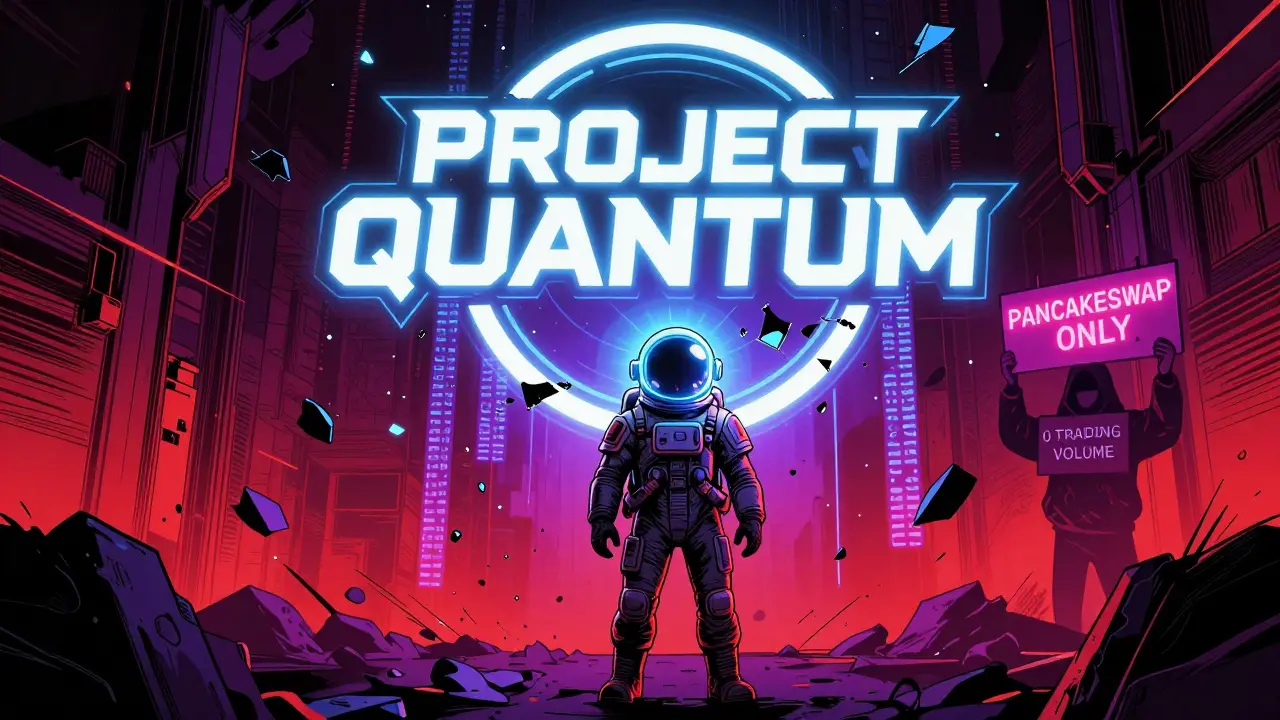
Project Quantum (QBIT) promises a AAA blockchain game with real rewards, but as of 2025, it has no live product, zero trading volume, and no player base. Here's what you need to know before buying QBIT.