
When you send crypto, you’re not just moving money—you’re paying for space on a blockchain. That’s where the priority fee, the extra payment users offer to miners or validators to jump the line when the network is busy. Also known as tip, it’s what keeps transactions moving when everyone else is trying to get through at once. Without it, your trade might sit in a queue for minutes, or even hours. This isn’t just a technical detail—it’s how you control when your transaction goes through.
The Ethereum gas fees, the base cost to execute any action on Ethereum, like swapping tokens or staking. Also known as transaction cost, it’s made up of two parts: the base fee (set by the network) and the priority fee (set by you). The base fee burns automatically and changes with demand. But the priority fee? That’s yours to adjust. If you’re swapping tokens during a token launch or trying to get into a popular NFT mint, raising your priority fee can mean the difference between success and missing out. It’s not magic—it’s economics. Miners and validators choose transactions that pay the most, so your fee directly impacts speed.
And it’s not just Ethereum. Networks like Solana, Arbitrum, and Polygon all use similar systems, even if they don’t call it a priority fee. The concept is the same: congestion = higher cost = faster processing. You’ll see this play out in real time during crypto rallies, airdrop seasons, or when a new DeFi protocol goes live. That’s why so many posts here talk about MEV, the profit bots make by reordering transactions in a block, often at the expense of regular users—because when priority fees go up, so does the incentive for these automated players to squeeze in ahead of you.
What you’ll find in the posts below isn’t theory—it’s real-world examples. You’ll see how people lost money by ignoring priority fees during high-volume events, how some traders automate their tips to beat the crowd, and why platforms like Binance and Coinbase now show estimated fees before you confirm a trade. You’ll also learn why some tokens, like those tied to gaming or DeFi, see wild fee spikes that have nothing to do with price and everything to do with network load. This isn’t just about saving a few dollars. It’s about understanding the hidden mechanics that decide when your crypto moves—and who gets to move first.
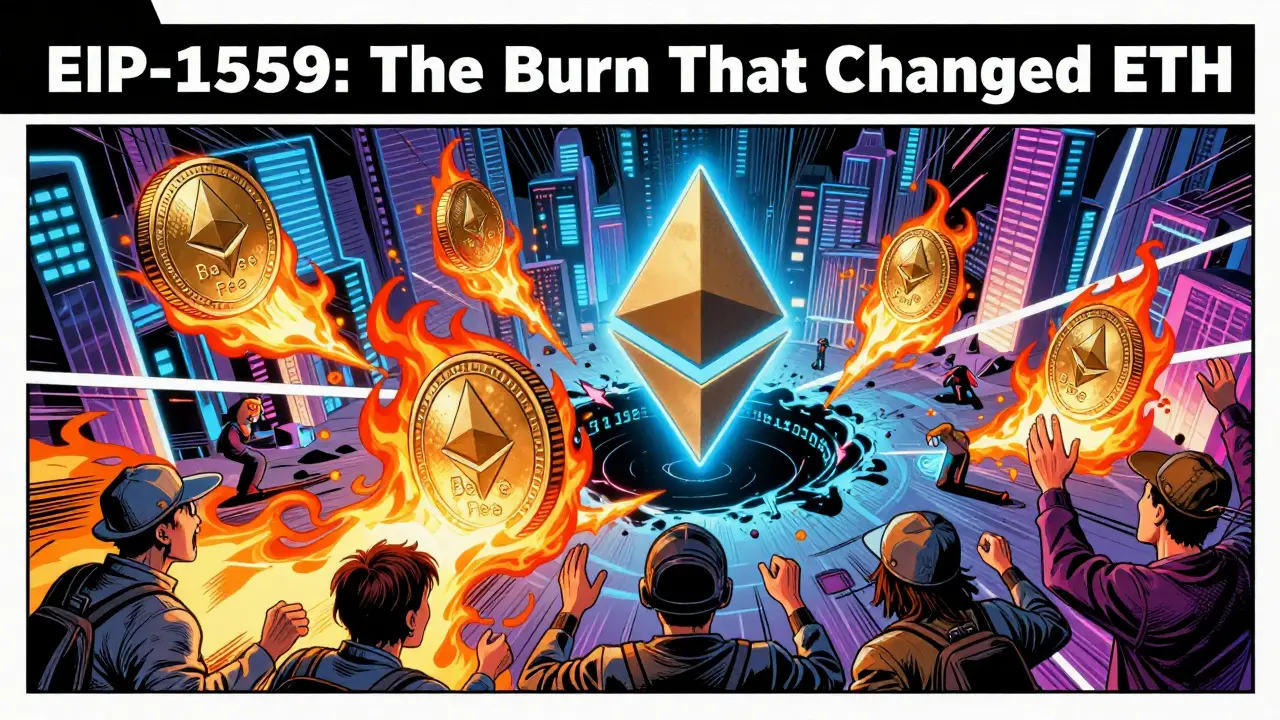
EIP-1559 revolutionized Ethereum's fee system by burning base fees, reducing supply pressure, and making transactions predictable. Over 2.5 million ETH have been burned since 2021, turning ETH into a deflationary asset during high usage.