
When you hear crypto exchange scam, a fraudulent platform pretending to be a legitimate place to trade digital assets. Also known as fake crypto exchange, it often looks real—clean website, fake testimonials, even fake customer support—but it’s built to steal your funds, not help you trade. These aren’t just sketchy websites anymore. They’re sophisticated operations with cloned logos, fake reviews, and even fake YouTube influencers pushing them. In 2025, over 30% of new crypto users reported losing money to platforms that vanished overnight.
One of the biggest tricks? Pretending to be no-KYC exchange, a platform that doesn’t require identity verification. While some legitimate exchanges skip KYC for small trades, scammers use this as a shield. If a platform says "no ID needed" and pushes high-leverage trading or impossible returns, it’s a warning sign. Look at Winstex or Burency Global—both claimed to be active exchanges but had zero trading volume, no user reviews, and no way to contact anyone. They weren’t just poorly run—they were empty shells designed to disappear with deposits. Then there’s the crypto scam, a broader category that includes fake airdrops, fake tokens, and fake partnerships. Projects like WSPP and THN airdrop claims aren’t giveaways—they’re traps. They ask you to connect your wallet, pay a "gas fee," or share your seed phrase. Once you do, your funds are gone. These scams don’t need a fancy website. Sometimes, just a Discord server and a TikTok video are enough.
Real exchanges like BitMEX or Quidax have clear teams, public regulatory status, and years of history. Scams have none of that. Check if the exchange is listed on trusted directories. Look for user reviews on independent forums—not the ones on their own site. If there’s no mobile app, no live chat, and no verifiable physical address, treat it like a warning light on your car dashboard. And never trust a platform that promises guaranteed returns or says "you’ll double your money in 24 hours." That’s not trading—that’s gambling with your life savings.
What you’ll find below isn’t just a list of bad platforms. It’s a collection of real cases—exchanges that shut down, tokens that vanished, airdrops that never existed. Each one shows the same patterns: hidden teams, fake liquidity, zero transparency. If you’ve ever wondered why someone lost everything in crypto, the answer is often one of these scams. Read these reviews. Learn the signs. And don’t let the next one catch you off guard.
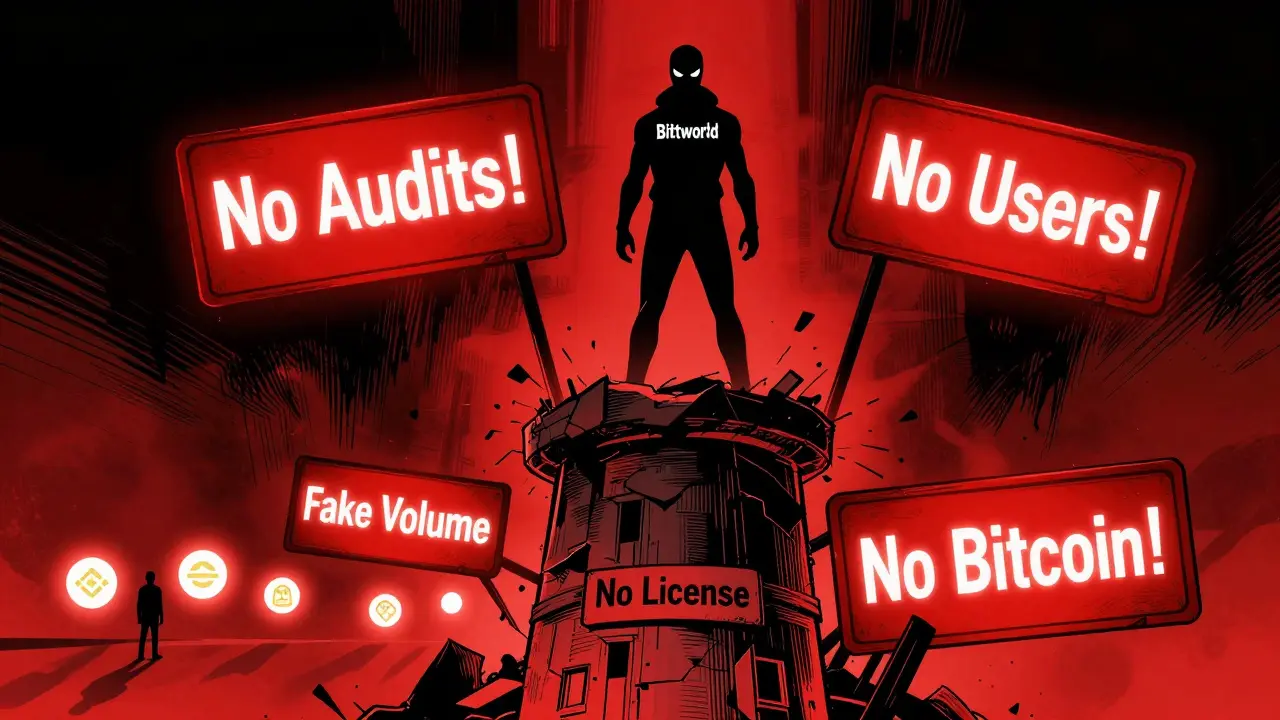
Bittworld claims to be the world's biggest crypto exchange, but there's no proof. No regulation, no trading volume, no user reviews. Avoid this platform - it's a high-risk gamble with no safety net.
Hashfort crypto exchange is not real. It's a scam platform designed to steal crypto deposits. Learn how to spot fake exchanges and which legit platforms to use instead in 2025.
Btcwinex was a fake crypto exchange that vanished in 2022 after luring users with fake airdrops. It had no trading volume, no support, and no legitimacy. Learn how to spot similar scams before it's too late.