
Crypto Exchange Legitimacy Checker
Enter details about a crypto exchange to verify if it's legitimate or a scam. Based on the article "Hashfort Crypto Exchange Review: Is It Legit or a Scam?".
Results
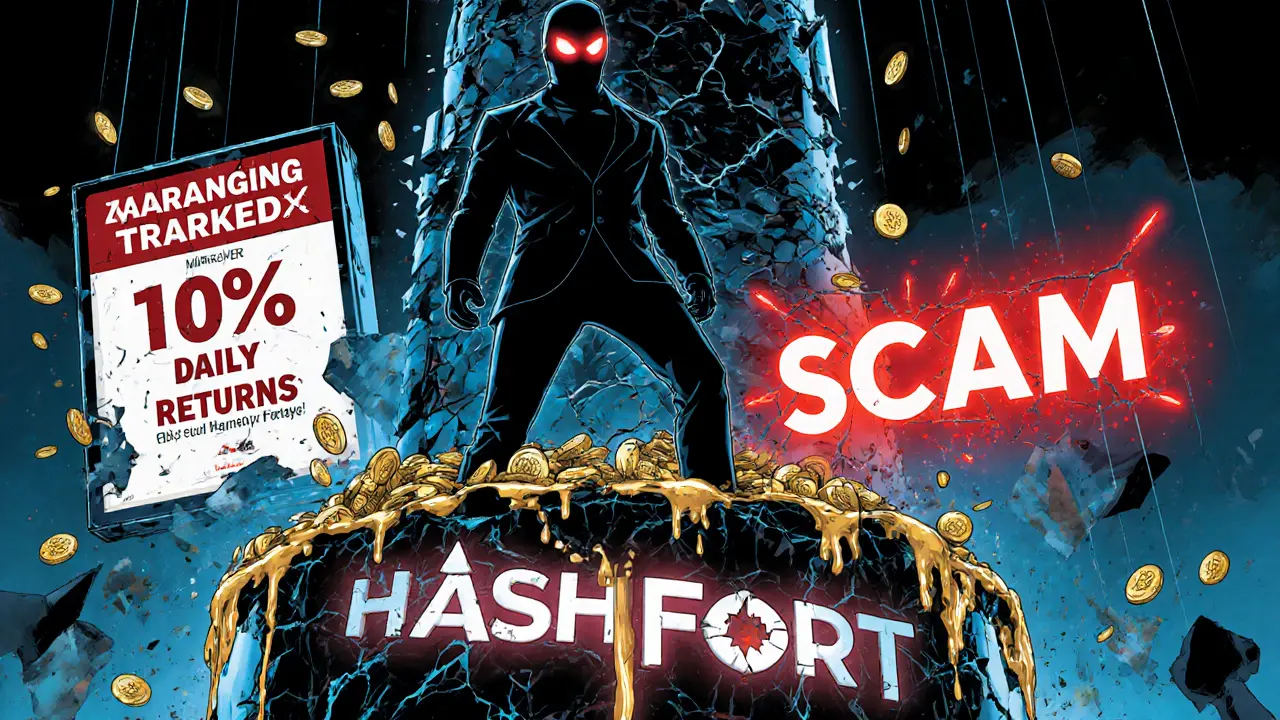
There’s no such thing as a legitimate crypto exchange called Hashfort. Not on any major exchange directory. Not in any official regulatory database. Not even in the quiet corners of Reddit or Telegram where obscure platforms usually hide. If you’ve seen ads for Hashfort promising high returns, low fees, or instant withdrawals, you’re being targeted by a scam.
Search engines don’t return results for Hashfort because it doesn’t exist as a real platform. No official website. No registered business license. No team members listed. No customer support email that works. No history of trades or user reviews on Trustpilot, Reddit, or CoinMarketCap. That’s not a glitch-it’s a red flag flashing in neon.
Why You Can’t Find Hashfort Anywhere
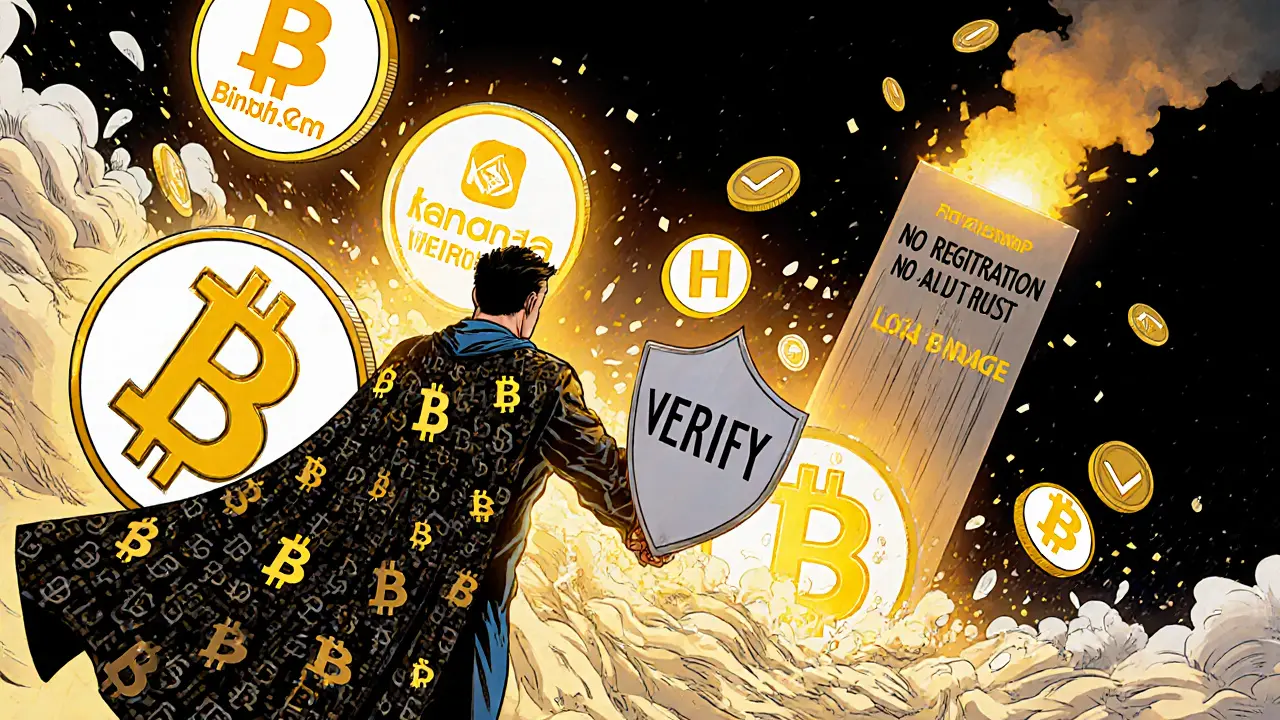
Legitimate crypto exchanges are public about who they are. They list their headquarters, their compliance team, their audit reports, and their licensing status. Binance, Coinbase, Kraken-they all have SEC or FCA registrations. Even smaller players like Kanga Exchange or LocalCoinSwap publish their legal documents. Hashfort doesn’t. And that’s not because it’s "too new." It’s because it’s fake.
Scammers create names that sound close to real ones. Hashfort? That’s a mix of "Hashflow" and "Fortress." Hashflow is a real DeFi trading platform that handles $500M+ in liquidity. Fortress? That’s a word used by legit exchanges to imply security. Scammers stitch those together to trick you into thinking you’re dealing with something trustworthy.
How the Hashfort Scam Works
The pattern is always the same:
- You see a Facebook ad or YouTube video promising 10% daily returns on crypto deposits.
- The site looks professional-clean design, fake testimonials, logos that look like they’re from Binance.
- You sign up, deposit $500 in USDT or BTC, and watch your balance climb.
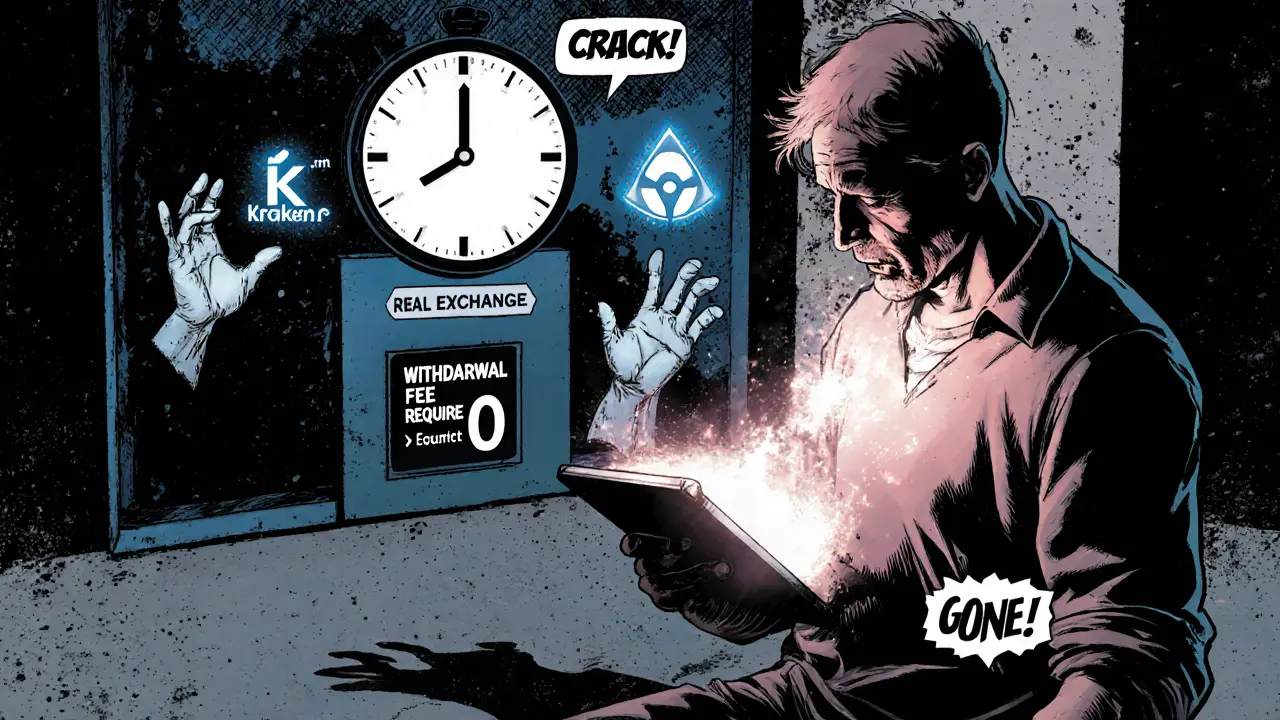
- You try to withdraw. They say "there’s a small verification fee" or "your account is flagged for compliance."
- You pay $100, then $200, then $500 more. The withdrawals never come.
- Your account vanishes. The website goes dark. The phone number is disconnected.
This isn’t speculation. It’s the exact method used by over 200 fake crypto platforms in 2024 alone, according to the FTC’s annual fraud report. The average victim loses $4,200. Some lose everything.
Real Exchanges vs. Hashfort: What to Look For
If you’re looking for a real crypto exchange, here’s what you need to check:
| Feature | Real Exchange (e.g., Crypto.com, Kanga) | Hashfort (Scam) |
|---|---|---|
| Company Registration | Publicly listed in EU, US, or Singapore regulatory databases | No registration found anywhere |
| Security Audits | Third-party audits from CertiK, Hacken, or PeckShield published online | No audits. No code repository on GitHub |
| Customer Support | Live chat, email, ticket system with response times under 24 hours | Only a contact form that never replies |
| Deposit Methods | Bank transfer, credit card, USDT, BLIK, Apple Pay | Only crypto deposits accepted-no fiat options |
| User Base | Millions of active users. Verified reviews on Trustpilot, Reddit | No user reviews. No social media followers beyond bot accounts |
What You Should Do Right Now
If you’ve already sent crypto to Hashfort:
- Stop sending more money. No amount will unlock your funds.
- Take screenshots of the website, your transaction IDs, and any chat logs.
- Report it to your local financial crimes unit. In the U.S., file a report at ic3.gov. In the EU, use Europol’s cybercrime portal.
- Warn others. Post on Reddit’s r/CryptoCurrency and r/Scams. Scammers rely on silence.
If you haven’t deposited yet:
- Close the tab. Don’t even click "Sign Up."
- Use only exchanges with a proven track record: Crypto.com, Kraken, Kanga Exchange, or LocalCoinSwap.
- Check if the exchange is listed on CoinMarketCap or CoinGecko. If it’s not, it’s not real.
- Never trust promises of guaranteed returns. No one can guarantee profits in crypto.
Where to Trade Crypto Safely in 2025
Here are three legitimate, regulated exchanges you can use today:
Crypto.com - Offers over 300 cryptocurrencies, staking, a Visa card, and insurance for custodied assets. Licensed in the U.S., EU, and Canada. Uses multi-factor authentication and cold storage for 95% of funds.
Kanga Exchange - Based in Europe, supports futures trading up to 100x leverage, and has a launchpad for new tokens. Accepts bank transfers and BLIK payments in Poland. Fully licensed under MiCA regulations.
LocalCoinSwap - A peer-to-peer exchange where you trade directly with other users. No KYC required if you stay under $1,000. Uses smart contract escrow to protect both sides. Supports 20+ cryptocurrencies and 300+ payment methods.
All three have been operating for over five years. All three have public teams. All three have been audited. None of them will ever ask you to pay a fee to withdraw your own money.
Why This Matters More Than You Think
Crypto scams don’t just steal money. They erode trust in the whole industry. Every time someone loses $5,000 to Hashfort, it makes it harder for real projects to get funding. It pushes regulators to crack down harder on everyone-even the good ones.
There’s nothing wrong with wanting to make money in crypto. But there’s everything wrong with chasing quick cash through fake platforms. The real opportunity isn’t in some mysterious exchange with no name. It’s in learning how to trade safely, understanding blockchain tech, and using platforms that have stood the test of time.
Don’t be the next statistic. If it sounds too good to be true, it is. And if you can’t find it on CoinMarketCap, it doesn’t exist.
Is Hashfort a real crypto exchange?
No, Hashfort is not a real crypto exchange. There is no official website, regulatory registration, team members, or user reviews for Hashfort. All search results point to it being a scam platform designed to steal crypto deposits.
Why do people think Hashfort is legitimate?
Scammers use fake websites that copy the design of real exchanges like Binance or Crypto.com. They use names that sound similar to real platforms like Hashflow or Fortress. They post fake testimonials and promise unrealistic returns to trick users into depositing crypto.
What should I do if I sent crypto to Hashfort?
Stop sending more money immediately. Save screenshots of the website, your transaction IDs, and any communication. Report the scam to your local cybercrime authority-like the FTC in the U.S. or Europol in Europe. Unfortunately, recovering funds from these scams is extremely rare, but reporting helps shut them down.
Are there any crypto exchanges similar to Hashfort that are real?
Hashfort is not similar to any real exchange-it’s a fake name. But if you’re looking for platforms with similar features, check out Kanga Exchange for futures trading, Crypto.com for ease of use, or LocalCoinSwap for peer-to-peer trading. All are regulated, audited, and have years of history.
How can I avoid crypto scams in the future?
Only use exchanges listed on CoinMarketCap or CoinGecko. Never trust platforms that ask for fees to withdraw your own funds. Check for regulatory licenses, third-party audits, and real user reviews. If you can’t find a team or HQ location, walk away. And never invest more than you can afford to lose.
Stick to the big names. Do your homework. And remember-real crypto doesn’t need hype. It needs trust.
Puspendu Roy Karmakar
November 27, 2025 AT 20:03Bro, I just lost $800 to this Hashfort thing last week. Thought it was legit ‘cause the site looked so clean. Now I’m kicking myself. Don’t let it happen to you.
Evelyn Gu
November 29, 2025 AT 19:34I can’t believe people still fall for this… I mean, if a platform doesn’t even have a LinkedIn page for its ‘team,’ or a single real review on Trustpilot, why are you even clicking? It’s not even a red flag-it’s a whole damn fire alarm going off in neon letters, and we’re still walking in like it’s a sale?
Shelley Fischer
November 30, 2025 AT 11:23It’s alarming how systematically these scams are engineered to exploit cognitive biases. The use of lexical mimicry-combining legitimate brand elements like ‘Hashflow’ and ‘Fortress’-is a textbook case of linguistic phishing. The absence of regulatory presence is not merely an oversight; it is a definitive ontological nullity.
Michael Fitzgibbon
December 1, 2025 AT 18:02I’ve seen this script play out too many times. People aren’t stupid-they’re tired, hopeful, and desperate for a break. That’s what these scammers count on. The real tragedy isn’t the money lost-it’s the way it makes people distrust everything, even the good stuff.
Komal Choudhary
December 2, 2025 AT 21:46OMG I JUST GOT A DM FROM SOMEONE SENDING ME A HASHFORT LINK!! I BLOCKED THEM BUT LIKE?? WHY DO THEY KEEP DOING THIS??
Tina Detelj
December 3, 2025 AT 12:23Every time I see one of these scams, I think about how the human brain is wired to believe in miracles… and how scammers have reverse-engineered that wiring into a profit machine. We want to believe in abundance, so they give us a glittery lie wrapped in a fake security badge. And we hand over our crypto like it’s a birthday gift.
Wilma Inmenzo
December 3, 2025 AT 23:04Wait… so if Hashfort doesn’t exist… then who’s running the ads? The government? Big Crypto? The NSA? Because I’ve seen the same ads on three different YouTube channels-AND THEY ALL USE THE SAME VOICE ACTOR. Coincidence? I think NOT.
priyanka subbaraj
December 4, 2025 AT 14:25I cried when I lost my savings. Now I’m just angry. And I’m telling everyone.
George Kakosouris
December 5, 2025 AT 02:34Hashfort’s architecture is a classic example of a Sybil attack vector-low-cost identity fabrication deployed at scale to mimic legitimacy. Their UI/UX is deliberately modeled after Kraken’s 2021 interface, which suggests a high degree of operational sophistication. This isn’t some guy in a basement. This is a coordinated, offshore syndicate.
Tony spart
December 5, 2025 AT 23:05why do yall keep fallin for this crap? if u cant tell its a scam then u prob shouldnt be in crypto. usa is full of dumbasses. get a job and save your money like a normal person.
Ben Costlee
December 7, 2025 AT 15:44I want to say thank you for writing this. I’ve been in crypto for seven years and seen dozens of these. But I’ve also helped friends recover from them-mostly by just listening. You’re not alone. And you’re not dumb. This isn’t about intelligence. It’s about trust. And these people weaponize that.
Mark Adelmann
December 8, 2025 AT 06:06Just shared this with my cousin who almost deposited $2k into Hashfort. He thought the ‘24/7 support’ was legit. I showed him the ‘contact us’ form-no replies in 6 months. He laughed and said, ‘Man, I’m glad you’re around.’
ola frank
December 9, 2025 AT 21:48From a protocol-level perspective, the absence of on-chain verification mechanisms (e.g., verified contract addresses, transparent liquidity pools, or multisig treasury structures) constitutes a fundamental violation of decentralized trust assumptions. Hashfort operates entirely within a centralized, opaque, and non-auditable environment-making it not merely fraudulent, but antithetical to blockchain’s core ethos.
imoleayo adebiyi
December 11, 2025 AT 08:42This is very important. I live in Nigeria and these scams are everywhere. People think they are rich because they see fake screenshots. I tell them: if it’s real, why can’t you find it on CoinMarketCap? Silence. Then they send the money.
Angel RYAN
December 12, 2025 AT 21:23Thanks for this. I’ve been trying to warn my group chat for weeks. Now I can just send this link.
stephen bullard
December 14, 2025 AT 01:53I used to think crypto was the wild west. Now I think it’s more like a carnival-lots of shiny tents, fake prizes, and people shouting ‘win big!’ while the real game is happening in the back room. Hashfort? Just another tent with a broken sign.
SHASHI SHEKHAR
December 14, 2025 AT 05:40Bro, I did a deep dive on Hashfort last month. Checked WHOIS, domain creation date (2023-11-07), used the Wayback Machine-nothing before 2024. No social media growth curve, just bots. Even the testimonials? All stock photos with names like ‘John D.’ and ‘Maria K.’-no last names, no LinkedIn, no nothing. And the ‘support email’? It’s hosted on a free Gmail alias. That’s not shady. That’s a neon sign saying ‘I’M A SCAM.’
Vaibhav Jaiswal
December 16, 2025 AT 02:42Been there. Lost my rent money. Took me 6 months to get back on my feet. Now I just check CoinMarketCap before I even look at a site. Simple. But it works.
Abby cant tell ya
December 17, 2025 AT 17:31Oh my god I knew it. I told my friend not to use it and she called me paranoid. Now she’s crying in our group chat. I’m not sorry.
Janice Jose
December 19, 2025 AT 16:11Thank you for this. I was just about to sign up. Your post saved me.
Savan Prajapati
December 20, 2025 AT 14:22Scam. Don’t touch. Move on.
Michael Labelle
December 21, 2025 AT 20:52It’s weird how these scams feel real. The logos, the animations, the fake customer service bots… it’s like they hire UX designers from legit companies. Scary how good they’ve gotten.
Joel Christian
December 21, 2025 AT 23:32why is everythng so hard now? i just wanted to make some money… i didnt even know it was fake… my bad…
Shelley Fischer
December 23, 2025 AT 18:11It’s worth noting that the FTC’s 2024 report explicitly identifies lexical mimicry as the primary vector of deception in crypto scams. The fact that Hashfort borrows phonological and semantic elements from Hashflow and Fortress is not accidental-it’s a deliberate heuristic exploitation designed to trigger System 1 cognitive processing. In layman’s terms: they’re not trying to fool the smart ones. They’re trying to bypass the smart ones’ defenses by appealing to the lazy, trusting part of the brain.