
When you send crypto, pay for a DeFi trade, or mint an NFT, you’re not just moving money—you’re paying for space on a blockchain. That cost is called the base fee, the minimum price set by the network to include your transaction in the next block. Also known as the dynamic gas fee, it’s not fixed, not optional, and it changes every few seconds based on how busy the network is. Unlike old-school transaction fees where you paid a flat rate, the base fee is automated, burned, and tied directly to demand. If everyone’s trading at once, the fee goes up. If the network is quiet, it drops. This system keeps blockchains from getting clogged, but it also means your trade could cost $0.10 one minute and $5 the next.
The base fee, the minimum price set by the network to include your transaction in the next block is most visible on Ethereum, but similar models now run on Layer 2s like Base, a low-cost Ethereum scaling network built by Coinbase, Arbitrum, and Optimism. On Base, for example, base fees are often under $0.01 because it’s designed to be cheap and fast. That’s why memecoins like Brat (BRAT), a community-driven memecoin built on the Base blockchain can thrive there—high volume, low cost. But on Ethereum mainnet, a simple swap can cost ten times more during peak hours. The base fee doesn’t go to miners anymore—it’s burned, which helps reduce supply and makes the network more deflationary over time.
What you’re really paying for isn’t just processing power—it’s priority. Higher base fees mean your transaction gets picked up faster. If you’re swapping tokens during a big airdrop or trying to buy into a new token launch, ignoring the base fee means your trade might not even go through. That’s why tools like DexBand track real-time base fee trends across chains, so you don’t overpay or get stuck waiting. You’ll also see base fee patterns in posts about MiCA regulation, the EU’s framework that requires crypto platforms to disclose transaction costs to users, or when exchanges like OraiDEX, an AI-powered decentralized exchange on Oraichain highlight their low fees as a selling point. Even tokenomics designs now factor in base fee volatility—projects that rely on frequent user interactions have to build fee buffers into their models.
So whether you’re trading BRAT on Base, dealing with Ethereum congestion, or just trying to avoid paying $20 to send $50 worth of crypto, understanding the base fee isn’t optional—it’s essential. Below, you’ll find real breakdowns of how fees impact everything from memecoins to regulated exchanges, and how to trade smarter without getting ripped off by hidden costs.
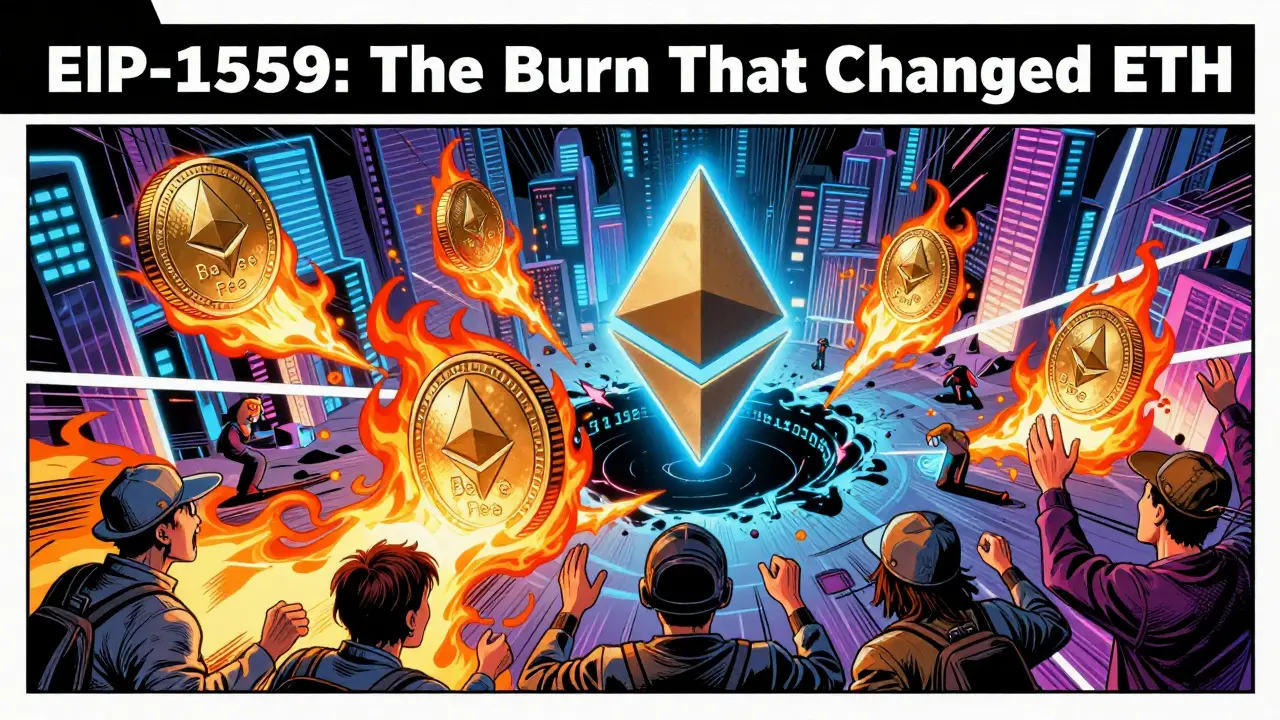
EIP-1559 revolutionized Ethereum's fee system by burning base fees, reducing supply pressure, and making transactions predictable. Over 2.5 million ETH have been burned since 2021, turning ETH into a deflationary asset during high usage.