
If you are looking for a place to move millions of dollars, this probably isn't your spot. However, if you are a DeFi enthusiast experimenting with micro-transactions or niche tokens on a Layer-2, it is worth understanding how this specific implementation works and where the pitfalls lie.
Quick Summary: What You Need to Know
- The Big Win: Transaction fees are incredibly low, often averaging around $0.003 per swap.
- The Big Problem: Liquidity is very thin. With only about 6 supported cryptocurrencies, your options are limited.
- Market Position: It dominates the small Arbitrum Nova DEX niche but is a tiny player in the global crypto market.
- User Effort: You cannot just "log in." You need a compatible wallet and the specific network settings for Arbitrum Nova.
The Tech Behind the Trade: Arbitrum Nova and AMMs
To understand why this exchange exists, you first have to understand Arbitrum Nova is a layer-2 scaling solution for Ethereum that uses optimistic rollups to process transactions off-chain. By bundling transactions together, it achieves a throughput of 4,000 to 7,000 transactions per second, which is a massive jump from Ethereum's modest 15-45 TPS.
Sushiswap operates as an Automated Market Maker (or AMM), a type of DEX that uses liquidity pools instead of traditional order books to facilitate trades. Instead of waiting for a buyer and seller to agree on a price, you trade against a pool of assets. This is why liquidity is so critical. If a pool is "thin" (meaning it doesn't have much money in it), a single large trade can push the price way up or down, causing you to lose money through slippage.
Fees and Trading Costs: The Main Attraction
Let's talk about the real reason anyone uses this platform: the cost. Trading on the Ethereum mainnet can feel like a robbery, with gas fees swinging between $1.50 and $5.00 for a simple swap. On Sushiswap (Arbitrum Nova), that cost drops to roughly $0.01 or less.
The trading fee structure generally follows the standard SushiSwap model: a 0.3% fee per trade. Most of that (0.25%) goes back to the people providing the liquidity, and a small slice (0.05%) goes to xSUSHI stakers. For a retail trader, this means you can execute a strategy with $10 or $20 without the fees eating your entire investment.
| Feature | Ethereum Mainnet | Sushiswap (Arbitrum Nova) |
|---|---|---|
| Average Gas Cost | $1.50 - $5.00 | ~$0.003 - $0.01 |
| Trade Speed | Slow (15-45 TPS) | Fast (4,000+ TPS) |
| Accessibility | Universal | Requires L2 Wallet Config |
The Liquidity Crisis: Why You Should Be Careful
Low fees are great, but they don't matter if the exchange is a ghost town. This is where the Sushiswap Arbitrum Nova implementation struggles. Most reporting services show a very limited selection of assets-often only about 6 cryptocurrencies. When you only have a handful of trading pairs, you run into a massive problem called "price impact."
For example, if you try to swap a significant amount of USDC for WETH in a thin pool, you might end up getting a much worse price than the current market rate. While some data suggests the USDC/WETH pair is the most active, other reports show the MOON pair taking the lead. This inconsistency in data usually means that the volume is too low for tracking services to agree on. In some cases, the 24-hour volume is barely over $100, which is essentially zero in the world of professional trading.
How to Get Started: The Technical Hurdle
You can't just sign up with an email and password here. Because it is a decentralized platform, you need a Web3 wallet like MetaMask, a cryptocurrency wallet used to interact with the Ethereum blockchain and its layer-2 networks.
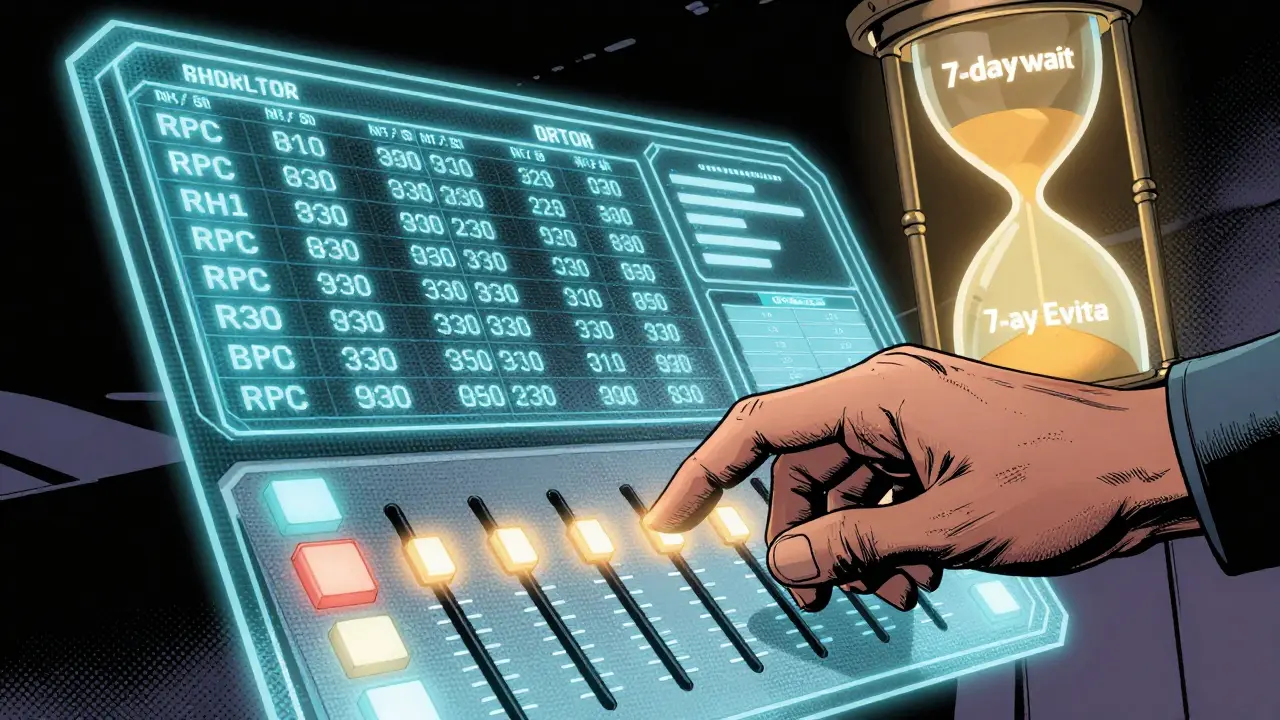
To actually see your funds and trade on this specific version of Sushiswap, you have to manually configure your wallet with the Arbitrum Nova RPC settings. You'll need the Network Name (Arbitrum Nova), the RPC URL (https://nova.arbitrum.io/rpc), and the Chain ID (42170). For a seasoned crypto user, this takes thirty seconds. For a beginner, it is a daunting barrier that often leads to mistakes.
Security and Risks
Since this is built on Arbitrum's optimistic rollup technology, there is a specific risk you should know about. If you want to move your funds back to the Ethereum mainnet, there is a standard 7-day fraud-proof window. This means your money isn't instantly available on the main chain; it's a security feature to prevent theft, but it can be a nightmare if you need your funds immediately.
Furthermore, the lack of a broad user base means there are very few community reviews or "stress tests" from retail traders. You are relying entirely on the underlying smart contracts of the SushiSwap protocol, which are generally well-audited, but the specific liquidity environment on Nova is highly volatile.
Final Verdict: Who is this for?
If you are a "whale" or a professional trader, stay away. The liquidity is simply not there, and you will lose money to slippage. However, if you are a DeFi hobbyist who likes to play with small amounts of money and wants to experience the absolute lowest fees possible, it is a fun playground.
Right now, the platform feels like a side project rather than a primary hub. The broader SushiSwap ecosystem is massive, supporting over 30 chains, but the Arbitrum Nova version is a niche implementation. Until they attract more market makers and a wider variety of tokens, it will remain a tool for the few rather than the many.
Is Sushiswap (Arbitrum Nova) safe to use?
The platform uses the audited smart contracts of the SushiSwap protocol and the secure infrastructure of Arbitrum Nova. However, the primary risk is not a "hack" but "liquidity risk," meaning you might get a very bad price on your trade due to the small size of the pools.
Why are the fees so much lower than on Ethereum?
This is thanks to Arbitrum Nova's layer-2 technology. Instead of every transaction being processed individually on the Ethereum mainnet, thousands of trades are bundled together and settled as a single batch, which spreads the cost across all users.
Can I trade any coin on this exchange?
No. You are limited to a very small selection of coins (around 6) that have liquidity pools established on the Arbitrum Nova network. If you need a wider variety of tokens, you'll need to use the main Ethereum version of Sushiswap or a different DEX.
What is the 7-day withdrawal delay?
Because Arbitrum Nova uses optimistic rollups, there is a mandatory waiting period before funds moved back to the Ethereum mainnet are finalized. This allows the network to verify that no fraudulent transactions occurred.
Do I need to pay for a subscription to use Sushiswap?
No. As a decentralized exchange, there are no subscription fees. You only pay the standard 0.3% trading fee and the tiny network gas fee for each transaction you perform.
nathan jones
April 17, 2026 AT 02:02fees are definitely a win here.
Alex Long
April 18, 2026 AT 21:16Ghost town is right. Why bother with a DEX that has like six coins? Total waste of time.
Robert Preston
April 19, 2026 AT 23:48The slippage on Nova is no joke if you aren't careful. I've seen people get absolutely wrecked trying to swap more than a few hundred bucks because they didn't check the pool depth first. Always use a tool like DexScreener to verify the liquidity before you hit swap, otherwise you're basically donating your money to the pool.
Andrew Southgate
April 20, 2026 AT 17:16It is really heartening to see the evolution of Layer-2 solutions like Arbitrum Nova because they genuinely open the door for people who can't afford those brutal Ethereum gas fees, and while the liquidity might be thin right now, that is often just a chicken-and-egg problem where users wait for liquidity and liquidity providers wait for users, but if we keep experimenting with these smaller pools, the ecosystem will naturally grow and mature over time. I personally find that using a wallet like MetaMask makes the setup process a bit more intuitive once you get the hang of adding custom RPCs, and honestly, the 7-day withdrawal window is a small price to pay for the added security of optimistic rollups, so I'd encourage anyone who is just curious about DeFi to give it a shot with a tiny amount of money just to see how the tech feels in practice.
Trudy Morse
April 22, 2026 AT 11:56Basically just a playground for micro-caps. It's a classic trade-off.
Anna Grealis
April 22, 2026 AT 23:27The 7-day delay is clearly a way for them to control the flow of funds and probably hide something from the users while they manipulate the pools behind the scenes. It's too convenient that they just "need time" to verify things.
Tracy Sperandio
April 23, 2026 AT 08:10This is absolutely electric for the little guys! Finally, we can stop letting the whales dictate the entire game with their massive wallets and high gas tolerance. It is a dazzling opportunity to dive into the deep end of DeFi without needing a corporate bank account just to pay the transaction fees. Let's get those micro-transactions moving and shake things up a bit!
Prachi Bhadarge
April 23, 2026 AT 16:44Imagine actually thinking a 7-day wait is a "security feature" and not just an annoying hurdle. Pure comedy.
Gillian Kent
April 25, 2026 AT 05:44I tried to set up the wallet and it was so confuzing. The RPC stuff is just too much for normal ppl to deal with honestley.
Evan Iacoboni
April 26, 2026 AT 03:08Why are there only 6 coins? That makes no sense for a protocol as big as Sushi. They need to aggressively onboard more pairs or the whole Nova implementation is basically dead on arrival.
Nishant Goyal
April 27, 2026 AT 09:33Small steps lead to big gains. Good for learning.
Kevin Lư
April 28, 2026 AT 15:28I'm just here for the vibes, but honestly, whoever complained about the 7 days is just being impatient. Just chill and let the tech work!
Vicky Duffala
April 28, 2026 AT 17:59It's all about the journey of decentralization! Even if it's a niche spot, it's like a tiny digital village where we can all learn how the future of finance will look. 🚀 Just keep exploring and don't let the fear of slippage stop you from trying something new!
Mike Kempenich
April 29, 2026 AT 10:21I think it's a fair point about the liquidity, but we should be optimistic that more users will find their way here as L2s become the norm.