
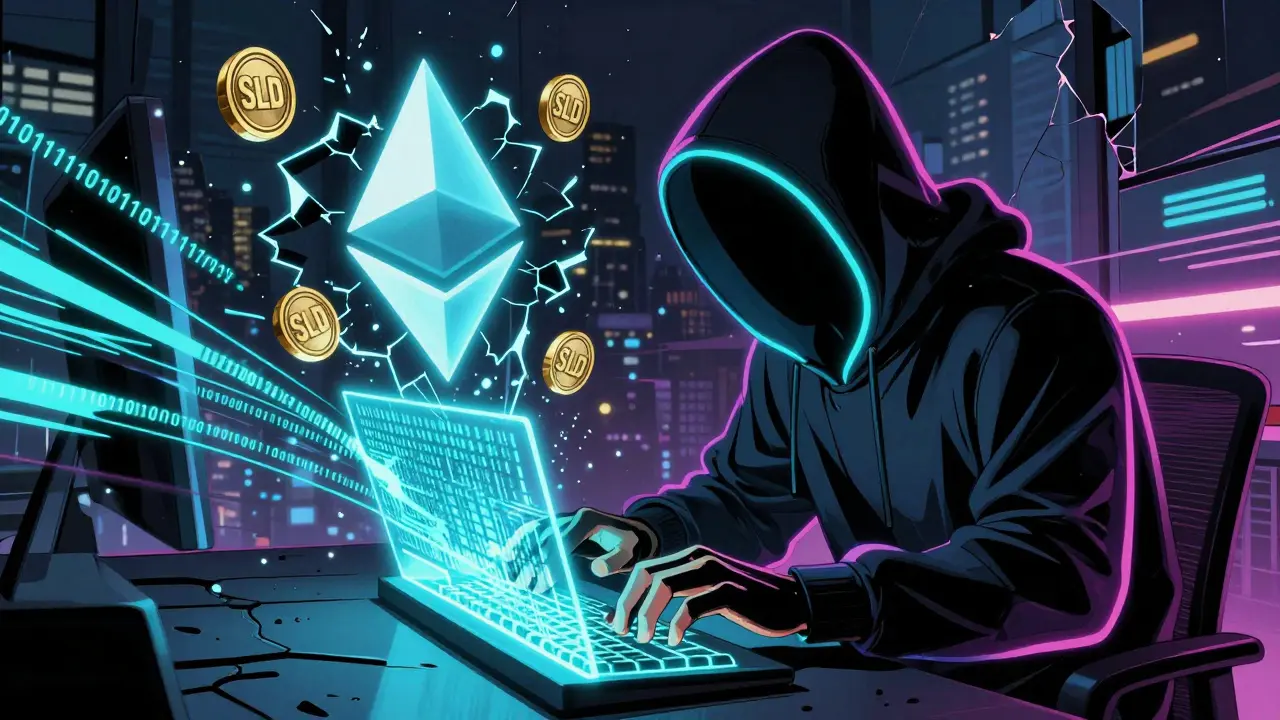
The Shield DAO SLD airdrop wasn’t just another token giveaway. In August 2021, during the height of DeFi’s explosive growth, Shield - then still rebranding from ShieldEX - dropped 4,085,754 SLD tokens to a tight group of early contributors. This wasn’t open to everyone. It wasn’t based on holding a coin or following a Twitter account. It was earned through real, technical participation: testing unstable networks, finding bugs, and helping build the foundation of a new kind of derivatives protocol.
What Was Shield DAO?
Shield wasn’t trying to be another DeFi lending platform or DEX. It was building something more complex: a decentralized infrastructure for perpetual options - on-chain contracts that let traders hold positions indefinitely without the hassle of rolling them over. That’s a big deal. In traditional DeFi, options expire, and traders constantly have to manage new positions. Shield wanted to remove that friction using a non-cooperative game theory model, meaning the system was designed so that no single participant could game it without breaking the whole thing.
The project launched on Ethereum, but quickly expanded to Binance Smart Chain (BSC) for testnet activity. That dual-chain approach became critical during the airdrop. The SLD token was built on Ethereum, but claiming it required switching your wallet to BSC. That detail tripped up a lot of people.
How the Airdrop Actually Worked
The airdrop ran from August 5 to September 12, 2021. If you weren’t involved before August, you missed your shot. There were only four ways to qualify:
- Participated in Shield’s Kovan or BSC testnet - meaning you traded, deposited, or interacted with live but unstable versions of the platform.
- Applied for Shield’s ITO (Initial Token Offering), even if it never launched.
- Joined the first or second Bug Bounty Programs and reported valid vulnerabilities.
- Took part in the Shield Gleam Series campaigns - likely social or community-driven tasks.
Eligible users had to go to the official claim page, connect their MetaMask wallet, and switch networks from Ethereum to BSC. That step was non-negotiable. Many users got stuck here, thinking they’d done everything right - only to realize their wallet was on the wrong chain. Shield released a second claiming window on August 12, 2021, specifically for those who ran into issues the first time.
After September 12, any unclaimed SLD tokens were burned and redistributed into the community treasury. No exceptions. No extensions. This wasn’t a soft launch - it was a clean, strict distribution.
Why the Airdrop Was Different
Most airdrops in 2021 were about grabbing attention. Projects gave away tokens to anyone who signed up, followed, or shared a post. Shield didn’t do that. It rewarded technical contributors. If you found a bug in their testnet, you got paid. If you spent hours testing liquidity pools on Kovan, you got rewarded. This wasn’t marketing - it was community building with skin in the game.
Compare that to newer models like Skyren DAO, which lets users farm airdrops from dozens of projects at once using AI-driven strategies. Shield’s approach was old-school: earn your place. That’s why the distribution was relatively small - under 4.1 million tokens - but highly targeted. The people who got SLD were the ones who actually helped build the protocol.
What Happened to SLD After the Airdrop?
The tokenomics of SLD have been confusing ever since. CoinMarketCap lists a max supply of 1 billion SLD, but current circulation and total supply show as 0. That doesn’t mean the tokens vanished - it means the data is stale or the token was restructured. The contract address (0x1ef6...95a084) still exists on Ethereum, but no active trading or liquidity pools are visible.
There’s been no public announcement about a token relaunch, listing on exchanges, or utility update since 2021. The original Shield derivatives protocol hasn’t made major public updates since then, either. The team went quiet. Some speculate the project was absorbed into another initiative. Others think it was shelved due to market conditions after the 2022 crypto crash.
The Confusion with Shield Protocol
Today, you’ll find another project called Shield Protocol - a blockchain-based 2FA platform that replaces centralized services like Google Authenticator. It’s got its own NFTs, gaming platform, and new airdrops. But it’s not the same thing.
The names are nearly identical. The branding looks similar. But the tech, the goals, and the tokenomics are completely different. The 2021 SLD airdrop had nothing to do with 2FA or NFT mystery boxes. This is a classic case of name collision in crypto - two unrelated projects using the same word, confusing newcomers and even long-time observers.
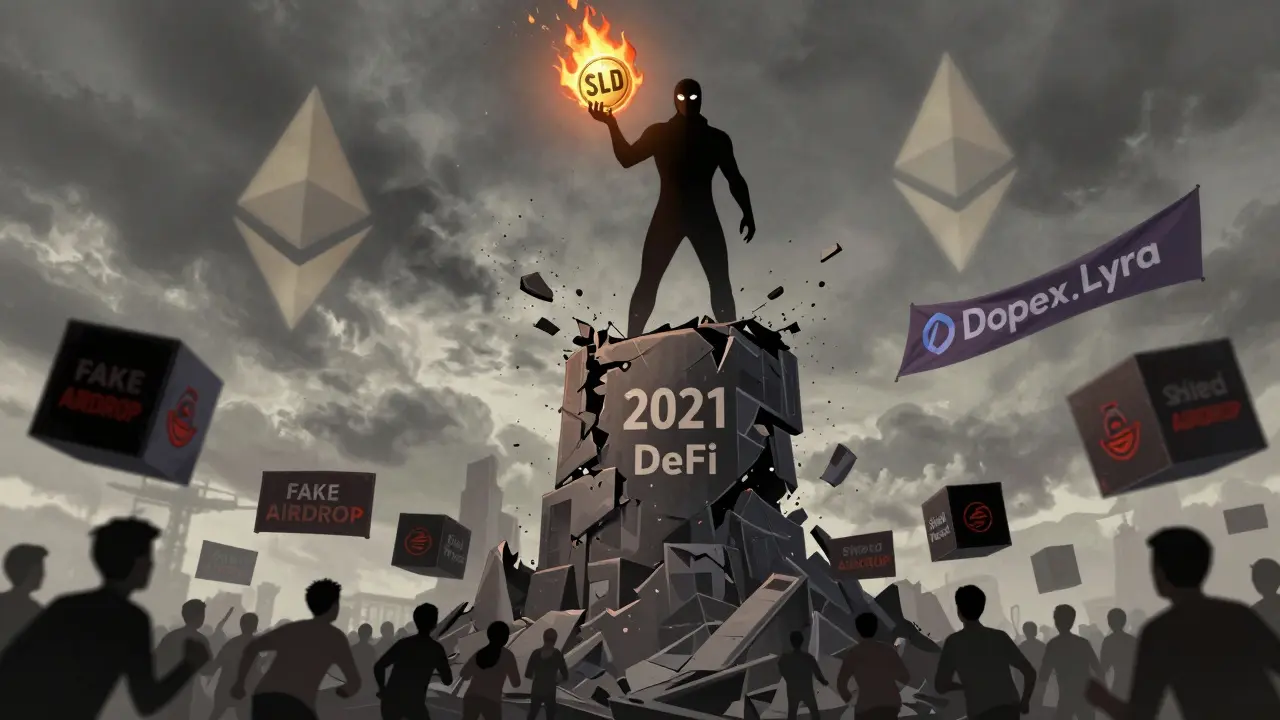
If you’re looking for your old SLD tokens, don’t get distracted by the new Shield Protocol. They’re separate. The original Shield DAO is effectively inactive. The SLD token, while technically still on-chain, has no current use or value.
What You Can Learn From This
The Shield DAO airdrop teaches you something important: not all airdrops are created equal. Some are marketing stunts. Others are tools to bootstrap real development. Shield chose the latter. It didn’t need a viral campaign. It needed engineers, testers, and security researchers. And it paid them in tokens - not promises.
If you’re considering participating in future airdrops, ask yourself: What am I actually contributing to? Are you just filling out a form, or are you testing code, reporting bugs, or helping design a product? The latter is how real value gets created in DeFi.
Also, pay attention to the network requirements. Shield’s requirement to switch to BSC was a hidden barrier. Many users didn’t know how to do it. Always check the technical setup before you start. Airdrops aren’t just about eligibility - they’re about execution.
Is There Any Way to Claim SLD Today?
No. The claiming window closed permanently on September 12, 2021. Even if you were eligible, the deadline passed. The contract still exists, but the claiming interface is offline. No official team is responding to claims or inquiries. The tokens are effectively frozen.
If you see anyone offering to help you claim SLD today, it’s a scam. No legitimate team is still distributing these tokens. The project is inactive.
What’s Next for Shield?
There’s no public roadmap for the original Shield DAO. The derivatives protocol hasn’t been updated since 2021. The team hasn’t posted on social media or Medium in years. The community forums are empty. It’s a ghost project.
That doesn’t mean the idea died. Perpetual options on-chain are still a huge unsolved problem in DeFi. Projects like Lyra and Dopex are now building similar tech, but with better funding, liquidity, and active development. Shield’s contribution was pioneering - but it didn’t survive the market shift.
If you’re interested in this space today, look at what’s alive: Lyra’s options markets on Arbitrum, Dopex’s decentralized options vaults, or Hegic’s on-chain options protocol. These are the successors to what Shield tried to build.
The SLD airdrop was a moment in time. It was a quiet, technical milestone in DeFi’s evolution - not a financial windfall. For those who participated, it was recognition. For everyone else, it’s a lesson: in crypto, the real rewards go to those who build, not just those who click.
Bill Sloan
January 18, 2026 AT 16:29Man, I remember testing Shield’s Kovan testnet back then - crashed my MetaMask three times trying to deposit liquidity. But when I finally got that SLD, it felt like a badge of honor. No other airdrop made me feel like I actually earned it. Still proud I was part of that crew.
Lauren Bontje
January 19, 2026 AT 03:01Oh please. You think getting a token for testing a broken prototype means anything? This is what happens when you reward amateurs with digital stickers. Real builders don’t need airdrops - they get paid in USD or equity. This whole thing was a glorified beta test for a project that died before launch.
Jill McCollum
January 20, 2026 AT 23:53omg yes!! i was one of the ones who switched to bsc and still got stuck 😭 i thought i did everything right but my wallet was on eth the whole time… i cried a little. but also, i’m so glad someone finally wrote about this. shield was real. it wasn’t just another ‘follow us for tokens’ scam. 🥺
Stephanie BASILIEN
January 21, 2026 AT 04:53It is, indeed, a profoundly instructive case study in the epistemology of decentralized governance and the ontological weight of token distribution mechanisms. One cannot help but observe that the Shield DAO’s decision to eschew performative marketing in favor of rigorous technical contribution reflects a rare fidelity to the foundational tenets of crypto-anarchism - a philosophy increasingly obscured by the performative spectacle of modern Web3.
Jason Zhang
January 22, 2026 AT 01:09Shield DAO was the last honest airdrop. After this, everything became a TikTok challenge. Now you got people farming 17 airdrops at once with bots. Shield? Nah. You had to sweat. You had to break shit. That’s why I still respect it. Even if the token’s dead, the vibe lives.
Deb Svanefelt
January 22, 2026 AT 08:41There’s something quietly beautiful about a project that didn’t care how many people got rich - it only cared who helped build it. I think that’s why so many of us still talk about SLD, even years later. It wasn’t about the money. It was about being seen. And in crypto, that’s rarer than a working smart contract.
Rod Petrik
January 24, 2026 AT 04:39Liza Tait-Bailey
January 24, 2026 AT 23:33soooo… if i did the gleam campaign but forgot to switch chains, does that mean i’m just… outta luck? 😅 i was so excited back then, now i just feel silly. but hey, at least i learned how to use bsc lol
Vinod Dalavai
January 26, 2026 AT 09:39Bro, this reminds me of my first time testing a DeFi protocol in 2020. No one paid us. We just did it because we believed. Shield was the first to say: ‘you did the work, here’s your share.’ That’s rare. I still follow Lyra now - same spirit, better funding. But Shield? First mover. Respect.
Tony Loneman
January 27, 2026 AT 04:59Let’s be real - this whole thing was a trap. Shield knew 90% of people would mess up the BSC switch. That’s why they burned the tokens. They wanted to flush out the weak. The real OGs? They got the tokens. The rest? They got a lesson in crypto humility. And now they’re crying on Reddit. Classic.
Anna Gringhuis
January 27, 2026 AT 16:05Wow. So the entire point of this post is to make people feel bad for missing out on a dead token? Congrats. You’ve turned a technical footnote into a nostalgia trip. Meanwhile, actual projects are building. But sure, let’s worship ghosts. 🙄
Haley Hebert
January 28, 2026 AT 09:33i still have the screenshot of my claim page from 2021. i never claimed it because i was scared i’d mess it up. now i just stare at it like it’s a lost photo of my dog. sometimes i wonder if i’m the only one who still thinks about this…
Hailey Bug
January 29, 2026 AT 17:56For anyone looking for active perpetual options protocols today: Lyra on Arbitrum is the closest thing to what Shield was trying to do - and it’s actually growing. Dopex is great for vaults. Hegic still has a loyal userbase. Shield was the prototype. These are the products.
CHISOM UCHE
January 31, 2026 AT 04:11Shield DAO’s non-cooperative game theory model was theoretically elegant - but the execution was plagued by insufficient liquidity primitives and poor UX design. The BSC dependency introduced a critical attack surface: wallet network misconfiguration. This is why most DeFi projects now abstract chain-switching via aggregators. Shield’s model was ahead of its time - but not ahead of its tooling.
Shaun Beckford
February 1, 2026 AT 21:27Let me tell you something - if you didn’t get SLD, you weren’t built for this. This isn’t a lottery. It’s a filter. Shield didn’t want you. They wanted the ones who broke their testnet and came back for more. You? You were just another clicker. Accept it. Move on.
Chris Evans
February 3, 2026 AT 07:34Think about it: what is a token but a story we tell ourselves? SLD was never meant to be traded. It was meant to be a relic. A digital scar. A tattoo that says: ‘I was here when the gods were still building.’ And now? The gods are gone. But the tattoo? Still there.
Pat G
February 4, 2026 AT 22:29They burned the tokens to hide the fact that they stole the code and sold it to a Chinese firm. That’s why the contract still exists but nothing works. They’re all in cahoots with the Fed. You think this is about DeFi? No. It’s about control. And you fell for it.
Alexandra Heller
February 5, 2026 AT 15:24It’s ironic. We spend our lives chasing value in digital tokens - but the real value was in the act of showing up. The late nights. The failed transactions. The bug reports no one thanked you for. Shield didn’t give you SLD. It gave you proof that you mattered. And that? That can’t be burned.
Telleen Anderson-Lozano
February 7, 2026 AT 03:26I got SLD. I still have it. I’ve never sold it. I don’t even know if it’s worth anything - but I keep it in my wallet like a keepsake. I tested their liquidity pool on Kovan at 3 a.m. after my kid went to sleep. I reported a reentrancy bug. No one knew it was me. But I knew. And that’s enough. Maybe this is why crypto still feels alive to me - not because of the charts, but because of the people who showed up when no one was watching.