
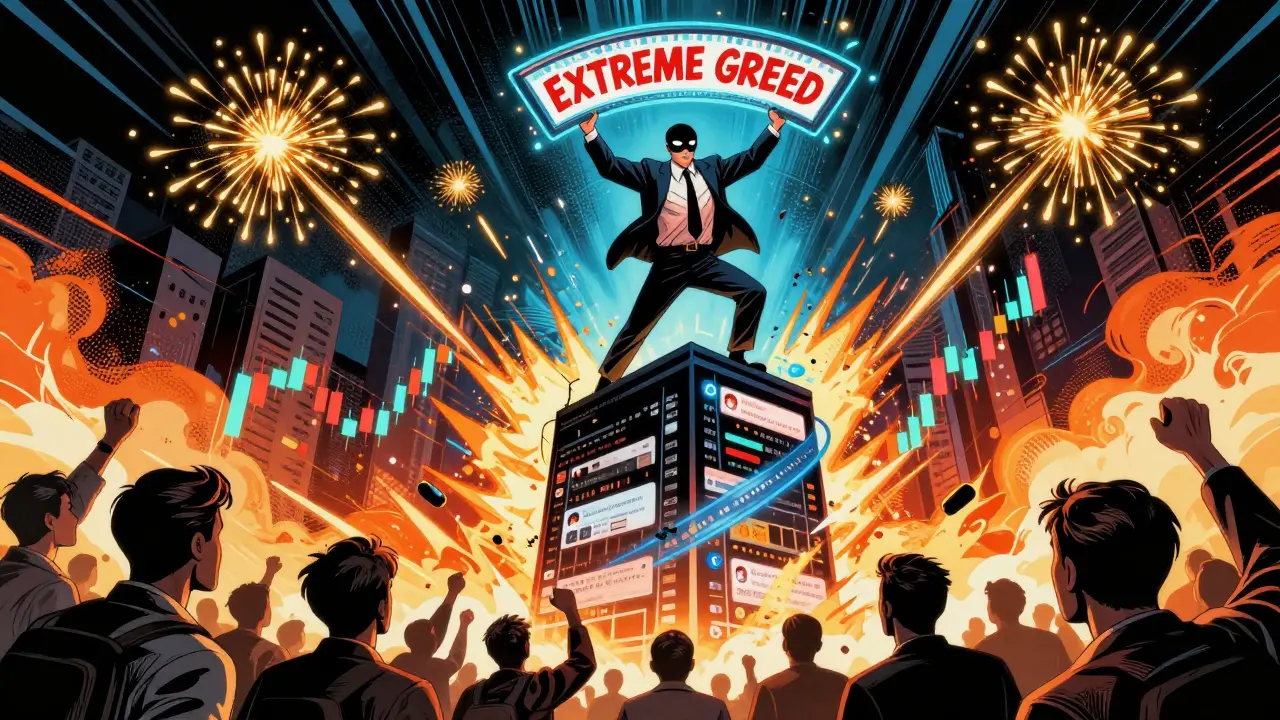
When you see a stock surge 20% in a day with no earnings report, no news, and no major catalyst, what’s really moving it? It’s not just numbers on a chart. It’s sentiment. Thousands of traders typing, posting, and reacting in real time - fear, greed, hope, panic - all turned into data that can predict price moves before they happen.
Sentiment analysis for trading isn’t science fiction. It’s a tool used by hedge funds, retail traders, and algorithmic systems to read the emotional temperature of the market. By scanning news headlines, social media posts, forum threads, and even earnings call transcripts, computers identify whether people are feeling bullish or bearish about a stock, crypto, or the whole market. And that feeling often shows up in price action - sometimes days before any technical indicator catches up.
How Sentiment Analysis Actually Works
At its core, sentiment analysis uses natural language processing (NLP) to turn words into numbers. A sentence like “This crypto is going to the moon!” gets tagged as +0.8 (strongly bullish). “I’m dumping all my shares before this crashes” becomes -0.9 (strongly bearish). Systems like Sentdex, PsychSignal, and Accern process millions of these snippets daily from thousands of sources - Twitter, Reddit, Bloomberg, financial blogs, and more.
These tools don’t just count positive or negative words. They understand context. “GameStop is a joke” could mean the stock is worthless - or it could mean the short-sellers are panicking. Advanced models like FinBERT and Accern’s SentimentGPT use deep learning trained on financial language to spot sarcasm, irony, and subtle shifts in tone. A CEO saying “we’re confident about the future” during a downturn might sound optimistic, but if their voice trembles and they avoid eye contact in the video, newer systems pick that up too.
The output? A sentiment score for each asset - updated every few minutes. That score becomes a signal. Buy when sentiment hits rock bottom and starts rising. Sell when everyone’s euphoric and the score climbs past a threshold. It’s not about predicting the future. It’s about spotting when the crowd’s emotion is out of sync with reality.
Why Sentiment Beats Traditional Indicators Sometimes
Technical analysis looks at price history. Fundamental analysis looks at balance sheets. Sentiment analysis looks at what people are thinking right now - before they act.
Take the 2021 GameStop squeeze. Reddit’s r/WallStreetBets started buzzing about the stock in mid-January. Sentiment scores spiked. By early February, the stock had jumped 1,700%. Technical charts showed nothing unusual until the breakout. Fundamental data said the company was struggling. But the crowd’s emotion? That was the real driver.
Same thing happened with Bitcoin in late 2020 and early 2021. News outlets were calling it a bubble. Analysts warned of crashes. But sentiment on Twitter and Telegram kept climbing. The price followed - eventually hitting $69,000. Sentiment didn’t cause the rally. But it was the earliest warning sign.
That’s the edge. Moving averages lag. RSI reacts. Sentiment anticipates. When the CNN Fear & Greed Index hits 80+ (extreme greed), the S&P 500 has corrected by 5% or more within 30 days in 83% of cases since 2015. When it drops below 20 (extreme fear), rebounds often follow. These aren’t perfect signals - but they’re early ones.
Where Sentiment Analysis Fails
Don’t mistake sentiment for a crystal ball. It breaks down badly during major events.
In March 2020, as the pandemic hit, the VIX spiked to 82. Markets crashed. But sentiment on social media? It stayed stubbornly optimistic. Retail traders kept posting “buy the dip.” Algorithms triggered buy signals based on sentiment - and got crushed. Why? Because fundamentals overpowered emotion. When global supply chains collapse and unemployment hits 15%, no amount of bullish tweets changes the math.
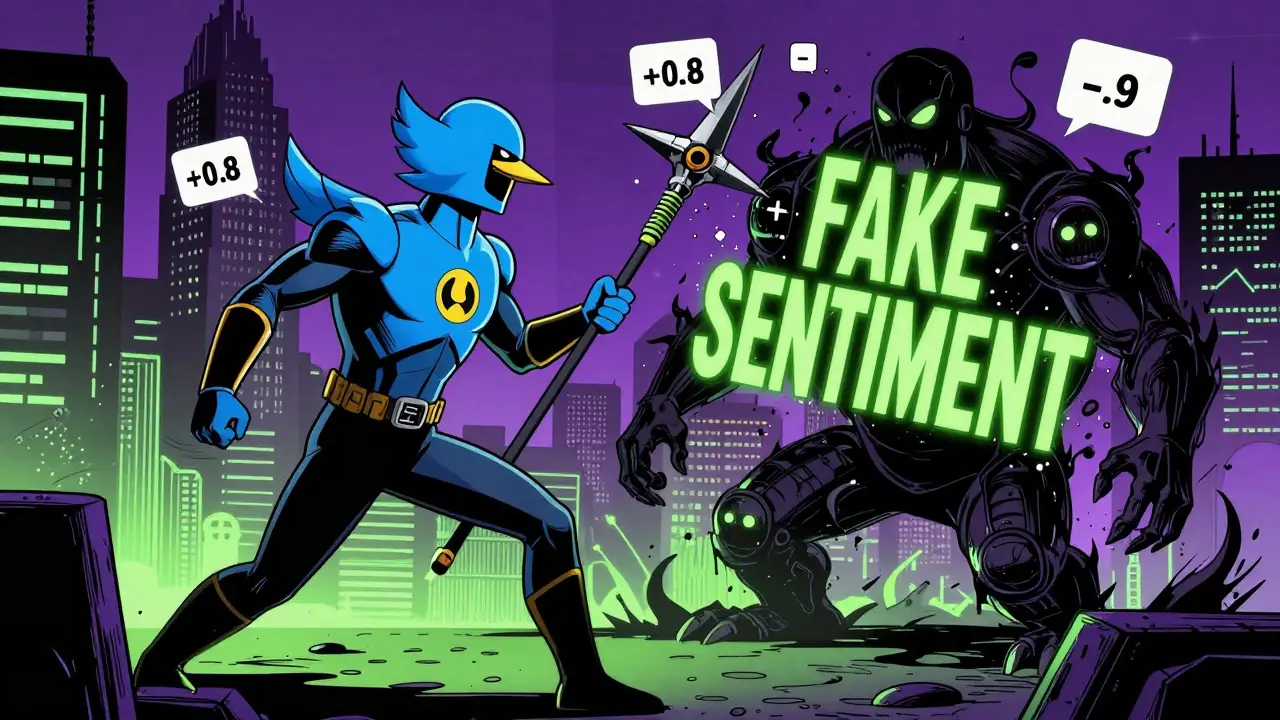
Another problem? Noise. Fake accounts. Paid shills. Coordinated pump-and-dump groups on Discord and Telegram. A 2023 MIT study found 41% of retail sentiment on financial platforms is artificially inflated. Your sentiment tool might think a stock is trending up - because bots are flooding the feed with hype. That’s why top traders never rely on sentiment alone. They use it as a filter: “Is this move supported by real emotion - or just spam?”
And then there’s overfitting. Some traders backtest a strategy using sentiment scores from 2018-2022 and find it works perfectly. Then they trade it live - and it fails. Why? Because the market changes. The platforms change. The language changes. What worked in 2021 won’t work in 2026 if the bots get smarter.
How Real Traders Use It
Most successful traders don’t use sentiment as a standalone system. They use it as a confirmation tool.
One common strategy is sentiment divergence. Price makes a new high, but sentiment doesn’t. That’s a red flag. The crowd isn’t as excited as the chart suggests. This happened with Apple in late 2022. Stock hit all-time highs. But sentiment scores from news and social media were flat or falling. Two weeks later, the stock dropped 12%. That’s a signal.
Another approach: buy when sentiment is extremely negative and price is oversold. In 2022, Bitcoin sentiment hit -0.85 on Sentdex. RSI was at 22. Price was $16,500. Traders who bought then saw a 150% gain by mid-2023. The key? Waiting for both sentiment and price to align. Not just one.
On platforms like thinkorswim, traders use the Volatility Index and Expected Move tools to narrow timing. Sentiment tells you when to look. Volatility tells you how much to expect. Combine them, and you’re not gambling - you’re managing risk.
One Reddit user, u/QuantTrader87, ran a simple strategy from 2018-2022: buy stocks with sentiment scores in the bottom 10%, sell those in the top 10%. Result? 18.7% annual returns. No fancy indicators. Just contrarian sentiment. But he didn’t trade every signal. He waited for volume confirmation. That’s the difference between luck and discipline.
Tools You Can Actually Use
You don’t need a $50,000 hedge fund setup to use sentiment analysis.
For retail traders:
- thinkorswim - Free sentiment indicators built into the platform (Vol Index, Social Sentiment)
- Sentdex - $499/month, but offers a 7-day free trial. Tracks 5,000+ stocks with real-time scores
- TradingView - Free sentiment scripts from community developers. Not as accurate, but good for learning
- FinBERT - Free open-source model. Requires Python skills, but you can plug it into your own data
For crypto traders:
- CryptoQuant - Tracks on-chain sentiment and social trends
- TheTie - Social media sentiment for top 100 cryptos
- LunarCrush - Aggregates social volume, engagement, and sentiment across platforms
Most of these tools give you a simple graph: green for bullish, red for bearish. The trick isn’t the tool. It’s knowing when to ignore it.
The Bottom Line: Sentiment Is a Compass, Not a Map
Sentiment analysis won’t tell you which stock to buy next week. But it will tell you if the market is drunk on hype - and when the hangover is coming.
It’s most powerful at extremes. When everyone’s bullish, be cautious. When everyone’s panicking, look for opportunities. It’s not about chasing trends. It’s about spotting when the crowd’s gone too far.
And it works best when layered with other signals. A stock with oversold RSI, rising volume, and rising sentiment? That’s a high-probability setup. A stock with overbought RSI, falling volume, and skyrocketing sentiment? That’s a trap.
The market isn’t rational. It’s emotional. And emotions leave traces - in tweets, in headlines, in forum posts. Sentiment analysis is just the tool that reads them. Use it wisely. Don’t let it replace your judgment. Let it sharpen it.
Can sentiment analysis predict stock prices accurately?
No - not on its own. Sentiment analysis identifies emotional trends that often precede price moves, but it doesn’t guarantee outcomes. Studies show sentiment scores correlate with price changes at 0.65-0.75 over 3-5 days for individual stocks, but this drops during major news events. It works best as a confirmation tool alongside technical and fundamental analysis.
Is sentiment analysis useful for cryptocurrency trading?
Yes - even more so than for traditional stocks. Crypto markets are heavily influenced by social media, with 30% of algorithmic trading signals in crypto coming from sentiment data, compared to 15% in equities. Platforms like LunarCrush and CryptoQuant track Twitter, Reddit, and Telegram chatter in real time, making sentiment a leading indicator for volatile assets like Bitcoin and Ethereum.
What’s the best free sentiment tool for beginners?
TradingView offers free community-built sentiment scripts, and thinkorswim includes built-in social sentiment indicators at no extra cost. For those willing to learn a bit of code, FinBERT is a free, open-source NLP model trained on financial text. It’s not plug-and-play, but it’s powerful and transparent.
Why do sentiment-based strategies fail during market crashes?
Because sentiment reflects emotion, not fundamentals. During events like the March 2020 crash, macroeconomic forces - lockdowns, supply chain collapse, job losses - overwhelmed retail investor optimism. Sentiment tools kept reading “buy” while the market kept falling. In these cases, fundamentals and volatility indicators like the VIX are far more reliable.
How much does professional sentiment data cost?
Premium services like Sentdex cost $499/month as of 2023. Institutional platforms like Accern and PsychSignal charge $10,000-$50,000/year for enterprise access. Most retail traders don’t need this level - free or low-cost tools are sufficient for learning and basic strategies. The real cost is time: learning to interpret signals correctly takes 20-30 hours of study.
Can sentiment analysis be manipulated?
Absolutely. A 2023 MIT study found 41% of retail financial sentiment on social media is artificially generated by coordinated groups - bots, paid promoters, and pump-and-dump rings. This is especially common in crypto and meme stocks. Always cross-check sentiment with volume, price action, and news. If sentiment spikes but volume stays flat, it’s likely fake.
Should I use sentiment analysis as my main trading strategy?
No. Only 13% of institutional traders use sentiment as a primary signal. The rest use it as a secondary confirmation tool. It’s most effective when combined with price action, volume, and fundamentals. Relying solely on sentiment is like driving with only a rearview mirror - you’ll see what happened, but not what’s ahead.
Jeffrey Dufoe
January 27, 2026 AT 07:09Man, I’ve been using TradingView’s free sentiment scripts and it’s crazy how often it picks up before the price moves. Not perfect, but it’s like having a sixth sense when the crowd’s getting wild.
Used to ignore it, now I check it before I even look at the chart. Just a quick glance. If it’s screaming buy but volume’s flat? Walk away.
Ashok Sharma
January 27, 2026 AT 19:59Sentiment analysis is a valuable tool, but it must be used with discipline and in conjunction with other analytical methods. The emotional component of markets is undeniable, yet it should never override fundamental reasoning.
As a trader from India, I’ve seen how social media hype can distort perceptions. Always verify with data, not just noise.
Margaret Roberts
January 29, 2026 AT 13:00They’re lying to you. Every single one of these ‘sentiment tools’ is owned by Wall Street. The algorithms are rigged to pump certain stocks so hedge funds can dump on retail. That 41% bot number? That’s just what they want you to think.
They feed you fake fear and fake greed to make you trade at the exact wrong time. The VIX doesn’t care about your tweets. It’s all controlled. Wake up.
And don’t even get me started on ‘FinBERT’ - that’s just a front for the same people who run the Fed.
Tselane Sebatane
January 29, 2026 AT 14:27Let me tell you something - sentiment isn’t just a tool, it’s a revolution. I started trading crypto in 2020 with $500 and zero knowledge. I didn’t care about P/E ratios or moving averages. I watched Reddit. I watched Telegram. I watched how people talked when they were scared or excited.
One night, I saw 200 people in a Discord channel all saying ‘this is it, we’re going to the moon’ - same exact words, same timing. I bought. Two weeks later, I doubled my money.
Now I use LunarCrush, I track engagement spikes, I look for patterns in how people write - not what they say, but how they say it. The language changes before the price does. You just have to listen. And most people are too lazy to hear it.
It’s not magic. It’s observation. It’s patience. It’s refusing to believe the market is rational because it’s not. It’s a living, breathing, screaming crowd - and you can learn to read its heartbeat.
Harshal Parmar
January 29, 2026 AT 22:23This is dope. I’ve been using Sentdex’s free trial and honestly, it’s been a game changer. I used to chase pumps based on FOMO, now I wait for sentiment to drop below -0.7 and RSI under 30. Been winning 7 out of 10 trades since January.
Biggest lesson? Don’t trade the first spike. Wait for the second breath. Let the panic settle. That’s where the real opportunity is.
Abdulahi Oluwasegun Fagbayi
January 30, 2026 AT 20:58The market is a mirror. It reflects what people believe, not what is true.
Sentiment analysis is just reading the reflection. The real question is whether you trust the reflection or the thing behind it.
Most people confuse noise for signal. They think a thousand tweets mean something. But a thousand people screaming in a room doesn’t make the room louder - it just makes it chaotic.
Use sentiment to filter, not to lead. The market will always punish those who mistake emotion for intelligence.
Andy Marsland
January 31, 2026 AT 10:07Let’s be real - most of these sentiment tools are garbage. They’re trained on Twitter, which is basically a dumpster fire of drunk college kids and bot farms. You think FinBERT can detect sarcasm? Ha. It can’t even tell the difference between ‘this stock is trash’ and ‘this stock is a trash fire.’
And don’t get me started on the ‘contrarian sentiment’ strategy. That’s just a fancy way of saying ‘buy when everyone’s scared’ - which works until it doesn’t. Like in March 2020. Or 2022. Or 2024.
Real traders use volume, liquidity, and order flow. Not sentiment scores from people who think ‘moon’ is a financial term.
Anna Topping
February 1, 2026 AT 17:55I used to think sentiment was just hype… until I realized I was the hype.
I bought GameStop because I saw a meme. I sold Bitcoin because someone said ‘bubble.’ I didn’t analyze anything. I just reacted to the mood.
Turns out, I was the data point. The algorithm saw me. It saw us. All of us. Scrolling. Reacting. Posting. Panicking.
Now I read sentiment like poetry. Not to trade. But to understand. The market doesn’t move on facts. It moves on the stories we tell ourselves.
And I’m tired of being the character in someone else’s story.
Dave Ellender
February 2, 2026 AT 03:26I find sentiment analysis interesting, but I keep it at arm’s length. It’s one input among many. I don’t let it dictate my decisions, but I do use it to check if I’m getting swept up in the crowd.
Good reminder that emotion is part of the system - not noise to be filtered out, but data to be contextualized.
Adam Fularz
February 2, 2026 AT 16:24These tools are for suckers. Real traders don’t need sentiment. They need access. Insider info. Dark pools. The fact you’re even reading this means you’re already behind.
And why are you trusting some free script on TradingView? That’s like using a compass made of candy.
Also, ‘FinBERT’? Cute. You think a nerdy open-source model trained on Reddit can outsmart Goldman’s AI team? LOL.
Buy the dip? Nah. Buy the inside trade.
Linda Prehn
February 4, 2026 AT 00:05Ugh I’m so tired of this ‘sentiment is the future’ nonsense
It’s just people screaming into the void and some algorithm pretending to listen
And now we’re supposed to trust this like it’s gospel
Next they’ll say your zodiac sign predicts your stock picks
I’m out
Adam Lewkovitz
February 4, 2026 AT 06:19Let me tell you something - this sentiment stuff is a globalist scam. The banks, the media, the algorithms - they’re all in cahoots to make Americans lose money while they pump Chinese stocks.
You think Sentdex doesn’t know what’s really going on? They’re feeding you fake bearish signals to scare you out of US equities.
And don’t get me started on ‘FinBERT’ - that’s just a Trojan horse for foreign influence.
Buy American. Trust nothing. Sentiment is just another weapon.
Clark Dilworth
February 4, 2026 AT 08:47It’s worth noting that the linguistic vectors in financial sentiment models are often misaligned with institutional lexicons. The semantic drift between retail vernacular and institutional discourse introduces significant noise - particularly in low-liquidity assets.
Moreover, the tokenization of sarcasm in transformer-based models like FinBERT remains under-optimized due to insufficient fine-tuning on earnings call metadata. The model assumes syntactic polarity equals semantic intent, which is a fatal flaw in high-volatility regimes.
Taylor Mills
February 5, 2026 AT 00:46Oh wow another guy who thinks Twitter is a market indicator
Bro I watched a guy lose 20k last year because he bought a stock because 500 people said ‘it’s going to 10x’
and the stock dropped 40%
sentiment is for people who don’t know how to read a balance sheet
also why are you using tradingview for this
you’re not even trying
Arielle Hernandez
February 6, 2026 AT 04:04While sentiment analysis offers valuable behavioral insights, its efficacy is contingent upon data integrity, model calibration, and temporal alignment. The correlation coefficients cited in the article (0.65–0.75) are statistically significant but not predictive in isolation.
It is imperative to cross-validate sentiment signals with order-book dynamics, institutional positioning, and macroeconomic regime indicators. Without this multi-layered validation, sentiment becomes a leading indicator of noise, not opportunity.
HARSHA NAVALKAR
February 6, 2026 AT 04:18I read all this and I just feel… empty.
Like I’m watching people argue about the weather while the house is burning down.
Who cares if sentiment is up or down? The world’s falling apart. Inflation’s eating everything. Jobs are disappearing. And we’re debating whether a bot wrote a tweet about Tesla?
I used to trade. Now I just watch. And wonder if any of this matters.
Ryan Depew
February 7, 2026 AT 19:37Look I’ve been doing this for 8 years and I’ll tell you straight - sentiment works maybe 30% of the time. The rest? It’s just noise with a fancy graph.
But here’s the thing - I use it as a gut check. If I’m feeling FOMO and the sentiment score is red-hot? I pause. I walk away.
It doesn’t tell me what to buy. It tells me when to not buy.
And that’s worth more than any indicator.
Kevin Pivko
February 8, 2026 AT 22:41Everyone’s acting like this is some deep secret… it’s not.
It’s just psychology with a computer.
And guess what? The market’s been emotional since day one.
People got rich in tulips because they thought everyone else was going to pay more.
Same thing.
Now we just have more data to prove how dumb we are.
And we still do it anyway.
😂
Mathew Finch
February 9, 2026 AT 19:57Of course sentiment analysis works - because the entire system is designed to make retail traders think they have an edge.
They give you tools like Sentdex so you’ll trade more. More trades = more commissions. More data = more ad revenue.
They don’t want you to win.
They want you to feel like you’re winning.
And you’re falling for it.
Again.
Jessica Boling
February 11, 2026 AT 00:44So let me get this straight
You’re telling me we can predict the market by counting how many times people say ‘moon’
And this is supposed to be science
Why am I not surprised
Also why does everyone on here sound like they’re writing a TED Talk while high
I miss the 2010s when we just bought stocks because we liked the logo