
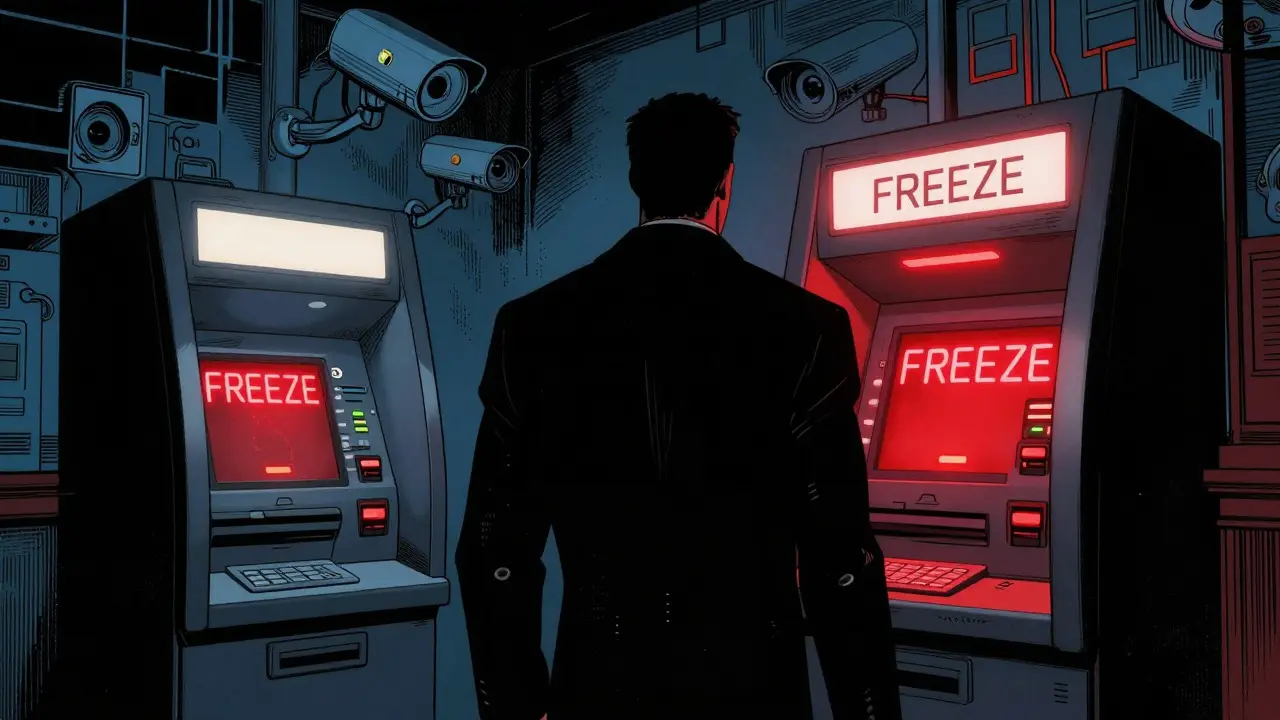
Imagine trying to buy a coffee with your phone, only for the transaction to trigger a silent alarm that freezes your access to cash for two days. This isn't a dystopian novel; it is the reality for many cryptocurrency traders in Russia following the regulatory shifts of late 2025. The landscape changed dramatically on September 1, 2025, when new legislation empowered banks to restrict daily ATM withdrawals to 50,000 rubles (approximately $600) for 48 hours if they detect suspicious patterns. For anyone involved in Bitcoin trading, this was not just an inconvenience-it was a structural blockage.
The Central Bank of Russia (CBR) moved quickly, citing a surge in fraud cases. In the second quarter of 2025 alone, they reported 273,100 fraud incidents totaling 6.3 billion rubles. While the goal was financial security, the collateral damage hit the crypto ecosystem hard. Small exchange offices and peer-to-peer (P2P) platforms, which rely heavily on quick cash liquidity, suddenly found themselves operating in a minefield. If you are looking to trade digital assets in Russia today, understanding these mechanics is no longer optional-it is survival.
How the New Monitoring System Works
To navigate this environment, you first need to understand what triggers the restriction. The banks are not acting randomly; they use a comprehensive monitoring system designed to flag specific behaviors. It is not enough to simply withdraw money; the context matters. Banks look for unusual withdrawal amounts, atypical ATM usage patterns, or sudden spikes in phone activity involving new numbers.
More critically, the system flags transactions linked to recent credit events. If you register for a loan or increase your credit limit and then attempt to withdraw cash within 24 hours, you will likely be flagged. Inter-account transfers exceeding 200,000 rubles also draw immediate scrutiny. Even technical changes, such as altering mobile banking authorization numbers or using QR codes for payments, can trigger alerts. For a crypto trader who might move funds frequently between wallets and bank accounts, these rules create a constant risk of having your liquidity frozen.
| Trigger Type | Specific Behavior | Risk Level |
|---|---|---|
| Credit Activity | Withdrawals within 24 hours of loan registration | High |
| Transfer Volume | Inter-account transfers over 200,000 rubles | High |
| Device Changes | New mobile number or altered auth codes | Medium |
| ATM Usage | Unusual frequency or locations | Medium |
| Payment Method | Frequent QR code or virtual card usage | Low-Medium |
Workaround 1: Mastering the P2P Strategy
With centralized local exchanges largely absent and foreign platforms facing connectivity issues, Peer-to-Peer (P2P) trading has become the backbone of Russian crypto activity. However, the old way of doing P2P-large lump-sum cash deals-is dead. You must adapt your strategy to fit the 50,000 ruble limit.
The most effective workaround is fragmentation. Instead of attempting one large trade, break your volume into smaller, manageable chunks spread across multiple days. If you need to liquidate 500,000 rubles worth of Bitcoin, do not try to do it in one session. Spread it out over ten days, keeping each individual transaction well below the radar. This requires patience, but it keeps your accounts clean.
You also need to diversify your counterparties. Relying on a single buyer or seller increases the risk of pattern detection. Rotate through different trusted merchants on P2P platforms. Additionally, maintain a consistent history. Banks look for anomalies. If your account usually handles small grocery bills and suddenly starts processing thousands of rubles in transfers, you stand out. Build a baseline of normal activity before engaging in larger crypto-related movements.
Workaround 2: Digital-First Operations
Cash is the enemy under the current regime. The more you can keep your transactions digital, the less likely you are to trigger the ATM freeze. Industry experts predict that small exchange offices will need to restructure toward digital-first approaches. For individual traders, this means minimizing physical cash handling entirely.
Use stablecoins like USDT or USDC as intermediaries rather than converting directly to fiat rubles whenever possible. Keep your capital in digital form until you absolutely need it for real-world expenses. When you do need rubles, use them immediately for online payments or direct transfers to utility providers, avoiding the ATM altogether. This reduces the visible footprint of your crypto activities in the traditional banking system.
Another angle is leveraging foreign platforms where accessible. While Russian citizens face no explicit prohibition on acquiring cryptocurrency, accessing global exchanges can be tricky due to sanctions and internet filters. Using reliable VPN services and maintaining separate, clean bank accounts dedicated solely to non-crypto personal expenses can help isolate your trading activities from your daily financial life.
The Regulatory Landscape: What’s Next?
The current situation is not static. Russia’s approach to cryptocurrency remains contradictory. On one hand, the government embraces digital assets for international trade and sanctions evasion. On the other, the Central Bank opposes their free circulation in the domestic economy. This duality creates a complex environment where rules can shift overnight.
There is growing momentum for a state-controlled solution. Evgeny Masharov, a member of the Russian Civic Chamber, has advocated for establishing a crypto-enabled bank similar to Belarus’s model. Such an institution would bring shadow transactions into the legal framework, potentially solving the liquidity crisis for miners and traders while generating tax revenue. Meanwhile, lawmakers have urged the CBR to license domestic exchange networks, recognizing the demand for regulated infrastructure.
For now, the experimental legal regime for qualified investors continues. This program targets individuals with portfolios exceeding 100 million rubles and annual incomes over 50 million rubles. If you fall into this category, you have more flexibility. For the average retail trader, however, the restrictions remain tight. The industry is watching closely to see if the cash withdrawal limits successfully reduce fraud or if they merely push activity further underground.
Impact on Miners and Large Players
The restrictions hit cryptocurrency miners particularly hard. With mining banned in 10 out of 46 regions as of January 2025, those still operating face significant challenges in cashing out earnings. Previously, miners could sell hash power or coins directly to local buyers for cash. Now, that pipeline is clogged. Vyacheslav Kopylov from Prostomining noted that despite these hurdles, the industry continues to thrive, suggesting that miners are adapting by finding alternative off-ramps or holding their assets longer.
Large players are likely moving toward institutional solutions or offshore structures. Retail traders, lacking these resources, must rely on the workarounds mentioned above. The gap between professional and amateur traders is widening, making knowledge of regulatory nuances more valuable than ever.
Practical Tips for Staying Under the Radar
If you are actively trading in this environment, here are actionable steps to minimize risk:
- Keep Records: Maintain detailed logs of all transactions. If your account is flagged, having a clear paper trail can help resolve disputes with banks faster.
- Avoid Round Numbers: Transfers of exact round numbers (e.g., 100,000 rubles) often look suspicious. Use irregular amounts to mimic natural spending patterns.
- Separate Accounts: Use one bank account for daily living expenses and another for crypto-related activities. Never mix the two streams.
- Monitor Alerts: Pay attention to any notifications from your bank regarding suspicious activity. Address them immediately to prevent extended freezes.
- Stay Informed: Regulations evolve rapidly. Follow updates from the Central Bank and industry forums to anticipate changes before they impact your trades.
Conclusion: Adaptation is Key
The era of easy, high-volume cash exits for crypto traders in Russia is over. The new restrictions force a shift toward patience, discretion, and digital sophistication. By fragmenting trades, avoiding cash, and maintaining clean transaction histories, you can continue to participate in the market without triggering the system’s defenses. As the regulatory framework evolves, staying agile and informed will be your greatest asset.
What is the current cash withdrawal limit for crypto traders in Russia?
Banks can limit daily ATM withdrawals to 50,000 rubles ($600) for 48 hours if suspicious transaction patterns are detected. This applies to accounts flagged for unusual activity, including frequent large transfers or recent credit events.
Is Bitcoin trading illegal in Russia?
No, acquiring and holding Bitcoin is not explicitly prohibited. However, using it for domestic payments is restricted, and banking regulations make moving fiat currency in and out of crypto exchanges difficult due to anti-fraud measures.
How can I avoid having my bank account frozen?
Avoid withdrawing cash shortly after taking out loans, keep inter-account transfers below 200,000 rubles, and maintain consistent transaction patterns. Diversify your P2P counterparts and avoid using new phone numbers or devices for critical transactions.
Are there licensed crypto exchanges in Russia?
Currently, there are no fully centralized local exchanges for retail users. Lawmakers have proposed licensing domestic networks, but as of 2026, most trading occurs via P2P platforms or foreign exchanges accessed through workarounds.
Who qualifies as a "qualified investor" in Russia's crypto regime?
Qualified investors are individuals with investment portfolios exceeding 100 million rubles and annual incomes surpassing 50 million rubles. They operate under a special experimental legal regime with fewer restrictions compared to retail traders.