
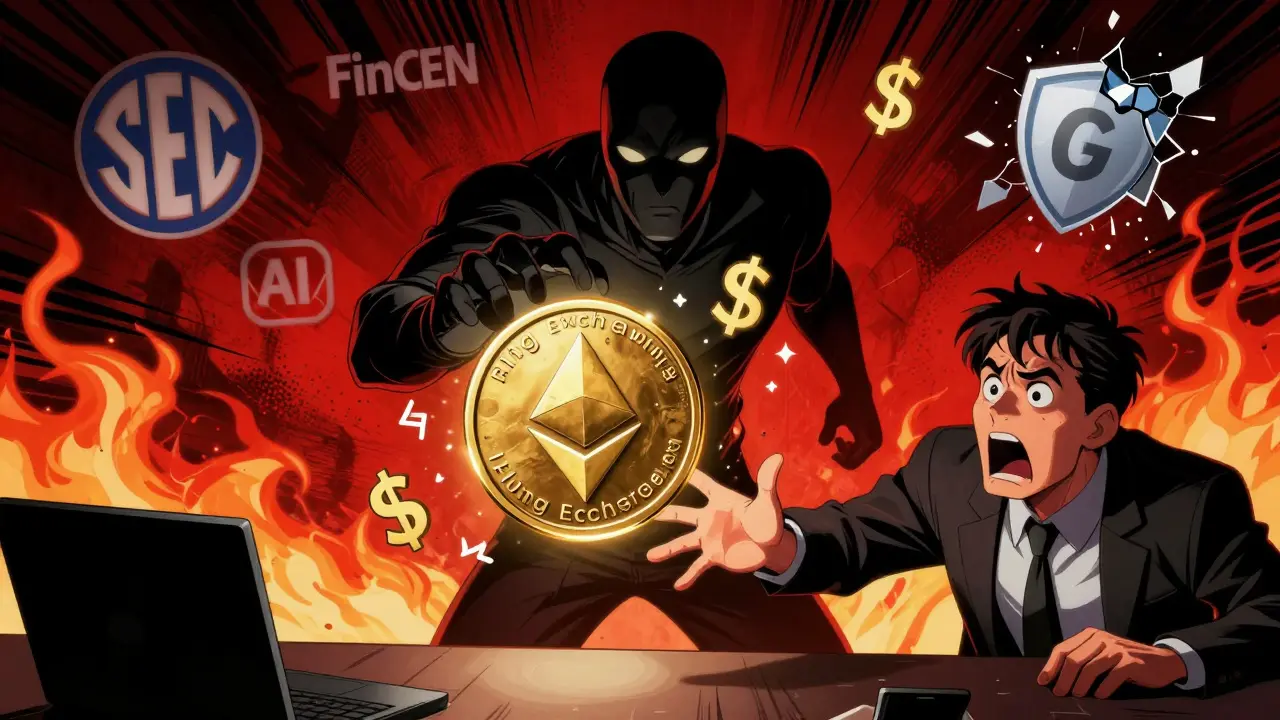
You might have seen ads for Ring Exchange promising easy Ethereum trades, AI-powered profits, and instant withdrawals. But here’s the truth: Ring Exchange doesn’t exist as a real crypto exchange. It’s a scam operation designed to steal your money, and it’s following a well-documented pattern used by dozens of fake platforms in 2025.
Why you won’t find Ring Exchange on any legitimate list
If you search for Ring Exchange on CoinGecko, CoinMarketCap, or even trusted review sites like 99Bitcoins and Good Money Guide, you’ll get nothing. Not a single listing. Not a single user review. Not even a mention in regulatory databases. That’s not an oversight-it’s a red flag. Legitimate Ethereum exchanges like Binance, Kraken, and Coinbase are tracked, reviewed, and ranked constantly. They appear in industry awards, have public leadership teams, and publish real fee schedules. Ring Exchange has none of that. Zero. If a platform claims to handle Ethereum trading but can’t be found anywhere reputable, it’s not missing from the market-it’s not real.The scam pattern: how Ring Exchange tricks you
Scammers behind Ring Exchange use the same playbook every time. First, they show up on social media or YouTube with flashy ads: "Earn 5% daily on Ethereum!" "AI trading signals guarantee profits!" They lure you in with fake testimonials and manipulated screenshots of growing balances. You deposit a small amount-maybe $100-and you see your balance jump to $150. You’re thrilled. You’re told to deposit more to unlock higher returns. You put in $1,000. Then $5,000. Your balance climbs to $12,000. It looks real. But when you try to withdraw? Suddenly, there’s a problem. "You need to pay a 15% tax fee first." "Your account is flagged-send $2,000 to verify identity." "We need a donation receipt certificate to release your funds." These are classic exit scams. The platform lets you withdraw small amounts at first to build trust. Then, when you’ve invested more, they vanish behind layers of fees, fake compliance demands, or outright silence. The domain often shuts down within 90 days. That’s the average lifespan of a scam like Ring Exchange.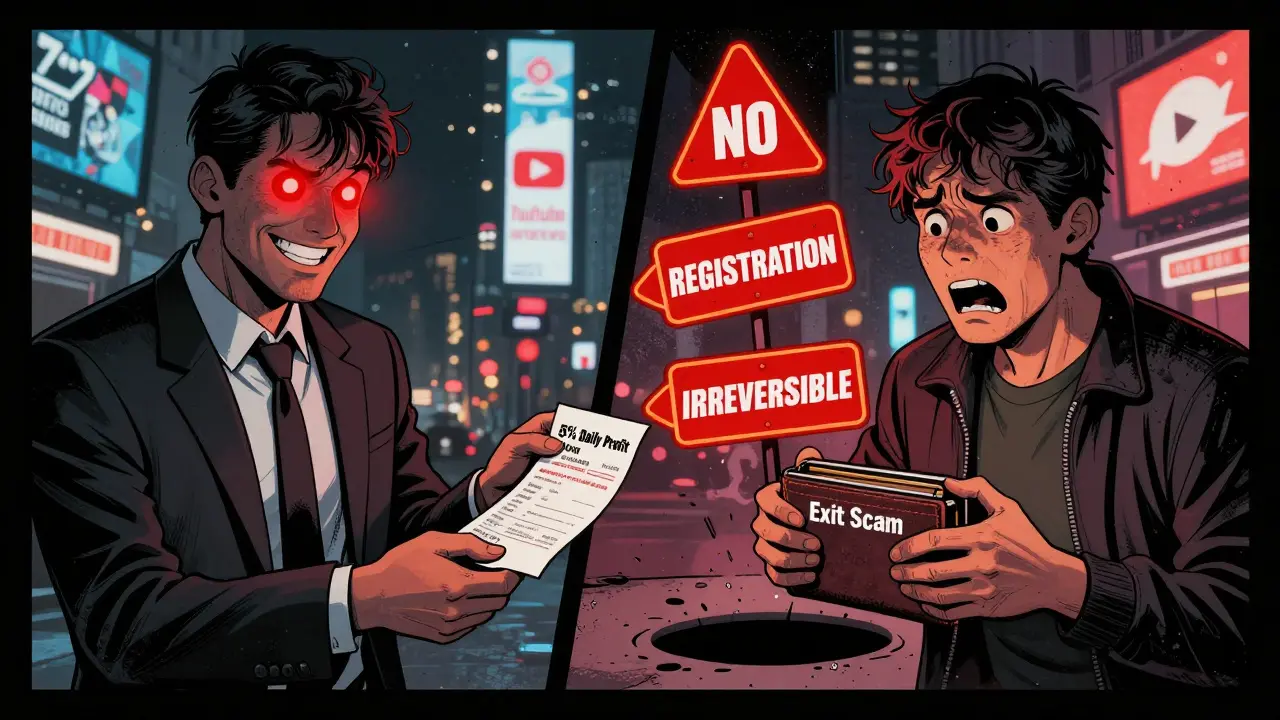
Red flags you can’t ignore
Here’s what Ring Exchange has in common with every major crypto scam of 2025:- Domain name pattern: "Ring Exchange" fits the exact naming formula scammers use-[Word] + "Exchange" or "Trade". Crypto Legal’s 2025 scam database shows 92.7% of fraudulent platforms use this exact structure.
- No regulatory registration: Legitimate exchanges in the U.S. register with FinCEN and comply with SEC rules. Ring Exchange has no license, no registration, no public compliance documentation.
- AI trading claims: Promises of "AI-powered signals" or "algorithmic profits" are common lures. Real exchanges don’t sell trading signals-they give you a market to trade on.
- Social media recruitment: Mass.gov reports 78% of scam victims were contacted through Instagram, TikTok, or YouTube ads. Ring Exchange ads follow this exact tactic.
- Withdrawal delays and fees: DFPI’s scam tracker shows 8 of 12 cases involved fake "tax payments" or "verification deposits" before allowing withdrawals. Ring Exchange uses this exact method.
- No public history: No CEO interviews. No press releases. No verified user reviews on Trustpilot or Reddit. Legitimate platforms have thousands of reviews. Ring Exchange has none.
- Missing from data trackers: If it were real, CoinGecko would list it. It doesn’t. That’s not a delay-it’s proof.
What happens if you deposit
Once you send crypto to Ring Exchange, it’s gone. Cryptocurrency transactions are irreversible. There’s no customer service hotline that can help you. No bank to reverse the payment. No government agency that can freeze the funds-unless you’re lucky enough to report it before the site vanishes. Even then, recovery rates are near zero. The California DFPI found that in 2024, 63% of crypto scam victims lost between $10,000 and $50,000. The average loss from a "pig butchering" scam like this is $37,000. Ring Exchange isn’t a platform-it’s a trap.
Real Ethereum exchanges you can trust
If you want to trade Ethereum, use platforms that have been tested, reviewed, and verified for years:- Binance: Largest global exchange, supports spot and derivatives trading, strong security, and transparent fee structure.
- Kraken: U.S.-based, fully regulated, offers staking and futures, public audit reports.
- Coinbase: Trusted by millions, insured custodial wallets, easy for beginners.
- eToro: Social trading, copy traders, regulated in Europe and Australia.
- Revolut: Simple app-based trading, clear fees (1.49% for small trades), instant portfolio visibility.
How to protect yourself
Don’t trust anything that sounds too good to be true. If a crypto platform promises guaranteed returns, uses AI hype, or pressures you to deposit quickly, walk away. Always check:- Is it listed on CoinGecko or CoinMarketCap?
- Does it have a public regulatory license number?
- Can you find real user reviews on Trustpilot or Reddit (not just testimonials on their site)?
- Does it use SSL encryption and two-factor authentication?
- Is there a real company address, not just a PO box or offshore registration?
Is Ring Exchange a real crypto exchange?
No, Ring Exchange is not a real crypto exchange. It does not appear on any legitimate cryptocurrency tracking platforms like CoinGecko or CoinMarketCap. It is not registered with any financial regulator, has no public leadership, and lacks verified user reviews. All evidence points to it being a scam operation designed to steal funds.
Why can’t I find Ring Exchange on review sites?
Legitimate exchanges are reviewed by multiple independent sources like 99Bitcoins, Good Money Guide, and DFPI. These sites test platforms for security, transparency, and operational history. Ring Exchange is absent from all of them because it doesn’t exist as a functioning service. Its absence is intentional-it avoids scrutiny.
What should I do if I already sent money to Ring Exchange?
If you’ve sent crypto to Ring Exchange, your funds are likely gone. Crypto transactions are irreversible. Immediately stop any further deposits. Report the scam to your local financial authority and file a complaint with agencies like the FTC (U.S.) or NZ’s Financial Markets Authority. There is no guaranteed way to recover funds, but reporting helps track patterns and may prevent others from being scammed.
Are there any legitimate Ethereum exchanges I can use?
Yes. Trusted Ethereum exchanges include Binance, Kraken, Coinbase, eToro, and Revolut. These platforms are regulated, have public audit reports, offer two-factor authentication, and are listed on major cryptocurrency data trackers. They don’t promise guaranteed returns-they give you a secure marketplace to trade.
How do I spot a crypto scam like Ring Exchange?
Look for these signs: unrealistic profit promises, pressure to deposit quickly, AI trading claims, no regulatory license, absence from CoinGecko/CoinMarketCap, and withdrawal fees before cashing out. Scams often use social media ads and fake testimonials. If you can’t verify the company’s existence through multiple independent sources, assume it’s fake.
jay baravkar
March 7, 2026 AT 13:00Ian Thomas
March 8, 2026 AT 01:22Austin King
March 9, 2026 AT 08:55Rachel Rowland
March 10, 2026 AT 02:12Basil Bacor
March 10, 2026 AT 11:58Ken Kemp
March 11, 2026 AT 19:21nalini jeyapalan
March 11, 2026 AT 22:23Steven Lefebvre
March 11, 2026 AT 23:30Shawn Warren
March 12, 2026 AT 12:36Jackson Dambz
March 12, 2026 AT 23:48Megan Lutz
March 14, 2026 AT 21:56Jesse VanDerPol
March 15, 2026 AT 09:28jonathan swift
March 16, 2026 AT 16:51Datta Yadav
March 17, 2026 AT 11:22Lydia Meier
March 18, 2026 AT 23:25Issack Vaid
March 20, 2026 AT 16:54Cerissa Kimball
March 21, 2026 AT 21:52Drago Fila
March 22, 2026 AT 14:27Leah Dallaire
March 23, 2026 AT 00:18Nick Greening
March 23, 2026 AT 22:12Bryanna Barnett
March 24, 2026 AT 08:36