
Have you ever clicked on an PureFi Protocol airdrop link only to find a broken page or a vague "coming soon" message? You are not alone. The UFI token, the native asset of the decentralized finance compliance protocol founded in 2021, has generated plenty of buzz but very little clarity for its community. As we stand in August 2026, the landscape for this specific project has shifted dramatically from its early days.
If you are hunting for free tokens, you need to know exactly where to look and what to expect. The reality is that PureFi’s distribution model isn’t like the massive, viral airdrops you see from Layer-1 blockchains. It is quieter, more technical, and heavily tied to their core mission: bridging traditional finance with decentralized finance through verifiable credentials. This article breaks down the current state of the PureFi airdrop, how the tokenomics affect your potential rewards, and why the "free money" narrative requires a serious dose of skepticism.
Understanding the PureFi Compliance Model
To understand the airdrop, you first have to understand the tech. PureFi Protocol is a security-focused DeFi platform that uses Zero-Knowledge Proof architecture. This means it allows users to prove they are compliant with Anti-Money Laundering (AML) and Know Your Customer (KYC) regulations without revealing their private data. This unique positioning sets it apart from generic yield farms.
Because the protocol prioritizes compliance, its airdrop mechanics often differ from standard permissionless distributions. In many cases, participants may need to undergo KYC verification through PureFi’s Self Sovereign Identity system before receiving tokens. This creates a barrier to entry that filters out casual farmers but attracts serious users interested in institutional-grade DeFi tools. If you are expecting a simple "follow on Twitter and get paid" scenario, you might be disappointed. The process is designed to reward verified, compliant actors.
Tokenomics and Vesting Schedules
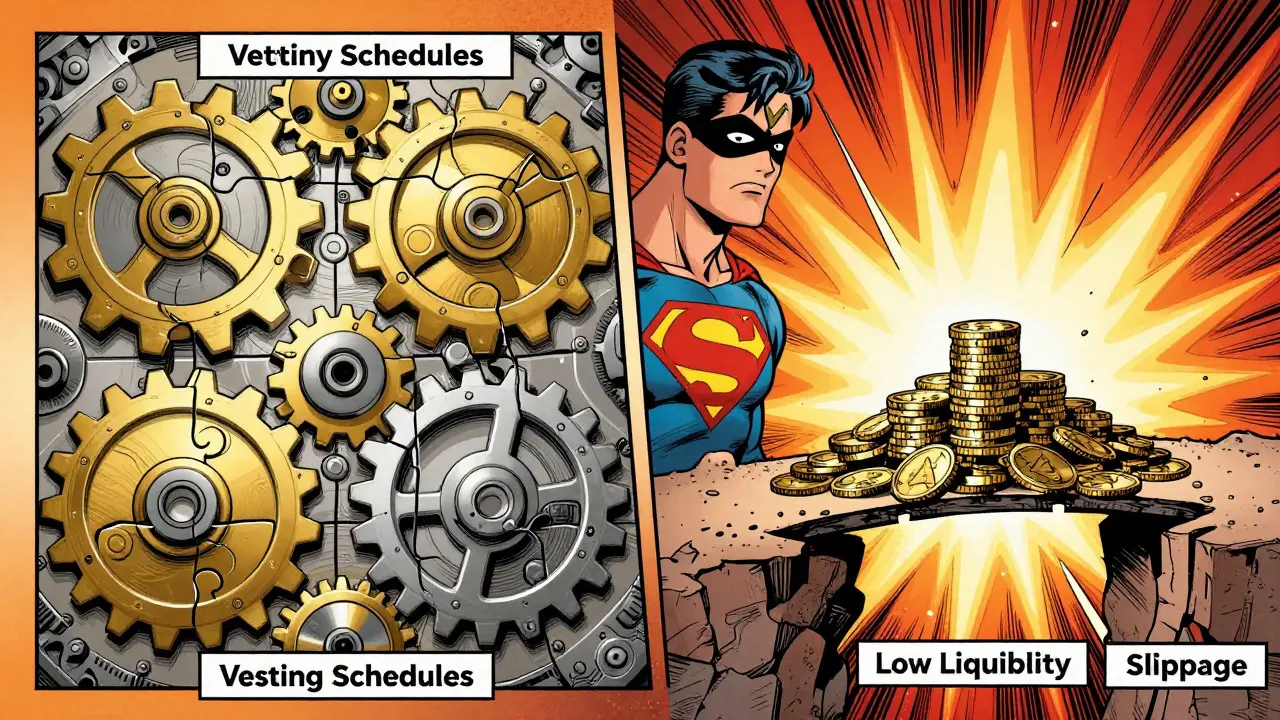
Money doesn't just appear; it unlocks. The UFI token supply follows strict vesting schedules that directly impact how much liquidity hits the market after an airdrop. According to historical tokenomics documentation, the initial Token Generation Event (TGE) in July 2021 saw 33% of the supply unlock immediately, while other allocations vested daily over two to five months.
Why does this matter for you? Because large amounts of locked tokens can create selling pressure when they finally unlock. If you receive an airdrop, you might find yourself competing against team members or early investors who are also unlocking their holdings. Here is a quick look at the distribution structure that influences these dynamics:
| Allocation Category | Percentage of Supply | Vesting Notes |
|---|---|---|
| Ecosystem Development | 33% | Used for incentives and partnerships |
| Strategic Partnerships | 25% | Often subject to long-term cliffs |
| Team & Advisors | 20% | Vested over 4 years with 1-year cliff |
| Public Sale | 15% | Distributed during TGE and IDOs |
| Marketing | 7% | Funds campaigns including airdrops |
The Marketing allocation, specifically, is the primary source for most community-facing airdrops. However, with a total supply capped at 1 billion tokens, the actual number of UFI distributed per campaign can be modest compared to projects with larger treasuries.
How to Participate: Past and Present Campaigns
Historically, PureFi ran three documented airdrop campaigns between August 2021 and March 2022. These required users to complete Telegram quizzes, follow social media accounts, and refer friends. Verified distributions ranged from 25 to 100 UFI per participant. While these numbers seem small today, they were significant relative to the token's price at the time.
Currently, the approach has shifted towards targeted engagement rather than broad blasts. Bitget’s analysis noted that users could join ongoing challenges to earn rewards convertible to UFI. This suggests a move toward partner-driven distributions rather than direct protocol payouts. To stay ahead, you should monitor these channels:
- Official Twitter (@Purefi_Protocol): Look for announcements about "community rewards" or partnership integrations.
- GitHub Repository: Check for commits related to "compliance-verification-update," which may signal new identity-based reward systems.
- Partner Platforms: Exchanges like Bitget or DEX aggregators sometimes run exclusive campaigns for niche protocols.
A word of caution: numerous scam airdrop imposters have plagued the community. Always verify links through the official website or verified social handles. If a site asks for your seed phrase to "claim" an airdrop, it is almost certainly a trap.
Market Reality and Liquidity Challenges
Let’s talk about value. An airdrop is only as good as the liquidity behind it. PureFi has faced significant headwinds here. With a market capitalization hovering around $721,660 in recent reports, the protocol lacks the massive reserves of top-tier DeFi projects. More importantly, trading volume has been extremely low, sometimes reporting near-zero USD volume on major trackers.
This low liquidity creates a tricky situation for airdrop recipients. Even if you receive 1,000 UFI, selling them might incur high slippage due to thin order books on Uniswap or PancakeSwap. Unlike Chainlink or Compound, PureFi does not have listings on major centralized exchanges like Binance or Coinbase, limiting exit options. You are essentially holding an illiquid asset unless you use decentralized exchanges exclusively.
Community sentiment reflects this frustration. Reddit threads from late 2023 highlighted complaints about dead links and unfulfilled promises. One user noted, "They promised quarterly airdrops since 2021 but last verifiable distribution was April 2022." This skepticism is healthy. It reminds us that in crypto, execution matters more than roadmap promises.
Expert Perspectives on Viability
Industry analysts remain divided on PureFi’s strategy. Dr. Elena Rodriguez from Stanford’s Center for Financial Markets argues that the mandatory KYC approach is necessary for institutional adoption, even if it limits retail participation. On the other hand, Michael Chen of TokenMetrics criticizes the fragmented communication, suggesting the distribution strategy failed to generate meaningful engagement compared to peers like Aave.
Data supports the criticism. Social media engagement metrics for PureFi sat at roughly 321 daily mentions in Q3 2023, far below the industry average of 12,500 for comparable projects. For an airdrop program to succeed, it needs virality. PureFi’s compliance-first model sacrifices virality for stability, a trade-off that doesn't always pay off in the short term.
Future Outlook: Institutional Focus
Despite the challenges, there is hope. Recent developments suggest a pivot toward institutional partnerships. A collaboration with EU-based fintech firm RegTech Solutions hints at possible airdrops targeting regulated entities. If PureFi can secure funding from these partnerships, future distributions might be more substantial and better marketed.
The growing regulatory focus on DeFi could actually benefit PureFi. As governments crack down on anonymous transactions, protocols offering verifiable credentials become more valuable. If you believe in the thesis that compliance will drive the next wave of DeFi adoption, holding UFI or participating in niche airdrops might be worth the risk. Just keep your expectations grounded.
Is the PureFi Protocol airdrop still active?
As of mid-2026, there is no single, continuous global airdrop program running continuously. Instead, rewards are distributed through sporadic community challenges, partner promotions, and ecosystem incentives. Users should monitor the official Twitter account and GitHub repository for real-time updates on specific campaigns.
Do I need to pass KYC to receive PureFi airdrops?
Not always, but it depends on the specific campaign. Because PureFi focuses on compliance and self-sovereign identity, some targeted airdrops require users to verify their identity through the protocol's system. Basic social media tasks usually do not require full KYC, but higher-value institutional rewards might.
Where can I trade my UFI tokens?
UFI is primarily traded on decentralized exchanges such as Uniswap (v2 and v3) and PancakeSwap (v2). It is not currently listed on major centralized exchanges like Binance or Coinbase, which limits liquidity and makes selling large amounts potentially difficult due to slippage.
What was the typical size of past PureFi airdrops?
Historical data from 2021-2022 shows that verified distributions typically ranged from 25 to 100 UFI per participant. Given the token's price fluctuations, the fiat value of these rewards varied significantly, but they remained modest compared to multi-hundred-dollar airdrops from larger protocols.
Are there scams associated with PureFi airdrops?
Yes, scammers frequently impersonate legitimate projects. Common red flags include websites asking for your private key or seed phrase to "claim" tokens, unofficial domains that mimic purefi.io, and urgent countdown timers. Always cross-reference announcements with the official @Purefi_Protocol Twitter handle.