
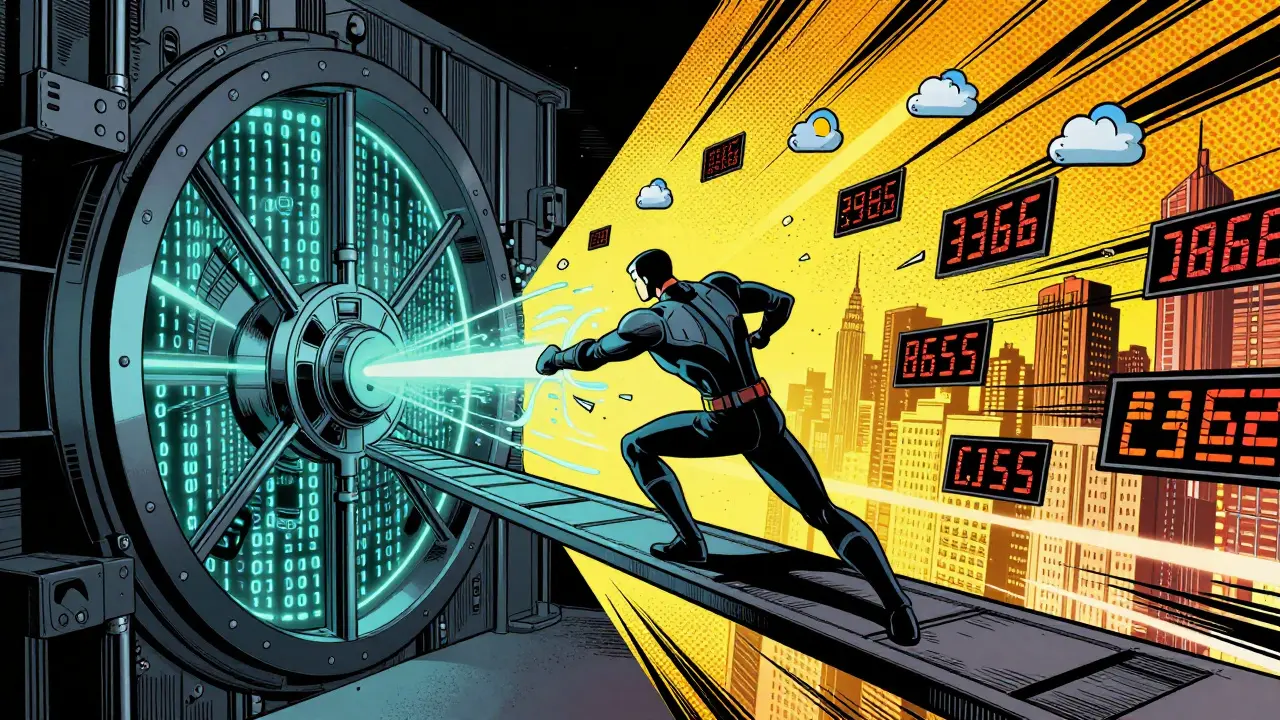
Imagine trying to run a bank that can only see the money inside its own vaults. It sounds impossible, right? That is exactly where blockchains sit by default. They are isolated digital ledgers. They cannot look outside their own walls to check the price of Bitcoin, the weather in Tokyo, or the score of a football match. Without this external information, smart contracts-the code that powers decentralized finance (DeFi)-are blind. This is where price oracles come in.
Price oracles act as the bridge between the real world and the blockchain. They fetch data from centralized exchanges, news feeds, or other sources and deliver it securely to smart contracts. If you have ever taken out a loan on Aave, swapped tokens on Uniswap, or minted a stablecoin like DAI, you relied on an oracle to tell the system what your collateral was worth at that exact second. Get the price wrong, and millions of dollars vanish in seconds.
The Core Problem: The Oracle Dilemma
To understand why oracles matter, you first need to grasp the "Oracle Problem." Blockchains are designed to be trustless and immutable. Once data is written, it cannot be changed. But how do you know the data was correct when it entered the chain?
If a single person or company sends the price data, they can lie. Imagine if Coinbase decided to report Ethereum’s price as $10,000 instead of $3,000 just before a massive liquidation event. They could drain the protocol. Because blockchains cannot verify external truth on their own, they must rely on intermediaries. These intermediaries are the oracles. The challenge isn't just getting the data; it's ensuring the data hasn't been tampered with before it hits the blockchain.
How Price Oracles Actually Work
There isn't one single way to build an oracle. Different projects use different architectures depending on whether they prioritize speed, cost, or security. Here are the two most common approaches you will encounter in DeFi today.
Decentralized Oracle Networks (DONs)
This is the model popularized by Chainlink. Instead of asking one source for the price, the system asks dozens. Here is the workflow:
- Data Collection: Independent node operators pull price data from various centralized exchanges (like Binance, Coinbase, Kraken).
- Aggregation: The nodes send their results to a smart contract on-chain. The contract calculates the median value. If one node says ETH is $3,000 and another says $5,000 (due to error or attack), the median filters out the outlier.
- Delivery: The final, verified price is written to the blockchain for smart contracts to read.
This method is slow but incredibly secure. It eliminates single points of failure. As of 2023, Chainlink secured over $30 billion in DeFi protocols using this multi-layered approach. However, it requires developers to integrate specific libraries and manage update thresholds carefully.
On-Chain Liquidity Oracles
Projects like Uniswap take a different route. They don't look outside the blockchain. Instead, they use the trading activity happening within their own liquidity pools to determine price.
Uniswap V3 uses Time-Weighted Average Prices (TWAP). It records the price at the beginning of every block and calculates the average over time. This prevents someone from spiking the price with a single large trade. However, this method has a major flaw: if the pool doesn't have enough liquidity, a hacker can manipulate the average price by executing a series of trades over several blocks. This vulnerability led to the Harvest Finance hack in October 2020, where attackers stole $24 million by manipulating the Uniswap oracle.
| Feature | Decentralized (e.g., Chainlink) | On-Chain (e.g., Uniswap TWAP) |
|---|---|---|
| Security | High (Multi-source aggregation) | Medium (Vulnerable to flash loans in low liquidity) |
| Cost | Higher (Gas fees + Node payments) | Lower (Native to exchange) |
| Speed | Sub-minute updates | Real-time (per block) |
| Best For | Lending, Stablecoins, Insurance | DEX Swaps, Capital Efficient Pools |
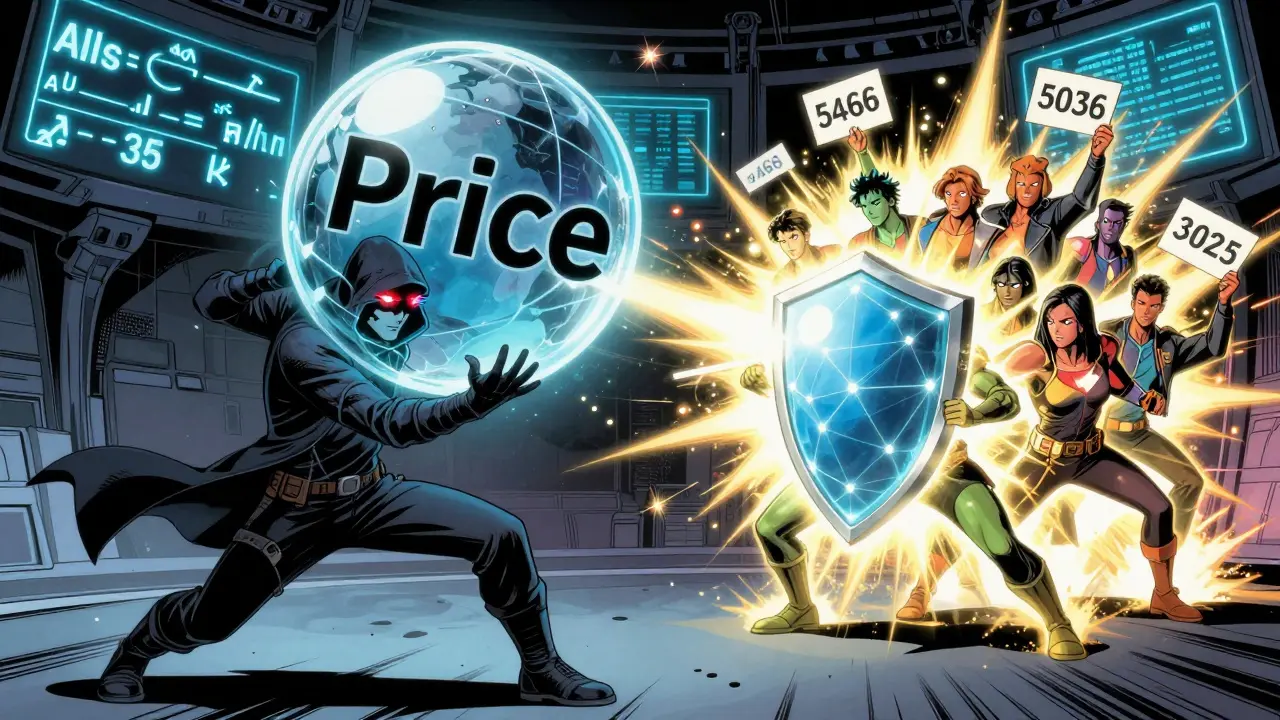
Why Security Is Everything
In traditional finance, if a price feed fails, a human trader steps in. In DeFi, there are no humans. Code executes automatically. If the code says your collateral is worthless, it gets liquidated instantly. This makes oracle security the single largest systemic risk in DeFi.
According to Messari’s 2023 DeFi Outlook, 37% of all DeFi hacks between 2020 and 2023 involved some form of oracle manipulation. Attackers don't usually break into the blockchain itself. They exploit the weak link: the data entering it.
Consider the "Black Thursday" crash in March 2020. During extreme market volatility, Ethereum gas fees skyrocketed, causing network congestion. MakerDAO’s oracle failed to update the price of ETH because transactions couldn't get through. The stale price remained high while the real price plummeted. This triggered $4 million in undercollateralized loans that weren't liquidated in time, exposing the protocol to significant loss.
Experts like Nicolas Macco from Cyfrin emphasize that "using decentralized oracles over centralized ones" is non-negotiable for critical functions. He also advises constantly monitoring oracle performance. A static configuration can become dangerous if market conditions change. For example, an asset that was highly liquid last year might become illiquid today, making its oracle susceptible to manipulation.
Choosing the Right Oracle for Your Project
If you are a developer building a DeFi application, selecting an oracle isn't just a technical choice; it's a business decision. You need to balance security, cost, and user experience.
- For Lending Protocols: Use decentralized networks like Chainlink. The margin for error is zero. Users deposit life savings; you need tamper-proof data from multiple sources. The extra gas cost is worth the insurance.
- For Decentralized Exchanges (DEXs): On-chain oracles like Uniswap’s TWAP are efficient. They reduce reliance on external APIs and keep everything within the ecosystem. Just ensure you implement circuit breakers to halt trading if the price deviates too sharply.
- For High-Frequency Trading: Look at newer solutions like Pyth Network. They offer ultra-low latency updates by having publishers sign data off-chain and submit it on-chain. This is faster than traditional DONs but requires trusting the publisher infrastructure.
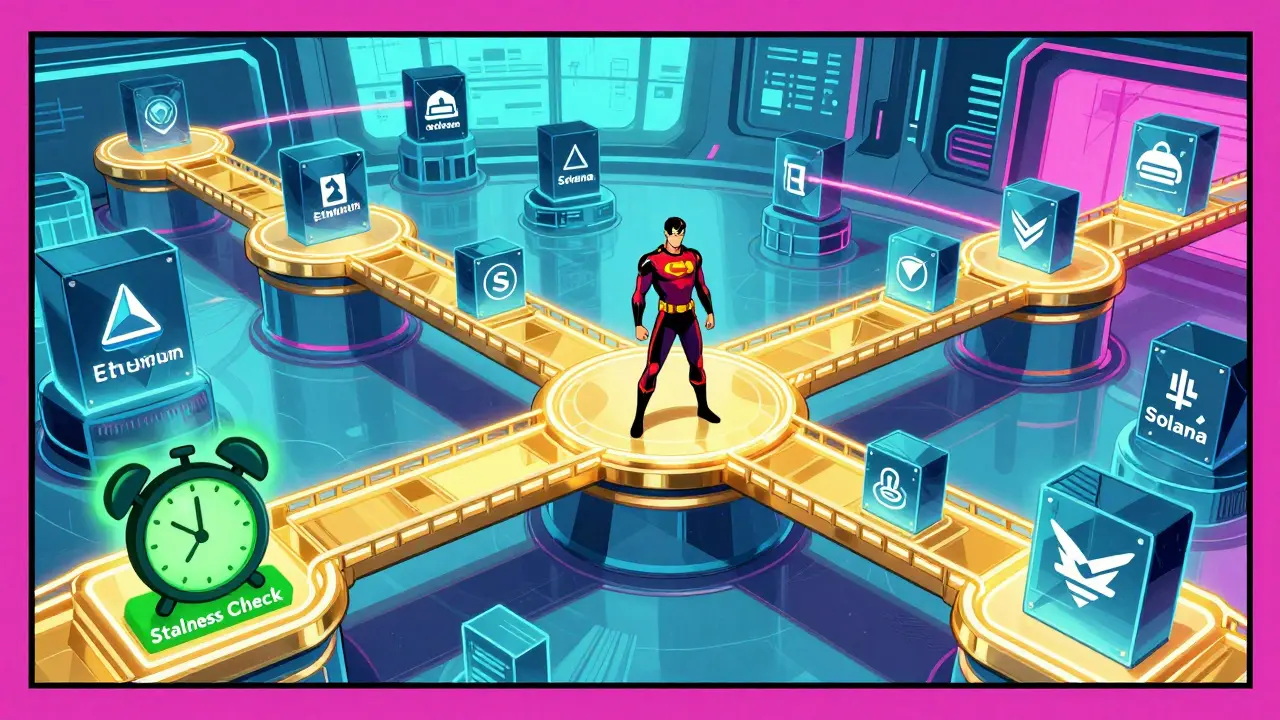
A critical best practice is implementing "staleness checks." Your smart contract should reject any price data that is older than a certain threshold (e.g., 30 minutes). If the oracle goes offline during a crash, it is better to pause the protocol than to execute trades based on outdated prices.
The Future: Hybrid Models and Cross-Chain Data
The oracle landscape is evolving rapidly. We are moving away from siloed solutions toward hybrid models. Delphi Digital predicts that by 2026, hybrid oracles combining on-chain liquidity data with traditional market feeds will become the standard. This approach aims to reduce manipulation vectors by up to 70%.
Cross-chain interoperability is another huge trend. With assets moving between Ethereum, Solana, Polygon, and others, price data needs to flow seamlessly across these networks. Chainlink’s Cross-Chain Interoperability Protocol (CCIP), launched in late 2023, allows secure transfer of price data between 12 different blockchains. This means a lending protocol on Avalanche can trust a price feed originating from Ethereum without needing a separate integration.
Regulatory pressure is also shaping the future. The EU’s MiCA legislation, effective December 2024, mandates "reliable and verifiable price sources" for stablecoin issuers. This forces projects to abandon cheap, insecure oracles in favor of audited, decentralized networks. Compliance is no longer optional; it's a survival requirement.
Common Pitfalls to Avoid
Even experienced developers make mistakes when integrating oracles. Here are three traps to watch out for:
- Ignoring Liquidity Depth: Never use an on-chain oracle for an asset with low trading volume. A small trade can swing the price significantly, creating artificial arbitrage opportunities for hackers.
- Hardcoding Update Intervals: Market volatility changes. An update interval that works in calm markets may fail during a crash. Build dynamic thresholds that adjust based on price variance.
- Single Source Dependency: Even reputable oracles can fail. Always have a fallback mechanism. If Chainlink’s feed stalls, switch to a secondary provider or pause operations rather than guessing.
As Sergey Nazarov, co-founder of Chainlink, stated, "The security of DeFi is only as strong as its oracles." Until we solve the theoretical limitations of the oracle problem, they will remain the weakest link in the chain. But with proper implementation, they are also the strongest enabler of trustless finance.
What is a price oracle in simple terms?
A price oracle is a service that brings real-world data, like the price of Bitcoin or gold, onto the blockchain. Since blockchains are closed systems, they need oracles to "see" outside information so smart contracts can make decisions based on current market values.
Are price oracles safe?
Decentralized oracles like Chainlink are generally very safe because they aggregate data from many independent sources, making it hard for one actor to manipulate the price. However, no system is perfect. Centralized oracles or those relying on low-liquidity pools carry higher risks of manipulation and failure.
Why did the Harvest Finance hack happen?
The Harvest Finance hack occurred because the protocol used Uniswap’s on-chain oracle for pricing. Attackers used flash loans to artificially inflate the price of a token within a short time window, tricking the oracle into reporting a false high value. This allowed them to borrow more funds than their collateral was actually worth, stealing $24 million.
Which oracle is best for DeFi lending?
For lending platforms, decentralized oracle networks like Chainlink are considered the best choice. They provide high-security, tamper-resistant price feeds by aggregating data from multiple exchanges. This minimizes the risk of manipulation, which is critical when users' deposits are at stake.
Can oracles be manipulated?
Yes, oracles can be manipulated, especially if they rely on a single data source or low-liquidity markets. Flash loan attacks are a common method where hackers temporarily distort prices. To mitigate this, developers use time-weighted averages, multiple data sources, and staleness checks.