
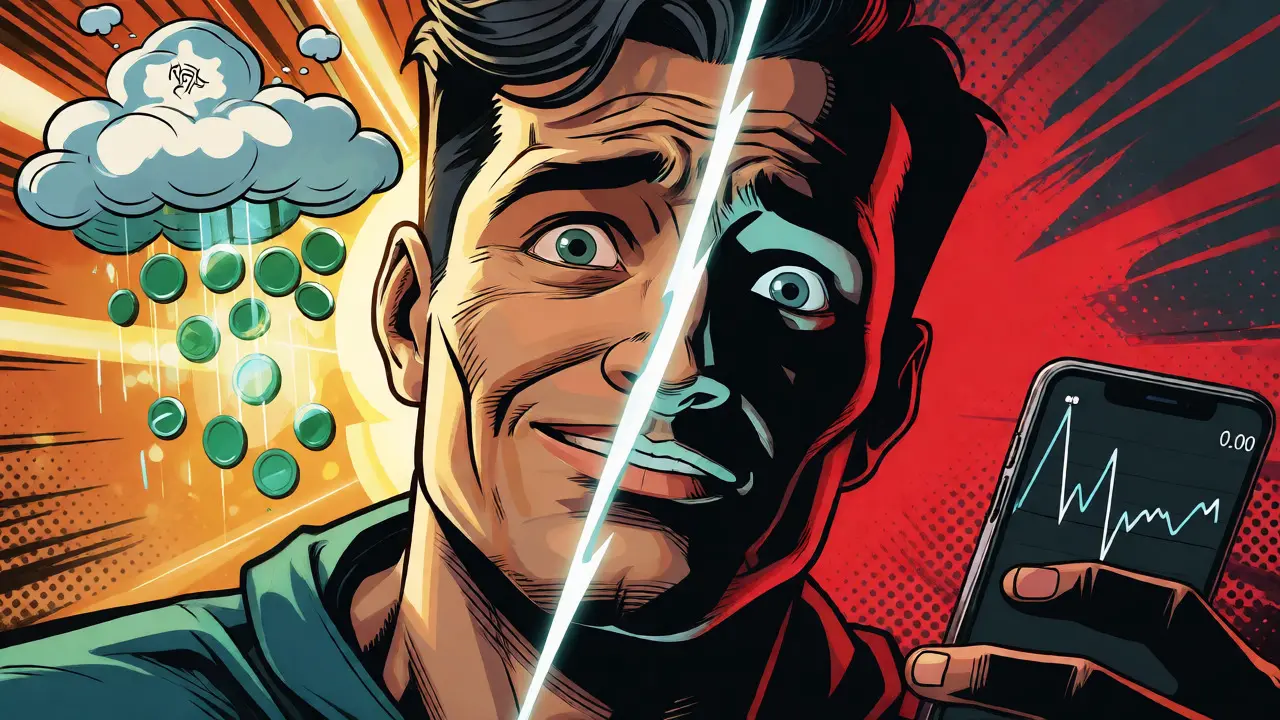
You saw the notification. Your wallet pinged with a mysterious deposit of PLGR tokens from Pledge Finance. Or maybe you read a forum post claiming an upcoming airdrop is just around the corner. Before you rush to sell or hold, pause. The story behind Pledge Finance isn't about free money raining from the sky; it's about a complex, struggling DeFi protocol that launched its main distribution years ago. As of September 2026, there is no active, widely recognized "airdrop campaign" for new users in the traditional sense. Instead, what many label as an airdrop is often a misunderstanding of the original 2021 Token Generation Event (TGE) distributions or delayed vesting unlocks.
| Metric | Detail |
|---|---|
| Project Type | DeFi Lending & Derivatives Protocol |
| TGE Date | October 5, 2021 |
| All-Time High | $0.009362 (Dec 2024) |
| Current Liquidity | Near Zero ($0.00 volume reported) |
| Airdrop Status | No Active Public Campaign (Sept 2026) |
The Myth vs. The Reality of PLGR Distribution
Let’s clear up the confusion immediately. If you are looking for a standard "do this task, get free tokens" airdrop like Uniswap or Arbitrum did, you won’t find one for PLGR in late 2026. The project completed its primary public sale and TGE back in October 2021. During that period, early participants bought tokens at $0.10 per PLGR. Today, the price hovers near $0.000211. That’s a massive drop, which explains why community chatter sometimes mislabels old holdings or small testnet rewards as "new airdrops."
Pledge Finance built itself as an algorithm-driven ecosystem for non-traders, using ERC-1155 NFTs to represent loans and bonds. While the tech was innovative, focusing on fixed-interest rate swaps and credit market derivatives, the market didn’t reward it with sustained liquidity. Most tracking platforms now show a 24-hour trading volume of $0.00. This lack of activity is critical. An airdrop is only valuable if you can trade the token. Right now, selling PLGR is difficult because few exchanges list it actively.
Why People Still Talk About a PLGR Airdrop
So why does the search term "PLGR airdrop" still generate clicks? Two reasons stand out. First, vesting schedules. Early investors who chose Option 2 or Option 3 during the 2021 sale had their tokens locked for months or quarters. Some of these unlock dates stretched into 2022 and 2023. When those tokens hit wallets, users perceived them as new drops. Second, scam campaigns. In the low-cap crypto space, fake sites often pop up promising "PLGR retroactive airdrops" to lure users into connecting wallets. These are traps. There is no official announcement from the core team about a broad retroactive distribution for general users in 2025 or 2026.
If you interacted with the platform during its beta phases on Binance Smart Chain, you might have earned minor rewards. However, these were negligible compared to major DeFi protocols. The project raised $3 million in private funding and over $30 million via ICO, but that capital went into development, not endless marketing giveaways. The focus remained on building structured lending products rather than farming user bases through aggressive token emissions.
Tokenomics and Market Performance
Understanding the supply helps explain the price action. The total supply sits at 1 billion PLGR, though some sources cite a max supply of 3 billion depending on burn mechanisms or future emissions. The circulating supply data is murky, often listed as zero on major aggregators due to delistings or poor API integration. This opacity is a red flag for any investor. You cannot trust a token where you don’t know exactly how many coins are floating around.
The price history tells a harsh story. After launching, PLGR struggled to gain traction. It hit a local high of $0.009362 in December 2024, likely driven by speculative pumps in the broader altcoin market. But it quickly crashed to an all-time low of $0.0001602 in April 2025. As of September 2026, it trades slightly above that floor. Technical indicators show extreme bearishness. The Fear & Greed Index has fluctuated, but volume remains dead. Without volume, price discovery is impossible. You’re essentially holding an asset with no exit ramp.

Liquidity Crisis: The Real Problem
Here is the biggest hurdle for anyone hoping to profit from PLGR: liquidity. DropsTab and other trackers note a severe lack of accurate trading data. This usually means two things: the token was delisted from major exchanges, or the remaining pools are so thin that any sell order crashes the price instantly. If you received tokens from an old event, check your ability to swap them. Many users report being unable to find sufficient buy orders.
Compare this to competitors like dYdX or Hyperliquid. Those platforms maintain deep order books. Pledge Finance operates in a niche sector-structured lending-and failed to capture significant market share. Its social media presence is weak, ranking poorly in engagement metrics compared to top-tier projects. Low social sentiment often correlates with low liquidity. Investors flee when they see no activity on X (formerly Twitter) or Discord.
Should You Hold or Sell?
If you already hold PLGR, assess your cost basis. If you bought at $0.10, you are down roughly 99%. Selling now locks in that loss, but holding assumes a miracle recovery. Given the zero-volume environment, a recovery requires a massive catalyst, such as a new exchange listing or a pivot in the protocol’s utility. No such news has emerged recently.
If you are considering buying in hopes of a future airdrop, be cautious. Buying a dead token to farm a hypothetical future drop is a risky strategy. Usually, airdrops reward active usage. Since Pledge Finance sees minimal daily transactions, new users aren’t generating the activity needed to justify a large retroactive reward. Furthermore, the project’s development pace has slowed significantly since the 2021 hype cycle.
How to Verify Official Announcements
To avoid scams, always verify claims through primary sources. Do not rely on Telegram bots or random YouTube videos. Check the official Pledge Finance website and their verified social channels. Look for specific details: snapshot date, claim deadline, and eligible networks. If a site asks you to connect your wallet and sign a transaction to "claim" a surprise airdrop without prior notice, treat it as a phishing attempt. Legitimate airdrops rarely require you to send ETH or BNB upfront to cover gas fees before verifying eligibility.
Also, check blockchain explorers like BscScan directly. Search for recent token transfers involving the PLGR contract address. If you see thousands of unique addresses receiving small amounts simultaneously, that might indicate a real distribution. If you see nothing, the rumors are likely false.
Better Alternatives in DeFi Lending
If you are interested in the lending and derivatives space, look at more active protocols. Projects like Aave, Compound, and newer entrants like Morpho offer better liquidity and clearer incentive structures. They regularly update their governance forums and provide transparent roadmap updates. Pledge Finance’s promise of "financial NFTs" was intriguing, but the execution lacked the network effects needed to survive the bear market cycles.
In short, the "PLGR airdrop" is largely a ghost from the past or a trap for the unwary. The token exists, but its economic engine has stalled. Treat any current offers with skepticism until proven otherwise by verifiable on-chain data.
Is there an active PLGR airdrop in 2026?
No, there is no widely recognized active public airdrop campaign for PLGR in 2026. Most mentions refer to historical vesting unlocks from the 2021 TGE or potential scam campaigns.
Where can I trade PLGR tokens?
Liquidity is extremely limited. Many major exchanges have delisted PLGR or show zero trading volume. Check decentralized exchanges on Binance Smart Chain, but expect high slippage or inability to execute trades.
What was the ICO price for Pledge Finance?
The initial offering price was $0.10 per PLGR token during the 2021 public sale. Current prices are significantly lower, hovering around $0.0002.
Are retroactive airdrops possible for early users?
While theoretically possible, there is no official confirmation of a retroactive drop for general users. Early investors received tokens based on their purchase options and vesting schedules, not as free rewards.
Is PLGR a good investment right now?
It is highly risky. With near-zero trading volume and stagnant development news, PLGR lacks the liquidity and momentum required for a safe investment. It is considered a micro-cap speculative asset.