
There is no verified partnership between Pandora Protocol (PNDR) and CoinMarketCap Community for an official airdrop program as of June 2026. If you have seen posts claiming otherwise, especially on X (formerly Twitter) or Telegram groups, proceed with extreme caution. The cryptocurrency space is flooded with fake announcements designed to steal private keys or drain wallets. Before you connect your wallet to any site promising free PNDR tokens, you need to understand the reality of the project’s current status and the mechanics of how these scams operate.
The Reality of Pandora Finance (PNDR)
To evaluate whether an airdrop is legitimate, you first need to look at the health of the underlying project. Pandora Finance is a customer-centric cryptocurrency ecosystem that launched in January 2021 under the leadership of Pushkar Vohra. The project operates primarily on the Binance Smart Chain (BSC) network. Its core promise was to build a comprehensive DeFi suite, transitioning toward a Decentralized Autonomous Organization (DAO) structure where PNDR tokens serve as governance instruments.
However, the market data tells a starkly different story from the early hype. As of mid-2026, the PNDR token has suffered a catastrophic decline in value and relevance. The token reached an all-time high of $0.74, but it currently trades at approximately $0.0031. This represents a drop of over 99% from its peak. More concerning than the price drop is the liquidity crisis. The 24-hour trading volume sits at roughly $97. With a market capitalization effectively near zero, there is almost no active interest from traders or investors.
A healthy project running a community airdrop typically shows rising activity, new product launches, and strong developer engagement. Pandora Finance shows none of these signs. The lack of volume suggests that the "community" mentioned in the title of this article is likely non-existent or dormant. Legitimate airdrops are marketing tools used by growing projects to acquire users; they are not used by dying projects to generate attention.
Why the CoinMarketCap Connection Is Likely Fake
CoinMarketCap is one of the most trusted data aggregators in the crypto industry. It does list thousands of tokens, including PNDR, but listing a token is not the same as endorsing it or partnering with it for giveaways. Scammers frequently misuse the CoinMarketCap brand because it carries weight. They create fake landing pages that mimic the clean design of CMC sites, adding logos and using phrases like "Official Partner" to lower your guard.
Here is how to spot the difference:
- Official Channels Only: CoinMarketCap announces major partnerships only through their verified social media accounts and official blog. They never announce random airdrops for low-cap tokens via third-party influencers.
- No Private Keys: No legitimate airdrop will ever ask for your seed phrase or private key. If a form asks for this information to "claim" your PNDR tokens, it is a theft attempt.
- Website URLs: Check the domain carefully. Scammers often use slight misspellings like coinmarketcap-airdrop.com or pandora-cmc-giveaway.net instead of the official coinmarketcap.com domain.
In the absence of any press release from either Pandora Finance or CoinMarketCap confirming a collaboration, you must assume the announcement is fraudulent. The burden of proof lies with the claimant, and right now, that proof does not exist.
How These Airdrop Scams Work
Understanding the mechanism behind the scam helps you protect yourself. Most fake airdrops follow a predictable pattern known as a "drainer" attack. Here is the step-by-step process scammers use:
- The Hook: You see a post on X or a message in a Telegram group claiming that Pandora Protocol is giving away 1,000 PNDR tokens to the first 500 participants.
- The Landing Page: You click a link that looks professional. It asks you to connect your wallet (MetaMask, Trust Wallet, etc.) to verify eligibility.
- The Approval Trap: When you connect your wallet, the site doesn't just read your balance. It prompts you to sign a transaction that grants "unlimited approval" to a smart contract. This contract is malicious.
- The Drain: Once approved, the malicious contract immediately transfers all your valuable assets (ETH, BNB, USDT) out of your wallet to the scammer's address. The PNDR tokens you were promised never arrive.
This method exploits the trust users place in big names like CoinMarketCap. By associating the fake giveaway with a reputable brand, scammers bypass the skepticism users usually apply to unknown projects.
Comparing Real vs. Fake Airdrops
| Feature | Legitimate Airdrop | Fake Airdrop (Scam) |
|---|---|---|
| Announcement Source | Official project website, verified Twitter/X account | Random influencers, Telegram DMs, unverified links |
| Wallet Requirements | Read-only connection or simple signature | Asks for unlimited token approval or private keys |
| Cost to Participate | Free (gas fees only for claiming later) | May ask for a small "verification fee" upfront |
| Project Health | Active development, high trading volume | Dormant project, low/no volume, old code |
| Token Utility | Clear use case (governance, staking) | Vague promises, no working products |
Red Flags Specific to Pandora Protocol
Beyond the general rules of airdrop safety, there are specific red flags associated with the current state of Pandora Finance that should make any investor pause.
Extreme Price Decline: A drop of 85% year-over-year indicates that the market has lost confidence in the project's future. Why would a project with such poor performance spend money on an airdrop? Airdrops cost gas fees and require marketing budgets. A project with near-zero revenue cannot afford this.
Lack of Recent Development: For a DAO transition to be meaningful, there needs to be active proposal voting and community governance. There is little evidence of recent significant governance activity for PNDR. The silence from the development team is deafening.
Confusion with Other Tokens: Be careful not to confuse PNDR (Pandora Finance) with other tokens that may have similar names. In the past, there have been issues with token confusion in the crypto space, leading to accidental purchases of worthless assets. Always check the contract address on BscScan before interacting with any token. The official PNDR contract should match exactly what is listed on major aggregators.
How to Safely Verify Crypto News
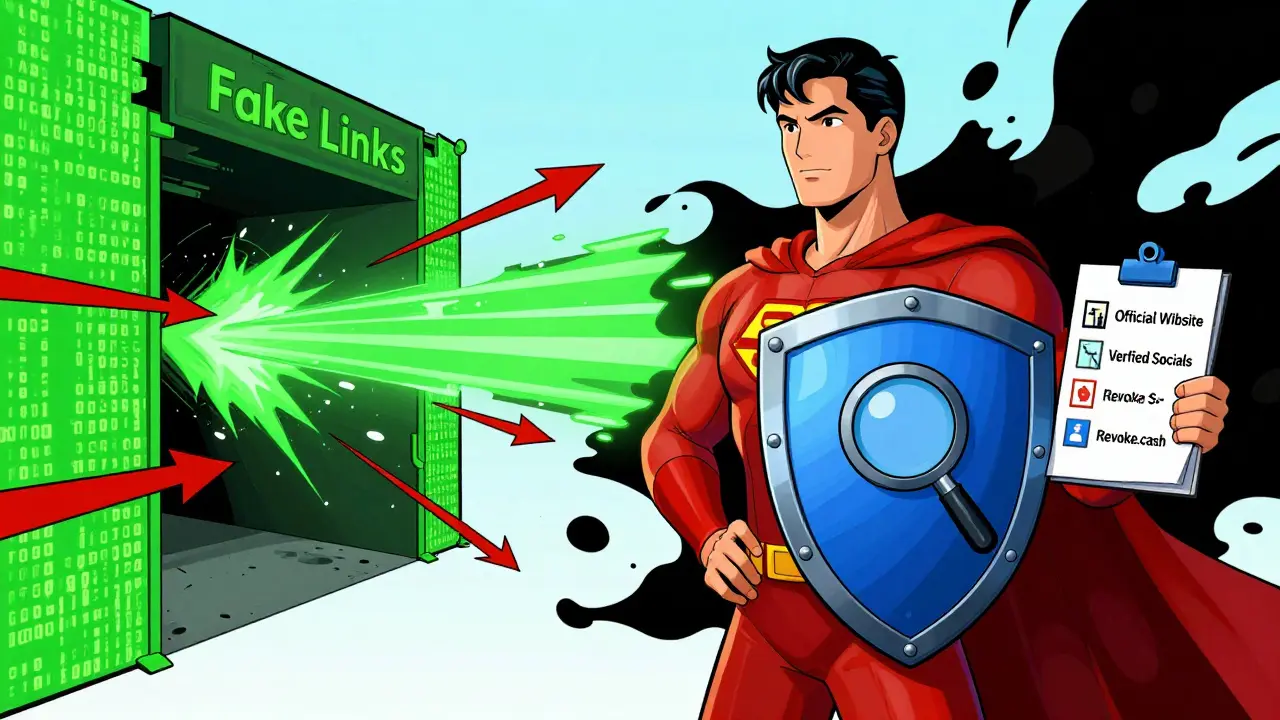
If you are unsure about any airdrop claim, use this three-step verification process before connecting your wallet:
- Check the Official Website: Go directly to the project's main domain (not the link in the tweet). Look for a "News" or "Blog" section. If the airdrop isn't there, it's fake.
- Verify Social Media Handles: Look at the project's verified Twitter/X account. Do they mention the airdrop? If only a random account with 500 followers is talking about it, ignore it.
- Use Revoke.cash: If you accidentally connected your wallet to a suspicious site, go to Revoke.cash immediately. Connect your wallet there to see if you have granted any approvals to unknown contracts. Revoke them instantly to stop potential drains.
What To Do Instead
If you are looking for legitimate opportunities in the Binance Smart Chain ecosystem, focus on projects with transparent roadmaps and active communities. Look for protocols that have undergone security audits from reputable firms like CertiK or Hacken. Avoid projects that rely solely on hype and vague promises of future utility.
For those interested in airdrops, the safest strategy is to interact with testnets of emerging Layer 2 solutions or established DeFi protocols that have a history of rewarding early users. Projects like Uniswap in the past demonstrated that genuine user engagement leads to fair rewards. However, never expect a reward; treat every interaction as a donation to the ecosystem. If a reward comes, great. If not, you haven't lost your principal investment because you didn't send funds to a scam site.
Regarding Pandora Protocol specifically, the data suggests it is better to observe from a distance. The combination of negligible trading volume, massive price depreciation, and lack of clear communication makes it a high-risk asset. An airdrop announcement in this context is likely a final attempt to extract value from remaining believers rather than a genuine community benefit program.
Is there an official Pandora Protocol (PNDR) airdrop?
No, there is no verified official airdrop for Pandora Protocol (PNDR) as of June 2026. Any claims suggesting otherwise, especially those linking to CoinMarketCap, are likely scams.
Did CoinMarketCap partner with Pandora Finance?
There is no public record of a partnership between CoinMarketCap and Pandora Finance for an airdrop. CoinMarketCap lists tokens but does not typically host airdrops for low-volume projects. Scammers often misuse the CoinMarketCap name to appear credible.
What is the current price of PNDR?
As of mid-2026, PNDR trades at approximately $0.0031, which is a significant decline from its all-time high of $0.74. The trading volume is extremely low, indicating minimal market interest.
How can I tell if an airdrop is a scam?
Signs of a scam include requests for private keys, demands for upfront fees, links from unverified sources, and websites that ask for unlimited token approvals. Always verify announcements on the project's official website and verified social media channels.
Is Pandora Finance still active?
While the project exists on the Binance Smart Chain, its activity levels are very low. The lack of trading volume and significant price drop suggest that development and community engagement have stalled compared to its launch in 2021.