

Imagine buying a ticket to a concert that hasn't happened yet, for a band you've never heard of. That's roughly what holding OnlyCalls by Virtuals is like right now. Tickered as CALLS, this isn't your typical Bitcoin or Ethereum play. It's a micro-cap utility token tied to an AI-driven "alpha calls" platform within the Virtuals ecosystem. If you're seeing it pop up on your radar and wondering if it's a hidden gem or just another speculative experiment, you're in the right place. We'll break down exactly what it does, where it lives, and why its price moves so erratically.
The Core Identity: An AI Agent Token
At its heart, CALLS is a native currency designed for access to premium features, automated strategies, and platform governance within the Virtuals ecosystem. Think of it less as a store of value and more as a membership pass. The project markets itself as an "AI Agent for Alpha Calls," meaning the underlying technology aims to generate trading signals that outperform the market average using artificial intelligence. Unlike meme coins that rely purely on hype, CALLS has a stated utility: you spend or stake these tokens to unlock better data or join decision-making processes on the platform. However, because the team behind Virtuals remains largely pseudonymous and low-profile, much of the value proposition still rests on the promise of future utility rather than proven, audited performance metrics available to the public eye.
Where Does It Live? Base vs. BSC
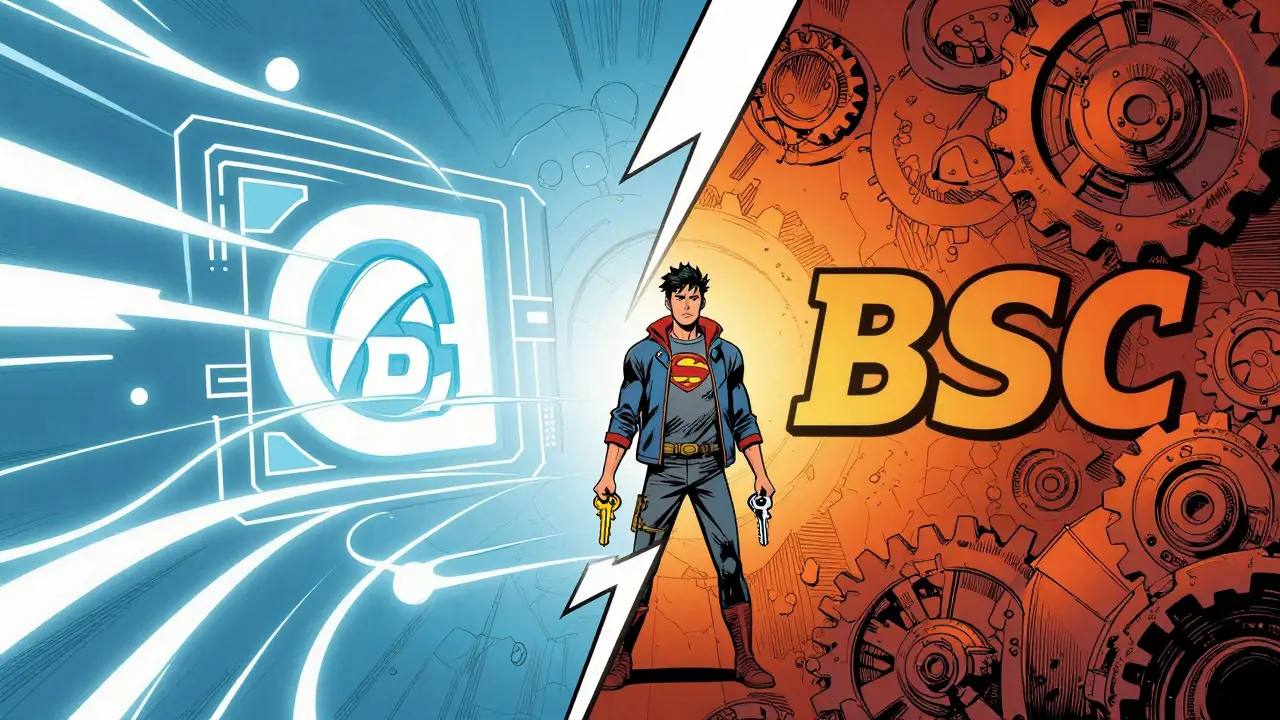
One thing that trips up many new users is that CALLS exists on two different blockchains. The primary home is Base, a layer-2 network built by Coinbase that offers faster transactions and lower fees than Ethereum mainnet. The smart contract for the Base version was deployed in late November 2024. Later, in July 2025, a separate version appeared on Binance Smart Chain (BSC). This dual presence creates a bit of a puzzle. Are they the same asset? Technically, they are distinct contracts. If you buy CALLS on Base, you don't automatically own the BSC version unless you bridge or swap specifically. This adds a layer of complexity: you have to be careful which network your wallet is connected to and which contract address you're interacting with. Mixing them up can lead to lost funds or mis-trades, a common pitfall in multi-chain environments.
Tokenomics: Supply and Circulation
Let's talk numbers. The total supply of CALLS is capped at 1,000,000,000 tokens. Most major data aggregators report that around 994 million of those are already in circulation, meaning nearly the entire supply is out there. There is no inflationary mechanism adding new tokens over time; it's a fixed supply model. But here’s the catch: because the project is small, data on circulating supply can vary between platforms. Some sites might show 1 billion in circulation, while others stick to the 994 million figure. This discrepancy doesn't change the fundamental math much, but it highlights a broader issue with micro-caps: data transparency isn't always perfect. You’re relying on self-reported figures from the project team rather than independent audits, which is standard for projects of this size but worth keeping in mind when assessing reliability.
Price Action and Market Reality
Now, the part that matters most to traders: how does it trade? As of mid-2026, CALLS trades at a fraction of a cent. Recent snapshots show prices hovering around $0.000025 USD per token. To put that in perspective, you’d need about 40,000 CALLS to equal one US dollar. The daily trading volume is shockingly low, often dipping below $5 USD in a 24-hour period. Yes, five dollars. This indicates extreme illiquidity. When you try to buy or sell even a modest amount, your order can significantly move the price against you, a phenomenon known as slippage. In contrast, during brief periods of higher interest, volumes have spiked to a few thousand dollars, causing double-digit percentage swings in price. This volatility makes CALLS a high-risk, high-reward play. It’s not suitable for conservative investors looking for steady growth. Instead, it appeals to niche traders who enjoy the thrill of micro-cap speculation and believe strongly in the AI-agent narrative.
| Attribute | Base Network Version | BSC Network Version |
|---|---|---|
| Launch Date | November/December 2024 | July 2025 |
| Contract Standard | ERC-20/721/1155 (Multi-standard) | BEP-20 |
| Primary DEX | Uniswap V2/V3 | PancakeSwap v2 |
| Liquidity Status | Very Low ($1-$5 daily volume) | Variable, often near zero |
How to Actually Use It
If you decide to dip your toes into CALLS, know that it’s not a plug-and-play experience like buying shares on a traditional stock app. You’ll need a self-custody wallet, such as MetaMask, configured for the Base network. You have to manually add the correct contract address to see the token in your wallet. Then, you swap for it on decentralized exchanges like Uniswap. Because there’s no centralized exchange listing with deep liquidity, you’re entirely dependent on on-chain pools. For the BSC version, you’d use PancakeSwap. The lack of dedicated customer support or detailed documentation portals means you’re largely on your own to figure out how to redeem your tokens for the promised AI services. This friction acts as a barrier for casual users, ensuring that the holder base remains mostly composed of experienced DeFi participants who are comfortable navigating complex interfaces and verifying contract addresses themselves.
Risk Profile and Long-Term Outlook
So, is it a good investment? That depends entirely on your risk tolerance. CALLS ranks outside the top 5,000 cryptocurrencies, placing it firmly in the fringe. There are no institutional endorsements, no major analyst reports, and no clear roadmap published on mainstream aggregator sites. The long-term viability hinges on whether the Virtuals ecosystem gains traction and if the AI agents actually deliver value. If the project fails to attract users, the token could become effectively worthless, similar to thousands of other abandoned micro-caps. On the other hand, if the AI-agent trend continues to grow and Virtuals becomes a go-to platform for trading signals, CALLS could see significant appreciation. But remember: you’re betting on a small, opaque team delivering on promises without a track record of large-scale adoption. It’s a speculative bet, not a blue-chip hold.
Frequently Asked Questions
What is the main purpose of the CALLS token?
CALLS serves as a utility and governance token for the OnlyCalls by Virtuals platform. Users spend or stake it to access premium AI-generated trading signals, participate in automated strategies, and vote on platform decisions.
Which blockchain is CALLS primarily on?
The primary implementation is on the Base layer-2 blockchain. A secondary version exists on Binance Smart Chain (BSC), but they are separate contracts and not automatically interchangeable.
Is CALLS a stablecoin?
No, CALLS is highly volatile. Its price fluctuates significantly due to low trading volumes and speculative demand, making it very different from stablecoins like USDT or USDC.
Where can I buy CALLS?
You can buy CALLS on decentralized exchanges. For the Base version, use Uniswap V2 or V3. For the BSC version, use PancakeSwap v2. You will need a compatible wallet and some ETH or BNB for gas fees.
What is the total supply of CALLS?
The maximum supply is fixed at 1,000,000,000 tokens. Approximately 994 million tokens are currently in circulation according to most recent data aggregators.