
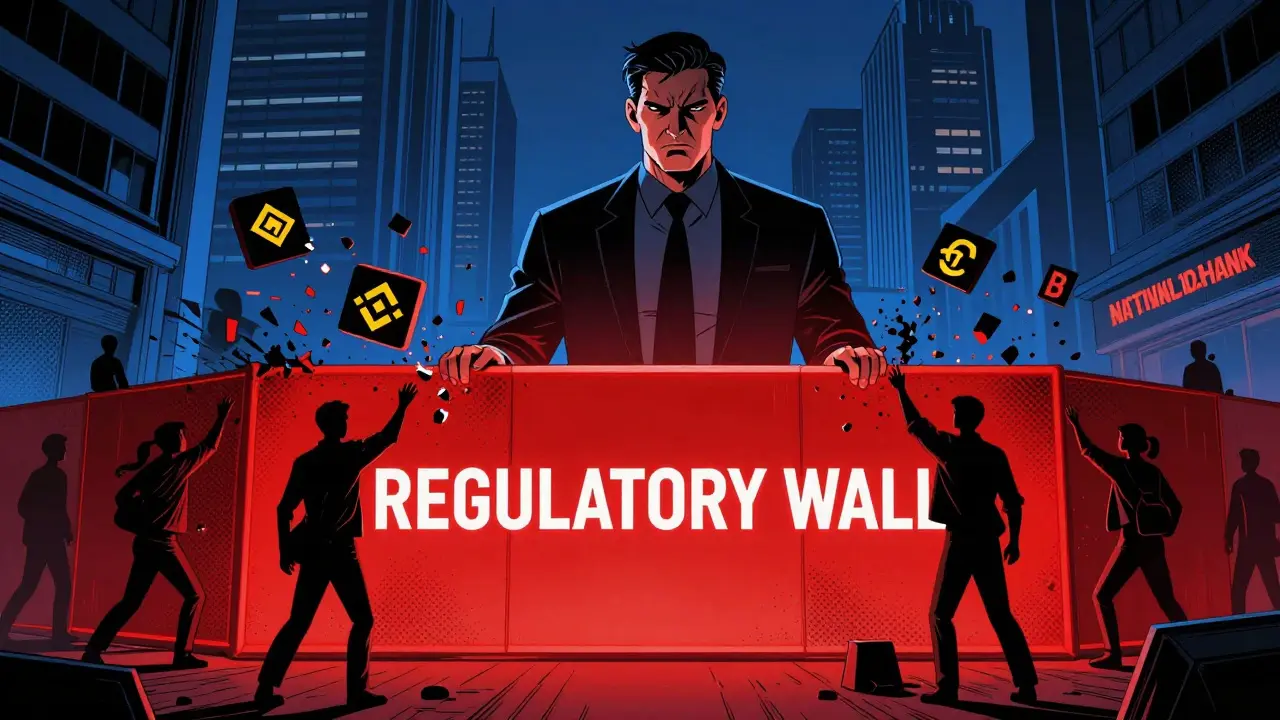
There is a lot of noise online about the National Bank of Cambodia banning cryptocurrency. You might have heard that all crypto trading is illegal or that the government has shut down access to exchanges like Binance. The truth is more complicated. The National Bank of Cambodia (NBC) did not issue a total ban on digital assets. Instead, they built a strict regulatory wall around them.
In late 2024 and early 2025, the NBC blocked unlicensed offshore exchanges and introduced new rules for banks and licensed platforms. This shift changed how Cambodians buy, sell, and hold crypto. If you are trying to trade from Phnom Penh or Siem Reap, understanding these rules matters. A mistake could mean frozen accounts or legal trouble. Let’s look at what actually happened, why it happened, and what you can do today.
The November 2024 Crackdown: Why Exchanges Were Blocked
It started with a hard move by regulators. In November 2024, the Telecommunications Regulator of Cambodia (TRC) cut off internet access to 16 major overseas crypto exchanges. Names like Binance and Coinbase were among those blocked. The regulator targeted over 102 domains linked to crypto activities. These platforms were operating without licenses required under Cambodian law.
Why did this happen? Three main reasons drove the decision. First, the government wanted to bring users back to domestic, regulated platforms. Offshore exchanges operated outside Cambodian jurisdiction, making oversight nearly impossible. Second, authorities aimed to protect the Cambodian riel. Widespread crypto usage threatened monetary stability and encouraged dollarization. Third, cybercrime was a serious concern. Fraud schemes involving forced labor compounds had proliferated, using crypto to move stolen funds. U.S. Department of Justice indictments in October 2024 highlighted entities like Prince Group for running such operations.
At the time of the block, Binance alone had roughly 200,000 registered users in Cambodia. The country ranked 17th globally in crypto adoption in 2024. The domestic market was valued at US$7.9 million. Users preferred offshore platforms because of lower fees and larger peer-to-peer networks. But that convenience came at a cost: no consumer protection and zero regulatory accountability.
Prakas B7-024-735 Prokor: The New Rules
Blocking websites was just the first step. On December 26, 2024, the NBC issued Prakas B7-024-735 Prokor, which took effect in early 2025. This regulation created a formal framework for digital assets. It didn’t ban crypto outright. It categorized it.
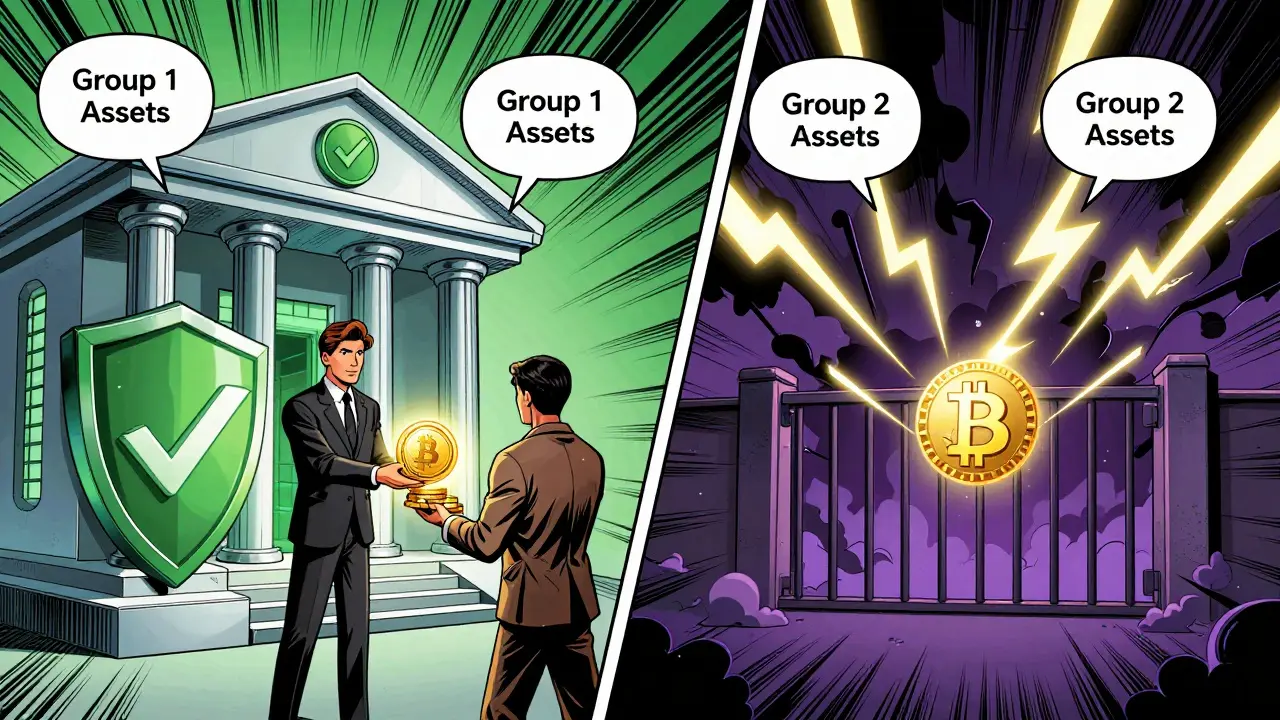
The rule split digital assets into two groups:
- Group 1 Assets: Tokenized securities and approved stablecoins. These are backed by real-world value or regulated structures. They carry lower risk.
- Group 2 Assets: Other crypto-assets, including Bitcoin and similar unbacked cryptocurrencies. Regulators view these as higher risk due to volatility and lack of underlying collateral.
Commercial banks supervised by the NBC can now invest in or hold Group 1 assets. But they need prior approval. There are also exposure limits to prevent systemic risk. Banks are explicitly forbidden from holding Group 2 assets on their balance sheets. This means you won’t see your bank buying Bitcoin directly. However, they may offer services related to crypto if approved.
| Feature | Group 1 Assets | Group 2 Assets |
|---|---|---|
| Examples | Tokenized securities, approved stablecoins | Bitcoin, Ethereum, other unbacked cryptos |
| Risk Profile | Lower | Higher |
| Bank Holdings Allowed? | Yes, with NBC approval | No |
| Client Services Permitted? | Yes, via licensed CASPs | Limited, depends on future rules |
Licensed Platforms: Who Can Operate Legally?
If offshore exchanges are blocked, where do people go? As of 2025, only two domestic platforms operate legally within Cambodia’s FinTech Regulatory Sandbox. These are Royal Group Exchange (RGX) and Cambodian Network Exchange (CNX). Both fall under direct NBC supervision.
This limited licensing strategy forces users toward channels that are easier to monitor. Authorities want compliance with anti-money laundering (AML) standards. They also want to ensure consumer protection. RGX and CNX must follow stricter rules than offshore competitors. Whether they can attract enough users remains an open question. Many traders still prefer the liquidity and features of global platforms.
Banks and payment institutions can provide crypto-related services too-but only with prior NBC approval. This includes custody solutions, exchange on-ramping, and remittance conversion. The key distinction is acting on behalf of clients versus trading for themselves. Banks cannot engage in proprietary crypto trading. They can serve as Crypto Asset Service Providers (CASPs) if licensed.
Project Bakong: The Government’s Alternative
To understand the NBC’s stance, you need to look at Project Bakong. Launched in 2020 after years of development with Japanese technical support, Bakong is both a Central Bank Digital Currency (CBDC) and a tokenized deposit system. It runs on blockchain technology and allows peer-to-peer payments and money transfers.
Users keep Bakong wallets linked automatically to their bank accounts. By 2024, more than 65% of Cambodia’s population used Bakong. It integrates with regional payment systems and supports financial inclusion goals. The government sees Bakong as a safer, more controlled alternative to decentralized crypto. Promoting Bakong helps boost the riel and reduces reliance on foreign currencies.
Crypto regulations exist within this broader strategy. The NBC wants to expand digital finance while keeping control over monetary policy. Allowing unrestricted crypto growth would undermine Bakong’s role. That’s why the focus stays on regulated channels and domestic infrastructure.

What Does This Mean for You?
If you live in Cambodia and use crypto, here’s what you need to know. Trading on banned offshore exchanges like Binance or Coinbase is technically illegal. Accessing them requires circumvention tools like VPNs, which carry their own risks. Law enforcement monitors suspicious activity closely.
Your safest option is to use licensed platforms like RGX or CNX. These exchanges comply with local laws and offer basic trading functions. For institutional players, working with approved banks provides access to Group 1 assets. Retail investors interested in Bitcoin or other Group 2 assets face fewer legal pathways. Future regulations may clarify client-side services, but nothing is confirmed yet.
Always check current status before making moves. The NBC continues updating operational procedures. Licensing requirements for CASPs will be detailed in forthcoming rules. Staying informed protects you from sudden changes.
Challenges Ahead
Enforcing the ban isn’t easy. Experts note that VPN usage and other workarounds remain widespread. Fulcrum analysis pointed out that the overseas exchange ban ignores deeper issues like elite corruption. Circumvention methods limit its effectiveness. Still, the NBC maintains pressure through monitoring and penalties.
Another challenge is competition. Domestic platforms must prove they can match offshore services. Lower fees, better UX, and wider asset selection matter to users. If RGX and CNX fail to deliver, demand for black-market solutions grows. Balancing innovation with control is tough.
Stablecoin adoption might grow under the Group 1 framework. Banks developing approved custody and exchange services could compete with Bakong. Or they might complement it. Time will tell which path wins out.
Is cryptocurrency completely banned in Cambodia?
No. Cryptocurrency is not fully banned. Unlicensed offshore exchanges are blocked, but licensed domestic platforms like Royal Group Exchange and Cambodian Network Exchange operate legally. Banks can offer certain crypto services with NBC approval.
Can I use Binance in Cambodia?
Access to Binance was blocked in November 2024. Using it requires circumvention tools, which violates telecom regulations. Stick to licensed platforms to stay compliant.
What is Project Bakong?
Project Bakong is Cambodia’s Central Bank Digital Currency and tokenized deposit system. It enables fast, secure peer-to-peer payments and integrates with bank accounts. Over 65% of the population uses it as of 2024.
Which cryptocurrencies are allowed?
Group 1 assets include tokenized securities and approved stablecoins. Group 2 covers Bitcoin and other unbacked cryptos. Banks can hold Group 1 with approval but cannot hold Group 2. Client services depend on future regulations.
Are there any licensed crypto exchanges in Cambodia?
Yes. Royal Group Exchange (RGX) and Cambodian Network Exchange (CNX) are the only two platforms authorized under the NBC’s FinTech Regulatory Sandbox as of 2025.
Will the ban on offshore exchanges lift soon?
No official announcements suggest lifting the ban. The NBC focuses on expanding regulated domestic options instead. Enforcement challenges persist due to VPN usage.
How does the NBC regulate banks’ crypto involvement?
Banks can hold Group 1 assets with NBC approval and face exposure limits. They cannot hold Group 2 assets. Approved banks may offer client services like custody and on-ramping if licensed as CASPs.
Why did the NBC block crypto exchanges?
The goals were to strengthen oversight, protect the Cambodian riel, and combat cybercrime linked to fraud schemes. Offshore platforms operated beyond regulatory reach, posing risks to consumers and monetary stability.