
Imagine reading a single blog post and paying $0.05 for it. No subscription. No ads. Just a tiny payment that goes straight to the writer’s pocket. That is the promise of micropayments for content on blockchain. It sounds simple, but the reality is messy. Traditional credit card processors charge fees that eat up small transactions whole. If you try to send someone five cents via PayPal, the fee alone might cost fifty cents. That math doesn’t work.
Blockchain technology changes this equation by removing middlemen. But does it actually work for everyday creators? Or is it just another tech buzzword? Let’s look at how these systems function, where they fail, and what they mean for the future of online content.
The Problem with Small Payments
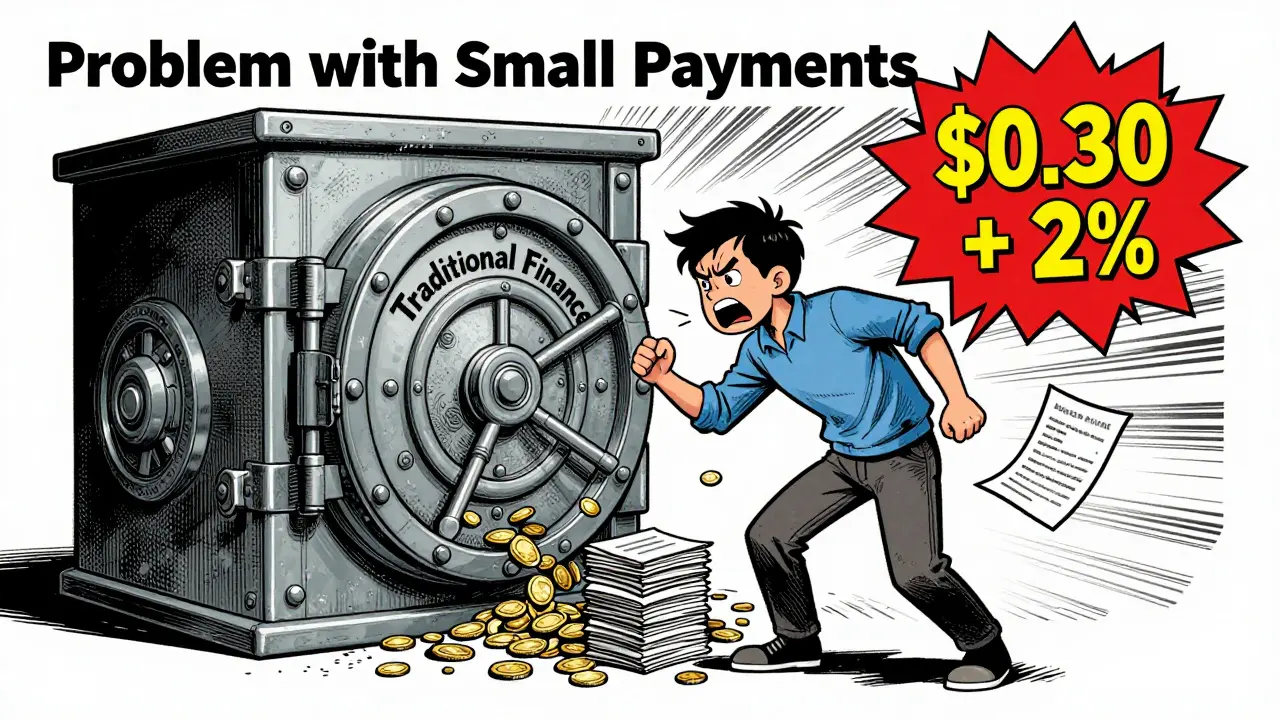
To understand why blockchain matters here, you first need to see why traditional finance fails at micro-transactions. When you buy a coffee, the merchant pays a processing fee-usually around 2% plus a fixed amount (like $0.30). For a $4 cup of coffee, that’s manageable. For a $0.10 digital tip? The fee exceeds the payment itself.
This creates a "minimum viable transaction" barrier. Most platforms force users to preload wallets or hit high payout thresholds. Think about Google AdSense. You don’t get paid after one click. You wait until you earn $100. Freelance sites like Upwork do the same. They hoard your money in a digital wallet until it reaches a certain size before releasing it to your bank account. This delays cash flow and favors big earners over small ones.
Stripe and PayPal have tried to fix this with specialized micropayment accounts, but they still require significant setup and often involve hidden costs or complex withdrawal rules. The system isn’t broken; it’s just not built for pennies.
How Blockchain Solves the Fee Issue
Blockchain networks operate differently. Instead of banks charging per transaction, miners or validators process batches of transactions for a small network fee. On efficient blockchains like Polygon or Solana, this fee can be less than a fraction of a cent. This makes it economically possible to send $0.01 without losing $0.99 to fees.
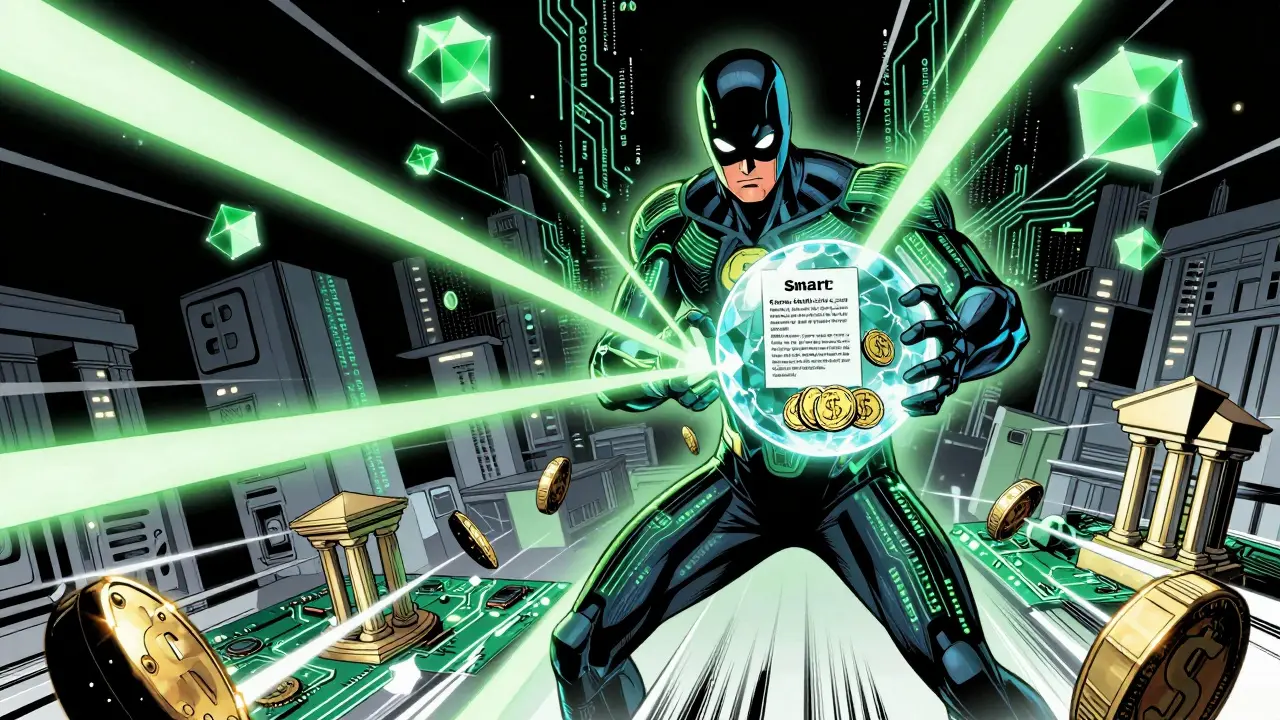
The magic happens through smart contracts. These are self-executing codes stored on the blockchain. When you pay for an article, the smart contract automatically splits the revenue. Maybe 80% goes to the writer, 10% to the platform hosting the content, and 10% to a community fund. All of this happens instantly, transparently, and without a lawyer or accountant involved.
Here is how the technical architecture usually breaks down:
- Fungible Tokens: These act like digital cash. They are interchangeable. You might use them to unlock a paywall or tip a creator. Think of them as the "coins" in the ecosystem.
- Non-Fungible Tokens (NFTs): These represent unique items. A creator might sell a special edition video or a signed digital artwork as an NFT. Each one is distinct and verifiable on the blockchain.
- Governance Tokens: These give holders a vote. Fans who hold these tokens can decide which topics the creator should cover next or how funds should be allocated. This turns passive readers into active stakeholders.
Real-World Use Cases for Creators
Who actually benefits from this? It’s not just for tech geeks. Several types of content fit perfectly into this model.
Journalists and Bloggers can charge per article. Instead of relying on ad views that pay fractions of a cent, they charge readers directly. A investigative piece might cost $1. A quick news update might cost $0.10. Readers pay only for what they read, eliminating the need for blanket subscriptions.
Musicians and Podcasters can use micropayments for instant tipping. Imagine listening to a podcast episode and sending $0.50 to the host immediately after a great segment. Platforms like Ko-fi offer fiat versions of this, but blockchain adds global accessibility and lower fees.
Educators can break courses into tiny modules. Instead of selling a $500 course upfront, they sell each lesson for $5. Students pay as they learn, reducing the risk for both parties. If the student quits halfway, they only lost half the price. If the teacher delivers value, they keep earning.
Digital Artists can sell prints or access rights via NFTs. While high-profile NFT sales made headlines, the real utility lies in small-scale licensing. A designer could license a font or icon pack for $2 per user, tracked automatically on-chain.
The Barriers to Adoption
If blockchain micropayments are so efficient, why aren’t we all using them yet? The answer lies in user experience and volatility.
Wallet Management is Hard. To receive crypto, you need a digital wallet. To use it, you need private keys. If you lose those keys, your money is gone forever. There is no "forgot password" button on Bitcoin. For average users, managing multiple wallets across different chains is confusing and intimidating. Centralized exchanges like Coinbase try to simplify this, but they reintroduce the fee problem. Coinbase charges around $0.99 for small transactions under $10, making micropayments unviable again.
Cryptocurrency Volatility. Prices swing wildly. If I pay you $1 worth of Ethereum today, it might be worth $1.50 tomorrow or $0.80 next week. Neither the creator nor the consumer wants this uncertainty. Creators need stable income to pay rent. Consumers want predictable pricing.
Regulatory Uncertainty. Governments are still figuring out how to tax and regulate crypto. In some regions, receiving micropayments in crypto could trigger complex reporting requirements. This legal gray area scares off mainstream adoption.
Comparison: Traditional vs. Blockchain Micropayments
| Feature | Traditional (PayPal/Stripe) | Blockchain (Crypto) |
|---|---|---|
| Transaction Fee | High ($0.30 + 2%) | Low (<$0.01 on fast chains) |
| Payout Speed | Days to Weeks | Seconds to Minutes |
| User Setup | Easy (Email/Phone) | Complex (Wallet/Keys) |
| Revenue Splitting | Manual/Paid Services | Automatic (Smart Contracts) |
| Currency Stability | Stable (Fiat) | Volatile (Most Cryptos) |
Hybrid Models: The Best of Both Worlds?
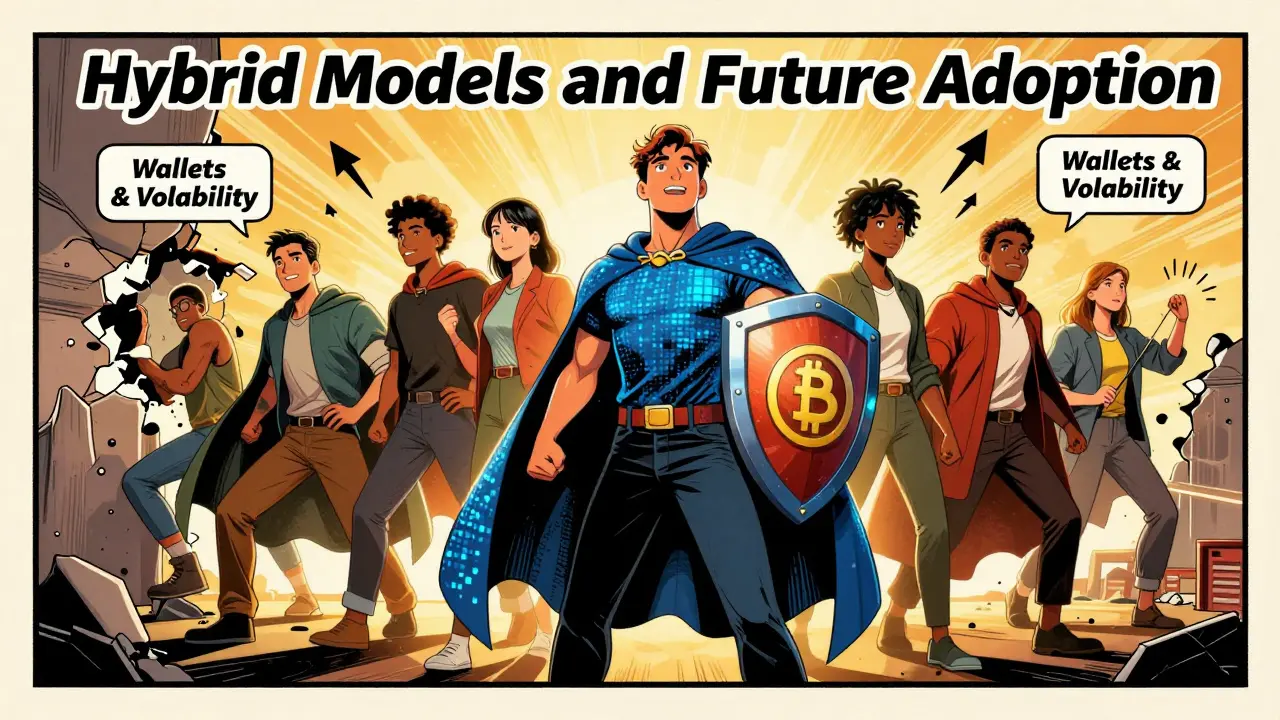
The most successful implementations currently use hybrid approaches. Platforms aggregate micropayments on-chain and convert them to stablecoins or fiat for payout. This shields creators from volatility while keeping transaction costs low.
Some services use "payment channels." Users open a channel, make hundreds of micro-transactions instantly with zero fees, and then close the channel to settle the final balance on the blockchain. This reduces the number of on-chain transactions significantly.
Another approach is token gating. Instead of paying per article, users hold a specific token that grants access. The value of the token fluctuates based on demand, creating a secondary market for content access. This shifts the friction from payment processing to token acquisition.
What Needs to Change for Mass Adoption?
For blockchain micropayments to become mainstream, three things must happen.
- Simpler Wallets: We need wallets that feel like email accounts. No seed phrases visible to users. Social recovery options where trusted friends can help restore access if keys are lost.
- Stable Value: Wider adoption of stablecoins (tokens pegged to the US Dollar or Euro) for everyday transactions. Users shouldn’t worry about exchange rates when buying a $0.10 article.
- Better UX: One-click payments integrated directly into browsers and apps. Users should not know they are using blockchain. It should just feel like a faster, cheaper version of clicking "Buy Now."
Until these hurdles are cleared, blockchain micropayments will remain a niche tool for early adopters, tech-savvy creators, and communities deeply invested in decentralization. But the potential is undeniable. As infrastructure improves, the dream of a pay-per-click internet may finally become reality.
What is the smallest amount I can pay via blockchain micropayments?
Technically, you can pay fractions of a cent. On networks like Polygon or Solana, transaction fees are often less than $0.001. This allows for payments as small as $0.0001, though practical limits depend on the platform's minimum threshold settings.
Do I need a cryptocurrency wallet to accept micropayments?
Yes, currently you need a digital wallet to receive crypto payments. However, new tools are emerging that abstract this away, allowing creators to link their existing bank accounts while handling the crypto conversion behind the scenes.
How do smart contracts ensure fair revenue splits?
Smart contracts are code-based agreements that execute automatically. When a payment is made, the code instantly distributes the funds according to pre-set percentages (e.g., 80% to creator, 20% to platform) without human intervention or delay.
Is blockchain better than Patreon for small donations?
Blockchain offers lower fees and faster payouts compared to Patreon, which takes a cut of earnings. However, Patreon provides a simpler user experience and handles taxes and billing for you. Blockchain is better for tech-savvy users wanting direct control; Patreon is better for ease of use.
Can I use stablecoins for content micropayments?
Yes, stablecoins like USDC or DAI are ideal for micropayments because their value is pegged to fiat currencies like the US Dollar. This eliminates the volatility risk associated with Bitcoin or Ethereum, making pricing predictable for both buyers and sellers.