
MiCA Compliance Cost Calculator
Estimate Your MiCA Compliance Costs
Get a personalized estimate of your compliance costs and timeline based on your business type and requirements.
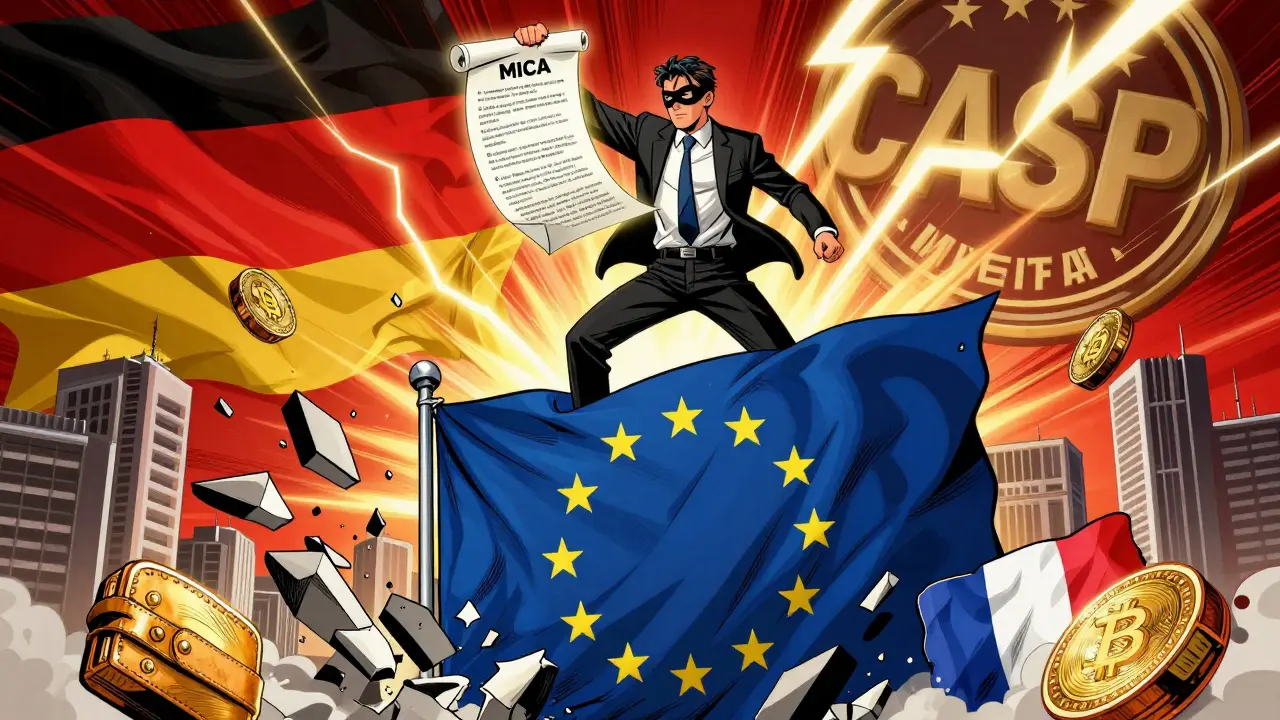
On December 30, 2024, the MiCA regulation became fully enforceable across the European Union. For any crypto business wanting to operate in Europe, this isn’t just another rule change-it’s a complete rewrite of the game. If you’re serving EU customers, handling crypto assets, or issuing tokens, you’re now under a single, strict, and detailed regulatory umbrella. No more playing hide-and-seek with 27 different national laws. MiCA demands clarity, accountability, and real compliance. And if you’re not ready, you’re not legal.
What Exactly Is MiCA?
MiCA stands for Markets in Crypto-Assets (Regulation (EU) 2023/1114). It’s the first time the EU has created a unified legal framework just for crypto. Before MiCA, a crypto exchange in Germany had different rules than one in France. Now, if you’re authorized in one EU country, you can offer services across all 27. That’s the passporting system. But getting that passport isn’t easy.MiCA covers three main areas: crypto-asset service providers (CASPs), token issuers, and stablecoins. It doesn’t touch decentralized finance (DeFi) protocols directly-if they’re truly permissionless and non-custodial, they fall outside its scope. But if you’re running a platform that holds users’ keys, processes trades, or issues tokens, MiCA is your new boss.
Who Must Comply? The CASP Rules
If your business provides any of these services, you’re a CASP:- Buying or selling crypto for fiat
- Trading crypto on your platform
- Managing crypto wallets
- Exchanging crypto for other crypto
- Providing custody services
You don’t need to be based in the EU-but if you serve EU customers, you must have a legal entity registered in one. That means a physical office, an EU-resident director, and a local compliance officer with a CAMS certification. Minimum capital? €100,000 for basic services. If you execute orders, it jumps to €150,000.
AML rules are no joke. You must follow the 5th Anti-Money Laundering Directive (AMLD5) to the letter. That means full KYC on every user, transaction monitoring, and reporting suspicious activity. The Travel Rule applies too: any crypto transfer over €1,000 must include sender and receiver info. No exceptions.
And here’s the kicker: if you hit 15 million average active EU users per year, you’re labeled a significant CASP (sCASP). That triggers extra scrutiny: quarterly stress tests, direct oversight from ESMA, and mandatory interoperability standards. The threshold is low-lower than any U.S. proposal-and it’s designed to catch fast-growing platforms before they become too big to fail.
Stablecoins Under MiCA: The Tightest Rules in the World
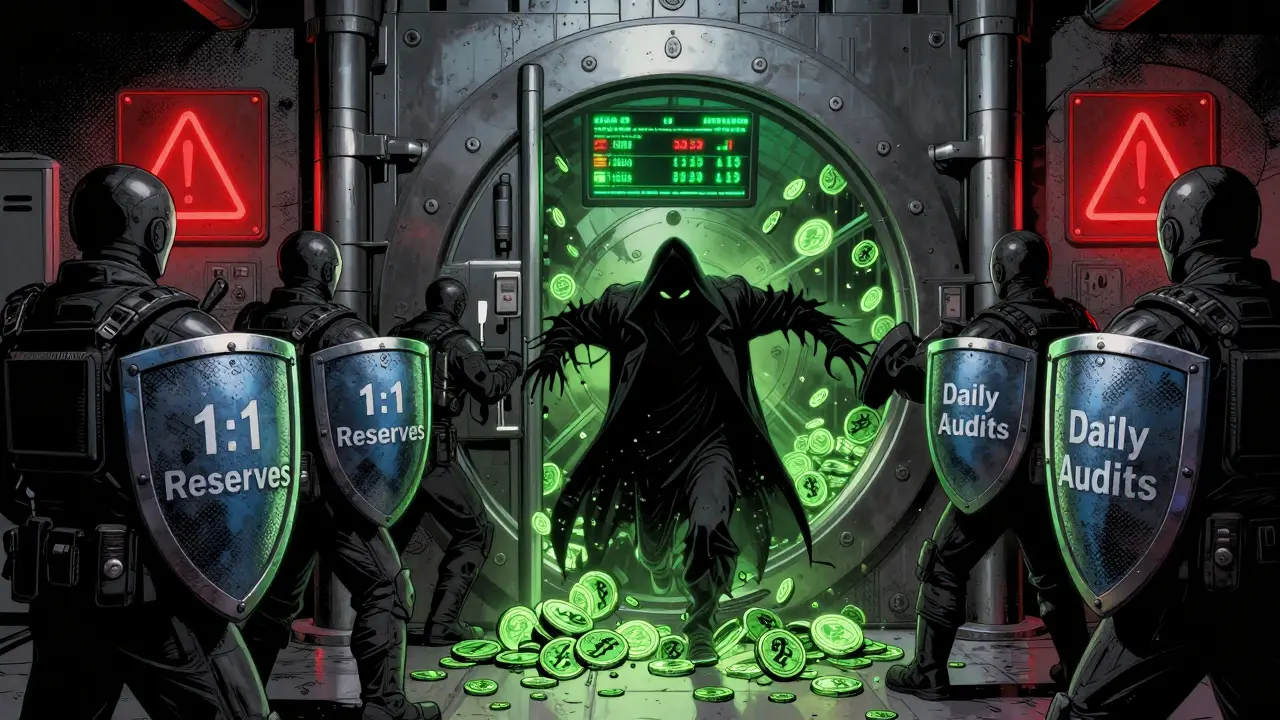
Not all stablecoins are treated the same. MiCA draws a hard line between e-money tokens (EMTs) and asset-referenced tokens (ARTs).EMTs-like euro-backed tokens-must hold 1:1 reserves in euro-denominated deposits. No risky assets. No lending. No collateral pooling. Just cash in the bank. Daily redemption rights? Mandatory. You must let users convert back to euros at any time, no delays.
ARTs-like USDT or USDC if they’re issued in the EU-have stricter rules if they hit €1 billion in market cap. They need:
- 1:1 reserves in high-quality liquid assets (cash, government bonds)
- Daily reserve verification by an independent auditor
- Public disclosures on reserve composition
- Immediate redemption rights
And if you’re a major stablecoin issuer? ESMA can freeze your reserves or demand immediate liquidation if they think you’re at risk. The ECB says even these rules might not be enough. But right now, they’re the strictest in the world. Japan only requires quarterly audits. The U.S. has no federal rules yet. MiCA is leading the charge.
Whitepapers Are No Longer Optional
If you’re issuing any crypto token-utility, governance, or security-you need a whitepaper approved by your national regulator. It’s not a marketing brochure. It’s a legal document.Here’s what it must include:
- Technical specs: blockchain used, consensus mechanism, smart contract details
- Business model: how the project makes money, revenue streams
- Tokenomics: supply, distribution, vesting schedules
- Risk factors: market volatility, regulatory changes, smart contract bugs
- Environmental impact: energy use per transaction, carbon footprint estimates
Environmental reporting is new. If you’re using proof-of-work, you’ll need to show your energy consumption. Proof-of-stake? Still needs disclosure, even if it’s 99% less energy. Many projects got rejected by BaFin (Germany’s regulator) for vague or missing environmental data. One team spent four months and three revisions just to get their utility token approved.
Costs and Timelines: What It Really Takes
Getting MiCA-compliant isn’t cheap. Most businesses spend between €500,000 and €1.2 million on setup. Here’s a breakdown:- Legal entity setup: €100,000-€250,000
- AML/KYC software: €80,000-€200,000/year
- Whitepaper development: €35,000 (simple token) to €150,000 (stablecoin)
- Compliance officer salary: €80,000-€120,000/year
- Office space (min. 20m² per 5 employees): €20,000-€60,000/year in EU cities
Timeline? Six to nine months on average. Luxembourg and France approve applications fastest-around 5.2 months. Germany and Italy take nearly nine. If you’re applying now, expect delays. Regulators are overwhelmed.

What’s Working? What’s Not?
Some businesses are thriving under MiCA. After getting French authorization, one exchange expanded to 15 EU countries with zero extra paperwork. Passporting works. Users notice the difference too: 78% of positive Trustpilot reviews mention clearer fees and better security.But there’s a cost. 63% of negative reviews blame reduced token listings. Many small altcoins don’t meet MiCA’s whitepaper standards. Exchanges are dropping them to avoid risk. The number of crypto businesses serving EU customers dropped from 1,850 to 1,240 in 2024. Consolidation is real.
Traditional banks are moving in fast. BNP Paribas, Deutsche Bank, and 10 others now have MiCA-compliant crypto arms. They’re using their existing compliance infrastructure to outpace crypto-native firms. The playing field is shifting.
What’s Next? The Road Beyond 2025
MiCA isn’t static. On March 31, 2025, new environmental reporting standards take effect, distinguishing between proof-of-work and proof-of-stake more precisely. ESMA will review stablecoin rules in Q3 2025-expect the €1 billion threshold to be lowered.Switzerland and the UK are negotiating equivalence agreements. If they succeed, MiCA-compliant firms could operate there too without extra licensing. That could turn the EU into the global compliance hub for crypto.
But gaps remain. Zero-knowledge proofs? DePIN networks? MiCA doesn’t define them. ESMA admits it. That means regulators will have to interpret existing rules to cover new tech-opening the door to uncertainty.
What Should You Do Now?
If you’re not compliant:- Decide: Are you serving EU users? If yes, you need to act.
- Choose your EU base: Luxembourg and France are fastest. Germany is thorough but slow.
- Start your legal entity: Hire a local lawyer, set up an office, appoint an EU director.
- Build your compliance stack: AML software, KYC provider, CAMS-certified officer.
- Write your whitepaper: Use ISO 27005 for risk, EU Taxonomy for environment.
- Apply early: Don’t wait until the last minute. Delays are common.
If you’re already compliant? You’re ahead of 70% of the market. Use your license to expand. Build trust. Users are choosing MiCA-compliant platforms because they know their funds are safer.
MiCA isn’t perfect. It’s complex. It’s expensive. But it’s here to stay. The EU isn’t trying to kill crypto. It’s trying to make it reliable. For businesses that can meet the standards, this is the best opportunity crypto has ever had to go mainstream.
Does MiCA apply to decentralized finance (DeFi) protocols?
MiCA doesn’t regulate truly decentralized, non-custodial DeFi protocols where users hold their own keys and no central entity controls the code. But if your DeFi project has a company behind it, issues tokens, or holds user funds-even partially-it likely falls under MiCA as a CASP or token issuer. Many DeFi teams are restructuring to separate their decentralized core from their legal entity to avoid compliance.
Can I avoid MiCA by geo-blocking EU users?
Yes, technically. Many non-EU businesses now block EU IP addresses to avoid compliance. But it’s risky. If your platform is accessible via VPN or you have EU customers anyway, regulators can still come after you. Plus, you’re cutting off a €287 billion market. Most serious businesses are choosing compliance over avoidance.
What happens if I don’t get MiCA authorization?
You’re operating illegally in the EU. Regulators can fine you up to 5% of your global turnover or €5 million, whichever is higher. You’ll be blocked from EU payment processors, payment gateways, and banking services. Your brand reputation will collapse. Users will leave. It’s not worth the risk.
Do I need to change my blockchain if it’s proof-of-work?
No, you don’t have to switch. But you must disclose your energy consumption and carbon footprint in your whitepaper. Proof-of-work projects face higher scrutiny. Some are switching to proof-of-stake not because MiCA forces it, but because investors and users now prefer lower-impact chains. The market is pushing change faster than the regulation.
Is MiCA the only crypto regulation I need to worry about?
No. MiCA works alongside DORA (Digital Operational Resilience Act), which requires cybersecurity frameworks and ICT risk management. You’ll also need to comply with GDPR for user data and the EU’s AML rules. If you’re listing security tokens, MiFID II may apply too. Compliance isn’t a one-regulation job-it’s a layered system.
How do I know if my token is a utility token or a security under MiCA?
MiCA uses a functional test, not a label. If your token gives rights to profit, dividends, or voting power in a company, it’s likely a security and falls under MiFID II. If it’s just for accessing a service or platform (like a game item or membership pass), it’s a utility token under MiCA. Many projects hire legal experts to conduct a token classification analysis before launching.
Althea Gwen
December 2, 2025 AT 13:37Rod Filoteo
December 4, 2025 AT 11:52Mark Stoehr
December 5, 2025 AT 15:15Greer Dauphin
December 6, 2025 AT 20:25Reggie Herbert
December 8, 2025 AT 13:05Britney Power
December 8, 2025 AT 13:49justin allen
December 8, 2025 AT 16:03Andrew Brady
December 10, 2025 AT 06:32Nelia Mcquiston
December 12, 2025 AT 03:29samuel goodge
December 13, 2025 AT 19:18Maggie Harrison
December 14, 2025 AT 00:00Lawal Ayomide
December 15, 2025 AT 11:18Shari Heglin
December 16, 2025 AT 04:01Akash Kumar Yadav
December 16, 2025 AT 16:18alex bolduin
December 16, 2025 AT 22:35Vidyut Arcot
December 18, 2025 AT 04:30Ivanna Faith
December 19, 2025 AT 15:54Jay Weldy
December 21, 2025 AT 14:03Layla Hu
December 23, 2025 AT 14:02Nora Colombie
December 25, 2025 AT 04:25