

Imagine a customer in New Zealand buying software from a developer in Lagos. Traditionally, that transaction involves banks, currency conversion fees, and waiting days for the money to clear. Now, imagine that same purchase happening in seconds via a cryptocurrency payment, which is a digital transaction method using blockchain technology to transfer value without traditional banking intermediaries. This isn't science fiction anymore; it’s the new reality for thousands of businesses navigating the shifting landscape of global commerce.
We are living through a pivotal moment in how money moves online. By 2026, the conversation has shifted from "Will merchants accept crypto?" to "How do they do it efficiently?" The global market for these specialized payment systems is exploding, projected to hit $1.68 billion by the end of 2025 alone. With over 659 million people worldwide now holding or using cryptocurrency, ignoring this demographic means leaving money on the table. But for business owners, the decision isn't just about chasing trends-it's about solving real problems like high processing fees, slow cross-border settlements, and chargeback fraud.
The Shift from Volatility to Stability
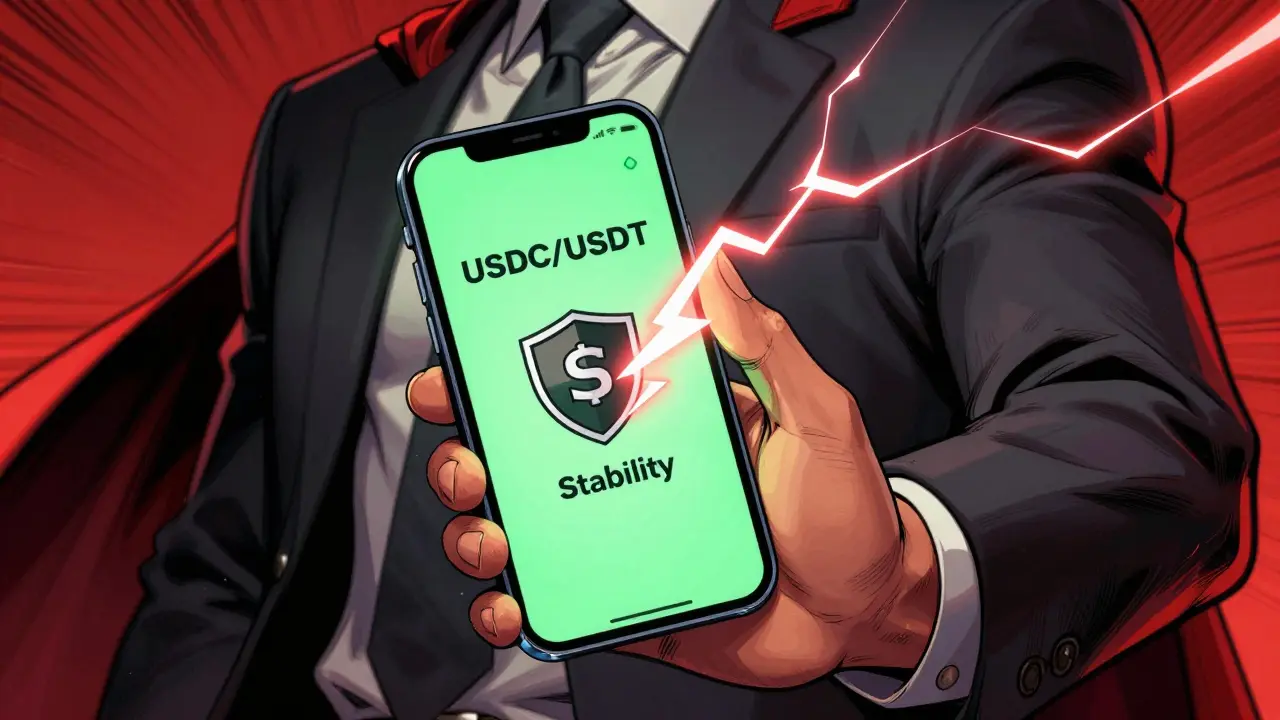
If you tried accepting Bitcoin as payment five years ago, you likely lost sleep worrying about its price dropping before you could convert it to cash. That fear is still valid, but the solution has matured significantly. Today, the star of the show isn't necessarily Bitcoin or Ethereum for daily transactions; it’s stablecoins, which are cryptocurrencies pegged to stable assets like the US Dollar to minimize price volatility.
Stablecoins now account for approximately 70% of all crypto payment volume. Why? Because merchants need predictability. When a customer pays with USDC or USDT, the value remains steady regardless of what happens to the broader crypto market. In fact, recent data shows that 80% of crypto-shoppers now prefer stablecoins over volatile assets like BTC or ETH for their purchases. This shift has removed the biggest barrier to entry for mainstream merchants: the risk of losing value during the settlement process.
For businesses, this means they can enjoy the benefits of blockchain-speed, lower fees, and global reach-without the headache of managing exchange rate fluctuations. It turns crypto from a speculative asset into a practical utility belt for international trade.
Who Is Leading the Charge?
Not all industries are adopting crypto at the same pace. Some sectors have embraced it out of necessity, while others are doing it to capture a younger, tech-savvy audience. Let’s look at who is actually using this technology right now.
| Industry Sector | Primary Driver for Adoption | Key Benefit Realized |
|---|---|---|
| SaaS & Tech Startups | Global Talent Access | Instant cross-border payouts to developers and freelancers |
| High-Risk Merchants | Chargeback Prevention | Irreversible transactions reduce fraud and reserve requirements |
| Digital Marketing Agencies | Demographic Targeting | Appealing to Gen Z and Millennials (40% prefer crypto options) |
| Gaming & NFT Platforms | Native Ecosystem Fit | Seamless integration with Web3 wallets and in-game economies |
High-risk merchants, such as those in online gaming, forex trading, or nutraceuticals, are finding a lifeline in crypto. Traditional payment processors often freeze accounts or demand excessive reserves due to perceived fraud risks. Crypto payments bypass these intermediaries entirely. Since blockchain transactions are irreversible, chargebacks-a major pain point for e-commerce-are virtually eliminated. This gives merchants more control over their revenue streams and reduces dependency on traditional banking channels that may be reluctant to serve them.
Meanwhile, marketing agencies and influencer platforms are seeing a surge in adoption because their core audience-Millennials and Gen Z-is already comfortable with digital assets. Nearly 40% of these younger consumers prefer shopping at stores that accept crypto. For these businesses, offering crypto isn't just a payment option; it's a competitive advantage that signals innovation and trust.
The Infrastructure: How Payments Actually Work
You don’t need to be a blockchain engineer to accept crypto. The infrastructure has become remarkably user-friendly. Most merchants rely on crypto payment gateways, which are third-party services that facilitate the acceptance of cryptocurrency payments by converting them to fiat or stablecoins automatically.
Here is how the typical flow works for a modern e-commerce store:
- Checkout Integration: The customer selects "Pay with Crypto" at checkout. The gateway generates a unique QR code or wallet address for that specific transaction amount.
- Payment Confirmation: The customer sends the funds from their wallet. The gateway monitors the blockchain for confirmation.
- Automatic Conversion: Once confirmed, the gateway instantly converts the crypto into your preferred fiat currency (like USD or NZD) or settles it in stablecoins.
- Payout: The funds are deposited into your bank account, usually within minutes or hours, depending on the provider.
This automation handles the technical complexity, including gas fees and network selection. Providers like CoinsPaid and BitPay have made this seamless for platforms like Shopify, WooCommerce, and custom-built sites. The result? You get the speed of crypto with the simplicity of a credit card transaction.
Mobile-First Reality
If you’re planning to adopt crypto payments, you must prioritize mobile optimization. In 2025, an staggering 87% of all crypto transactions were processed via mobile devices. This aligns with broader consumer behavior but is even more pronounced in the crypto space, where most users manage their assets through smartphone apps rather than desktop browsers.
This means your checkout experience needs to be flawless on small screens. Wallet connections should be instant, QR codes scannable, and loading times minimal. If a user has to struggle to find their wallet app or copy-paste long addresses, they will abandon the cart. The frictionless nature of mobile crypto wallets is a key driver of adoption, so ensure your integration supports popular wallets like MetaMask, Trust Wallet, and Phantom directly within the mobile browser.

Regulatory Clarity and Future Outlook
One of the biggest hurdles for crypto adoption has always been regulatory uncertainty. However, 2025 and early 2026 have seen significant shifts. Regulatory frameworks, particularly in regions like the United States under evolving administrations, have begun providing the clarity that payment providers needed to invest confidently. This hasn't solved every legal question, but it has reduced the fear of sudden bans or crackdowns.
Despite this progress, experts warn that crypto payments will remain niche for the general population in the near term. Projections suggest usage might reach only 2.6% of the U.S. population over the next two years. This doesn't mean failure; it means specialization. Crypto payments are becoming essential tools for specific verticals-international freelancers, digital creators, and global SaaS companies-rather than replacing Visa for buying groceries at the corner store.
Geographically, adoption is leading in India and the United States, driven by large populations of young, tech-literate users and robust fintech ecosystems. Emerging markets also benefit greatly, as crypto provides access to financial services where traditional banking infrastructure is limited or unreliable.
Getting Started: A Checklist for Merchants
Ready to dive in? Here is a practical checklist to ensure you’re prepared:
- Choose the Right Gateway: Compare providers based on fees, supported cryptocurrencies, and payout speeds. Look for ones that offer automatic fiat conversion if you want to avoid volatility.
- Update Your Website: Ensure your checkout page clearly displays accepted crypto options. Use recognizable logos for Bitcoin, Ethereum, and major stablecoins like USDC.
- Educate Your Customers: Add a FAQ section explaining how to pay with crypto. Many potential customers have crypto but don’t know how to use it for shopping.
- Start Small: Consider launching with stablecoins first. They offer the best balance of security and ease of use for both you and your customers.
- Monitor Compliance: Stay updated on local tax laws regarding crypto income. Even if you convert to fiat immediately, the initial receipt of crypto may have tax implications.
The path to mainstream adoption isn't a straight line, but the trajectory is clear. By integrating crypto payments, you’re not just adding a new checkout button; you’re opening doors to a global, borderless customer base that values speed, privacy, and lower costs. Whether you’re a high-risk merchant seeking stability or a startup aiming to attract digital natives, the tools are here, and they’re ready for you.
What are the main benefits of accepting cryptocurrency for merchants?
Merchants benefit from lower transaction fees compared to credit cards, faster cross-border settlements, reduced risk of chargebacks due to irreversible transactions, and access to a growing global customer base of crypto holders.
Do I need to hold cryptocurrency if I accept it as payment?
No. Most crypto payment gateways automatically convert received cryptocurrencies into fiat currency (like USD or EUR) or stablecoins instantly. This allows you to avoid volatility risks and manage your finances in familiar terms.
Which cryptocurrencies are best for merchant payments?
Stablecoins like USDC and USDT are currently the best options for merchants because they maintain a stable value relative to fiat currencies. Bitcoin and Ethereum are also widely accepted but carry higher volatility risks.
Is it difficult to integrate crypto payments into my existing website?
Integration is relatively straightforward thanks to established payment gateways. Many platforms offer plugins for popular e-commerce solutions like Shopify, WooCommerce, and Magento, allowing you to add crypto checkout options with minimal technical effort.
How do crypto payments handle international transactions?
Crypto payments excel at international transactions by eliminating currency conversion fees and banking delays. Transactions settle on the blockchain globally in minutes, regardless of borders, making them ideal for businesses serving overseas clients.
Kwon Bill
June 12, 2026 AT 16:36The semantic shift from speculative asset class to utility-based payment rail is undeniable. We are witnessing the decoupling of value transfer from legacy banking infrastructure, a paradigm that fundamentally alters the friction coefficients in cross-border B2B transactions. The integration of stablecoin liquidity pools effectively mitigates the volatility risk premium previously associated with BTC or ETH settlements. It is imperative for merchants to recognize that this is not merely a trend but a structural evolution in global finance. The interoperability protocols between Web3 wallets and traditional e-commerce platforms like Shopify represent a significant reduction in transactional overhead. Furthermore, the elimination of chargeback vectors provides a robust defense mechanism against fraudulent activity, which has long plagued high-risk merchant categories. This technological maturation allows for near-instantaneous settlement layers that bypass the inefficiencies of correspondent banking networks. The data suggests a clear migration toward USDC and USDT as the primary mediums of exchange for daily commerce, reflecting a market preference for stability over speculation. Merchants who fail to adapt their payment stacks to accommodate these digital assets will inevitably cede market share to more agile competitors. The regulatory clarity emerging in key jurisdictions further solidifies the viability of crypto payments as a mainstream alternative to fiat rails.
Danna Charris
June 13, 2026 AT 09:39Finally someone wrote something sensible about this. Most people still think crypto is just for gambling.
Fede Faith
June 14, 2026 AT 14:19I’ve been running my SaaS business on crypto payments for two years now and the difference in operational efficiency is night and day. The biggest hurdle isn’t the technology itself, it’s educating your customers who are used to the comfort of credit cards. You have to make the onboarding process incredibly smooth. If you’re using a gateway that handles the conversion to fiat automatically, you lose almost none of the benefits while keeping your accounting simple. I recommend starting with stablecoins only, as mentioned in the post. Trying to explain Bitcoin volatility to a client who just wants to pay an invoice is a headache you don’t need. Also, don’t sleep on the mobile experience. If your checkout doesn’t work flawlessly on a phone, you’re losing half your potential crypto users. It’s worth the upfront effort to integrate a good provider like BitPay or CoinsPaid. They handle the gas fees and network selection so you can focus on your product. Once you get past the initial setup, the recurring savings on processing fees add up quickly. Just remember to keep your records straight for tax purposes because that part hasn’t gotten any easier.
Josh Dodson
June 16, 2026 AT 03:51thats awesome feds! i totally agree with the stablecoin part. its so much less stress knowing the value wont drop while ur waiting for confirmation. im gonna try this for my freelance gigs next month. thanks for the tips!
Suman Patil
June 16, 2026 AT 15:00This is exactly what we needed in India! The remittance costs are killing us. Imagine if every freelancer could send money home without losing 5% to banks. The tech is ready, we just need more adoption. Let’s go team! 🚀
Kenneth Riley
June 16, 2026 AT 16:16you guys are all asleep at the wheel. this whole stablecoin narrative is a trap set by the same central bankers trying to control us. they want you to use USDC so they can freeze your assets anytime. look at what happened with Tether. its all rigged. real freedom is holding BTC cold storage not trusting some corporate ledger. wake up sheeple.
ravi mahla
June 18, 2026 AT 01:26Oh wow, another conspiracy theory. Maybe if you spent less time worrying about the Illuminati and more time paying your bills, you’d realize that getting paid instantly is actually pretty nice. But sure, keep hoarding dust while the rest of us move forward.
Mark Brunschwiler
June 19, 2026 AT 07:00I feel like we are missing the soul of money here. It’s not just about speed or fees. It’s about trust. Can we really trust code? Or do we need human connection? I just want to buy coffee and smile at the barista. Why does everything have to be digital? It feels so cold and empty. Where is the warmth in blockchain?
Sonya O'Brien
June 20, 2026 AT 04:32I completely understand where Mark is coming from regarding the human element, but I think we have to acknowledge that for many people, especially those in developing nations, the 'warmth' of traditional banking often comes with a side of exclusion and predatory fees. When you talk about the ability for a developer in Lagos to receive payment from New Zealand without waiting days and losing a chunk of their earnings to currency conversion, that is a profound act of empowerment. It brings dignity back to the transaction by ensuring the worker receives the full value of their labor. While the interface may seem cold, the impact is deeply humanizing for those who have been marginalized by the traditional financial system. We shouldn't let our nostalgia for paper money blind us to the opportunities this technology creates for global equity and accessibility. It’s a tool, and like any tool, its value depends on how we choose to wield it for the greater good.
Filbert Reeves
June 21, 2026 AT 10:10its all a scam designed to track your every move. they say its private but the blockchain is public. anyone can see your wallet address and trace it back to you. plus the government will just ban it soon anyway. why bother integrating something that might disappear overnight. i stick to cash under my mattress. at least thats real. also spelling matters people stop ignoring grammar rules.
Nick Rice
June 23, 2026 AT 06:07Filbert, you are living in the past. Privacy coins exist and mixing services are available if you truly care about anonymity. But for merchants, transparency is a feature not a bug. It reduces fraud. Stop being paranoid and embrace the future. The tech is here to stay regardless of what you think.
Amit Thakur
June 23, 2026 AT 14:20Bhai, listen to me carefully. The API integration for RazorpayX and other Indian gateways is becoming super robust. If you are in the startup space, you cannot ignore this. The settlement time is T+0 in many cases. This is a game changer for cash flow management. Don’t let the FUD stop you. Do your due diligence on the KYC norms but definitely onboard crypto payments. Your competitors will eat your lunch if you don’t.
Eric Scheinberg
June 25, 2026 AT 05:48The economic implications are significant. Reduced transaction costs lead to increased marginal utility for consumers. This aligns with classical free-market principles. Efficiency is paramount.
pankaj chawla
June 25, 2026 AT 20:06I agree with Eric. The efficiency gains are hard to argue with. In my experience with supply chain financing, crypto rails offer unparalleled speed. It simplifies reconciliation processes significantly.
Jessica Lane
June 26, 2026 AT 18:00I appreciate the detailed breakdown of the industry sectors. It’s fascinating to see how gaming and NFT platforms are leading the charge. As a marketer, I’m curious about the conversion rates for Gen Z specifically. Does offering crypto actually increase cart completion rates, or is it mostly a novelty for them? I would love to see more case studies on this demographic.
Charles Pawlikowski
June 27, 2026 AT 05:06typical woke tech bro nonsense. america should stick to the dollar. this crypto stuff is for criminals and terrorists. we need strong borders not open ledgers. shame on you for promoting this garbage. :-(