
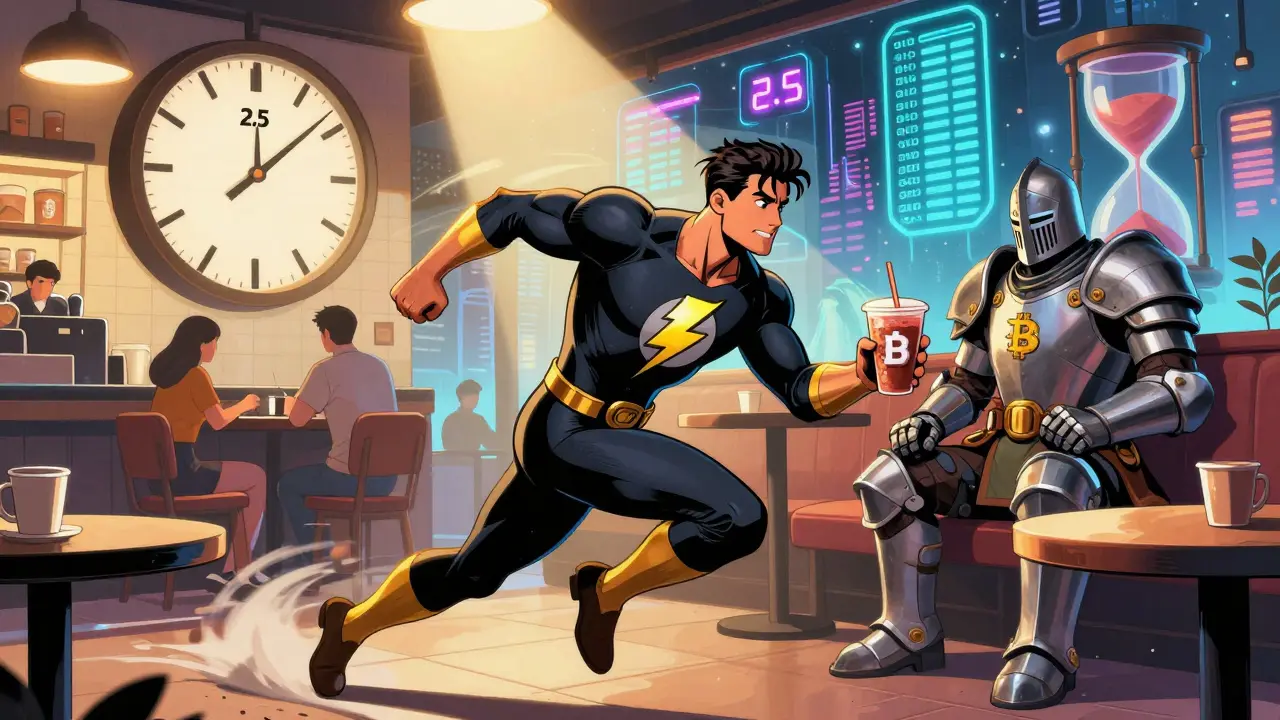
When you’re paying for coffee, sending money overseas, or buying something online with crypto, Litecoin and Bitcoin aren’t just two coins with different prices-they’re built for completely different jobs. One is designed to be digital gold, hoarded and held. The other was built from day one to move money fast and cheap. If you’re trying to use crypto for everyday payments, this isn’t a debate about which is ‘better.’ It’s about which one actually works for what you need.
Block Time: The Hidden Clock That Controls Your Payment Speed
Bitcoin blocks are mined every 10 minutes. That’s not a bug-it’s a feature. It gives the network time to settle securely across thousands of nodes. But for paying for lunch? That’s like waiting for a train that comes once an hour. Litecoin, on the other hand, mines a new block every 2.5 minutes. That means your payment confirms roughly four times faster.
For merchants, this isn’t theoretical. A coffee shop in Wellington using Litecoin can process a payment and hand over the drink while the customer is still standing at the counter. Bitcoin? You’re asking them to wait 30 to 60 minutes for even one secure confirmation. Even if you use the Lightning Network for Bitcoin, you’re adding layers of complexity-channels, routing, liquidity. Litecoin just works out of the box.
Fees: Pennies vs Dollars
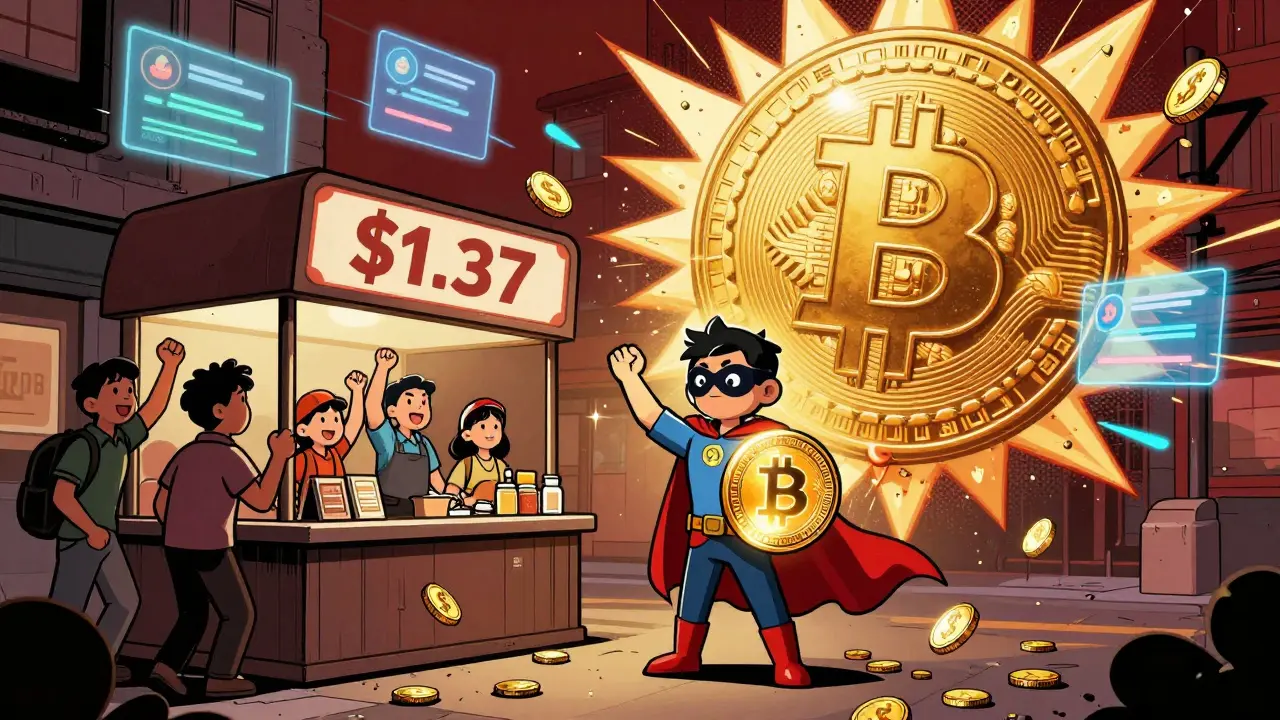
Bitcoin’s average transaction fee is $1.37. Litecoin’s? Less than $0.05. That’s a 96% difference. When you’re sending $5 to a friend in the Philippines, paying $1.37 in fees makes no sense. But if you’re moving $50,000? Maybe it’s worth it for the security.
Litecoin’s low fees come from its design. Faster blocks mean more transactions fit into each one. Even though both networks use 1MB blocks, Litecoin’s four-times-faster block rate means it can handle roughly four times the volume per hour. That keeps congestion low and fees stable. Bitcoin’s network gets clogged during hype cycles, and fees spike. Litecoin? It barely flinches.
Transaction Volume: Who’s Actually Using It to Pay?
Bitcoin processes $18.7 billion in on-chain transactions daily. Sounds huge, right? But only 12% of that is real payments-buying goods, tipping creators, paying for services. The rest? Exchanges, whales moving money between wallets, institutional flows.
Litecoin? $12.75 billion daily. And 83% of it? Real payments. That’s not speculation. That’s people using it like cash. Telegram added Litecoin support in late 2024. It now processes over 2.3 million payments a day inside the app. That’s not a lab experiment. That’s a messaging platform choosing Litecoin because users expect instant, cheap transfers.
Security: Bitcoin’s Fortress vs Litecoin’s Reliable Gate
Bitcoin’s network hash rate is 400 exahashes per second. Litecoin’s? 2.7 petahashes. That’s a 15,000x difference. In plain terms: Bitcoin is far harder to attack. If you’re storing millions in crypto, Bitcoin’s security is unmatched.
But for payments under $1,000? That level of security is overkill. Litecoin’s network is still massive-bigger than most altcoins-and it’s proven reliable for over a decade. Merchants don’t need Bitcoin-level security to accept a $20 coffee. They need it to work, fast, and without drama. Litecoin delivers that.
Merchant Adoption: Brand Power vs Practical Fit
82% of major e-commerce platforms accept Bitcoin. Only 37% accept Litecoin. That’s not because Litecoin is worse-it’s because Bitcoin has the brand. People recognize it. They trust it. Even if they don’t use it for payments, they know what it is.
But here’s the catch: most of those 82% are accepting Bitcoin through Layer 2 solutions like Lightning. That’s not Bitcoin on the base chain-it’s a side system built to fix Bitcoin’s payment flaws. Meanwhile, Litecoin’s base layer is already optimized for payments. No extra setup. No routing issues. Just send and receive.
Small businesses that actually use crypto for daily sales? They’re switching to Litecoin. A Shopify store owner in Auckland told me: “I tried Bitcoin. Customers complained about waiting. I switched to Litecoin. Now they pay, I get paid, and I ship. Done.”
Setup and Support: How Easy Is It to Start?
Getting paid in Litecoin takes 15 to 20 minutes with most POS systems. Bitcoin? 25 to 30 minutes-sometimes longer if you’re setting up Lightning. The learning curve is steeper. You need to understand channels, invoices, liquidity. Litecoin? Plug in your wallet, generate an address, and you’re done.
Support is another gap. Bitcoin payment processors offer 98% 24/7 support. Litecoin processors? Around 82%. That’s a real issue if your payment system goes down at 2 a.m. But for most small merchants, the simplicity of Litecoin outweighs the risk. You’re not running a Fortune 500 company-you’re running a bakery. You need reliability, not a helpdesk.
Future Developments: Where Are They Headed?
Bitcoin’s future for payments lies in Layer 2. Taproot 2.0, coming in late 2025, will make Lightning faster and cheaper. But it’s still an add-on. It doesn’t fix Bitcoin’s core design. It works around it.
Litecoin’s future? The MimbleWimble upgrade added privacy features in late 2024. That’s huge for users who don’t want every transaction public. And a Litecoin spot ETF is expected by Q4 2025. If it gets approved, more businesses will feel safe accepting it. No more “Is this even real?” questions.
Which One Should You Use?
Use Bitcoin if:
- You’re storing value long-term
- You’re moving large sums ($10,000+)
- You need maximum security and institutional backing
- You’re okay waiting 30+ minutes for confirmation
Use Litecoin if:
- You’re paying for daily goods or services
- You care about low fees and fast confirmations
- You’re a small business owner or freelancer
- You want to send money across borders without high costs
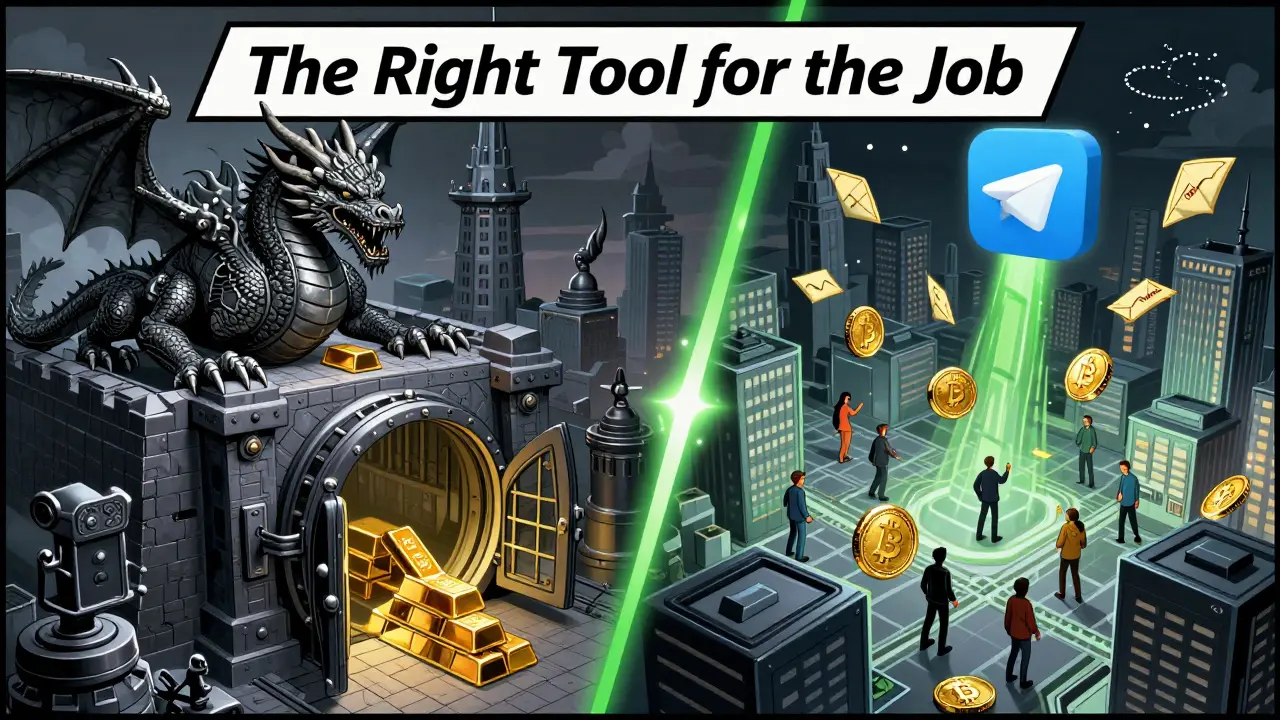
There’s no winner here. There’s just the right tool for the job. Bitcoin is the vault. Litecoin is the wallet in your pocket.
Can I use Litecoin to pay for online shopping?
Yes. Over 37% of major e-commerce platforms accept Litecoin, including Shopify stores, digital service providers, and niche retailers. Payment processors like NOWPayments and CoinRemitter make it easy to add Litecoin as a payment option with just a few clicks. Unlike Bitcoin, you don’t need to set up complex routing or channels-just generate a wallet address and start accepting payments.
Is Litecoin faster than Bitcoin for international transfers?
Yes. Litecoin completes cross-border transfers 68% faster than Bitcoin on average, with fees 87% lower. A payment from New Zealand to the Philippines takes under 10 minutes with Litecoin. With Bitcoin, even using Lightning, you’re looking at 15-25 minutes plus potential routing delays. For remittances, Litecoin is the clear practical choice.
Why don’t more stores accept Litecoin if it’s faster and cheaper?
Brand recognition. Most people know what Bitcoin is. Fewer know Litecoin, even though it’s been around since 2011. Big retailers stick with Bitcoin because customers ask for it. But small businesses that actually use crypto for daily sales-like cafes, repair shops, or freelancers-are switching to Litecoin because it just works better for payments.
Does Litecoin have a future as a payment coin?
Yes. Litecoin’s daily transaction volume is almost entirely real-world payments, not speculation. With the MimbleWimble privacy upgrade and a potential spot ETF coming in late 2025, merchant confidence is growing. While Bitcoin relies on Layer 2 for payments, Litecoin’s base layer was built for this from the start. Its niche is secure, fast, low-cost payments-and it’s holding strong.
Can I mine Litecoin with my home computer?
Not profitably anymore. Litecoin uses the Scrypt algorithm, which was originally designed to be mined with CPUs and GPUs. But today, specialized ASIC miners dominate the network. Mining Litecoin at home with a regular computer won’t cover your electricity bill. It’s not worth it unless you’re doing it for learning or fun.
What’s the difference between Bitcoin’s Lightning Network and Litecoin’s base layer?
Lightning is a second-layer solution built on top of Bitcoin to fix its slow, expensive base layer. It requires opening payment channels, managing liquidity, and routing through other users. Litecoin’s base layer already handles fast, cheap payments without any extra setup. You don’t need to learn new tools. Just send and receive. For most users, that simplicity matters more than theoretical scalability.
Deb Svanefelt
January 17, 2026 AT 13:22It’s funny how we treat crypto like it’s one big monolith when it’s really a whole ecosystem of tools. Bitcoin’s like a vault in a bank-impressive, secure, but you don’t bring it to the grocery store. Litecoin? That’s the wallet in your pocket with a little cash and a loyalty card. The real win isn’t which one’s ‘better’-it’s that we finally have options that match real human needs. No dogma. Just utility.
Katherine Melgarejo
January 18, 2026 AT 23:54So Litecoin’s the ‘wallet in your pocket’ now? Cute. Next they’ll say Bitcoin is the ‘family heirloom’ and we all have to kiss it before we spend it.
Haley Hebert
January 19, 2026 AT 12:32I just switched my coffee shop to accept Litecoin last month and honestly? My life got easier. No more customers asking if it’s ‘real money.’ No more waiting 40 minutes for a confirmation while the barista stares at me like I’m trying to pay with dinosaur bones. I used Bitcoin for a week. It was like trying to order coffee with a fax machine. Litecoin? Just scan, pay, done. I even got a regular who now sends me $5 tips in LTC every Tuesday. It’s weirdly sweet.
Lauren Bontje
January 19, 2026 AT 19:52Of course you’re praising Litecoin. You’re clearly a shill for Charlie Lee’s cult. Bitcoin is the only true decentralized money. Litecoin is just a copy-paste with a different color. The fact that you think ‘fast’ matters more than security is why we’re heading into financial collapse. This isn’t about payments-it’s about control. And you’re letting them take it.
Hailey Bug
January 21, 2026 AT 01:28For anyone thinking about using Litecoin for payments: check your local businesses. I’ve seen cafes, laundromats, even a bike repair shop in Portland take it. No apps. No setup. Just a QR code on the counter. The fees are so low you can literally send $0.10 and it costs $0.003. Bitcoin’s fees make that impossible. And yes, the network is secure enough-Litecoin’s been running for 13 years without a single successful 51% attack. Don’t let Bitcoin’s hype scare you off something that just works.
Patricia Chakeres
January 21, 2026 AT 22:36Litecoin’s ‘MimbleWimble upgrade’? Please. That’s just a marketing gimmick. The real truth is that Litecoin is a graveyard for failed altcoins. Every time Bitcoin’s fees spike, some blogger writes a ‘Litecoin is the future’ piece. It’s always the same script. And yet, no one outside the echo chamber actually uses it. The 83% ‘real payments’ stat? Probably bots. Or people sending money to themselves. Don’t be fooled.
Jill McCollum
January 22, 2026 AT 00:43so i tried ltc for the first time to pay for my vpn and it was like... magic? like literally 3 seconds and done. no drama. no ‘wait your tx is stuck’ nonsense. bitcoin? i had to wait 2 hours once bc the mempool was full. ltc just... works. i dont even know why people still argue about this lol 🤷♀️
Pramod Sharma
January 22, 2026 AT 10:44Speed and cost aren’t features. They’re necessities for daily use. Bitcoin was never meant for this. Litecoin was. End of story.
Michael Jones
January 24, 2026 AT 10:09It’s worth noting that while Bitcoin’s base layer is slow, the Lightning Network is growing rapidly. By 2025, it’s expected to handle over 90% of Bitcoin’s payment volume. Litecoin’s advantage is real today-but it’s not necessarily permanent. The real question is: are you optimizing for today’s convenience or tomorrow’s scalability? Both have value.
Nishakar Rath
January 24, 2026 AT 14:55Litecoin is just Bitcoin with a different name and faster blocks. The only reason people like it is because they’re too lazy to learn how to use Lightning. And don’t get me started on that ‘MimbleWimble’ nonsense-privacy is a trap. If you want anonymity, use Monero. Stop pretending this is innovation
Vinod Dalavai
January 24, 2026 AT 21:10My cousin in India sends money to his sister in Nepal every month. Used to pay $20 in fees with Western Union. Now he uses Litecoin. Pays $0.04. Takes 8 minutes. She gets it in her phone wallet. No ID, no bank, no paperwork. That’s not a ‘niche.’ That’s justice. Bitcoin can keep its gold. Litecoin is feeding families.
Jason Zhang
January 25, 2026 AT 13:24Let’s be real-Litecoin’s only advantage is that it’s not Bitcoin. It doesn’t have the network effect, the liquidity, or the brand. If you’re a merchant, you’re still going to get more customers asking for Bitcoin. Litecoin’s ‘simplicity’ means nothing if no one knows it exists. This isn’t about tech-it’s about adoption. And adoption is still dominated by the OG.
Sarah Baker
January 27, 2026 AT 05:53I used to think Bitcoin was the only crypto that mattered… until I tried paying for my daughter’s online art class with Litecoin. She got her drawing back within minutes. No stress. No ‘your payment is pending.’ I cried a little. Not because it was cheap. But because for the first time, tech felt… human. Like it was made for people, not just investors. Thank you, Litecoin. You’re the quiet hero we don’t talk about enough.
Dustin Secrest
January 27, 2026 AT 08:01There’s a philosophical layer here too. Bitcoin represents the idea of scarcity as virtue. Litecoin represents the idea of utility as virtue. One is a monument. The other is a tool. We don’t need to choose one as ‘right.’ We just need to stop pretending they’re the same thing. Maybe the future isn’t one coin to rule them all-but many coins for many needs.
nathan yeung
January 28, 2026 AT 12:38As someone from India, I’ve seen how remittance fees eat into people’s lives. Litecoin isn’t perfect, but it’s the first crypto that actually feels like it was built for people like my uncle who works in Dubai and sends money home. Bitcoin? Too slow. Too expensive. Litecoin? Just works. I don’t care if it’s ‘not Bitcoin.’ It’s helping people. That’s enough.
Anthony Ventresque
January 30, 2026 AT 02:43What’s interesting is how little attention Litecoin gets despite being one of the oldest coins. It’s like the quiet kid in class who always gets A’s but never shows up on the honor roll. Maybe that’s why it’s perfect for payments-no hype, no drama, just steady, reliable performance. We don’t need flashy. We need functional.
ASHISH SINGH
January 31, 2026 AT 19:23Litecoin ETF? Ha. The SEC won’t approve it until they’ve squeezed every last drop of profit out of Bitcoin. This whole thing is a distraction. The real power is in the banks and the exchanges. Crypto is just the shiny wrapper on the same old scam. Litecoin’s faster? So what. It’s still controlled by the same whales. Wake up.
Stephanie BASILIEN
February 1, 2026 AT 21:40One must consider the epistemological foundations of digital currency adoption. While Litecoin’s technical parameters-namely, its accelerated block time and reduced transactional friction-may appear empirically advantageous for microtransactions, one must interrogate the ontological primacy of Bitcoin as the original decentralized monetary protocol. To privilege utility over provenance is to risk the commodification of decentralization itself. One wonders whether the allure of speed is not merely a symptom of late-stage capitalist impatience, rather than a genuine advancement in monetary sovereignty.