
Ever wondered if you could actually make money just by participating in a gaming ecosystem? The KAKA NFT World airdrop is designed to do exactly that, handing out tokens to users who engage with its metaverse. While the project blends gaming with DeFi, navigating airdrops can be tricky, especially when you're staring at conflicting data about which blockchain the project actually lives on. If you're looking to snag some free KAKA tokens or understand how the Mystery Boxes work, you're in the right place.
Key Takeaways: The KAKA Airdrop at a Glance
- Primary Reward: KAKA tokens distributed via mining and promotional airdrops.
- Distribution Focus: A massive 59% of the total token supply (in the 1 billion supply model) is dedicated to community rewards.
- Entry Points: Official website challenges and Mystery Box distributions.
- Added Value: KAKA-rabbit NFT holders get priority access to game features and battles.
- Risk Alert: Current market liquidity is extremely low, with some exchanges reporting zero trading volume.
How the KAKA Airdrop Works
Getting your hands on KAKA tokens isn't just about clicking a button; it's about interacting with the ecosystem. The project uses a multi-channel approach to distribute its wealth. Most users enter through the official website, where they can participate in challenges. These tasks are typically designed to grow the community, and the rewards earned can be directly converted into KAKA tokens.
One of the more interesting mechanics is the Mystery Box system. Periodically, the platform drops these boxes to users. The gamble here is that the value inside varies. Based on the project's internal logic, if you're lucky with your airdrop values, you could potentially recoup any initial entry costs within three or four box acquisitions. It's essentially a gamified loot box system tied to token distribution.
Beyond the boxes, there is a mining component. This isn't traditional hardware mining like Bitcoin; instead, it's a reward distribution system hosted on their site that provides various popular cryptocurrency tokens as incentives to keep users active in the KAKA environment.
Breaking Down the Tokenomics
There is some confusion in the wild regarding exactly how many tokens exist. Some trackers like CoinMarketCap point to a 100 million supply, while other technical documents suggest a 1 billion token cap. For those hunting the airdrop, the 1 billion model is the one to watch, as it outlines a very aggressive community distribution strategy.
| Allocation Category | Percentage | Token Amount |
|---|---|---|
| Mining & Airdrops | 59% | 590 Million KAKA |
| Investment Institutions | 25% | 250 Million KAKA |
| Project Team | 15% | 150 Million KAKA |
| Initial DEX Offering (IDO) | 1% | 10 Million KAKA |
A critical detail for the cautious investor: the contract for this token has been renounced and the liquidity pool burned. In plain English, this means the developers can't just change the rules of the token or pull the rug by stealing the liquidity. It's a strong move toward decentralization, though it does mean the project can't easily tweak the technical protocol if a bug appears.
The Role of KAKA-rabbit NFTs
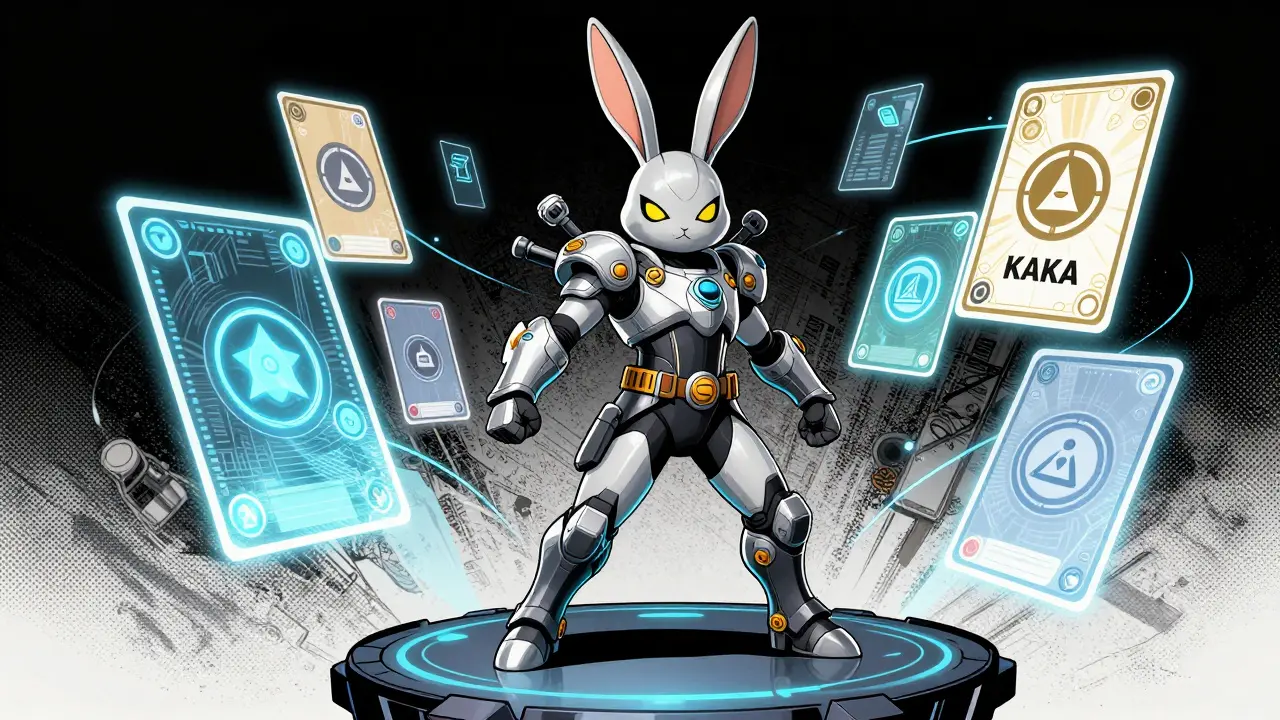
You can't talk about the KAKA ecosystem without mentioning the KAKA-rabbit NFTs. These aren't your typical AI-generated avatars. These are hand-drawn pieces created by professional CG artists, limited to only 10,000 units globally. Only 20 of these exclusive pieces were even sold on the Binance NFT marketplace, showing the high-tier nature of the collection.
Holding one of these rabbits does more than just give you a cool profile picture for Twitter. It acts as a VIP pass. Holders get:
- Priority access to KAKA card games.
- Enhanced user rights within the DAO.
- Competitive advantages in gaming battles.
Market Reality Check: Is it Tradable?
Here is where things get a bit bumpy. If you check Bitget or other trackers, you might see the price listed as $0.00 with zero trading volume. This is a huge red flag or a sign of a dormant project. When there's no volume, you can't actually sell the tokens you've earned from the airdrop.
There is also a tug-of-war regarding the blockchain. Some data says KAKA runs on the BNB Chain (Binance Smart Chain), while others claim it's on Solana. If you are attempting to claim an airdrop, double-check which wallet you're using. Sending BNB-chain tokens to a Solana wallet (or vice versa) is a quick way to lose your funds forever.
How to Get Started with the Airdrop
If you're still keen on trying your luck, follow these steps to navigate the process safely:
- Verify the Source: Only use the official KAKA NFT World website. Never give your seed phrase to anyone promising "bonus" tokens.
- Connect Your Wallet: Ensure you have the correct wallet for the chain they are currently using (check their latest official announcement for BNB vs Solana).
- Complete Social Tasks: Look for the challenges section. This usually involves following their socials or joining their community groups.
- Claim Mystery Boxes: Check in periodically to see if you've been allocated a box.
- Monitor Liquidity: Keep an eye on platforms like CoinMarketCap to see when actual trading volume returns, so you know when you can actually move your rewards into a stablecoin.
Is the KAKA NFT World airdrop free?
Yes, the primary airdrop tokens are earned through community challenges and mining rewards on the official site. However, some "Mystery Box" paths may involve initial costs, though the project claims users can recover this through the value of the boxes.
Which blockchain does KAKA use?
There is conflicting information. Some sources list it on the BNB Chain, while others specify the Solana blockchain. Always verify the contract address (e.g., 0x26a1...d13a8a) on the appropriate blockchain explorer before sending funds.
Why is the KAKA price showing as $0.00?
This typically happens when there is zero trading volume on the exchanges tracking the token. It means the token is either inactive, lacks a functioning liquidity pool, or is in a pre-trading phase.
What are KAKA-rabbit NFTs?
These are unique, hand-drawn digital collectibles limited to 10,000 pieces. They grant the holder special privileges, such as priority access to card games and enhanced rights within the KAKA ecosystem.
Can I trust the KAKA token contract?
The project has renounced the contract and burned the liquidity pool, which are standard industry signals that the developers cannot unilaterally alter the token or steal the funds. However, this doesn't guarantee the project's ultimate success or price increase.
Next Steps & Troubleshooting
If you've claimed tokens but they aren't appearing in your wallet, first check if you are using the correct network. A common mistake is looking for BNB Chain tokens in a Solana-only wallet like Phantom. Switch your wallet network to the one specified by the KAKA project.
If you're seeing a $0.00 price on your exchange, don't panic-but don't invest more than you can afford to lose. Since there is no current trading volume, you cannot "cash out" immediately. Your best bet is to join their DAO or community channels to see if there's a scheduled liquidity event or a new exchange listing coming up.
Robert Smith
May 2, 2026 AT 03:08Looks like a wild ride! 🚀
Emily A
May 3, 2026 AT 22:24The blatant discrepancy between the 100 million and 1 billion token supply suggests a complete lack of transparency from the developers. One should never trust a project that cannot even standardize its own basic tokenomics. Furthermore, the fact that the price is sitting at zero on major trackers is not a "bumpy road," it is a systemic failure of the asset's utility.
Felix Eduardo Velasquez
May 4, 2026 AT 06:37Renouncing a contract is a common tactic to build trust, but it is important to remember that a burned liquidity pool only prevents the developers from withdrawing it, not from the price crashing to zero due to a lack of demand. The real question is whether there is any actual utility beyond the speculation of airdrops. In the broader scope of decentralized finance, projects that rely solely on gamified rewards often struggle to maintain long-term viability once the initial hype dies down.
Abhishek Verma
May 5, 2026 AT 12:28Oh wow, another "revolutionary" metaverse project where you can get free money by clicking buttons. I'm sure we'll all be millionaires by next Tuesday. Totally legit. 🙄
Michael Repak
May 6, 2026 AT 05:01This guide is super helpful!!! I really appreciate the breakdown of the different blockchain options!!! It's so easy to make a mistake with wallets, so thank you for the warning!!!
Andrew Todd
May 6, 2026 AT 12:28Total scam. Only real US investors know how to spot this junk. Garbage project for garbage people.
Livvy Cooper
May 7, 2026 AT 08:35Who cares about rabbit pictures. It is just a way to trick people into spending money on nothing. Waste of time.
Jan Conrad
May 9, 2026 AT 03:47The mention of the BNB vs Solana confusion is a great catch. I've seen plenty of people lose assets because they didn't verify the chain. I wonder if the project is planning a bridge to unify the liquidity across both networks in the future.
Aaron Zeiler
May 10, 2026 AT 07:20just check the contract address on bscscan or solscan before you do anything man its the only way to be sure
April D Thompson
May 10, 2026 AT 12:40Oh my gods, the drama of these crypto projects is just an endless cycle of hope and heartbreak! It's like a modern tragedy written in code and greed! We are all just pilgrims searching for a digital oasis in a desert of volatile tokens!
Kara Spadone
May 12, 2026 AT 11:34The energy here is just so chaotic. If you don't understand the flow of the metaverse, you're just chasing ghosts 🌀. Truly sad.
Amanda Macy
May 13, 2026 AT 20:09The tension between decentralization and technical stability is evident here. Renouncing the contract is a philosophical victory for the community, but a practical risk for the software's evolution.
Lex Harley
May 14, 2026 AT 20:20I'm really trying to wrap my head around the tokenomics here... seems like the slippge would be insane if there is no lquidity pool. Is it possible the LP is burned but the token is just not listed on a DEX yet? Very confuzing stuff.
Tony Phan
May 15, 2026 AT 11:03I NEED THOSE TOKENS NOW! Just tell me which button to click so I can get the bag! I'm so hyped for this metaverse stuff, let's goooo!
Kristi Swartz
May 17, 2026 AT 03:21it is simply not acceptable to promote projects with zero volume as a way to make money it is misleading and wrong
Alex Mazonowicz
May 17, 2026 AT 07:39I believe in the community!!! We can make this project soar if we all stay positive and hold!!! Let's get those rabbits!!!
Lloyd I
May 18, 2026 AT 10:58I think we can all find a way to navigate this safely together. If anyone needs help setting up their wallet for the first time, feel free to reach out and we can walk through it!
Lynne Teperman
May 18, 2026 AT 18:03rainbow dreams and digital schemes just another day in the crypto wild west i guess
Iestyn Lloyd
May 19, 2026 AT 03:57It's quite a peculiar setup. In the UK, we see many of these emerging trends, and while the gaming aspect is intriguing, the lack of trading volume is a significant hurdle for any serious participant.
Gabby Puche
May 20, 2026 AT 10:20You guys can do it! Just be careful with your seed phrases and stay safe out there! 💖✨