
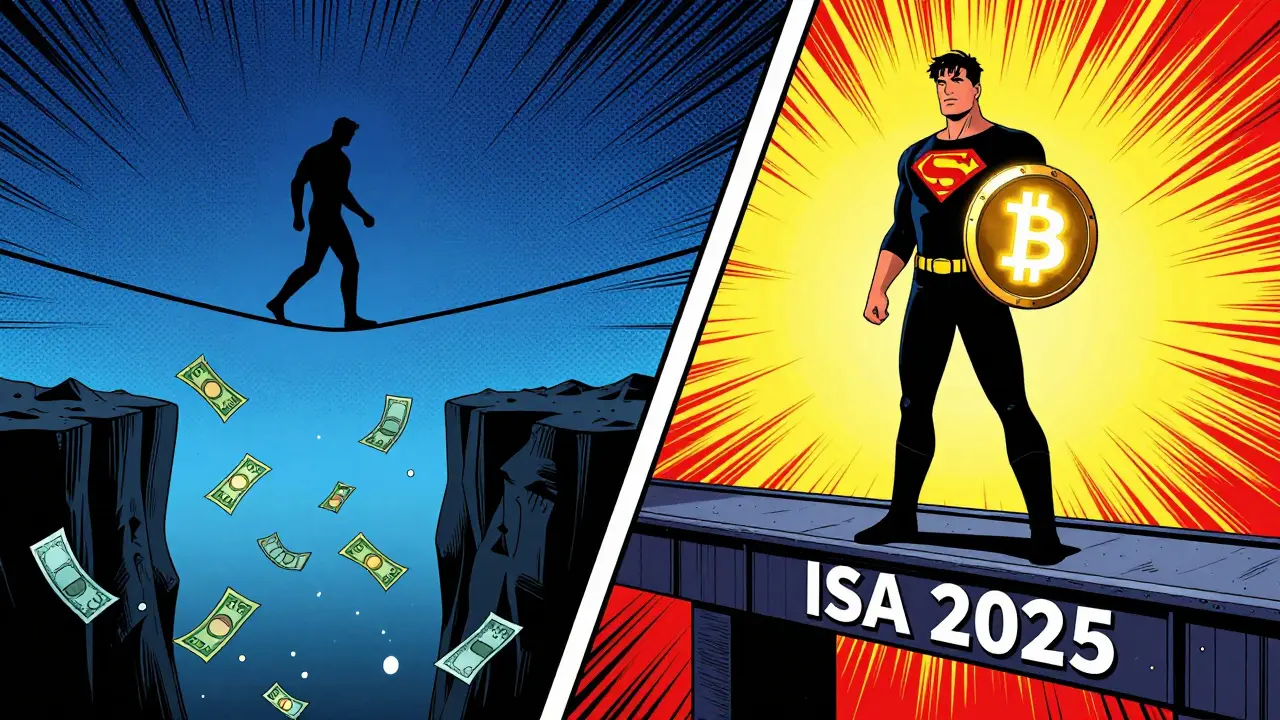
For years, trading cryptocurrency in Nigeria felt like walking a tightrope without a net. You knew the money was moving-billions of dollars worth-but you also knew that one wrong transaction could get your bank account frozen. That era of ambiguity is officially over. As of mid-2026, crypto regulation in Nigeria has shifted from restrictive bans to a structured, legal framework. If you are holding Bitcoin, using P2P platforms, or running an exchange, the rules have changed dramatically since the legislative reforms of 2025.
The landscape isn't just about permission anymore; it's about compliance. The government has moved from trying to stop crypto adoption to trying to capture its economic value through taxation and oversight. This guide breaks down exactly what is legal, who regulates what, and how these changes affect your wallet in real time.
From Ban to Blueprint: How the Rules Changed
To understand where we stand today, you have to look at the pivot point. For nearly a decade, the Central Bank of Nigeria (CBN) issued circulars banning banks from processing crypto transactions. This didn't stop Nigerians from trading-it just pushed the activity underground into peer-to-peer (P2P) networks and informal channels. The tension peaked when users faced sudden account freezes with little recourse.
The turning point came in December 2023 when the CBN lifted its ban on crypto transactions. This wasn't a full endorsement, but it was a signal that the floodgates were opening. The real structural change arrived in March 2025, when President Bola Ahmed Tinubu signed the Investments and Securities Act (ISA) 2025 into law. This legislation replaced the outdated 2007 version and did something historic: it officially recognized digital assets, including cryptocurrencies, as securities under Nigerian law.
This shift means crypto is no longer a gray area. It is now a regulated financial instrument. The Securities and Exchange Commission (SEC) took over as the primary regulator for the industry, ending years of uncertainty. For users, this provides legal protection. For businesses, it means strict adherence to new licensing categories.
Who Controls the Market? SEC vs. CBN
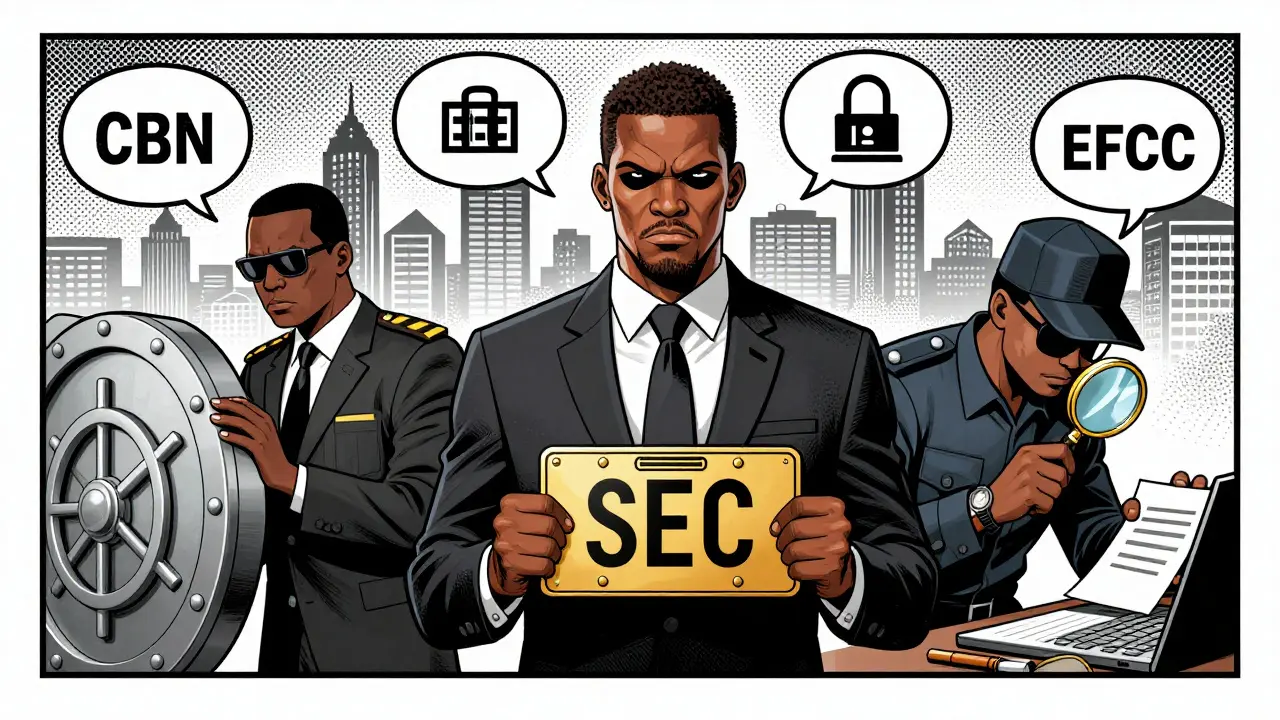
Nigeria’s regulatory approach is not handled by a single entity. Instead, it relies on a multi-agency model that can be confusing if you don’t know which agency does what. Understanding this split is crucial for compliance.
| Agency | Primary Role | Jurisdiction |
|---|---|---|
| Securities and Exchange Commission (SEC) | Licensing and Oversight | Exchanges, VASPs, Token Offerings, Investment NFTs |
| Central Bank of Nigeria (CBN) | Banking and Payments | Bank accounts for licensed firms, Currency stability, Anti-Money Laundering |
| Economic and Financial Crimes Commission (EFCC) | Enforcement | Fraud investigations, Ponzi schemes, Illegal fundraising |
| Nigerian Financial Intelligence Unit (NFIU) | Monitoring | Suspicious transaction reporting, AML/CFT compliance |
The SEC handles the "business side" of crypto. If you want to run an exchange, issue tokens, or offer investment-grade NFTs, you answer to the SEC. They enforce the Digital Assets Rules 2022, which work alongside the ISA 2025. The CBN, on the other hand, controls the banking rails. They ensure that only licensed entities can hold corporate bank accounts and process fiat payments. This separation means that while you can trade legally, you cannot bypass banking regulations to hide illicit funds.
What Does This Mean for Exchanges and Businesses?
If you operate a crypto business in Nigeria, the days of flying under the radar are gone. The ISA 2025 introduced rigorous licensing requirements designed to weed out fraudulent operators and protect investors. By late 2024, the SEC had awarded its first provisional licenses to major players like Busha and Quidax. These platforms set the standard for compliance.
To get licensed, companies must meet several strict criteria:
- Paid-up Capital: Firms must demonstrate significant financial backing to ensure solvency.
- Nigerian Corporate Registration: Foreign entities cannot operate remotely; they must register locally.
- Local Management: Key management personnel must be based in Nigeria.
- Fidelity Bonds: Insurance coverage to protect against employee fraud or misappropriation of funds.
The vetting process is thorough and slow. Even established platforms faced delays as regulators conducted deep-dive audits. This creates a high barrier to entry, which benefits large, compliant players but squeezes out smaller, informal operators. For users, this means fewer shady exchanges but potentially higher fees due to increased operational costs for licensed firms.
Taxes and Penalties: The Cost of Compliance in 2026
Regulation brings clarity, but it also brings bills. The Nigeria Tax Administration Act (NTAA) 2025, signed into law in June 2025, takes effect in 2026. This introduces specific tax obligations for Virtual Asset Service Providers (VASPs). No more ignoring capital gains or trading income-the Federal Inland Revenue Service (FIRS) now has the tools to track and tax digital asset transactions.
The penalties for non-compliance are steep. If a VASP fails to meet regulatory standards, the initial fine is ₦10 million (approximately $6,693) for the first month of default. After that, it adds up to ₦1 million ($669) for every additional month. The SEC also holds the power to suspend or revoke licenses entirely. This enforcement mechanism signals that the government is serious about collecting revenue and maintaining order.
For individual traders, the tax implications are still being clarified, but the trend across Africa-with Kenya and South Africa already implementing crypto taxes-suggests that personal capital gains will likely face scrutiny soon. Keeping detailed records of your trades is no longer just good practice; it’s a legal necessity.

User Experience: Safety vs. Surveillance
How do regular Nigerians feel about these changes? The sentiment is mixed. On one hand, there is relief. The fear of having your bank account frozen for buying Bitcoin is largely gone, provided you use licensed platforms. The legal recognition of crypto as a security offers a layer of consumer protection that didn’t exist before. If an exchange goes bankrupt, there are now regulatory bodies to complain to.
On the other hand, many users worry about privacy. The new framework gives regulators access to telecom records and transaction data to combat fraud. While this helps fight Ponzi schemes and money laundering, it raises concerns about government surveillance. Peer-to-peer (P2P) trading, which was the lifeline during the ban years, is now under tighter scrutiny. Users report that while P2P is still possible, platforms are more aggressive about verifying identities and flagging suspicious activity.
Despite these concerns, adoption remains robust. Nigeria received an estimated $92.1 billion in crypto value between July 2024 and June 2025. This volume nearly doubles South Africa’s activity, proving that regulation hasn’t killed demand-it has simply formalized it. Nigerians continue to adopt crypto at one of the fastest rates globally, driven by inflation hedging and remittance needs.
Looking Ahead: Is Nigeria a Fintech Hub?
Experts view Nigeria’s regulatory shift as strategic calibration rather than rigid restriction. By creating clear rules, the government aims to position Lagos as a fintech hub for Africa. This approach encourages foreign investment, creates jobs in compliance and tech development, and extends financial services to the unbanked population.
However, challenges remain. The complexity of navigating overlapping jurisdictions between the SEC, CBN, and EFCC can be daunting for startups. Additionally, the cost of compliance may limit innovation from smaller players. The long-term success of this model depends on balancing consumer protection with ease of doing business. If regulators maintain transparency and reduce bureaucratic delays, Nigeria could become a global leader in emerging market crypto adoption. If they become too heavy-handed, the market may retreat to decentralized, unregulated alternatives.
Is it legal to buy Bitcoin in Nigeria in 2026?
Yes, it is legal. Following the Investments and Securities Act (ISA) 2025, cryptocurrencies are recognized as securities. You can buy and sell them through licensed Virtual Asset Service Providers (VASPs) registered with the SEC. However, you must use platforms that comply with local banking regulations enforced by the CBN.
Which exchanges are licensed in Nigeria?
As of late 2024 and early 2025, the SEC has awarded provisional licenses to platforms like Busha and Quidax. Dozens of other companies are in the application process. Always verify a platform's status on the official SEC website before depositing funds to ensure you are using a compliant service.
Can I still use peer-to-peer (P2P) trading?
Yes, P2P trading is still available, but it is more regulated. Licensed platforms facilitate P2P trades, but they enforce stricter Know Your Customer (KYC) and Anti-Money Laundering (AML) checks. Direct, off-platform P2P transactions carry higher risks and may attract regulatory scrutiny if linked to suspicious activity.
Do I have to pay taxes on my crypto profits?
Likely yes. The Nigeria Tax Administration Act (NTAA) 2025, effective in 2026, introduces crypto-specific taxation. While specific rates for individuals are being defined, VASPs are required to report transactions. It is advisable to keep detailed records of all trades to comply with potential capital gains tax obligations.
What happens if I use an unlicensed exchange?
Using an unlicensed exchange carries significant risk. These platforms are not protected by Nigerian law, meaning you have no recourse if the exchange collapses or engages in fraud. Additionally, banks may freeze accounts linked to unlicensed entities, and the EFCC may investigate such transactions for potential money laundering violations.
ravi mahla
June 20, 2026 AT 02:12So basically the government finally realized they can't ban money, so now they just want a cut of it? Classic.
I mean, look at us in India, we have our own struggles with crypto regulation, but at least we aren't dealing with bank freezes every Tuesday. It's funny how 'protection' always comes with a price tag. But hey, if Busha and Quidax are licensed, maybe my savings won't vanish into the ether next time I check my balance. Or will they? Who knows. The SEC is watching now, so better keep those records tidy folks.
Mark Brunschwiler
June 20, 2026 AT 21:46It feels like we are trading one master for another. The freedom of the underground was sweet, wasn't it? Now we have forms to fill out and taxes to pay. Is this progress or just a slower way to bleed us dry? I feel a deep sadness in my soul when I think about the purity of early Bitcoin being corrupted by bureaucrats. We lost something special here. Something intangible. Can you feel it?
Terry Hyland
June 22, 2026 AT 20:25Don't believe the hype. This is all part of the plan. They let you buy in cheap so they can tax you later. The SEC isn't protecting you, they are profiling you. Every transaction is tracked. Every satoshi is monitored. You think you're safe with a license? No. You're just on a list now. Wake up people. The surveillance state doesn't sleep. And Nigeria is leading the charge because they need the data. Think about it.
Tim Lefebvre
June 23, 2026 AT 17:42hey guys i think its actually pretty cool that they made it legal. i used to be scared to trade because my account would get frozen randomly. now with busha and quidax having licenses its much safer. you just gotta make sure you do your kyc stuff right. dont try to hide anything from the sec. they are serious about the fines. 10 million naira is a lot of money lol. so just play by the rules and you should be fine. hope this helps someone
JEVON HALL
June 24, 2026 AT 15:34This is huge news 🚀 Finally some clarity after years of chaos. The ISA 2025 is a game changer for institutional investors too. Not just retail traders. If you are running a business, you need to register locally. No more offshore tricks. The capital requirements are high but that filters out the scams. I see a lot of potential for Lagos as a fintech hub 🌍💰 Just remember to keep your tax records straight with the FIRS. Don't mess around with the NTAA 2025 😅
Dr Lynea LaVoy
June 24, 2026 AT 21:47I appreciate the detailed breakdown here. As someone who has seen friends lose everything to unregulated platforms, this shift towards compliance offers a necessary layer of security. However, we must remain vigilant about privacy concerns. The balance between consumer protection and surveillance is delicate. Let's support regulated exchanges like Busha and Quidax while advocating for transparent data practices. We deserve both safety and dignity in our financial transactions. Please share this with anyone still using shady P2P channels without verification.
Matthew Malone
June 24, 2026 AT 23:19Nigeria trying to be a fintech hub? Please. Until the power grid works reliably, talk less. But seriously, this regulation is a joke. They ban it, then they legalize it to tax it. Typical corrupt government move. In America, we understand markets. Here, they just want control. The SEC taking over is suspicious. Why does the government need to touch every digital asset? Freedom is dead. Long live bureaucracy. At least the US has clearer laws, even if they are annoying.
aaliyah zahid
June 26, 2026 AT 14:21Oh wow, look at everyone getting worked up. It's just regulations. Relax. I think it's great that Nigeria is catching up with global standards. South Africa and Kenya are already doing this. It's not about surveillance, it's about legitimacy. If you want to be taken seriously as an economy, you need rules. Plus, no more frozen accounts is a win-win. Let's celebrate progress instead of crying about privacy. We can adapt. It's not that hard.
Erik Kirana
June 28, 2026 AT 03:19You people are naive. Do you really think the SEC cares about your wallet? They care about their budget. The fines are just a revenue stream. And don't get me started on the KYC requirements. They want your biometrics, your address, your entire life history. Once you give them that, you are owned. I suggest you move your assets to cold storage and forget these local exchanges. Use decentralized protocols. Only code can save you now. Trust no one. Especially not the government. 🙄
dan kaffeman
June 29, 2026 AT 19:39This is pathetic. Nigeria should focus on real industries, not digital fairy dust. Crypto is a scam invented by libertarians to avoid taxes. Now they are legitimizing it? Disgraceful. The American dollar is strong because of stability, not speculation. These Nigerian regulators are fools. They will destroy their currency further. I pity the citizens who fall for this hype. Stay away from crypto. It's a trap for the weak-minded. Real wealth comes from hard work, not clicking buttons on an app.
Meg Gran
July 1, 2026 AT 07:37so like... why are we surprised? governments always regulate what makes them money. first gold, then stocks, now crypto. it's the same cycle. but honestly, i kinda like the idea of legal protection. who wants to gamble with their life savings on some sketchy platform? yeah, the privacy loss sucks, but at least my bank account wont disappear overnight. also, typo alert: 'securities' not 'securites'. anyway, just keep your receipts. the tax man cometh. lol.
Alexander DeVries
July 1, 2026 AT 14:22Let's channel this energy into building! The regulatory framework is clear now. If you are a developer or entrepreneur, this is your green light. Register your entity, comply with the SEC, and innovate. The barrier to entry is higher, yes, but that means less competition from fraudsters. Focus on solving real problems in payments and remittances. Nigeria has a massive unbanked population. Use this structure to serve them. Success awaits those who adapt quickly. Go get it!
Mark Corpuz
July 3, 2026 AT 04:40The distinction between the roles of the SEC and the CBN is crucial for understanding the new landscape. Many users mistakenly believe that banking access implies regulatory approval for trading activities. This is incorrect. One must hold a VASP license from the SEC to operate legally, while the CBN ensures that the fiat rails remain secure and compliant with anti-money laundering statutes. Clarity in this separation prevents operational missteps for businesses.
Steven Jacobowitz
July 4, 2026 AT 14:07I've been analyzing the liquidity flows since the December 2023 ban lift. The volume spike mentioned in the article-$92.1 billion-is staggering. It suggests that demand was pent-up, not suppressed. With the ISA 2025, we might see institutional capital entering the space. The key metric to watch is the adoption rate of licensed VASPs versus informal P2P networks. If the friction of KYC/AML is too high, the market will fragment. But if seamless integration occurs, Nigeria could indeed become a regional hub. Fascinating dynamics at play here.
Yogendra Dwivedi
July 6, 2026 AT 05:53This is a positive step for financial inclusion. In India, we see similar trends where regulation brings trust. For the average person in Nigeria, knowing that there is a recourse mechanism if an exchange fails is invaluable. It reduces the anxiety associated with digital assets. I encourage everyone to educate themselves on the new tax obligations. Being prepared is the best strategy. Let's build a sustainable ecosystem together.
Sylvia Mossman
July 6, 2026 AT 14:35Everyone is cheering for regulation like it's a party. What a joke. Regulation kills innovation. Always has, always will. You think the SEC is going to approve the next revolutionary protocol? No. They will stifle it with red tape. Look at Silicon Valley. Look at Europe. Bureaucracy strangles creativity. Nigeria is making a mistake by formalizing this too early. Let the wild west breathe. The best ideas come from the margins, not from boardrooms in Lagos. You are all sheep following the herd.
Alexis Abster
July 7, 2026 AT 16:27I am so relieved to read this! My cousin had his account frozen last year and he was devastated. He couldn't pay for his mother's medicine. That fear is real. Knowing that there is now a legal framework gives me hope. Yes, taxes are annoying, but peace of mind is priceless. I am going to sign up for a licensed exchange today. Thank you for sharing this information. It feels like a weight has been lifted off our shoulders. Let's move forward with caution but optimism!
Brad Ranks
July 9, 2026 AT 04:16Wait, wait, wait. Did I miss something? So I can't just send BTC to my buddy anymore without filling out a form? This is absurd. The whole point of crypto was decentralization. Now it's just centralized banking with extra steps. I'm done. I'm moving to Monero. Or maybe cash. Anything but this bureaucratic nightmare. Why do we need the government involved in every single transaction? It's suffocating. I feel trapped in a system that hates freedom. Ugh.
Lee Paige
July 9, 2026 AT 22:13They say it's for your protection, but it's for their control. The NFIU monitoring transactions is just the beginning. Soon they will link your crypto wallet to your social credit score. Or whatever the Nigerian equivalent is. The EFCC is already hunting down 'fraud', which usually means anyone with too much money. Be careful. The net is closing in. Decentralization is the only escape. Keep your keys private. Never trust the system. They are watching.
Caitlin Donahue
July 11, 2026 AT 17:03i mean, its nice to have rules i guess. but like, who has time to fill out all those forms? its so much paperwork. i just want to buy bitcoin and chill. but okay, if it keeps my account safe, i suppose i can deal with it. just dont make it too complicated please. and please no more sudden freezes. that was stressful. lets hope the new system works smoothly. fingers crossed 🤞