
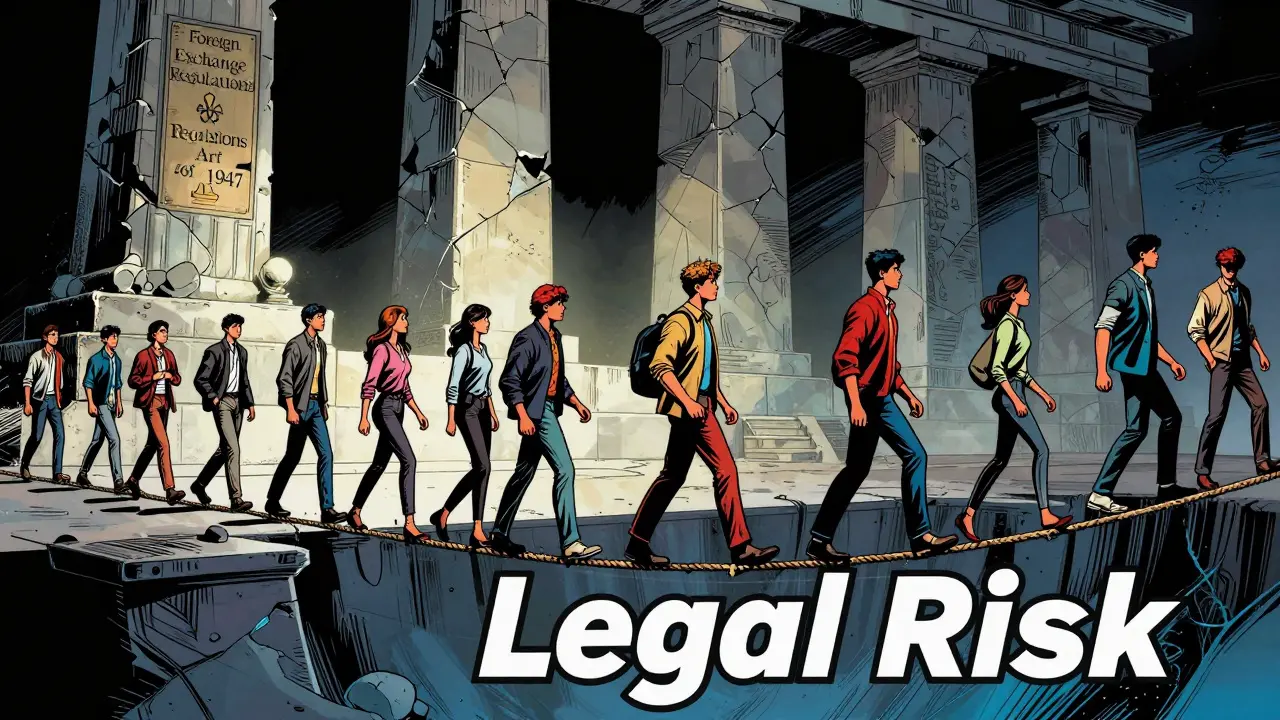
If you are holding Bitcoin or Ethereum while living in Dhaka, Chittagong, or anywhere else in Bangladesh, you are technically walking a legal tightrope. The official stance from the government is clear: cryptocurrencies are banned. But if you look closer at the actual laws, specifically the Foreign Exchange Regulations Act of 1947 (FERA), things get surprisingly murky. You might be wondering if that ban is actually enforceable or if it’s just a warning shot across the bow.
The reality is that while the Bangladesh Bank has issued strict prohibitions against trading and possessing digital assets since 2017, the legal foundation for these bans rests on outdated definitions that don’t quite fit modern technology. This creates a paradoxical situation where the activity is officially illegal, yet millions of people continue to trade using local agents and global apps with relative ease. Understanding this gap between policy and law is crucial for anyone navigating the Bangladeshi financial landscape in 2026.
The Legal Gap: Why FERA Doesn't Fit Crypto
To understand why the ban is controversial among legal experts, we have to look at the text of the Foreign Exchange Regulations Act of 1947. This law was drafted decades ago, long before blockchain existed. Under Section 2(b) of the Act, "currency" is defined in two specific categories. First, it lists traditional instruments like cheques, drafts, traveler's cheques, and promissory notes. Second, it allows the Bangladesh Bank to declare any other instrument as currency via an official notification in the Gazette.
Here is the catch: Bitcoin and other cryptocurrencies do not appear in the first list. More importantly, the Bangladesh Bank has never issued the required statutory notification under the second clause to formally declare cryptocurrency as "currency" for regulatory purposes. Without that specific declaration, legal scholars argue that prosecuting someone for holding crypto under FERA lacks a solid statutory basis. It’s like trying to ban electric cars using a law written for horse-drawn carriages-the intent might be there, but the words don’t match the object.
This definitional ambiguity extends to the Anti-Money Laundering Act (AMLA) as well. AMLA defines foreign currency by referencing FERA’s definition. If FERA doesn’t clearly define crypto as currency, then AMLA struggles to classify crypto transactions as money laundering offenses in the same way it handles traditional foreign exchange violations. This legal gray area means that while warnings are frequent, successful criminal prosecutions based strictly on possession remain rare and legally complex.
Bangladesh Bank’s Strict Stance
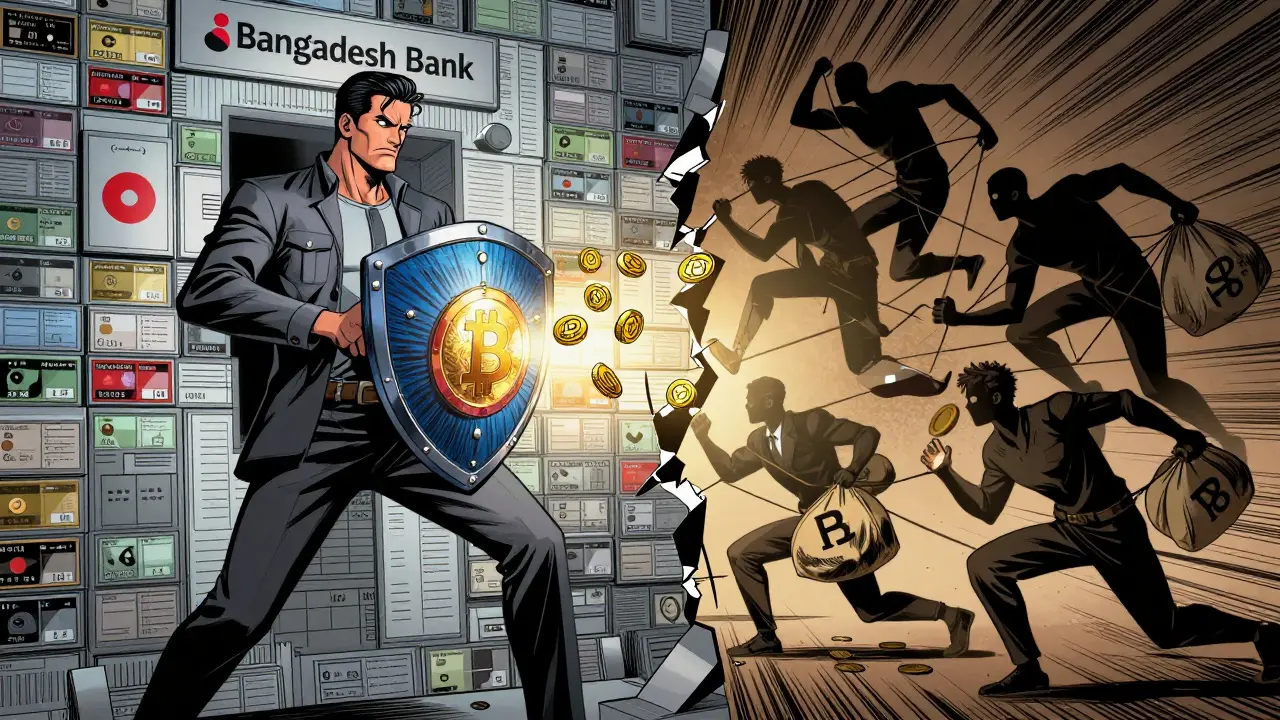
Despite the legal loopholes, the practical restrictions are real and enforced through banking channels. In 2017, the central bank clarified its position, banning all usage, trade, and possession of cryptocurrencies. Their primary concerns were money laundering, terrorism financing, and the potential destabilization of the national economy. For regular citizens, this meant that banks were instructed to block transactions related to known crypto exchanges.
The enforcement mechanism relies heavily on monitoring credit and debit card transactions. If you try to buy Bitcoin directly from a major exchange like Coinbase using your Bangladeshi Visa or Mastercard, the transaction will likely be flagged and blocked. The banks act as the gatekeepers, ensuring that no formal financial institution facilitates the movement of funds into the crypto ecosystem. This makes direct, on-ramp purchases difficult for the average user who relies on traditional banking infrastructure.
The Underground Market and Local Agents
So, how do people actually trade crypto in Bangladesh if the banks are blocking them? The answer lies in a thriving underground network. While direct bank transfers to exchanges are blocked, peer-to-peer (P2P) trading has become the norm. Applications like Binance and KuCoin remain accessible on the Google Play Store and Apple App Store, allowing users to download the software without technical barriers.
Most transactions happen through local agents. These individuals facilitate the exchange of Bangladeshi Taka (BDT) for US Dollars (USD) or stablecoins like USDT. They charge a small commission for their service and use informal networks to move money. This method provides plausible deniability; you aren’t sending money to a crypto company, you’re sending money to a person you know or trust within a community. This informal market operates outside the radar of traditional banking compliance checks, making it resilient despite the official ban.
| Method | Risk Level | Accessibility | Legal Status |
|---|---|---|---|
| Direct Bank Transfer to Exchange | High | Blocked | Explicitly Prohibited |
| P2P via Local Agents | Medium | High | Gray Area / Unregulated |
| Crypto ATMs | Low Availability | Very Low | Non-existent Officially |
Taxation Paradox: Paying Taxes on Illegal Activity?
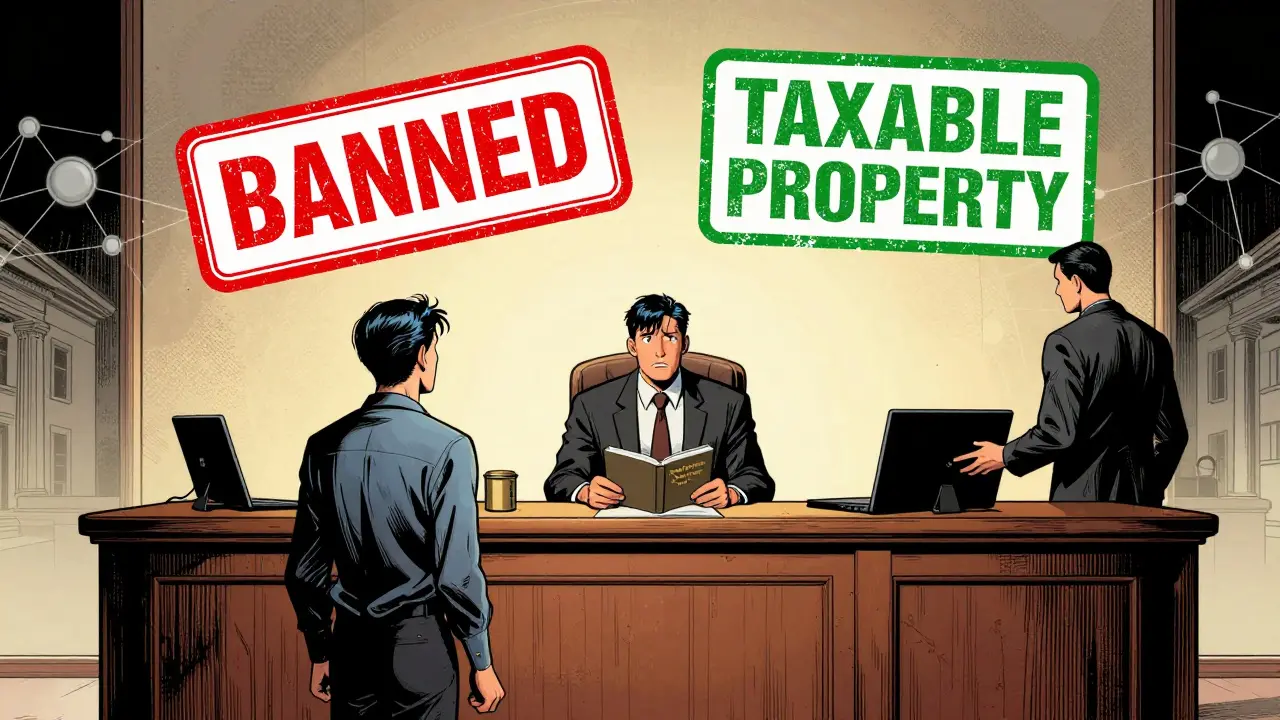
One of the most confusing aspects of the current regime is taxation. The National Board of Revenue (NBR), Bangladesh’s tax authority, treats cryptocurrencies as property rather than currency. Under the Income Tax Ordinance of 1984, any profit made from selling crypto is subject to capital gains tax. This creates a bizarre scenario where the government prohibits the activity but still expects you to pay taxes on the profits if they can trace them.
As of 2025, there is no specific cryptocurrency tax regime. However, the NBR has been increasingly vigilant about tracking high-value transactions. If you withdraw significant amounts of Taka from P2P trades into your bank account, and those deposits look suspicious, you could face scrutiny. The lack of specific legislation means that tax officers interpret general rules broadly. This puts traders at risk of double jeopardy: breaking the central bank’s rules while simultaneously owing taxes to the revenue board.
Regional Context: How Bangladesh Compares
Bangladesh’s approach stands out as uniquely restrictive compared to its neighbors. While Bangladesh maintains a comprehensive prohibition, other South Asian countries have moved toward regulation. Pakistan, for instance, established the Pakistan Digital Assets Authority (PDAA) in May 2025. They have allocated electricity for mining and created a framework for exchanges and wallets.
India has taken a different path, implementing a structured regulatory approach with a 30% tax on crypto profits and a 1% Tax Deducted at Source (TDS). This generated $1.8 billion in tax collections in FY 2024-2025. By contrast, Bangladesh misses out on potential tax revenue and technological innovation by sticking to a blanket ban. This isolation limits participation in the broader digital asset economy and pushes more activity into the unmonitored underground sector.
Future Outlook and Regulatory Reform
The current system is unsustainable. Academic experts, including Dr. B M Mainul Hossain from Dhaka University, have publicly stated that banning cryptocurrency is ineffective. The demand for digital assets continues to grow, driven by remittance needs, investment opportunities, and the desire for financial privacy. The persistence of the underground market proves that prohibition does not eliminate usage; it only hides it.
There are signs that the government may reconsider its approach. The National Board of Revenue is reportedly considering updated regulations that could provide clearer guidelines. Legal experts suggest that future reforms will likely involve either amending FERA to explicitly include cryptocurrencies or creating a new digital asset regulatory framework. Until then, users must navigate the existing restrictions with caution, understanding that while the law is ambiguous, the central bank’s enforcement powers are real.
Is it illegal to own cryptocurrency in Bangladesh?
Technically, yes. The Bangladesh Bank has prohibited the possession, trading, and usage of cryptocurrencies since 2017. However, legal experts argue that the Foreign Exchange Regulations Act of 1947 does not explicitly define crypto as "currency," creating a legal gray area regarding criminal prosecution for mere ownership.
Can I use Binance in Bangladesh?
You can download the Binance app and access the platform, as it is not blocked by internet service providers. However, you cannot deposit or withdraw funds using Bangladeshi bank cards directly due to central bank restrictions. Most users rely on Peer-to-Peer (P2P) trading with local agents to convert Taka to crypto.
Do I need to pay tax on crypto profits in Bangladesh?
Yes. The National Board of Revenue (NBR) treats cryptocurrencies as property. Profits from selling crypto are subject to capital gains tax under the Income Tax Ordinance of 1984. Failure to declare these gains can lead to tax evasion penalties, even though the underlying activity is restricted by the central bank.
Why is crypto banned in Bangladesh?
The primary reasons cited by the Bangladesh Bank are concerns over money laundering, terrorism financing, and the potential instability of the national financial system. The government fears that unregulated digital assets could undermine monetary policy and control over foreign exchange reserves.
What happens if my bank finds out I trade crypto?
Banks are instructed to block transactions linked to known crypto exchanges. If your account shows suspicious patterns consistent with crypto trading, the bank may freeze your account or report you to authorities. Direct bank transfers to international exchanges are almost always blocked.