
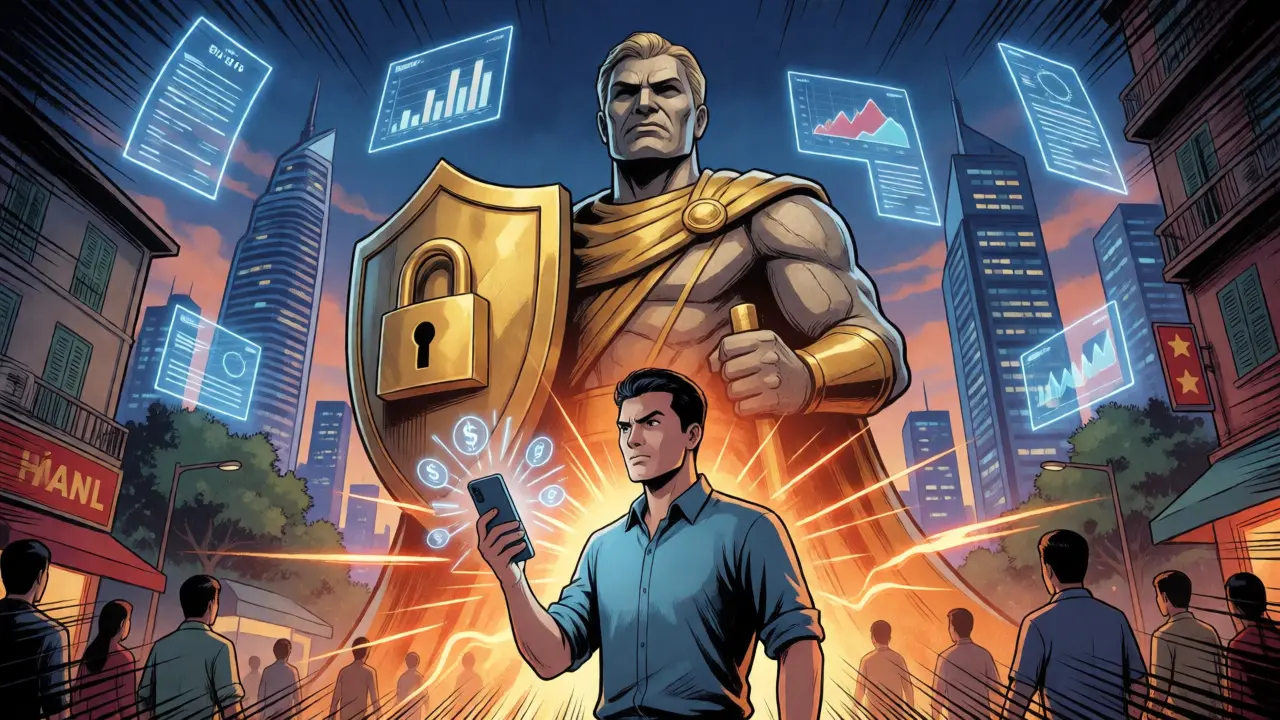
Imagine trying to buy Bitcoin with your salary, only to find that the bank freezes your account because it suspects you're up to something shady. That was daily life for many Vietnamese traders just a few years ago. Today, the landscape has shifted dramatically. With over 21 million people owning digital assets, Vietnam is no longer a wild west of unregulated speculation. It’s a structured market where access depends on navigating a new regulatory maze and choosing the right platform. If you are looking to trade in Vietnam, you aren't just picking an app; you are choosing how to interact with the State Bank's pilot program.
The New Regulatory Reality
You might wonder why there is so much talk about licenses when you can already download Binance and start trading. The answer lies in Resolution 05/2025. Passed in January 2025, this resolution launched a five-year pilot program that fundamentally changed how crypto works in the country. Before this, crypto existed in a legal gray area-declared not legal tender by the State Bank in 2014 but never outright banned. Now, the government is tightening the screws.
The Ministry of Finance announced that only five licenses would be issued for domestic exchanges during this pilot phase. This isn't a free-for-all. To get one of these spots, a company needs charter capital of VND 10 trillion (about US$380 million), with 65% coming from institutional investors. They also need to show profitability for two consecutive years. This high barrier effectively handed the initial advantage to state-owned banks and large financial institutions like SSI Digital Corporation and Techcom Securities' TCEX. For the average trader, this means the "official" local options are limited, pushing most users toward global platforms that have adapted to these rules.
| Requirement | Details | Impact on Traders |
|---|---|---|
| Charter Capital | VND 10 trillion (~$380M) | Limits entry to major financial players |
| Foreign Ownership | Capped at 49% | Ensures local control over data and operations |
| Trading Currency | Vietnamese Dong (VND) only | No direct USD trading on licensed local platforms |
| Pilot Duration | Until Dec 31, 2029 | Regulations may tighten further after this period |
Global Giants vs. Local Contenders
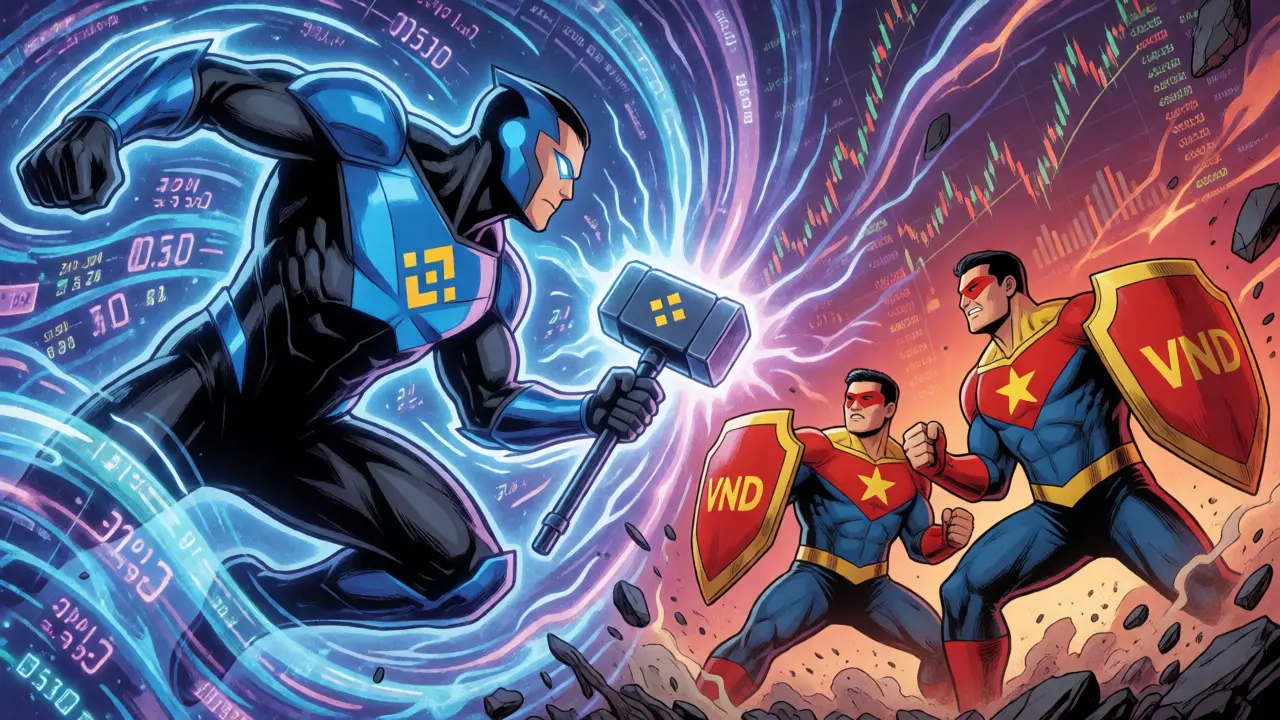
Since local exchanges are still ramping up, who are you actually trading on? The reality is that global centralized exchanges (CEXs) dominate the market. Binance holds roughly 45% of the market share, followed closely by Bybit, MEXC, and Bitget. These platforms didn't just ignore Vietnam; they localized aggressively. They offer Vietnamese-language interfaces, VND-based Peer-to-Peer (P2P) trading, and customer support teams that speak your language.
Why do traders stick with them despite the regulatory uncertainty? Liquidity and fees. Binance, for instance, handles billions in daily volume, offering tight spreads on BTC/VND pairs. In contrast, newer local entrants like SSI Digital are processing significantly less volume. While SSI and others are gaining traction, they represent less than 5% of total market activity as of late 2025. Most traders prefer the depth of order books on global platforms, even if it means navigating a slightly more complex compliance layer.
It’s worth noting the trade-off here. Global exchanges offer better tools and lower fees-Binance charges around 0.1% for spot trades-but they don't always provide automated tax reporting compatible with Vietnam's specific laws. You often have to track your own gains against the 22% capital gains tax rate, which can be a headache for active traders.
Funding Your Account: The VND Gateway
Getting money into your exchange account is where the rubber meets the road. Since you can't directly wire USD easily without friction, most Vietnamese traders use VND deposits. How does this work technically? It usually involves three main channels:
- Bank Transfers: Over 28 Vietnamese banks are integrated with major exchanges via NAPAS (National Payment Corporation). Deposits typically take 2-5 minutes, while withdrawals take 15-30 minutes.
- E-Wallets: Services like MoMo, ZaloPay, and VNPay are hugely popular for smaller transactions due to their speed and convenience.
- P2P Trading: This is the backbone of VND liquidity. You buy crypto directly from another user using a bank transfer or e-wallet, with the exchange acting as an escrow service.
A critical tip here: avoid sending large lump sums. Financial advisors suggest keeping individual transfers under VND 100 million ($4,000) to reduce the risk of bank account freezes. Banks in Vietnam are increasingly vigilant about crypto-related flows, and sudden large inflows can trigger manual reviews that lock your funds for days.
KYC and Verification Hurdles
Have you ever tried to verify your identity and failed because your name on your National ID doesn't perfectly match your passport? This is a common pain point. Vietnam-specific KYC requirements mandate verification using your National ID (CMND/CCCD) with facial recognition that matches the national citizen database. If your ID photo is old or blurry, you might face delays.
On average, completing KYC takes 24-48 hours. Binance and Bybit are among the fastest, often verifying accounts within 18 hours. However, issues arise when information mismatches occur. A recent survey showed that many users struggled with OKX due to discrepancies between their submitted documents and the national database. Always ensure your input details match your official documents exactly, character for character, including diacritics.
Starting in Q1 2026, the process will shift again. The Ministry of Information and Communications plans to integrate the National Digital Identity system, replacing current manual KYC checks. This should streamline the process, but until then, expect some friction.
Security Risks and Common Pitfalls
Accessing an exchange is one thing; keeping your money safe is another. The biggest threat isn't necessarily a hack-it's fraud and operational failure. During periods of high volatility, withdrawal limits often kick in. Users have reported being unable to withdraw funds quickly during market crashes because exchanges cap daily outflows to manage liquidity risks.
Another frequent issue is API latency. Vietnamese users experience about 38% higher response times compared to those in Singapore due to internet infrastructure limitations. This might sound minor, but for high-frequency traders, a 420ms delay versus 305ms can mean missed opportunities or slippage.
Then there is the human element. P2P fraud remains a concern, with thousands of cases reported annually. Scammers often trick users into releasing crypto before the bank transfer clears. Always wait for the actual notification from your banking app, not just a screenshot sent by the buyer. Screenshots can be faked; bank notifications are harder to forge.

Tax Implications You Can't Ignore
Here is the part nobody likes to talk about: taxes. Vietnam imposes a 22% capital gains tax on crypto profits. Unlike in some countries where exchanges provide a simple tax report, most global platforms operating in Vietnam do not offer automated tax calculations tailored to local regulations. You are responsible for tracking every transaction.
If you trade frequently, this becomes a massive administrative burden. Using spreadsheet tools or third-party tax software that supports VND conversions is essential. Remember, the tax applies to realized gains. If you hold your assets long-term, you might defer this cost, but if you are day-trading perpetual futures-which make up 68% of volume on platforms like Bybit-you need meticulous records.
Future Outlook: What’s Next?
Where is this all heading? The market is growing fast. Projections suggest the Vietnamese crypto market could reach $14.7 billion by 2027. But the path isn't smooth. The strict licensing regime means innovation might slow down locally, with some startups relocating to Singapore to escape the heavy capital requirements.
For traders, the key takeaway is adaptability. The five-license pilot ends in 2029. Until then, expect continued reliance on global exchanges that have localized well. Keep an eye on developments regarding the National Digital Identity integration and any changes to the 22% tax law. The government wants stability, not speculation, so expect rules to tighten rather than loosen.
Can I trade crypto legally in Vietnam?
Yes, trading is legal but regulated. Cryptocurrencies are not legal tender, meaning you cannot use them to pay for goods and services officially, but holding and trading them on approved or accessible platforms is permitted under the pilot program established by Resolution 05/2025.
Which exchange is best for Vietnamese traders?
Binance is currently the market leader due to its high liquidity and strong VND P2P market. Bybit is preferred by derivatives traders, while Remitano offers a simpler interface for beginners. The "best" choice depends on whether you prioritize low fees, advanced trading tools, or ease of VND deposits.
How do I deposit VND into my crypto account?
You can deposit VND via bank transfers through NAPAS, e-wallets like MoMo and ZaloPay, or through Peer-to-Peer (P2P) trading. P2P is often the most flexible method, allowing you to buy directly from other users using your preferred payment method.
Do I need to pay taxes on crypto profits?
Yes, Vietnam applies a 22% capital gains tax on profits from crypto trading. Currently, most exchanges do not provide automated tax reports compliant with Vietnamese law, so traders must manually track their transactions and file returns accordingly.
What happens if my bank freezes my account?
This can happen if large, frequent transfers to/from crypto exchanges are flagged. To avoid this, keep individual transactions under VND 100 million and maintain clear records of the purpose of the transactions. If frozen, contact your bank immediately with proof of source of funds.