

Providing liquidity in decentralized finance (DeFi) isn’t just a way to earn passive income-it’s one of the most direct ways to make money from cryptocurrency without selling your assets. If you’ve ever wondered how people make money just by holding ETH and USDC in a pool, this is how it works. No middlemen. No banks. Just smart contracts and trading fees.
What Is Liquidity Provision?
Liquidity provision means depositing two cryptocurrencies into a smart contract called a liquidity pool a smart contract that holds paired crypto assets to enable trading on decentralized exchanges. These pools power automated market makers (AMMs), which replace traditional order books with algorithms that automatically set prices based on supply and demand. Platforms like Uniswap a leading decentralized exchange on Ethereum that uses liquidity pools for trading, SushiSwap a DeFi protocol offering liquidity pools with additional governance token rewards, and Raydium a Solana-based AMM known for low transaction fees and fast trades rely entirely on these pools to function.When you add liquidity, you’re not lending your coins. You’re locking them up as a trading pair-like ETH/USDC or SOL/USDT. In return, you get LP tokens digital tokens that represent your share of a liquidity pool and entitle you to a portion of trading fees. These tokens aren’t tradable like regular crypto, but they’re your proof of ownership. Every time someone trades using that pool, a small fee (usually 0.3%) is charged. That fee gets split among all LPs based on how much of the pool they own.
How Do You Earn Fees?
Let’s say you deposit $1,000 worth of ETH and $1,000 worth of USDC into a pool. You now own 1% of that pool. If traders swap $1 million worth of tokens in that pool over a month, the total fees collected are $3,000 (at 0.3%). You’d earn 1% of that-$30. Simple math.But here’s the catch: fees aren’t paid out automatically. They’re reinvested into the pool. Your LP tokens increase in value over time. You don’t see cash in your wallet, but your share of the pool grows. To cash out, you withdraw your portion of the pool, which includes both your original deposit and the accumulated fees.
Some pools offer more than just trading fees. Curve Finance a DeFi protocol optimized for stablecoin trading with lower fees and additional CRV token rewards pays out CRV tokens as extra rewards. Balancer a DeFi platform allowing custom-weighted liquidity pools with up to eight tokens lets you create pools with uneven ratios like 80% ETH / 20% USDC, which can boost returns if you’re confident in one asset’s direction.
Annual yields vary wildly. Stablecoin pairs like USDC/DAI might earn 3-8% from fees alone. But volatile pairs like ETH/WRBTC can hit 40-60% if trading volume spikes. Some DeFi farms combine liquidity provision with staking LP tokens elsewhere-doubling or tripling returns. But that’s advanced. Stick to basics first.
Where Should You Provide Liquidity?
Not all pools are equal. Here’s a quick breakdown:| Platform | Typical Fee | Best For | Extra Rewards | Chain |
|---|---|---|---|---|
| Uniswap | 0.3% | High-volume pairs (ETH/USDC) | UNI | Ethereum |
| Curve Finance | 0.04% | Stablecoins (USDC/DAI/USDT) | CRV | Ethereum |
| Raydium | 0.2% | Solana-based tokens | RAY | Solana |
| Balancer | Custom (0.01-1%) | Custom token ratios | BAL | Ethereum |
| SushiSwap | 0.3% | Altcoin pairs | SUSHI | Ethereum, Polygon |
Start with ETH/USDC on Uniswap. It’s the most tested, has the highest trading volume, and the lowest risk of impermanent loss. Avoid obscure token pairs like $WIF/SHIB unless you’re comfortable losing money.
What Is Impermanent Loss?
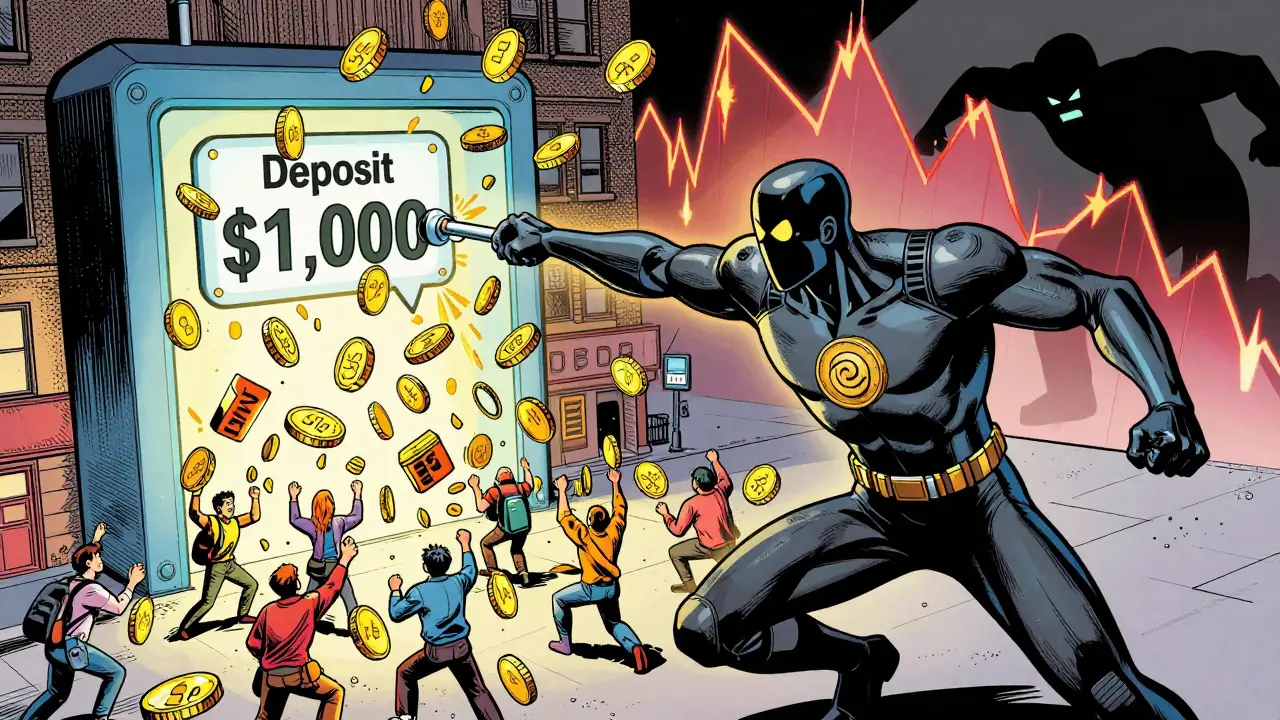
This is the big scary thing everyone talks about. Impermanent loss happens when the price of one token in your pair moves up or down compared to the other. The AMM algorithm automatically rebalances your pool to keep the ratio constant. So if ETH doubles while USDC stays flat, the pool sells some ETH to buy USDC. You end up with less ETH than you started with-even though ETH went up.Here’s the math: if one token doubles in value, your loss is about 5.7%. If it triples, it’s around 11%. That sounds bad. But here’s the real deal: if fees earned over time exceed that loss, you’re still ahead. A 0.3% fee on $10 million in trading volume? That’s $30,000 in fees. Even if you lost 10% on the price move, you still made money.
Stablecoin pairs like USDC/DAI have almost zero impermanent loss because their prices rarely move. That’s why they’re popular. But they also earn less in fees. Volatile pairs earn more fees, but carry more risk. The trick? Pick pairs that move together-like ETH and wstETH. If one goes up, the other usually does too. That minimizes imbalance.
How to Get Started
You don’t need to be a coder. Here’s how to do it in under 10 minutes:- Connect your wallet: Use MetaMask a popular Ethereum wallet for interacting with DeFi protocols (Ethereum), Phantom a Solana wallet optimized for low-cost transactions (Solana), or WalletConnect.
- Go to a DeFi platform: Visit Uniswap.app, Curve.fi, or Raydium.org.
- Select a pool: Choose a pair like ETH/USDC.
- Enter amount: The platform will auto-calculate how much of each token you need. You must deposit equal dollar values.
- Approve and deposit: Two transactions. One to approve spending, one to deposit. Gas fees apply.
- Receive LP tokens: You’ll see them in your wallet. That’s your proof of ownership.
- Monitor: Use DeFiLlama or APY.vision to track your earnings.
Minimum deposit? Most platforms suggest $100-$500. Below that, gas fees eat your profits. On Ethereum, a single deposit can cost $5-$20. On Solana? Less than $0.50. That’s why many beginners start on Solana or Polygon.
What to Avoid
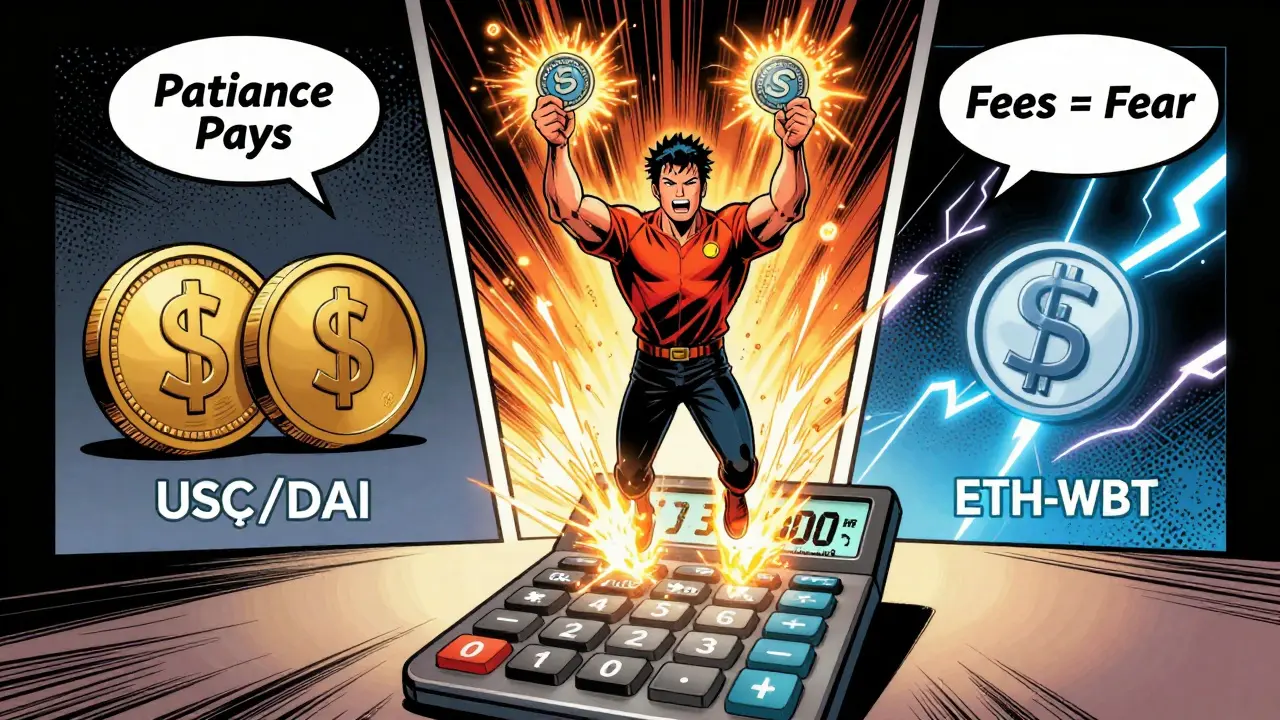
- New tokens with no volume: If no one trades them, you earn zero fees. - High-leverage farms: Staking LP tokens in another protocol to earn more rewards sounds great-until one protocol fails and you lose everything. - Ignoring gas fees: On Ethereum, small deposits are a money-losing game. Use Layer 2s like Arbitrum or zkSync if you’re depositing under $1,000. - Chasing the highest APY: A 100% APY pool? It’s probably unsustainable. Look at 30-day average yields, not the headline number.Advanced Tips
If you’ve done this for a while, try:- Use Uniswap V3: It lets you concentrate your liquidity within a price range. If ETH stays between $3,000-$4,000, you earn 10x more fees than in V2. But if it breaks out, you’re out of the pool. Requires active management.
- Automate with Yearn Finance: It rebalances your LP positions and compounds rewards automatically. Less work. Less control.
- Track with DeFiLlama: See which pools have the highest 30-day fees, not just APY. Volume matters more than headlines.
Some pros use bots to shift liquidity between pools based on fee trends. That’s overkill for beginners. Start simple. Stay patient. Fees add up.
Final Thoughts
Providing liquidity is one of the most powerful tools in DeFi. It’s not risk-free, but it’s not gambling either. You’re not betting on price. You’re betting on trading activity. If people keep swapping tokens, you keep earning. And that’s a steady, predictable income stream-if you pick the right pools and avoid emotional decisions.Most people lose money because they chase hype. They jump into a new token pair because it’s trending. Then they panic when the price moves. Stick to ETH/USDC, SOL/USDC, or USDC/DAI. Keep deposits above $500. Monitor fees monthly. Withdraw only when you’ve earned more than the impermanent loss.
As of 2024, over $50 billion is locked in DeFi liquidity pools. Institutions are starting to join. You don’t need to be a whale to participate. Just smart.
Can you lose money providing liquidity?
Yes. The biggest risk is impermanent loss, where the price of one token in your pair moves significantly compared to the other. If you withdraw when the loss is high, you lose value compared to just holding the tokens. But if you hold long enough, trading fees usually outweigh the loss. Stablecoin pairs have minimal risk.
How much do you need to start?
You can start with as little as $50, but it’s not worth it on Ethereum due to gas fees. Aim for $500 minimum on Ethereum, or $100 on Solana or Polygon. Transaction costs below $10 make small positions profitable.
Are liquidity pools safe?
The smart contracts behind major pools like Uniswap and Curve have been audited and used for years. But no code is perfect. Always check for audits, avoid new or untested pools, and never deposit more than you’re willing to lose. Rug pulls and exploits still happen.
Do you pay taxes on liquidity fees?
In most countries, yes. Earning fees is treated as income. When you withdraw your LP tokens and convert them to USD or another asset, you may owe capital gains tax on the increase in value. Keep records of deposits, withdrawals, and fees earned. Tax tools like Koinly or CoinTracker can help.
What’s the difference between staking and liquidity provision?
Staking means locking up one token to support a blockchain’s security and earn rewards (like ETH staking). Liquidity provision means depositing two tokens into a trading pool to earn fees from trades. Staking is simpler and lower risk. Liquidity provision offers higher returns but comes with impermanent loss risk.
Eva Gupta
March 4, 2026 AT 11:01Nancy Jewer
March 5, 2026 AT 01:30Julie Potter
March 5, 2026 AT 03:44James Burke
March 6, 2026 AT 17:19Megan Lutz
March 6, 2026 AT 21:11jay baravkar
March 8, 2026 AT 17:04Jane Darrah
March 8, 2026 AT 18:14Issack Vaid
March 10, 2026 AT 08:50prasanna tripathy
March 11, 2026 AT 06:12Jesse VanDerPol
March 12, 2026 AT 02:29jonathan swift
March 13, 2026 AT 08:18Melissa Ritz
March 13, 2026 AT 18:00Emily Pegg
March 15, 2026 AT 05:33Jeffrey Dean
March 15, 2026 AT 22:16Leah Dallaire
March 16, 2026 AT 01:14Olivia Parsons
March 16, 2026 AT 11:23Nick Greening
March 17, 2026 AT 04:39Shawn Warren
March 17, 2026 AT 14:06