
Imagine running a company where no single CEO holds the reins. Instead, every decision-from hiring new developers to allocating millions in treasury funds-is made by the community itself, executed automatically by code. This isn't science fiction; it is how Decentralized Autonomous Organizations (DAOs) operate. If you have ever wondered how these digital collectives actually function without traditional management structures, you are looking at a system built on transparency, tokens, and trustless execution.
The core question many newcomers ask is simple: How do decisions get made when there is no boss? The answer lies in a structured process that replaces boardrooms with blockchains and executive orders with smart contracts. Understanding this mechanism is crucial for anyone participating in or building within the crypto ecosystem today.
The Four Pillars of DAO Decision-Making
To grasp how a DAO functions, you need to understand the four components that drive its governance engine. These elements work together to create a self-sustaining loop of proposal, debate, vote, and action.
- Proposals: These are the starting point. Any member can submit a suggestion for change, whether it is funding a new project, updating protocol rules, or adjusting token emission rates.
- Voting: Once a proposal is live, members cast their ballots. Your influence usually depends on how many governance tokens you hold.
- Governance Tokens: These digital assets act as your voice. Holding them grants you the right to participate in the democratic process.
- Smart Contracts: These are the enforcers. When a proposal passes, code-not people-executes the decision instantly and immutably.
This structure ensures that power is distributed rather than concentrated. It removes the need for intermediaries like lawyers or auditors to verify that a decision was carried out correctly, because the blockchain itself serves as the public ledger of truth.
From Idea to Execution: The Voting Workflow
The journey from a raw idea to an executed action follows a predictable path. Let's walk through what happens behind the scenes when a decision is made.
- Submission: A member drafts a proposal and submits it to the governance contract. This often requires locking up a small amount of tokens to prevent spam.
- Discussion: Before voting begins, the community debates the merits of the proposal. This usually happens in forums, Discord servers, or Telegram groups. This off-chain discussion is vital for building consensus.
- Voting Period: Token holders cast their votes during a set timeframe. The length of this period varies, but it is designed to give everyone enough time to participate while keeping momentum high.
- Execution: If the proposal meets the required thresholds, the smart contract automatically triggers the action. For example, if the vote was to transfer funds to a developer, the money moves immediately upon approval.
This workflow eliminates human error and bias in the implementation phase. You cannot argue with code; it simply does what it was programmed to do once the conditions are met.
Configuring the Rules: Quorum and Pass Rates
Not all DAOs are created equal. Each organization sets its own governance parameters to balance efficiency with security. Two critical metrics define this balance: quorum and pass rate.
Quorum refers to the minimum percentage of total tokens that must participate in a vote for the result to be valid. If only 1% of token holders vote, the decision lacks legitimacy, even if those voters unanimously agree. Setting a low quorum encourages participation but risks decisions being made by a tiny minority. Setting it too high can lead to gridlock where nothing gets done.
Pass Rate determines how many "yes" votes are needed relative to the total votes cast. Most DAOs use a simple majority (50% + 1) for routine matters. However, for critical changes-like altering the core charter or minting new tokens-a super-majority (often 67%) is required. This higher bar protects the organization from hostile takeovers or rash decisions during volatile market conditions.
| Parameter | Typical Value | Purpose |
|---|---|---|
| Quorum | 4% - 10% | Ensures sufficient community participation |
| Pass Rate (Routine) | 50% + 1 | Allows efficient day-to-day operations |
| Pass Rate (Critical) | 67% (Super-majority) | Protects against fundamental structural changes |
| Voting Period | 3 - 7 Days | Balances urgency with accessibility |
Beyond Simple Majority: Advanced Voting Mechanisms
While token-weighted voting is the standard, it has flaws. Large holders (whales) can dominate outcomes, potentially ignoring the interests of smaller members. To address this, some DAOs experiment with alternative mechanisms.
Holographic Consensus is one such innovation. Instead of just voting yes or no, members predict whether a proposal will pass or fail and stake tokens on their prediction. If they are correct, they earn rewards. If wrong, they lose tokens. This incentivizes members to research proposals thoroughly and align their votes with the likely outcome of the broader community, reducing noise and encouraging accurate forecasting.
Multisig Voting offers a hybrid approach. Here, the community signals their preference, but a small committee of trusted individuals executes the vote via a multi-signature wallet. This speeds up decision-making for urgent issues, like patching a security bug, but introduces centralization risks. If the committee acts against the community's interest, the DAO loses its decentralized advantage.
Real-World Example: How Lido DAO Governs
To see these concepts in action, look at Lido DAO, a leading liquid staking protocol governed by LDO token holders. Lido uses a sophisticated framework to manage its vast treasury and protocol upgrades.
In Lido, a proposal must secure at least 5% of the total token supply voting "yes" to meet the quorum. Additionally, more than 50% of the votes cast must be in favor. The voting window lasts seven days, split into two phases. The first 48 hours allow members to vote for or against. The final 24 hours serve as an objection phase, where supporters can switch to opposing if new concerns arise. This structure prevents last-minute manipulation and gives dissenters a clear window to halt problematic proposals.
Lido also bundles multiple related proposals together. This reduces voter fatigue, as members don't have to spend hours reviewing dozens of minor updates separately. Instead, they approve a package of changes that make logical sense together.
Challenges and Risks in DAO Governance
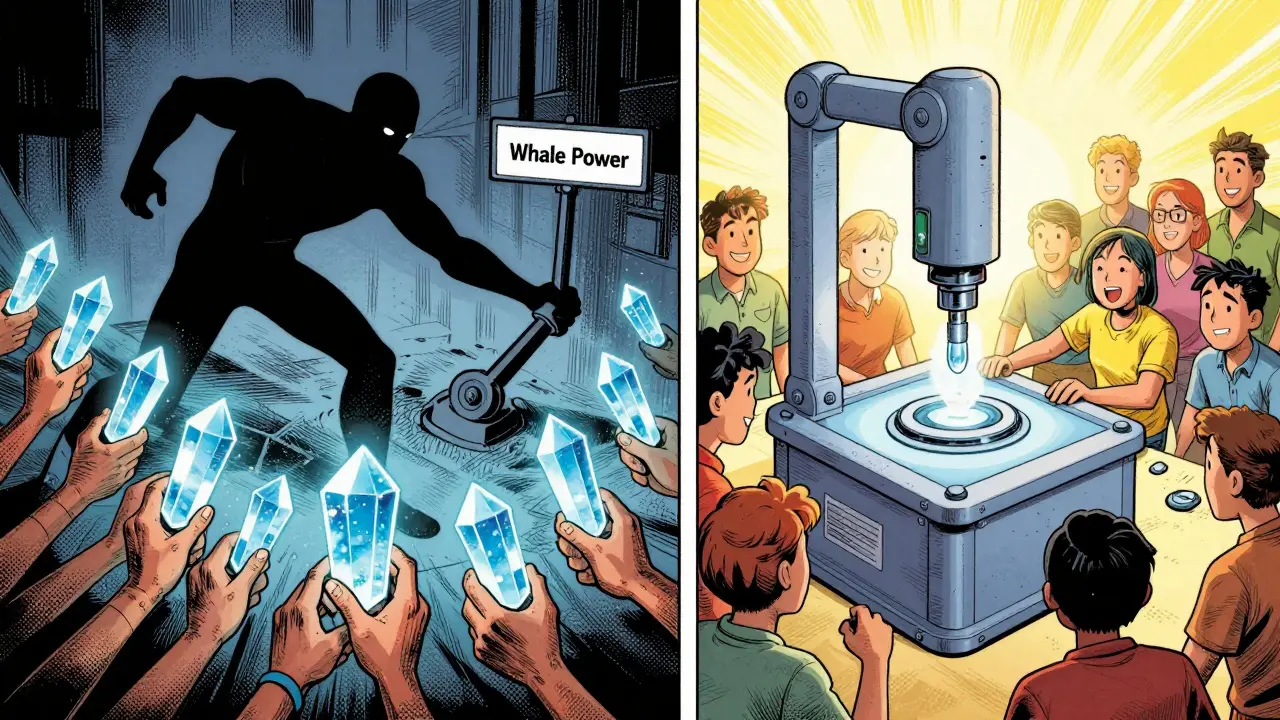
Despite their innovative design, DAOs face significant hurdles. Security remains the top concern. Smart contracts are immutable, meaning if there is a bug in the code, hackers can exploit it. The infamous 2016 hack of "The DAO" resulted in the loss of millions of dollars and highlighted the fragility of early governance models.
Voter Apathy is another major issue. In many DAOs, only a small fraction of token holders actually vote. This leads to decisions being made by a vocal minority rather than the true community. Low participation can also make DAOs vulnerable to attacks where bad actors buy enough tokens to sway votes.
Coordination Complexity arises from the sheer diversity of stakeholders. Aligning the interests of global participants across different time zones and cultural backgrounds is difficult. Disagreements can lead to hard forks, where the community splits into two separate chains, diluting value and creating confusion.
Why This Matters for the Future of Work
DAOs represent a fundamental shift in how we organize collective action. By removing hierarchical bottlenecks and automating execution, they offer a model for transparent, inclusive governance. While challenges remain, the evolution of voting mechanisms and security practices continues to improve. As more projects adopt these tools, we may see DAOs becoming a standard structure for online communities, creative collectives, and even traditional businesses seeking greater accountability.
What is a governance token?
A governance token is a digital asset that grants its holder the right to vote on proposals within a DAO. The number of tokens you hold typically determines your voting power, although some systems use quadratic voting to limit whale influence.
Can I withdraw my vote after casting it?
In most DAOs, votes are final once submitted to the blockchain. However, some frameworks include a "delegation" feature where you can assign your voting power to another address, allowing you to effectively change your stance by delegating to someone who supports the opposite view before the voting period ends.
What happens if a proposal fails?
If a proposal fails to meet the quorum or pass rate requirements, it is rejected. No action is taken, and the status quo remains. Members can then revise the proposal based on feedback and resubmit it for a future voting cycle.
Are DAO decisions legally binding?
Legally, it depends on the jurisdiction. Some countries have passed laws recognizing DAOs as legal entities, providing liability protection for members. In others, DAOs exist in a gray area, and participants may be personally liable for actions taken by the organization.
How do DAOs handle emergencies?
Many DAOs implement multisignature wallets or emergency pause functions controlled by a small group of trusted admins. This allows for rapid response to security threats, though it introduces a degree of centralization that contradicts pure decentralization ideals.
Joshua Alcover
May 29, 2026 AT 05:27The theoretical underpinnings of decentralized autonomous organizations represent a paradigm shift in corporate governance structures yet the practical implementation remains fraught with inefficiencies that traditional hierarchical models have long since optimized for maximum productivity and accountability within the framework of established legal jurisdictions.
trisya hazriyana
May 29, 2026 AT 09:52honestly this is all just buzzword bingo wrapped in smart contracts nobody actually reads the code before voting so its basically a lottery for who gets to waste treasury funds first
Debbie Lewis
May 29, 2026 AT 16:30i see where you are coming from but i think it is still pretty cool how people can collaborate without needing a boss to micromanage everything
Eric Grosso
May 29, 2026 AT 22:57wait so if the code has a bug does that mean the money is gone forever like in that one big hack they mentioned or is there some kind of insurance policy for these things
Edith Mair
May 31, 2026 AT 17:10You need to understand that security audits are not optional in this space. If you are deploying capital into a protocol that has not been audited by multiple reputable firms, you are essentially volunteering to be exit liquidity for malicious actors. The immutability of blockchain is a double-edged sword that cuts both ways.
Sam Dashti
June 2, 2026 AT 12:23think of it like a digital town hall meeting where everyone shouts their opinion at once and then the loudest voice wins unless the whales decide to whisper sweet nothings to the algorithm instead
Miss Masquer
June 3, 2026 AT 07:28I have been following the evolution of these governance models for quite some time now and while I appreciate the idealistic notion of pure decentralization I find myself constantly reminded of the stark reality that human coordination problems do not simply vanish because we replace a CEO with a line of immutable code on a distributed ledger system that requires significant technical expertise to navigate effectively.
Diana Morris
June 4, 2026 AT 04:32stop complaining and start participating if you dont like the outcome vote more tokens or shut up and hold your bags
Dianne Wright
June 6, 2026 AT 00:00you guys really think this is new stuff? corporations have been doing this for decades just with better lawyers and worse transparency but hey lets pretend we invented democracy again
Joe Clements
June 8, 2026 AT 21:50i get why people are skeptical but seeing a community come together to fix a bug without any central authority stepping in was genuinely inspiring to me personally
Rosie Morris
June 10, 2026 AT 03:06thats soo true like remember when that one dao forked because half the people wanted to go left and the other half wanted to go right it was such a mess
lorna erni
June 10, 2026 AT 08:58we need to stop fighting each other and realize that whether we use multisig or pure token voting the goal is collective progress so let us focus on solutions rather than tearing down every proposal that doesnt align perfectly with our personal agendas