
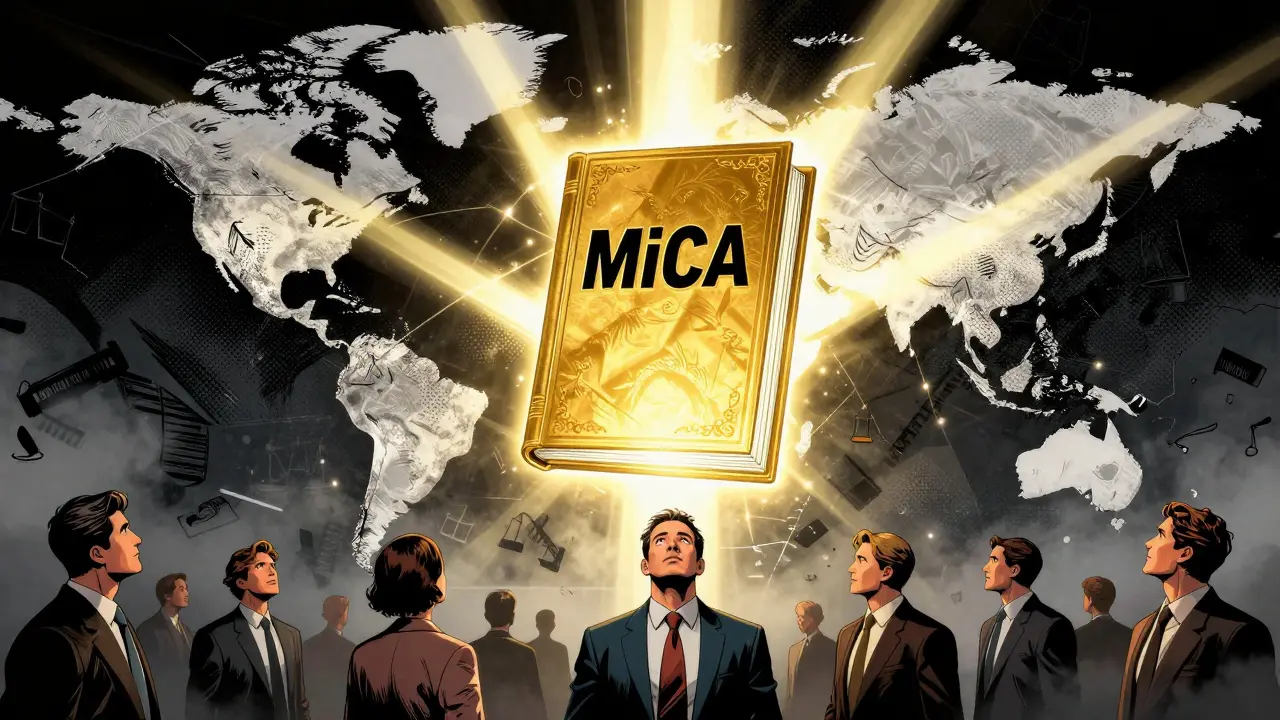
Remember when you could launch a crypto project from your laptop and ignore laws entirely? Those days are gone. By mid-2026, the global landscape for digital assets has shifted dramatically. We aren't just seeing isolated rules; we are witnessing a massive wave of global crypto regulatory convergence. Governments are no longer shouting across borders with conflicting mandates. Instead, they are syncing up.
This isn't about killing innovation. It’s about survival. The borderless nature of cryptocurrency forced regulators to realize that fragmented national approaches create loopholes-regulatory arbitrage-that threaten financial stability. If one country is lax, capital flows there, causing risks elsewhere. To stop this, major economic powers have started building harmonized frameworks. For businesses and investors, this means less chaos, but also higher barriers to entry. Here is what you need to know about how the world is aligning its crypto rules.
The EU's MiCA as the Global Anchor
If there is one rulebook everyone is copying, it’s the European Union’s Markets in Crypto-Assets Regulation (MiCA). Fully applicable since 2025, MiCA has become the de facto standard for the rest of the world. Why? Because the EU is a massive market. You don’t want to be shut out of Europe.
MiCA covers everything from stablecoins to service providers. It requires strict transparency, reserve backing for stablecoins, and clear consumer protection measures. According to the Cambridge Judge Business School’s 2nd Global Cryptoasset Regulatory Landscape Study, 67% of surveyed jurisdictions had aligned their standards with MiCA by Q3 2025. That is 13 out of 19 analyzed regions. This phenomenon is known as the "Brussels Effect." When non-EU firms adjust their operations to meet EU standards to maintain market access, they effectively export those regulations globally.
For a crypto business, this simplifies things. Instead of navigating 27 different sets of rules within the EU, plus dozens of others worldwide, you aim for MiCA compliance. Once you are compliant there, you are likely 80% of the way to being compliant almost anywhere else. Dr. Sarah Lam from Cambridge’s Centre for Alternative Finance noted that this extraterritorial effect is accelerating global harmonization faster than anyone predicted.
How the United States Caught Up
For years, the U.S. was the outlier. While Europe built a house, America was arguing over who owned the bricks. The Securities and Exchange Commission (SEC) and the Commodity Futures Trading Commission (CFTC) were locked in a jurisdictional tug-of-war. But 2025 changed that.
The turning point was the GENIUS Act (Guiding and Establishing National Innovation for U.S. Stablecoins Act), signed into law on March 15, 2025. This created a federal licensing regime for stablecoin issuers, overseen by the Federal Reserve and the Office of the Comptroller of the Currency (OCC). Crucially, it mirrored MiCA’s reserve requirements. This meant U.S. stablecoins now had to prove they held 1:1 reserves, just like their European counterparts.
Then came the FIT Act (Financial Innovation and Technology for the 21st Century), passed by the House in June 2025. This legislation finally drew a line in the sand: the SEC handles securities-like tokens, and the CFTC handles commodities. On September 5, 2025, SEC Chair Paul Atkins and CFTC Acting Chair Caroline Pham announced a coordinated approach to align product definitions. This ended the era of uncertainty where projects didn’t know which regulator would sue them. It brought the U.S. much closer to the clarity seen in Europe and Asia.
Asia’s Rapid Harmonization
Don’t think Asia is lagging behind. In fact, Asian financial hubs have been aggressive adopters of these converged standards. Hong Kong’s Securities and Futures Commission (SFC) implemented a comprehensive licensing regime for virtual asset service providers on April 1, 2025. This wasn’t a half-measure. It required proof of segregated reserves and quarterly audits, directly reflecting MiCA’s standards.
Singapore followed suit. The Monetary Authority of Singapore (MAS) finalized its stablecoin framework on February 12, 2025. Single-currency stablecoins must be backed 1:1 by SGD. This aligns perfectly with MiCA’s Article 34 requirements for asset-referenced tokens. By June 2025, Singapore’s rigorous licensing framework covered 100% of crypto firms operating within its jurisdiction.
The result? A tri-polar regulatory system where the EU, U.S., and key Asian hubs speak the same language regarding custody, reserves, and anti-money laundering (AML) checks. This makes cross-border trading safer and more predictable for institutional players.
| Jurisdiction | Key Legislation/Regulator | Stablecoin Requirement | Status as of Sept 2025 |
|---|---|---|---|
| European Union | MiCA / European Commission | 1:1 Reserves, Strict Issuer Oversight | Fully Enforced |
| United States | GENIUS Act & FIT Act / Fed & OCC | Federal Licensing, 1:1 Reserves | Implementation Phase |
| Hong Kong | SFC Licensing Regime | Segregated Reserves, Quarterly Audits | Active Since April 2025 |
| Singapore | MAS Stablecoin Framework | 1:1 SGD Backing | Active Since Feb 2025 |

The Institutional Money Floodgates Open
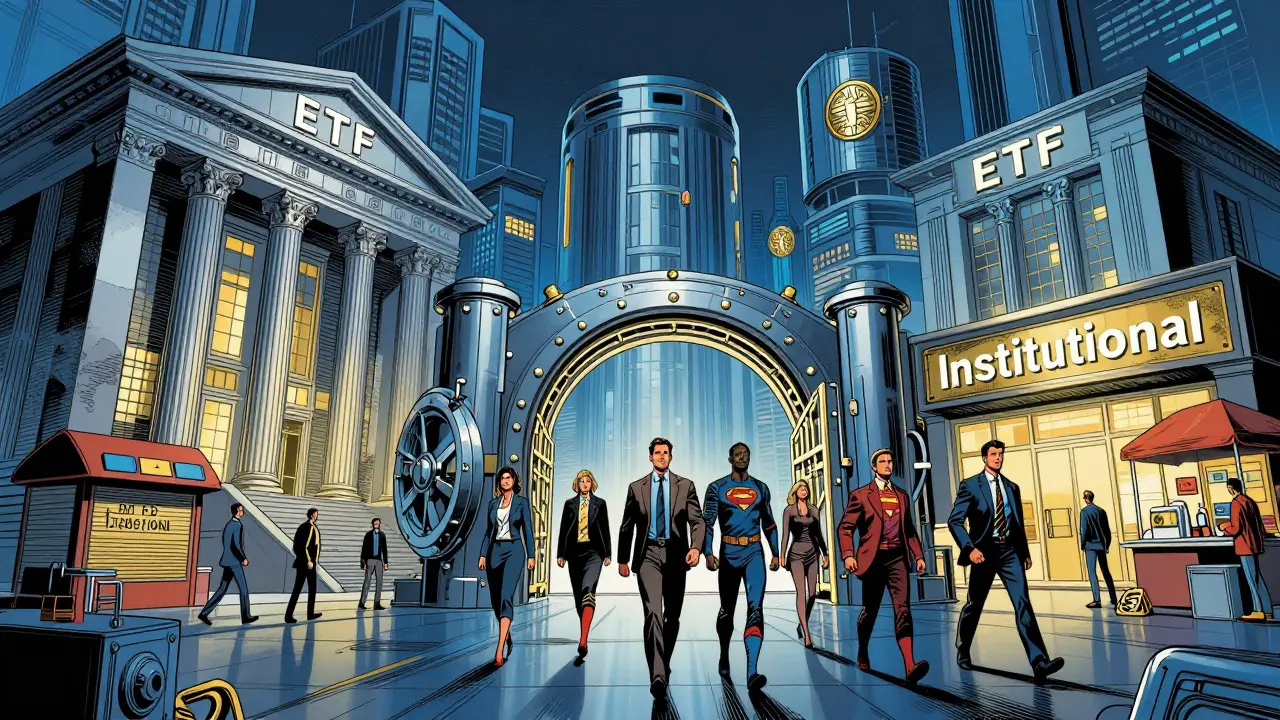
Why does this convergence matter to you? Because money follows certainty. Before these rules aligned, big institutions stayed on the sidelines. They couldn’t risk regulatory backlash. Now, the path is clear.
The data supports this shift. Institutional inflows into crypto increased by 217% year-over-year through Q3 2025. Traditional financial institutions now represent 38% of total crypto trading volume, according to Chainalysis. BlackRock’s IBIT Bitcoin ETF reached $42.7 billion in assets under management by September 30, 2025. This isn’t retail speculation anymore; it’s portfolio allocation.
Regulatory clarity enabled the launch of 17 new crypto ETF products across 8 jurisdictions in 2025 alone. Grayscale converted its Bitcoin Trust to an ETF in January 2024 and added Ethereum, Solana, and Chainlink ETFs throughout 2024-2025. These products only exist because regulators agreed on what constitutes a compliant security or commodity. The G20’s endorsement of cross-border regulatory sandboxes has further facilitated this, allowing 43 joint innovation projects between banks and crypto firms to test products under harmonized supervision.
The Hidden Cost: Market Consolidation
There is a flip side to this harmony. Compliance is expensive. PwC’s regulatory cost survey found that average compliance costs hit $2.1 million annually per jurisdiction. For small startups, this is impossible. As a result, the market is consolidating rapidly.
The number of active crypto exchanges dropped from 587 in January 2024 to 312 in September 2025-a 47% reduction. Smaller players are shutting down or merging because they cannot afford the legal teams and audit requirements demanded by MiCA, the GENIUS Act, and similar frameworks. If you run a small exchange, you are either getting big or getting out. This consolidation reduces choice for consumers but increases safety. The remaining platforms are heavily scrutinized and financially robust.
The DeFi Gap and Future Challenges
While centralized finance (CeFi) has largely been tamed, decentralized finance (DeFi) remains the wild west. As of September 2025, only 37% of jurisdictions had specific frameworks for DeFi protocols. The EU Commission’s mandated report on DeFi, NFTs, lending, and staking is due December 15, 2025. This will likely set the next global standard.
Dr. Garrick Hileman of Blockchain Data Lab warned that convergence efforts risk stifling innovation if frameworks become too rigid. DeFi protocols operate without central intermediaries, making traditional licensing models difficult to apply. The SEC and CFTC’s "innovation exemptions" for DeFi are still in consultation phase. This creates uncertainty for the $85 billion DeFi market, which grew 28% year-to-date despite the ambiguity.
Furthermore, the IMF cautioned that the implementation gap between different parts of MiCA created temporary arbitrage opportunities. About 15% of stablecoin issuers exploited the time difference between the stablecoin provisions (effective Dec 2024) and other requirements (Dec 2025). However, with the Financial Stability Board’s assessment coming in December 2025, these loopholes are closing fast. The goal is full harmonization of stablecoin supervision by the end of 2025, with 82% of member countries reporting they are "on track."
What This Means for Your Strategy
If you are investing, stick to regulated venues. The days of high-yield, unregulated yield farming are fading. Look for products backed by entities compliant with MiCA or the GENIUS Act. If you are building, budget for compliance early. Don’t wait for the rules to catch up-they already have. Engage with legal experts who understand cross-border implications. The future of crypto isn’t libertarian anonymity; it’s integrated, transparent, and regulated financial infrastructure. Embrace it, or get left behind.
What is the main driver behind global crypto regulatory convergence?
The primary driver is the need to prevent regulatory arbitrage and ensure financial stability. Since cryptocurrencies are borderless, fragmented national rules allow bad actors to exploit loopholes. Harmonizing standards, led by the EU's MiCA, creates a predictable environment for businesses and protects investors globally.
How does the US GENIUS Act compare to the EU's MiCA?
Both frameworks require strict oversight of stablecoin issuers, including 1:1 reserve backing. The GENIUS Act establishes a federal licensing regime overseen by the Federal Reserve and OCC, mirroring MiCA's reserve requirements. This alignment allows US firms to operate with standards similar to those in Europe, facilitating cross-border cooperation.
Is DeFi fully regulated under these new convergence trends?
No. As of late 2025, only 37% of jurisdictions have specific frameworks for DeFi. While centralized services are heavily regulated, decentralized protocols remain in a gray area. The EU is expected to release a report on DeFi regulation in December 2025, which may set future global standards.
How has regulatory convergence affected the number of crypto exchanges?
It has led to significant market consolidation. The number of active exchanges dropped by 47% between January 2024 and September 2025. High compliance costs, averaging $2.1 million per jurisdiction annually, force smaller players to exit or merge, leaving only well-capitalized, compliant firms.
What role do regulatory sandboxes play in this process?
Cross-border regulatory sandboxes, endorsed by the G20, allow firms to test innovative crypto products under harmonized supervision. As of September 2025, 11 jurisdictions operate these sandboxes, facilitating 43 joint innovation projects. This helps bridge the gap between innovation and regulation before full-scale enforcement.
Korn Arrieta
July 6, 2026 AT 07:45You really think this is alignment? It's capitulation. The US didn't catch up, they folded to the EU because their own regulators were too incompetent to write a coherent law without Brussels holding their hands. MiCA isn't a standard, it's a straitjacket designed by bureaucrats who have never coded a smart contract in their lives. The whole 'Brussels Effect' narrative is just corporate propaganda to justify why your startup needs to hire three lawyers instead of one developer. Stop pretending this is about safety. It's about control.
Deep Rahman
July 8, 2026 AT 07:05One must consider that the nature of money itself is shifting from a physical commodity to a digital consensus mechanism which inherently challenges the very notion of sovereign borders and thus the regulatory frameworks built upon them are struggling to adapt to this new reality where value can move faster than thought and perhaps we should ask ourselves if the goal of regulation should be to stop the flow or to guide it towards ethical ends rather than mere compliance with arbitrary rules set by those who do not understand the technology they seek to govern
Melissa Beckwith
July 9, 2026 AT 08:49The article conveniently omits the fact that the GENIUS Act is largely a shell company for existing banking interests. While it claims to mirror MiCA, the enforcement mechanisms are entirely different and rely on legacy financial institutions acting as gatekeepers. This creates a two-tier system where well-connected entities get fast-tracked while independent projects face insurmountable hurdles. The claim that 67% of jurisdictions aligned with MiCA is also misleading because many of these regions lack the infrastructure to actually enforce such standards, leading to a facade of compliance rather than genuine harmonization. Furthermore, the assertion that DeFi remains unregulated ignores the increasing pressure on node operators and liquidity providers who are being targeted under existing securities laws despite the lack of specific frameworks. The real story here is not convergence but centralization of power into the hands of a few large players who can afford the compliance costs.
Josephine Finlayson
July 11, 2026 AT 06:40I appreciate the detailed breakdown!
It is interesting to see how different regions are finding common ground.
Perhaps this will lead to a more stable environment for everyone involved.
Let us hope for the best.
Tuan Nguyen
July 11, 2026 AT 14:52Ah yes, the great dumbing down of global finance. Now we all must adhere to the lowest common denominator of European bureaucratic whimsy. The American spirit of innovation has been sacrificed at the altar of risk aversion. I suppose you lot enjoy playing by rules written by people who still use fax machines. How quaint. How utterly devoid of any actual merit or understanding of technological progress. The elite always win, and now they have a rulebook to ensure you peasants stay in your lane. Bravo.
Hazel Fruitman
July 12, 2026 AT 02:24its so sad that we let big banks dictate our future again. they just want to control everything and make it hard for normal people to participate. its not fair at all and i think we should resist this kind of centralized power grabbing. its morally wrong to exclude small players just because they cant afford expensive lawyers. we need freedom not rules.
Autumn Story
July 13, 2026 AT 04:20I totally get the worry about costs!
But maybe this means safer investments for us?
I hope things work out nicely for everyone.
Its exciting to see change happening!
Curtis Johnson
July 14, 2026 AT 08:41Look, I know everyone hates red tape but honestly? Having clear rules is better than the wild west. Remember when every exchange was a scam waiting to happen? At least now we know who to sue if things go sideways. Its not perfect but its a step forward. Lets try to keep an open mind about this stuff.
Steven Briggs
July 14, 2026 AT 18:53Clear rules help. Less chaos.
Hamza k
July 16, 2026 AT 15:29Oh wow, what a rollercoaster of bureaucracy! One minute you're coding in your basement, the next you're filling out forms thicker than a phone book. It's like the government decided to play Jenga with the entire crypto industry and now we're all holding our breath waiting for the tower to collapse. But hey, at least the suits feel secure in their little glass boxes. Drama queen much?
Kim Kay
July 17, 2026 AT 14:29i think we should all learn together about these new rules. its important to stay informed so we dont get left behind. lets support each other through this transition period and share resources. community is key.
Brad Semp
July 18, 2026 AT 20:46The notion that regulatory convergence equates to market maturation is a fallacy perpetuated by those who benefit from status quo inertia. In reality, this harmonization serves primarily to entrench incumbent financial institutions by raising barriers to entry to prohibitive levels. The cited statistics regarding institutional inflows are merely indicative of capital fleeing speculative retail assets into fortified silos managed by traditional intermediaries. This is not innovation; it is the colonization of a disruptive technology by the very forces it sought to dismantle. One might suggest reading Hayek before pontificating on the virtues of centralized oversight.
Jackie D
July 19, 2026 AT 02:54wait so does this mean my local coffee shop cant accept bitcoin anymore? i love using crypto for small purchases. seems like they are trying to kill the little guy again. whats the point of decentralization if only big corps can use it? feels like a buzzkill vibe.
Ruth Williams
July 20, 2026 AT 20:37It is quite evident that the average participant lacks the intellectual capacity to grasp the nuances of international regulatory frameworks. The conflation of MiCA with mere 'red tape' demonstrates a profound ignorance of the systemic risks posed by unbacked stablecoins and opaque lending protocols. Until the masses educate themselves on the fundamentals of monetary policy and financial stability, they will remain pawns in a game they refuse to understand. Ignorance is indeed bliss, but it is also costly.
Sophie Nakasako
July 22, 2026 AT 18:40This is such a fascinating shift! I wonder how this will impact the everyday user who just wants to send money to family abroad. Do you think we will see lower fees eventually as competition stabilizes? I'd love to hear more thoughts on the human side of this tech evolution. Let's discuss!
Kristy Morrow
July 24, 2026 AT 13:49convergence is just a fancy word for conformity. nobody wants the same boring rules everywhere. where is the fun in that? we should embrace chaos and let the best code survive not the most compliant corporation. typical groupthink.
John Harman
July 25, 2026 AT 06:31Listen, I've been in this space since 2013 and yeah, it's getting tighter. But look at the TVL numbers. Institutions aren't stupid. They see the value. If you can't handle compliance, you shouldn't be in business. It's simple supply and demand. The weak links are breaking off, leaving the strong ones. That's how nature works. Get used to it or get out.
Antony Lopez
July 26, 2026 AT 20:59Why are we letting Europe dictate our financial sovereignty? The US has always led in innovation and now we're just copying their sluggish regulations. This is a betrayal of American exceptionalism. We should be forging our own path, not following the herd. The SEC and CFTC need to stand firm against foreign influence. America first, always. This convergence is a trap.
Kat Barr
July 27, 2026 AT 19:34OMG this is huge!! 😱 So basically if you follow the rules you get the big money? 🤑 I guess that makes sense. I'm just happy there are fewer scams now. 🙏 Let's hope for a bright future with less stress! ✨💖
Logan Edmison
July 29, 2026 AT 04:23so like if the gov controls it then its not really crypto right? just digital dollars with extra steps. kinda defeats the purpose of having decentralized money doesnt it? feels like we went full circle back to bank control but with worse UX.
Michelle Walker
July 30, 2026 AT 04:05Wrong. Compliance is mandatory. Survival depends on it. Weak players die. Strong players thrive. Adapt or perish. Simple logic. Stop whining.
Shay Thomson
July 31, 2026 AT 15:12Man, it's like watching a giant machine grind down everything in its path. You feel the weight of it pressing down on the innovators. It's tragic really, seeing the dream of financial freedom being squeezed into a suit and tie. But maybe, just maybe, this structure allows the dream to live longer in a harsh world. Who knows? It's a dramatic turn of events.
DJ Maleko
August 1, 2026 AT 21:42Hey @Korn Arrieta you sound bitter. Maybe if you weren't so toxic you could see the benefits. 🤔 Also @Deep Rahman your sentences are too long, no one reads that. Just saying. 🙄
Erika Pozzetto
August 2, 2026 AT 00:13It is imperative to acknowledge that the harmonization of regulatory frameworks across diverse jurisdictions represents a significant milestone in the evolution of global financial systems. This convergence facilitates enhanced cross-border cooperation and reduces the likelihood of regulatory arbitrage thereby promoting a more stable and predictable environment for both investors and businesses. Furthermore, the adoption of stringent reserve requirements for stablecoins ensures greater transparency and accountability which are essential components of a robust financial infrastructure. Consequently, stakeholders should view these developments as positive indicators of maturity within the cryptocurrency sector.
Russ Fincham
August 3, 2026 AT 06:31Here is the deal. The rules are here to stay. You can cry about it or you can comply. Most people choose to complain until they lose money. Then they switch sides. Typical. The data shows consolidation is good for price stability. Deal with it.