

When you think of crypto regulation, most countries struggle to keep up with fast-moving technology. But Japan? It doesn’t just keep up-it sets the pace. The Financial Services Agency (FSA) is Japan’s primary financial regulator, responsible for overseeing all crypto-asset exchange service providers (CAESPs) under a legal framework that is among the strictest in the world. Since the collapse of Mt. Gox in 2014, Japan has rebuilt its crypto system from the ground up, turning a national disaster into the most disciplined regulatory model on Earth.
How Japan’s FSA Rules Work
Japan doesn’t have one rulebook for crypto-it has two, and both are enforced with military precision. The first is the Payment Services Act (PSA), updated in 2017 and again in 2023. This law defines what counts as a crypto-asset and says: if you run an exchange in Japan, you must register with the FSA. No exceptions. No gray areas. You need a physical office in Japan, a clean audit record, and a team that knows exactly what compliance means.
The second rulebook is the Financial Instruments and Exchange Act (FIEA). On September 2, 2025, the FSA announced a major shift: certain crypto tokens are now being reclassified under this securities law. That means if a token acts like an investment-offering profit expectations, voting rights, or分红-you’re no longer just trading digital money. You’re dealing with a security. And that triggers full investor protections: mandatory disclosures, insider trading bans, and clearer paths for regulated crypto ETFs.
This dual-system approach is why Japan’s market is so stable. Unlike places where regulators wait for chaos to happen before acting, Japan moves before the storm hits. Tokens that were once in a legal gray zone now have clear labels. Exchanges know exactly what they’re allowed to do-and what will get them shut down.
What Exchanges Must Do to Stay Legal
If you’re running a crypto exchange in Japan, your job isn’t just to make trades. It’s to pass a series of impossible-sounding checks.
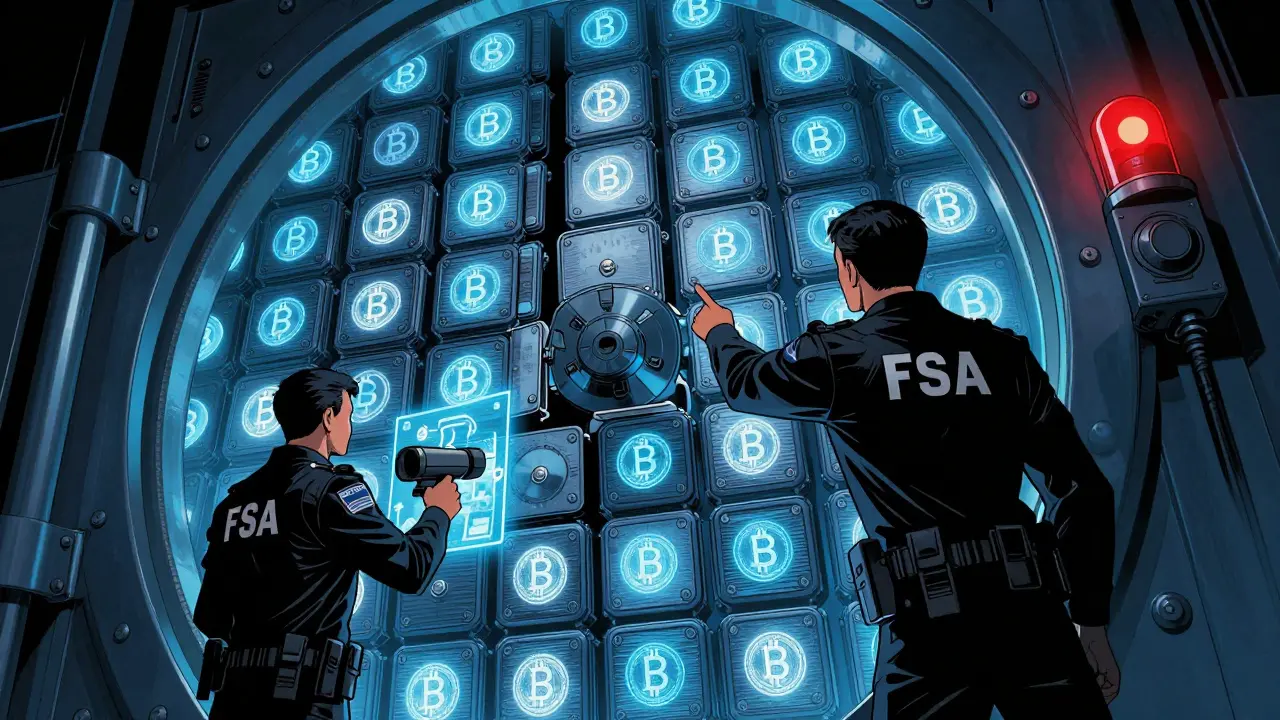
- 95% cold storage rule: At least 95% of all customer crypto must be stored offline, in hardware wallets that are never connected to the internet. This isn’t a suggestion-it’s a legal requirement. The FSA checks this during surprise audits.
- Strict fund segregation: Customer funds must be kept completely separate from the exchange’s own money. No mixing. No borrowing. No using user deposits to cover operational costs.
- Full KYC/AML systems: Every user must be verified with government-issued ID, proof of address, and source-of-funds documentation. Suspicious activity triggers automatic reporting to the FSA.
- Capital reserves: Exchanges must hold enough capital to cover potential losses. For larger platforms, that means tens of millions in cash or liquid assets.
- Monthly reporting: The FSA demands detailed transaction logs, security incident reports, and user growth metrics every single month.
These aren’t optional best practices. They’re enforced with fines, license suspensions, and outright shutdowns. In 2024, one major exchange lost its license for failing to update its KYC system for six months. No warning. No second chance.
Why Japan’s System Is Different
Most countries try to balance innovation and regulation. Japan does both at the same time-by making innovation fit inside a very tight box.
For example, Japan was the first country to legally recognize Bitcoin as a payment method. But it didn’t stop there. It then created the strictest rules for who can sell it. That’s the Japanese way: embrace the tech, but control the players.
Compare that to places like the U.S., where regulators argue over whether crypto is a commodity, a security, or a currency. Or the U.K., where rules change with each new minister. Japan doesn’t debate. It decides. And then it enforces.
The Japan Virtual Currency Exchange Association (JVCEA) and the Japan Security Token Offering Association (JSTOA) aren’t just industry groups-they’re extensions of the FSA. They set standards that go beyond the law. Many exchanges follow JVCEA’s guidelines even when they’re stricter than FSA rules. Why? Because in Japan, reputation is everything. One slip-up, and you’re out.
The Real Cost of Compliance
Running a crypto exchange in Japan isn’t cheap. Industry insiders say compliance eats up 15-20% of total operating costs. That’s why you don’t see dozens of small exchanges here. You see a handful of giants-Coincheck, BitFlyer, Zaif-that have spent years building teams of lawyers, auditors, and cybersecurity experts.
Getting registered takes 6 to 12 months. The paperwork is overwhelming: security architecture diagrams, employee background checks, third-party audit reports, emergency response plans. And once you’re in? You’re under constant surveillance. The FSA can show up unannounced, demand server access, and shut you down if they find one missing log.
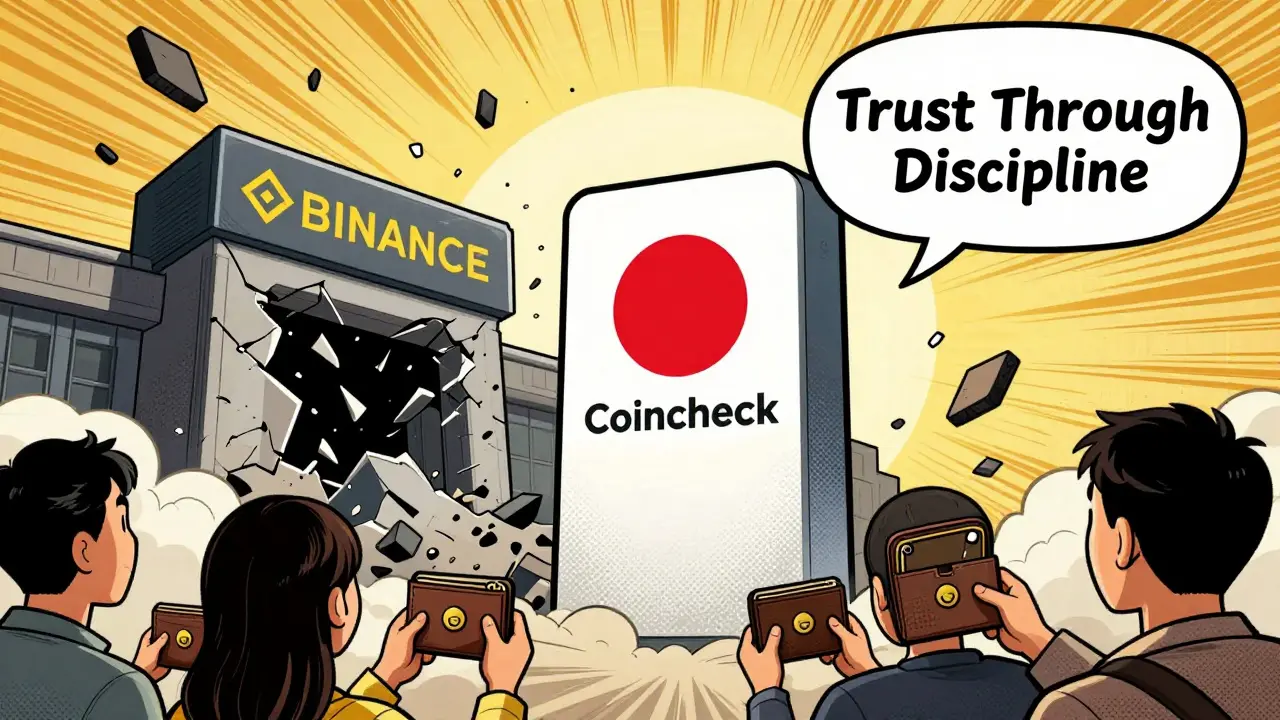
Users notice the difference. Japanese exchanges rarely get hacked. Customer funds are safe. But there’s a trade-off: trading fees are higher than on global platforms like Binance or Kraken. Why? Because the exchange has to pay for the FSA’s oversight. It’s not a tax-it’s insurance.
What’s Coming in 2026
The biggest change is coming in early 2026. The FSA plans to pass a formal bill that fully integrates digital assets into the FIEA. This will mean:
- All tokens with investment features must be registered as securities
- Token issuers must file public disclosures like public companies
- Market manipulation and insider trading will carry criminal penalties
- Crypto ETFs, including spot Bitcoin funds, will be legally approved
This isn’t just a rule change. It’s a paradigm shift. Japan is creating the first legal framework that treats crypto not as a novelty, but as part of the mainstream financial system.
Meanwhile, the FSA’s DeFi Study Group meets every two months. They’re talking about how to regulate decentralized protocols, smart contracts, and automated lending platforms. No other regulator is this far ahead.
Why This Matters to Everyone
Japan’s model isn’t just for Japanese users. It’s a blueprint. Regulators in the EU, Canada, and Singapore are studying it. The U.S. Treasury has sent delegations to Tokyo. Why? Because Japan proved you can have innovation and safety at the same time.
It’s not about being strict for the sake of it. It’s about trust. After Mt. Gox, Japanese users lost billions. The FSA’s response wasn’t to ban crypto-it was to rebuild it right. Now, when you trade on a Japanese exchange, you know your coins are safe. You know the rules. You know what happens if something goes wrong.
That’s what every market should aim for. Not the lowest fees. Not the fastest trades. But real, lasting security.
Is Bitcoin legal in Japan?
Yes, Bitcoin is legal in Japan and has been recognized as a legal payment method since 2017 under the Payment Services Act. However, it’s not considered legal tender like the yen-it’s classified as a crypto-asset. All exchanges handling Bitcoin must be registered with the FSA and follow strict compliance rules.
Can foreign exchanges operate in Japan?
No. Any crypto exchange that wants to serve Japanese users must have a physical office in Japan, a local legal entity, and be registered with the FSA. Foreign platforms like Binance or Coinbase cannot legally operate in Japan unless they set up a fully compliant local subsidiary.
What happens if an exchange breaks FSA rules?
The FSA can issue warnings, suspend operations, fine the company, or revoke its license entirely. In 2024, one major exchange lost its license for failing to update its KYC system. There are no second chances. The FSA enforces rules immediately and without warning.
Are crypto taxes different in Japan?
Yes. As of August 2025, crypto gains are taxed at a flat 20% under Japan’s income tax system. Investors can carry forward losses for up to three years to offset future gains. This is more flexible than many other countries, but still requires detailed record-keeping for tax filings.
Do Japanese users trust crypto exchanges more than users elsewhere?
Yes. Surveys show over 80% of Japanese crypto users feel their funds are safer on local exchanges than on international platforms. This trust stems directly from the FSA’s enforcement of cold storage, fund segregation, and regular audits. It’s not marketing-it’s regulation that works.
What’s Next?
Japan’s FSA isn’t done. The next frontier is stablecoins and tokenized assets-real estate, bonds, and even stocks represented as digital tokens. The FSA is already testing how these can fit into the FIEA framework. Expect more rules in 2026 and 2027.
If you’re a trader, investor, or developer, Japan’s model shows something important: regulation doesn’t kill innovation. It makes it sustainable. And in crypto, that’s the only kind that lasts.
Michael Teague
March 3, 2026 AT 01:25kati simpson
March 4, 2026 AT 01:25Cory Derby
March 5, 2026 AT 07:31Mary Scott
March 5, 2026 AT 20:19Shannon Holliday
March 6, 2026 AT 03:21Jeremy buttoncollector
March 6, 2026 AT 17:48Michelle Xu
March 7, 2026 AT 15:54Ryan Burk
March 8, 2026 AT 07:14Sriharsha Majety
March 9, 2026 AT 19:51Tabitha Davis
March 10, 2026 AT 10:05John Fuller
March 10, 2026 AT 23:40Lucy Simmonds
March 11, 2026 AT 22:47Maggie House
March 12, 2026 AT 03:52Dana Sikand
March 14, 2026 AT 03:10Cameron Pearce Macfarlane
March 15, 2026 AT 04:22Elizabeth Smith
March 16, 2026 AT 05:50Robert Kromberg
March 17, 2026 AT 11:03Ifeanyi Uche
March 18, 2026 AT 10:59Kenneth Genodiala
March 18, 2026 AT 13:08Michael Rozputniy
March 19, 2026 AT 01:33Danny Kim
March 19, 2026 AT 12:36Cathy Sunshine
March 20, 2026 AT 21:52Shannon Black
March 21, 2026 AT 23:40