
Imagine borrowing $10 million to execute a trade, repay the loan instantly, and keep the profit-all without putting up a single cent of collateral. That is exactly what flash loans are in decentralized finance (DeFi). They are not magic; they are a clever use of blockchain mechanics that allow you to borrow unlimited funds as long as you return them within the same transaction. If you fail to repay, the entire transaction reverts as if it never happened.
This guide breaks down the technical requirements for building secure and efficient flash loan strategies. We will look at the code structures you need, the gas limits that constrain your logic, and the security pitfalls that have cost developers millions. Whether you are an experienced Solidity developer or a curious engineer, understanding these constraints is critical before writing any code.
The Core Mechanism: Atomicity and Revert Logic
To understand flash loans, you first need to grasp the concept of atomicity in the Ethereum Virtual Machine (EVM). An atomic transaction means that all steps within it must succeed. If one step fails, the EVM rolls back every state change made during that transaction. This is the safety net for lenders.
When you initiate a flash loan, the protocol sends assets to your smart contract. Your contract then executes its strategy-perhaps swapping tokens on Uniswap or rebalancing a portfolio. Finally, your contract must repay the borrowed amount plus a fee. If the repayment falls short by even one wei, the transaction reverts. The lender loses nothing because the assets never left their control effectively. This mechanism relies entirely on the executeOperation() function, which acts as the callback for the loan execution.
You cannot split this process across multiple transactions. You cannot borrow today and repay tomorrow. Everything happens inside a single block. This creates a hard constraint on complexity. Your code must be extremely efficient because you are fighting against the block gas limit.
Smart Contract Interfaces and Standards
Different protocols handle flash loans differently, but most follow specific interfaces. The most common standard is ERC-3156, also known as the Flash Loans Standard. Protocols like MakerDAO and Euler Finance adhere to this standard, making it easier to write reusable code.
However, the most popular platform, Aave, does not strictly follow ERC-3156. Instead, Aave V3 uses its own interface called IFlashLoanSimpleReceiver or IFlashLoanReceiver. To interact with Aave, your contract must implement the executeOperation function correctly. Here is what that looks like in practice:
- Assets: An array of token addresses you borrowed.
- Amounts: The quantity of each asset.
- Premiums: The fees you owe to the protocol.
- Initiator: The address that started the transaction.
A critical detail often missed by beginners is the allowance. In Aave, the lending pool pulls the repayment from your contract. It does not push money back. Therefore, your contract must approve the Pool contract to spend the repaid amount plus the premium. If you forget this approval, the transaction will revert immediately.
| Protocol | Fee Structure | Standard Compliance | Key Feature |
|---|---|---|---|
| Aave V3 | 0.05% (variable) | Custom Interface | Multi-asset support |
| Uniswap V3 | Swap Fee Only | FlashSwap Specific | Integrated swaps |
| Balancer V3 | 0% | Custom Logic | Gas optimized |
| MakerDAO | 0% | ERC-3156 | Governance integrated |
Gas Limits and Execution Constraints
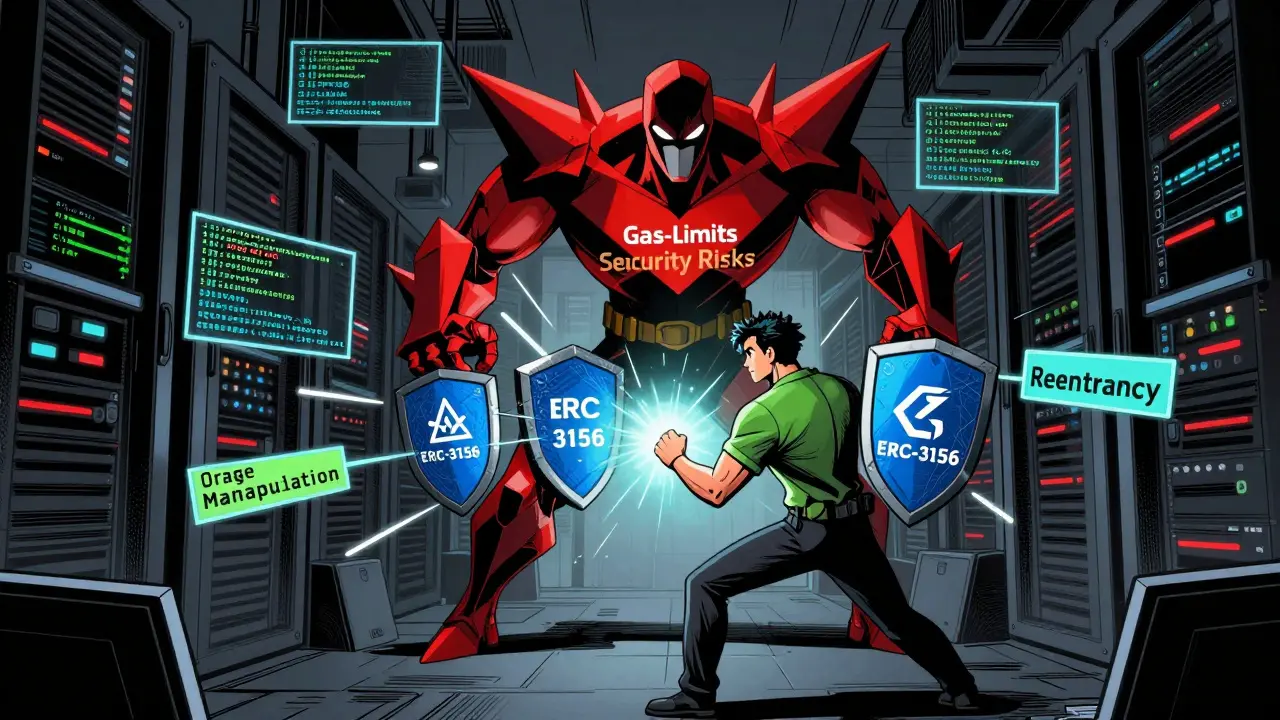
The biggest enemy of flash loan developers is gas. As of the Shanghai upgrade in April 2023, Ethereum’s block gas limit sits at 30 million units. Your entire flash loan strategy-from borrowing to executing trades to repaying-must fit within this budget. If your code consumes too much gas, the transaction will fail before it even completes.
This limitation forces you to optimize aggressively. You cannot call expensive functions repeatedly. Complex loops are dangerous. Every external call to another smart contract adds risk because that contract might consume more gas than expected. For example, interacting with a low-liquidity pool can trigger unexpected slippage checks that burn gas.
Experienced Solidity developers typically spend 8 to 12 hours implementing a basic arbitrage strategy, including security testing. Beginners often underestimate this time, spending 20 to 30 hours debugging gas issues. To mitigate this, always test your contracts on a testnet like Goerli or Sepolia before deploying to mainnet. Use tools like Hardhat or Foundry to simulate gas usage under various conditions.
Security Risks and Common Pitfalls
Flash loans are powerful tools, but they are also vectors for attack. Between 2020 and 2023, over $200 million was lost in flash loan attacks. Most of these attacks did not exploit the flash loan mechanism itself but rather used flash loans to manipulate price oracles. By borrowing massive amounts of a token, attackers could distort the perceived price of that asset, tricking other protocols into lending them more funds.
As a developer, you must guard against several specific risks:
- Griefing Attacks: Never store funds permanently in your flash loan receiver contract. Attackers can send small amounts of dust tokens to your contract, forcing you to pay high gas fees to clean them out. Always clear balances after execution.
- Reentrancy: Ensure your contract does not allow external calls to modify state before your repayment logic finishes. Use the Checks-Effects-Interactions pattern to prevent reentrancy vulnerabilities.
- Oracle Manipulation: Do not rely on single-source price feeds. Use decentralized oracle networks like Chainlink to get accurate prices that cannot be easily manipulated by flash loans.
Cyfrin’s security researchers emphasize that keeping funds on your receiver contract exposes you to griefing. Your contract should act only as a conduit, not a vault. Once the operation is complete, transfer any remaining assets to a safe wallet or burn them.
Implementation Strategies for Different Use Cases
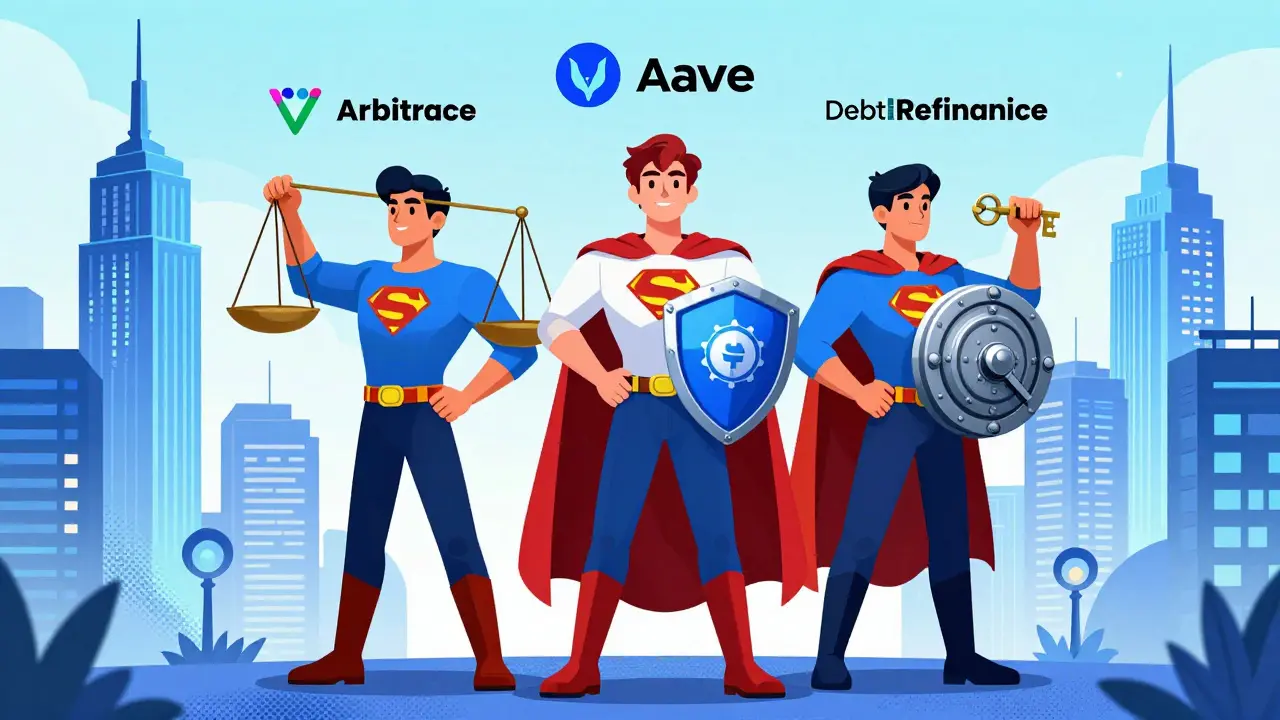
Most developers use flash loans for three primary purposes: arbitrage, collateral swapping, and debt refinancing. Each requires a different technical approach.
Arbitrage involves buying an asset on one exchange where it is cheap and selling it on another where it is expensive. You need to calculate the potential profit minus fees and gas costs before initiating the loan. If the profit is marginal, the gas cost will eat it all. Always include a minimum profit threshold in your code to avoid executing unprofitable transactions.
Collateral Swapping allows users to change the underlying collateral of their position without closing the loan. For example, if you hold ETH as collateral but want to switch to USDC, you can flash loan USDC, repay your existing debt, and deposit the USDC as new collateral. This saves you from needing extra capital to bridge the gap between positions.
Debt Refinancing lets borrowers move debt from a high-interest protocol to a lower-interest one. You flash loan the amount needed to repay the original debt, take out a new loan with better terms, and repay the flash loan. This strategy works best when interest rates fluctuate significantly between platforms.
Choosing the Right Protocol
Selecting the right protocol depends on your specific needs. Aave V3 dominates the market with 62% share, offering robust documentation and community support. Its custom interface allows for complex multi-asset operations, but the 0.05% fee can add up for high-frequency strategies.
If you prioritize zero fees, Balancer V3 or MakerDAO might be better options. Balancer offers gas-optimized flash loans with dynamic fee structures, while MakerDAO integrates deeply with its governance system. However, both have steeper learning curves and less comprehensive documentation compared to Aave.
Uniswap V3’s FlashSwap is unique because it combines swapping and borrowing in one step. This reduces the number of transactions and saves gas, but it lacks dedicated flash loan interfaces. You must structure your logic around swap hooks, which can be challenging for beginners.
Can I use flash loans for personal trading?
Not directly. Flash loans require smart contract interaction, so you cannot use them from a standard wallet like MetaMask. You must deploy a contract that executes the trade and repays the loan automatically. Personal trading usually involves manual swaps, which do not benefit from flash loan mechanics.
What happens if my flash loan transaction fails?
If the transaction fails, the entire operation reverts. No assets are transferred, and no debt is created. You only lose the gas fees paid for the failed transaction. This is why thorough testing on testnets is essential to minimize wasted gas.
Do all DeFi protocols support ERC-3156?
No. While MakerDAO and Euler Finance comply with ERC-3156, major players like Aave and Uniswap use custom interfaces. Aave uses IFlashLoanReceiver, and Uniswap uses FlashSwap. Developers must check each protocol’s documentation to ensure compatibility.
How much does a flash loan cost?
Costs vary by protocol. Aave charges approximately 0.05%, Uniswap charges the standard swap fee (0.01%-1%), and Balancer and MakerDAO charge 0%. Additionally, you must pay Ethereum gas fees, which can range from $10 to $100+ depending on network congestion.
Is it safe to store funds in a flash loan receiver contract?
Absolutely not. Storing funds exposes your contract to griefing attacks, where attackers send dust tokens to force you to pay high gas fees to clean them out. Always design your contract to execute and clear balances immediately without holding assets.
Tony Phan
May 2, 2026 AT 09:33finally someone explains this shit properly i was always confused about the revert logic but now it makes sense
Rachel S
May 2, 2026 AT 14:09Oh my goodness, this is incredibly important information for anyone dipping their toes into DeFi development! :o I cannot stress enough how critical the atomicity concept is. If you do not grasp that every step must succeed or the whole thing rolls back, you are going to lose your shirt. It is quite dramatic when you see a transaction fail after hours of debugging, but that is just part of the learning curve, isn't it? The section on gas limits is also spot on. We often forget that we are fighting against the block limit, and every external call is a gamble with our gas budget. Please, everyone, read the part about griefing attacks again. It is so easy to leave dust tokens in your contract and then wonder why you are paying high fees to clean them out. Stay safe out there!
Aaron Zeiler
May 3, 2026 AT 18:39solid writeup but you missed one key detail about uniswap v3 flashswaps they dont have a separate fee structure its just the swap fee which can be anything from 001 to 1 depending on the pool tick range
Jan Conrad
May 4, 2026 AT 23:14I have been working with Aave V3 interfaces for a while now and I can confirm that the allowance check is where most beginners trip up. The pool pulls the repayment so if you do not approve the pool address to spend the repaid amount plus premium the tx reverts instantly. Also regarding the executeOperation function signature make sure you handle the initiator address correctly because some protocols require specific checks on who initiated the loan. Has anyone tried combining multiple flash loans in a single transaction using nested callbacks?
Brendan Thraxton
May 6, 2026 AT 00:53hey guys great article here i think a lot of people overlook the importance of testing on testnets before mainnet deployment especially for gas optimization foundry is really good for simulating different scenarios and checking gas usage under various conditions
Janis Naglis
May 6, 2026 AT 16:42This is absolutely fantastic!! I am so excited to share this with my team! The breakdown of ERC-3156 versus custom interfaces is super helpful for our current project roadmap. We were struggling with the multi-asset support in Aave V3 and this clarifies exactly how to structure the assets array. Let us all remember to use Chainlink oracles though, right? Oracle manipulation is such a huge risk and we need to be vigilant about it. Keep up the amazing work!!!
Carli Bates
May 8, 2026 AT 09:32surely you mean that the entire internet is built on sand and we should all just stop coding until further notice
Sri Astuti
May 9, 2026 AT 15:49look at this mess of code and protocols and standards who even needs this complexity when you could just trade manually like a normal human being :/ the gas fees alone will eat your profit before you even start let alone the risk of getting hacked by some script kiddie who knows more about solidity than you do it is a scam designed to make rich people richer while poor devs burn through their electricity bills trying to figure out why their transaction reverted again and again and again
its me
May 10, 2026 AT 04:48you people are living in a fantasy world where code fixes itself and security is guaranteed by magic spells written in soliditiy it is pathetic that you trust these decentralized protocols without understanding the inherent flaws in the system itself
Tracy McBurney
May 10, 2026 AT 06:29The author clearly lacks a fundamental understanding of the psychological warfare involved in DeFi development. This guide is superficial at best and ignores the real threat vectors that exist outside of simple smart contract vulnerabilities. You are focusing too much on technicalities and not enough on the human element of exploitation.
Gabrielle Danis
May 10, 2026 AT 14:31It is crucial to note that the Checks-Effects-Interactions pattern is not just a suggestion but a necessity for preventing reentrancy attacks in flash loan receivers. Many developers underestimate the sophistication of modern attack vectors. Furthermore, the assertion that Balancer V3 offers zero fees is misleading because while the protocol fee might be zero, the gas costs associated with executing the complex logic can be significantly higher than Aave's straightforward approach. One must calculate the total cost of ownership including gas, not just the explicit protocol fee.
Andrew Todd
May 11, 2026 AT 16:56this is garbage info only useful for nerds who cant hold a real job american devs should stick to building things that matter not this crypto nonsense
Abhishek Verma
May 11, 2026 AT 20:45lol imagine thinking you can make money with flash loans in 2024 the market is saturated with bots that will front run your arbitrage strategy before you even submit the transaction to mempool
Kathleen Warren
May 12, 2026 AT 23:48i really appreciate how clear this explanation is for beginners like me who are just starting out with smart contracts it helps to know that failing transactions just revert and dont take your money away except for the gas fees which is still scary but better than losing everything
Barbara Jones
May 14, 2026 AT 17:10thats so true about the gas limits i had a tx fail once because i used a loop that was too long and it was so frustrating to debug typos happen when you rush so take your time
Rushell Perry
May 16, 2026 AT 03:45great tips on avoiding griefing attacks i never thought about dust tokens being a problem but it makes sense now thanks for sharing this info
Nitin Gupta
May 17, 2026 AT 10:44I agree with the points made about Aave V3 being the dominant player due to its robust documentation. For those looking to implement collateral swapping, ensure you handle the approval for the new collateral token correctly within the same transaction context. It is a common oversight that leads to failed repayments.
Ryan Nakielny
May 19, 2026 AT 09:06oh look another tutorial on how to waste gas and get hacked by a script kiddie because you forgot to update your dependencies
Jimmy vasquez
May 19, 2026 AT 10:38hey everyone nice read i think the part about oracle manipulation is super important because a lot of new devs dont realize how easy it is to distort prices with a big flash loan
Elle Kharitou
May 20, 2026 AT 19:16In the grand tapestry of blockchain existence, we find ourselves woven into a complex web of atomic transactions and ethical dilemmas 🌿 The concept of borrowing without collateral challenges our traditional notions of trust and value exchange. It is fascinating to consider how these digital constructs mirror ancient bartering systems yet operate at the speed of light. We must embrace the uncertainty and learn from each failed transaction as a step towards greater wisdom in the DeFi realm ✨
Mitali Rajvanshi
May 22, 2026 AT 00:49this is really helpful for understanding the basics i will definitely keep this guide handy when i start writing my own contracts
Veronica Bago
May 23, 2026 AT 17:33hi there i found this guide very informative especially the part about different protocols having different interfaces it is good to know what to expect
Gabby Puche
May 24, 2026 AT 07:29love this emoji overload 😍✨🔥 the tips on gas optimization are so useful for keeping costs down happy coding everyone 🚀💻
Lynne Teperman
May 24, 2026 AT 17:05the cultural shift towards decentralized finance is profound and this guide captures the technical nuances beautifully without overwhelming the reader
Ipsita Seal
May 25, 2026 AT 12:26boring stuff just another way for tech bros to show off their knowledge while ignoring the real issues in society