

Imagine checking your phone to see a massive spike in Bitcoin’s price, only to realize that buying those coins could land you in prison. For millions of people, this isn’t a hypothetical scenario-it’s their daily reality. The global landscape for cryptocurrency is not just a patchwork of different tax rates; it is a minefield where the rules change drastically depending on which border you cross. While some nations are racing to welcome digital assets with open arms and clear regulations, others treat holding crypto like a serious criminal offense.
If you are traveling, moving abroad, or even just trading from home, understanding where the hammer falls hardest is crucial. This guide breaks down exactly which countries prosecute crypto users most aggressively, how they do it, and what it means for your financial freedom in 2026.
The Hard Ban Zone: Where Holding Crypto Is a Crime
At the extreme end of the enforcement spectrum lie countries that have declared total war on cryptocurrencies. In these jurisdictions, the government does not just regulate the industry; it actively seeks to eradicate it. If you live here, or visit here while holding digital assets, you are at significant risk of prosecution.
China is the heavyweight champion of crypto prohibition. Since banning exchanges and Initial Coin Offerings (ICOs) in 2017, Beijing has tightened its grip significantly. All domestic crypto trading is strictly prohibited. But the enforcement goes deeper than just stopping trades. Chinese authorities systematically crack down on mining operations, seizing hardware and shutting down farms. More importantly for the average user, the government actively pursues individuals engaged in peer-to-peer trading. You might think using a decentralized exchange or swapping tokens with a friend is safe, but in China, these actions can trigger criminal investigations. The state views any uncontrolled flow of capital as a threat to national security, making it one of the highest-risk environments globally.
Then there are Algeria and Bolivia. These two nations represent perhaps the most absolute bans in existence. Algeria has declared all crypto-related activities illegal, attaching strict penalties to violations. There is no gray area here. Bolivia follows suit, with its Central Bank citing fears over financial stability and money laundering to justify a complete prohibition. In both countries, simply owning Bitcoin or Ethereum can be construed as a violation of financial laws, leading to fines or imprisonment. These governments do not wait for large-scale fraud to act; they prosecute users for mere participation.
Bangladesh takes a similarly aggressive stance. Authorities classify cryptocurrency use as illegal under existing anti-money laundering and counter-terrorism financing laws. The message from Dhaka is clear: involvement in crypto transactions leads to fines or criminal prosecution. Unlike some countries that ignore small players, Bangladesh’s enforcement mechanisms are active, meaning local police and financial regulators are looking for violators.
The Tax Trap: Punishment Without Prison
Not every hostile country puts you in jail, but some make crypto so financially painful that it achieves the same result. This is the approach taken by major economies that want to control capital flows without outright banning innovation.
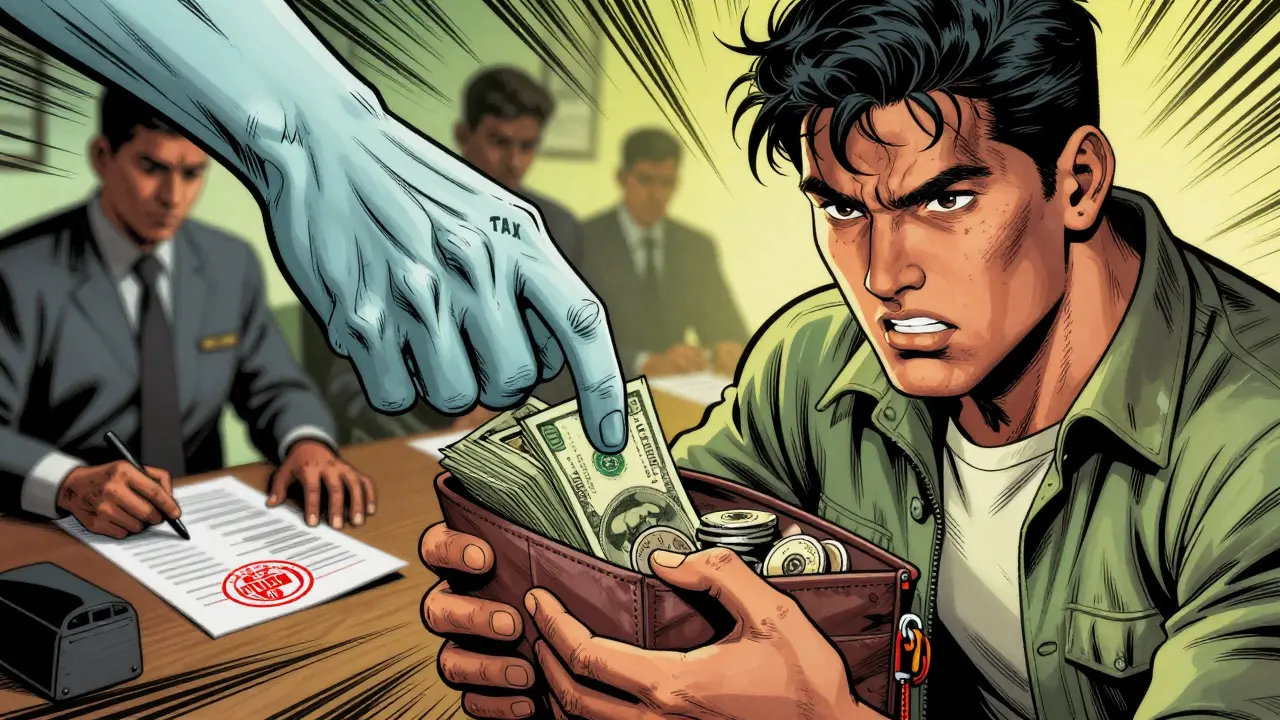
India is the prime example of this "de facto" enforcement through taxation. While ownership is technically not illegal-the Supreme Court overturned a banking ban in 2020-the government has implemented a punitive tax regime. Traders face a flat 30% tax on all crypto gains. Even worse, there is a 1% Tax Deducted at Source (TDS) on every single transaction. Imagine buying $1,000 worth of Bitcoin and immediately losing $10 to taxes before you even own the asset. This creates a chilling effect. It doesn't matter if you are a casual investor or a day trader; the friction is designed to discourage usage. While you won't likely face criminal prosecution for simple holding, the regulatory environment is hostile, and non-compliance with these reporting requirements can lead to severe financial penalties.
This strategy allows governments to claim they are not banning crypto while effectively driving users underground or away entirely. It shifts the burden of enforcement from the police to the tax collector, creating a bureaucratic maze that many users find impossible to navigate profitably.
Selective Enforcement: Targeting the Big Fish
In contrast to the blanket bans seen in Asia and Africa, Western democracies typically adopt a selective enforcement model. They focus on criminal enterprises, money laundering, and institutional failures rather than prosecuting individual retail users. However, "selective" does not mean "absent."
The United States exemplifies this approach. The U.S. government does not ban crypto, but it aggressively prosecutes those who break sanctions or facilitate crime. A stark example occurred in September 2024, when the Office of Foreign Assets Control (OFAC) sanctioned the Russia-based exchange Cryptex and its operator, Sergey Sergeevich Ivanov. Cryptex had processed over $5.88 billion in transactions linked to ransomware and darknet markets. The U.S. State Department offered a $10 million reward for information leading to Ivanov's arrest. This demonstrates that while an American citizen buying Bitcoin on Coinbase is generally safe, anyone touching funds linked to illicit networks faces federal prosecution.
Furthermore, operations like "Operation Endgame" show coordinated international efforts. In this case, Dutch and U.S. law enforcement seized domains and infrastructure related to payment processors funneling millions to criminal entities. The lesson here is clear: the U.S. enforces against bad actors with immense resources. For the average user, the risk is low, provided you stay within the bounds of the law. However, the regulatory uncertainty remains high, with shifting political winds affecting how strictly agencies like the SEC and CFTC interpret existing securities laws.
Europe’s New Regulatory Hammer
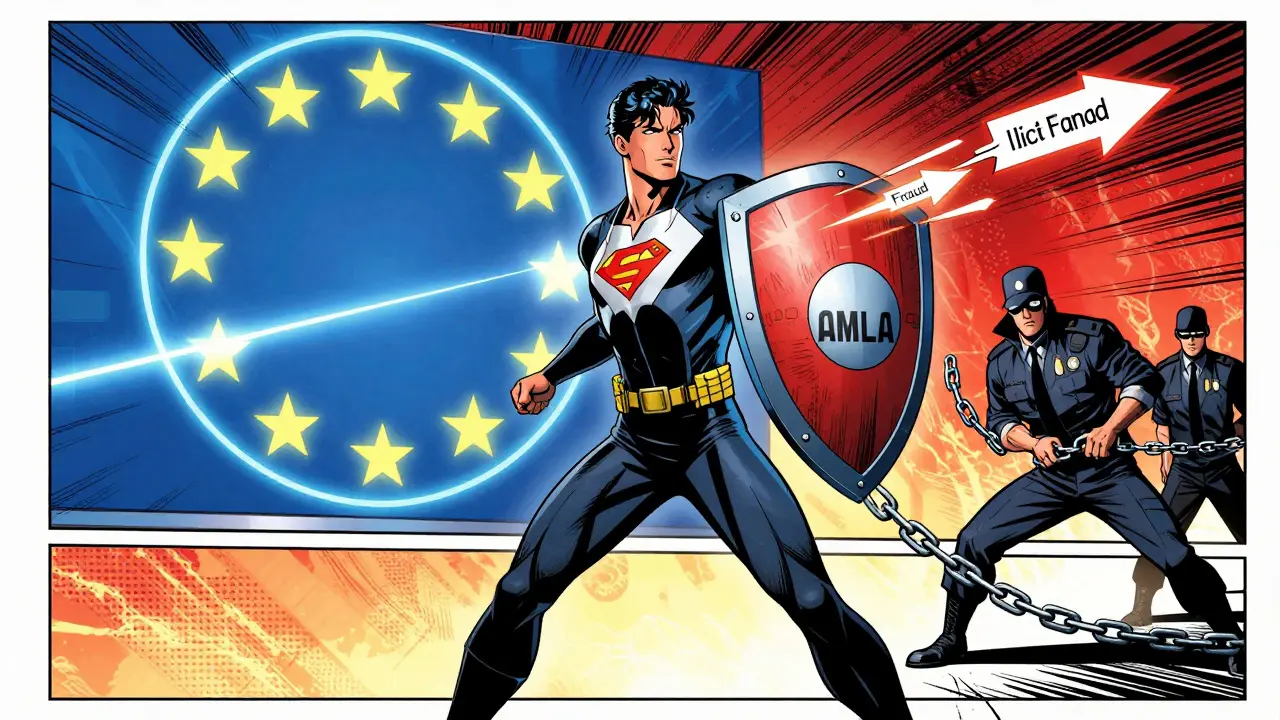
Europe is moving away from ambiguity toward strict compliance. The launch of the Anti-Money Laundering Authority (AMLA) in July 2025 marked a turning point. With plans to scale from 30 to over 400 employees by 2028, AMLA represents a centralized force dedicated to cracking down on financial crimes across the EU.
The Fifth Anti-Money Laundering Directive (AMLD5) requires exchanges and custodian wallet providers to implement rigorous customer due diligence. This means less anonymity for users. If you try to hide behind privacy coins or unregistered wallets, European authorities now have the tools and the mandate to investigate. While Europe is not prosecuting everyday users for holding Bitcoin, the threshold for being flagged as suspicious has lowered dramatically. The focus is on protecting consumers from fraud and ensuring that exchanges segregate client assets properly. Countries like Portugal remain relatively friendly, but the overarching EU framework ensures that no jurisdiction within the bloc can become a haven for unchecked crypto activity.
The Compliance Model: Regulation Over Prosecution
Some countries have chosen a third path: heavy regulation that prioritizes consumer protection and market integrity over punishment. These nations are often considered "crypto-friendly," but that doesn't mean they are lawless.
Singapore operates under the Payment Services Act, enforced by the Monetary Authority of Singapore (MAS). In August 2023, MAS introduced a strict stablecoin framework requiring full reserve backing. The goal is to prevent another Terra-Luna collapse from destabilizing the local economy. Singapore focuses on licensing and compliance. If you operate an exchange without a license, you will be shut down and potentially prosecuted. But if you are a user trading on licensed platforms, you are protected. The enforcement is directed at businesses, not individuals.
Similarly, South Korea enacted the "Act on Protection of Virtual Asset Users" (VAUPA) in July 2024. This law imposes wide-ranging protections, forcing exchanges to maintain insurance and report suspicious activity. The Financial Services Commission monitors compliance closely. Like Singapore, South Korea’s enforcement is structural. It aims to clean up the market and protect users from scams, rather than punishing users for participating in the market.
| Country | Enforcement Style | Risk to Individual Users | Key Mechanism |
|---|---|---|---|
| China | Total Prohibition | Very High | Criminal prosecution of trading/mining |
| Algeria | Total Prohibition | Very High | Strict penalties for possession/use |
| Bangladesh | Total Prohibition | High | AML/CFT laws applied to crypto |
| India | Punitive Taxation | Moderate (Financial) | 30% gain tax + 1% TDS |
| United States | Selective/Targeted | Low (for compliant users) | Sanctions enforcement & major crime |
| Singapore | Regulatory Compliance | Low | Licensing & stablecoin rules |
Navigating the Gray Areas
Not every country fits neatly into these boxes. Some, like Ecuador, maintain a cautious stance. The Central Bank of Ecuador does not recognize crypto as legal tender and discourages payments, yet it hasn't launched mass prosecutions. Instead, it promotes its own state-backed digital currency, the Sistema de Dinero Electrónico. Here, the risk is regulatory discouragement rather than immediate criminal action. Brazil passed a national crypto law in 2023, focusing on building a framework rather than enforcing bans. These countries are watching, waiting, and slowly adapting. For users, this means staying informed is key, as policies can shift rapidly.
Global enforcement cooperation is also strengthening. Blockchain tracking tools are becoming more sophisticated, allowing authorities to trace illicit funds across borders. In 2024, sanctioned jurisdictions received $15.8 billion in crypto, accounting for 39% of all illicit transactions. This data drives international collaboration. Platforms like Tether are moving offshore to avoid oversight, creating regulatory arbitrage, but this also increases scrutiny on any jurisdiction that tries to host them. The net is tightening everywhere, even if the pace varies.
What This Means for You
Your risk profile depends entirely on your location and behavior. If you are in China, Algeria, or Bangladesh, the advice is simple: avoid crypto entirely if you value your freedom. If you are in India, ensure your tax reporting is flawless, as the financial penalty is severe. In the U.S., Europe, Singapore, or South Korea, you are generally safe as long as you use regulated platforms and avoid mixing your funds with illicit sources. The era of wild west anonymity is ending. Whether through criminal bans or strict KYC (Know Your Customer) requirements, the world is bringing crypto into the light. Understanding where you stand on this spectrum is the first step to protecting yourself.
Is it illegal to hold Bitcoin in China?
Yes. China has banned all cryptocurrency trading and mining. While simple possession is sometimes treated with varying degrees of severity, engaging in any transaction, including peer-to-peer swaps, is illegal and can lead to criminal prosecution. The government actively pursues individuals involved in crypto activities.
Why is India considered hostile to crypto if it's not banned?
India applies a punitive tax regime that acts as a de facto barrier. With a 30% flat tax on gains and a 1% TDS on every transaction, the cost of trading becomes prohibitive for many. This creates a challenging environment that discourages participation without technically criminalizing ownership.
Do US authorities prosecute individual crypto users?
Generally, no. The U.S. focuses on major criminal enterprises, money laundering, and sanctions violations. Average users who buy and sell on compliant exchanges are not targeted. However, those involved in illicit activities, such as ransomware payments or using sanctioned exchanges, face severe federal prosecution.
How does the new European AMLA affect crypto users?
The Anti-Money Laundering Authority (AMLA) increases oversight and reduces anonymity. Users must expect stricter KYC checks and transaction monitoring. While this protects against fraud, it also means less privacy and higher scrutiny for unusual transactions.
Which countries have the strictest crypto bans besides China?
Algeria, Bolivia, and Bangladesh enforce complete bans on cryptocurrency use and trading. In these countries, involvement in crypto can lead to fines or criminal charges under financial crime statutes.
Is it safer to use crypto in Singapore or South Korea?
Both are considered safe for compliant users. Singapore and South Korea prioritize regulatory frameworks and consumer protection over prosecution. As long as you use licensed exchanges and follow local reporting rules, the risk of legal trouble is minimal.
Can I travel to a crypto-banned country with my hardware wallet?
It is risky. In countries like China or Algeria, possessing a device used for crypto transactions could be interpreted as intent to violate the law. Customs officials may confiscate devices or question travelers. It is advisable to leave such devices at home or secure them thoroughly if travel is unavoidable.