
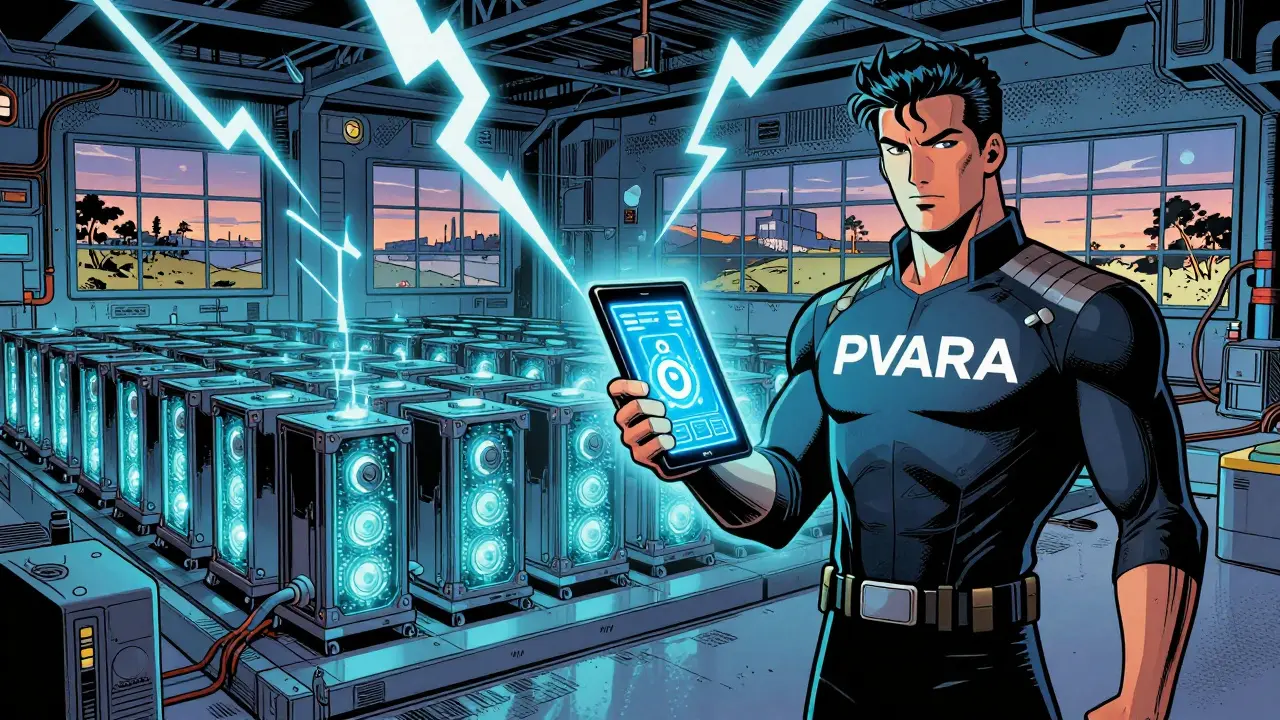
For years, crypto mining in Pakistan existed in a shadowy limbo. The State Bank of Pakistan (SBP) warned that digital assets were illegal under banking laws, yet millions of citizens traded and mined coins anyway. That ambiguity ended abruptly in mid-2025. With the enactment of the Virtual Assets Act, 2025, which formally legalized and regulated virtual asset activities including mining operations in Pakistan, the country pivoted from restriction to aggressive promotion. Today, Pakistan isn't just allowing mining; it is actively trying to become a global hub for it.
If you are looking to mine Bitcoin or other cryptocurrencies in Pakistan today, you are no longer operating in a legal grey area. You are entering a highly structured environment governed by the Pakistan Virtual Asset Regulatory Authority (PVARA), a new federal regulator established to oversee everything from licensing to taxation. But this shift comes with strict rules, high entry barriers, and specific tax obligations that every miner needs to understand before plugging in their ASICs.
The New Regulatory Landscape: From Ban to Boom
The transformation began with the formation of the Pakistan Crypto Council (PCC), which pushed for regulatory clarity despite earlier resistance from financial regulators. By July 2025, the government passed the Virtual Assets Act, creating PVARA as an autonomous body. This was a massive strategic pivot. Analysts noted that while Iran and India had already established significant mining infrastructures, Pakistan’s contribution to the global hash rate was previously negligible.
The game-changer came in August 2025 when the government announced the allocation of 2,000 megawatts (MW) of electricity specifically for Bitcoin mining and AI data centers. This power doesn’t come from new plants but from surplus energy generated by underutilized coal-based stations and regions where demand has dropped due to economic shifts. If fully deployed using modern ASIC miners with efficiency ratings of 30-40 joules per terahash, this capacity could add over 60 exahashes per second (EH/s) to the network. That would theoretically propel Pakistan into the top five mining nations globally.
However, this expansion didn't happen without friction. The International Monetary Fund (IMF) raised serious objections in early July 2025. Their concerns centered on three points: subsidized electricity tariffs for miners, potential strain on the national grid, and fiscal risks associated with diverting power away from traditional industries. While consultations are ongoing, the government has moved forward, aiming to leverage its status as the world’s third-largest crypto adopter, with over 40 million active wallets.
Licensing Requirements: Who Can Mine?
You cannot simply buy a rig and start mining at home if you want to operate legally and access commercial benefits. The Virtual Assets Act defines "block reward mining" as a service provided by Virtual Asset Service Providers (VASPs). This means large-scale operations and mining pools must obtain a license from PVARA.
The licensing process is rigorous. Applicants must demonstrate compliance with Financial Action Task Force (FATF) standards, IMF guidelines, and World Bank recommendations. For international firms, the bar is even higher: you must already hold licenses from recognized regulators such as the US SEC, UK FCA, EU VASP framework, UAE’s VARA, or Singapore’s MAS. This creates a high barrier to entry that favors established global players over local startups.
PVARA has outlined a two-phase implementation plan:
- Phase 1 (Q3-Q4 2025): Focuses on licensing major international mining operations with hash rates exceeding 1 EH/s.
- Phase 2 (Q1 2026): Opens licensing to domestic small-scale miners, though they must still meet a minimum capacity of 100 PH/s.
To apply, you need to submit detailed documentation covering your technology stack, security protocols, expected hash rate, energy consumption metrics, and a business model that addresses environmental impact. Board members of these entities are also barred from insider trading or misuse of confidential information.
Electricity Rules: No More Residential Subsidies
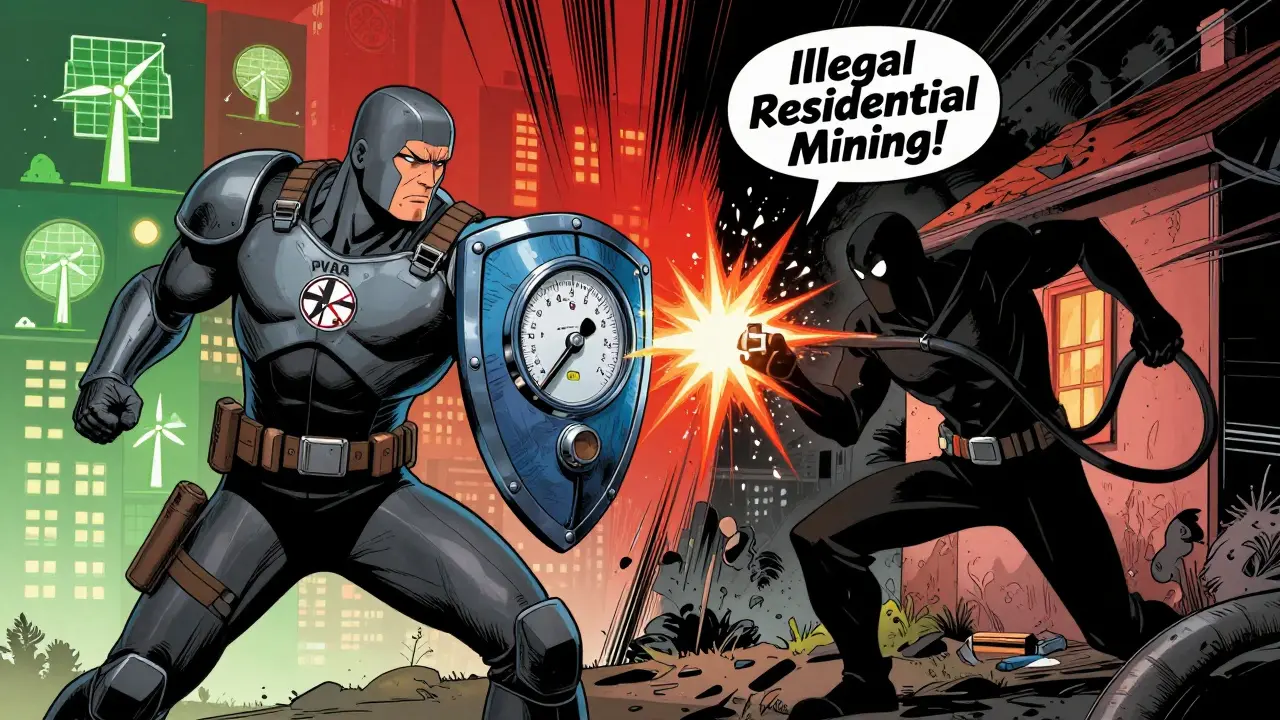
One of the most critical changes for miners involves how you pay for power. The days of running industrial-grade mining rigs on cheap residential electricity are over. PVARA’s draft guidelines explicitly prohibit mining operations from using subsidized residential rates. All commercial mining facilities must connect to industrial tariffs with a minimum connection of 500 kW.
This rule directly addresses the IMF’s concerns about fiscal leakage. Furthermore, the government is pushing for sustainability. Draft guidelines released in August 2025 require mining operations to utilize at least 70% renewable or repurposed energy sources by 2027. This means relying solely on fossil-fuel-heavy grid power might not be viable long-term unless you can prove the energy is "surplus" from existing infrastructure rather than newly generated load.
| Feature | Pre-2025 Status | Current Regulation (2025-2026) |
|---|---|---|
| Tariff Type | Residential/Subsidized (Illegal but common) | Industrial Tariffs Only (Min. 500 kW) |
| Power Source | General Grid | Surplus Coal/Renewable (70% target by 2027) |
| Legal Status | Grey Area/Prohibited by SBP | Legal with PVARA License |
| Grid Impact | Unmonitored | Monitored via FATF/IMF Compliance |
Taxation: What You Owe the Government
With legalization comes taxation. The 2025 reforms formalized how mining income is treated. It is no longer hidden; it is reported. Mining income is taxed as regular income, subject to progressive rates based on your total annual earnings. Here is how the brackets work:
- Up to ₨600,000: 5% tax rate
- ₨600,001 - ₨12 million: Progressive rates increasing with income
- Over ₨12 million: 35% tax rate
If you sell the cryptocurrency you mined, capital gains are taxed at a flat 15% rate. All mining income must be reported in Form IT-1, with an annual filing deadline of September 30. Starting mid-2025, PVARA shares transaction data directly with the Federal Board of Revenue (FBR), making evasion nearly impossible for licensed operators.
Banking and Operational Hurdles
Despite the progress, contradictions remain. As of late 2025, the State Bank of Pakistan (SBP) maintains that digital currencies are not legal tender and that existing banking laws prohibit institutions from dealing in them. This creates a practical nightmare for miners who need to move fiat currency to pay for hardware, electricity, and maintenance.
While PVARA issues licenses, banks may still hesitate to open accounts for mining companies due to fear of violating SBP directives. This disconnect between the regulatory authority (PVARA) and the financial system (SBP) is the biggest operational risk currently facing the industry. Miners often have to rely on alternative payment channels or offshore banking structures, adding complexity and cost.

Shariah Compliance and Religious Considerations
In a country where religious considerations play a significant role in financial decisions, the new framework includes provisions for Shariah-compliant mining operations. PVARA has introduced regulatory sandboxes designed to test and approve mining models that adhere to Islamic finance principles. This aims to remove one of the historical barriers to adoption, allowing conservative investors and communities to participate in the mining boom without religious conflict.
Strategic Outlook: Is Pakistan Ready?
Bilal bin Saqib, Chair of PVARA and Minister of State for Crypto and Blockchain, stated that Pakistan is no longer following trends but setting them. The goal is to build global-level companies within the country. With a crypto market valued at approximately $21 billion in September 2025, mining is projected to contribute 15-20% of this value within two years if the 2,000 MW allocation is fully utilized.
However, challenges persist. The Senate standing committee recommended moving the Pakistan Crypto Council from the Ministry of Finance to the Ministry of Information Technology, arguing that digital assets fit better under IT mandates. Such bureaucratic shuffling can slow down implementation. Additionally, the requirement for international pre-licensing means local entrepreneurs may struggle to compete with well-funded foreign firms in Phase 1.
For those willing to navigate the complex licensing, tax, and banking landscape, Pakistan offers a unique opportunity. Access to cheap surplus power and a supportive (if imperfect) regulatory framework makes it an attractive destination. But success will depend on strict compliance with PVARA’s rules, particularly regarding energy sources and financial reporting.
Is crypto mining legal in Pakistan in 2026?
Yes, crypto mining is legal in Pakistan as of 2026, provided you comply with the Virtual Assets Act, 2025. You must obtain a license from the Pakistan Virtual Asset Regulatory Authority (PVARA) for commercial operations. Small-scale hobbyist mining exists in a grey area, but all commercial entities must be licensed.
What is the tax rate for Bitcoin mining in Pakistan?
Mining income is taxed as regular income with progressive rates ranging from 5% to 35%, depending on your total annual income. Capital gains from selling mined crypto are taxed at a flat 15%. All income must be reported via Form IT-1 by September 30 each year.
Can I use residential electricity for mining?
No. PVARA regulations strictly prohibit using subsidized residential electricity for commercial mining. All licensed mining facilities must connect to industrial tariffs with a minimum capacity of 500 kW.
Who regulates crypto mining in Pakistan?
The Pakistan Virtual Asset Regulatory Authority (PVARA) is the primary regulator for crypto mining. However, the State Bank of Pakistan (SBP) still controls banking services, and the Federal Board of Revenue (FBR) handles taxation.
Do I need an international license to mine in Pakistan?
For large international firms applying in Phase 1, yes. You must already hold licenses from regulators like the US SEC, UK FCA, or UAE VARA. Domestic miners in Phase 2 do not need prior international licenses but must meet PVARA’s strict technical and compliance standards.
How much electricity is allocated for mining in Pakistan?
The government has allocated 2,000 megawatts (MW) of surplus electricity for Bitcoin mining and AI data centers. This power primarily comes from underutilized coal plants and renewable sources.
Jay Sharma
June 28, 2026 AT 08:39they are just setting up a massive surveillance state under the guise of crypto regulation. pvara is basically a front for tracking every single transaction and linking it to your identity so they can freeze your assets whenever they want. do not trust this government initiative.
Trent Erman1
June 28, 2026 AT 23:45hey everyone! i think this is actually a huge opportunity for pakistan to modernize its economy. the allocation of 2000 mw of surplus power is smart because it uses energy that would otherwise go to waste. if you look at the efficiency ratings mentioned, modern asics can really maximize that output without straining the grid too much. we should encourage these kinds of innovative policies rather than shutting them down out of fear. let's keep the conversation positive and focused on the potential benefits!
nancy jarecki
June 30, 2026 AT 12:56pathetic. another country trying to jump on the bandwagon with zero understanding of the underlying technology or market dynamics. the barrier to entry is absurdly high for locals which means only foreign corporations will profit while the local population deals with grid instability. typical neoliberal disaster waiting to happen.
Abby Martin
July 2, 2026 AT 12:39you people are missing the point entirely. this is about sovereignty and control. by regulating it through pvara and tying it to fatf standards, they are essentially handing over their financial autonomy to western institutions. but hey, if you want to be a digital colony, go ahead. i just find it morally bankrupt that they are pushing this while basic infrastructure fails elsewhere. shame on anyone cheering this on without questioning the geopolitical implications.
ELNORA JEFFERSON
July 4, 2026 AT 02:31boring read. nobody cares about the tax brackets or the licensing phases. just tell me if i can make money or not. also why is the formatting so messy? lazy journalism.
Carol @minaszilda
July 4, 2026 AT 03:37i appreciate the detailed breakdown here. it shows that there is a structured approach being taken. perhaps we can all learn from how they are attempting to balance innovation with regulation. let us support efforts that bring clarity to complex industries.
John Curry
July 5, 2026 AT 21:35it is fascinating to watch the shift from prohibition to promotion. one day it is illegal, the next day it is a national priority. the volatility of policy in emerging markets is always dramatic. i wonder how long before the imf steps in again with more conditions. history repeats itself in strange ways.
Fiona Ellis
July 6, 2026 AT 16:56must admit this is quite intriguing 🤔 the requirement for international pre-licensing seems like a blatant attempt to exclude local entrepreneurs. however, the shariah compliance angle is clever marketing. does anyone know if the renewable energy target is actually enforceable or just greenwashing?
Melissa L
July 8, 2026 AT 07:36i dont get it why cant they just use normal electricity. seems complicted. also the taxes sound high. maybe ill stick to trading instead of mining since i dont have 500kw connection. sounds like a headache for regular people.
Rebecca Shoniker
July 10, 2026 AT 01:21the fiscal leakage concerns raised by the imf are valid; however, the proposed mitigation strategies appear superficial. furthermore, the reliance on coal-based surplus energy contradicts global sustainability trends. investors should exercise extreme caution regarding the environmental liabilities associated with these operations. the regulatory sandbox for shariah compliance is merely a token gesture to appease conservative demographics without addressing core ethical issues.
Scott Miller
July 11, 2026 AT 18:46come on guys stop being so negative! this is a chance for pakistan to become a tech hub. sure there are risks but every new industry has growing pains. if you don't take chances you never win. let's hype up the potential for local miners to eventually get licenses in phase 2. stay positive and grind!
Maurice Flynn
July 13, 2026 AT 03:33just watching from the sidelines. seems like a lot of bureaucracy for something that was previously unregulated. i guess that is what happens when governments try to catch up. interesting experiment though. let us see if the grid holds up.
Jon Milton
July 14, 2026 AT 01:55look, i am all for economic growth but this feels like selling out. giving 2000mw to crypto miners while factories struggle for power is wrong. it prioritizes speculative assets over real manufacturing jobs. we need to protect our industrial base not subsidize bitcoin farms for foreign companies. this is aggressive capitalism at its worst.
Sajjad Ghorbani Moghaddam
July 14, 2026 AT 11:19hey man, i think you might be overlooking the fact that this is surplus power. it is not taking away from factories directly. plus the licensing process ensures only serious players enter the market. maybe we can discuss how small miners can prepare for phase 2 instead of focusing on the negatives.
Jon Milton
July 15, 2026 AT 00:48surplus power is a myth when the grid is unstable. load shedding is still a problem in many areas. calling it surplus is just propaganda to justify diverting resources. and phase 2 requires 100 ph/s which is impossible for any small player. it is rigged from the start.
Rob Morton
July 15, 2026 AT 08:48i am curious about the banking hurdles. if sbp still considers crypto illegal for banks, how do miners actually pay their bills? this disconnect between pvara and sbp seems like a major flaw in the implementation plan. does anyone have insights on how they are solving this practical issue?
Routh Middaugh
July 17, 2026 AT 05:37the tax structure is surprisingly progressive which is good. however, the 15% capital gains tax on top of income tax could be heavy for some. also, the deadline of september 30 is tight. i hope the fbr system is ready to handle the influx of data from pvara. transparency is key here.
Robert Hundley
July 17, 2026 AT 23:53woah this is wild! 😲 imagine if this works out. pakistan could be a top 5 mining nation. the hash rate increase would be massive. i hope they get the infrastructure right. let us hope for the best and see how it plays out in 2026. exciting times ahead! 🚀
Ryan Peters
July 19, 2026 AT 03:28typical western interference via the imf dictating terms to sovereign nations. but then again, pakistan needs the bailout money so they swallow the poison pill. the jargon-heavy regulations are designed to confuse the average citizen while elites profit. sarcasm aside, this is a neocolonial trap disguised as innovation. wake up sheeple.
Mélanie Boulay
July 21, 2026 AT 01:14while i understand the enthusiasm surrounding the potential economic benefits, it is crucial to consider the long-term environmental impact and the social equity implications of such a drastic policy shift, particularly given the existing disparities in access to reliable electricity and the potential for increased carbon emissions despite the stated goals of utilizing surplus energy sources.