

Imagine trying to send money abroad for business software or pay an international contractor, only to find every traditional bank account frozen and every credit card declined. For millions of Russians, this isn't a hypothetical nightmare; it's daily life. Since the geopolitical shifts following 2022, cryptocurrency adoption in Russia has exploded, not just as a speculative investment trend, but as a vital survival tool for commerce and personal finance.
As of late 2025 and early 2026, roughly 20 million people-about 13.6% of the population-are actively using digital assets. That’s a massive shift from just a few years ago. But here is the catch: while everyone is using crypto, the government hasn’t fully embraced it yet. In fact, you still can’t legally buy coffee with Bitcoin in Moscow. So, how does a country with strict bans on crypto payments end up being one of the top adopters globally? The answer lies in a complex mix of necessity, regulatory gray areas, and a pivot toward institutional control.
The Numbers Behind the Boom
To understand the scale, we need to look at the hard data. According to Deputy Finance Minister Ivan Chebeskov, speaking in October 2025, the sheer volume of users forced the state to acknowledge that ignoring crypto was no longer an option. The Bank of Russia reported that by March 2025, the total value held in cryptocurrency exchange wallets reached 827 billion rubles (approximately $10.15 billion USD). This represents a 27% jump year-over-year from the previous year.
What are people actually holding? It’s not all risky altcoins. The asset distribution tells a story of caution:
- Bitcoin: Dominates with 62.1% of holdings. It’s seen as digital gold and a hedge against inflation.
- Ether: Holds 22%, serving those interested in smart contracts and broader DeFi interactions, though less popular than BTC.
- Stablecoins: Make up 15.9%. Primarily USDT and USDC, these are crucial for preserving value without volatility.
Chainalysis ranked Russia #10 in its 2025 Global Crypto Adoption Index. While this is down slightly from #8 in 2024, it still places Russia ahead of major economies like the United Kingdom (#11) and far behind China, which doesn’t rank in the top 20 due to strict prohibitions. The real surprise? Russia ranks #4 globally for institutional centralized service value received. Big players are moving big money, even if retail users are doing it via peer-to-peer networks.
Why Crypto Is Essential Now
You might wonder why adoption spiked so dramatically. The primary driver is isolation from the global financial system. When Western payment systems like Visa and Mastercard exited the market, and SWIFT restrictions hit, businesses and individuals needed a way to move value across borders.
Crypto filled that gap perfectly. Here is what users report:
- Speed: Cross-border crypto transactions take 10-15 minutes. Traditional banking wires, when they work, take 3-5 business days.
- Cost: Crypto fees range from 0.1% to 0.5%. International wire transfers often cost 3% to 5%.
- Access: Even if your bank account is restricted, you can still access global markets via decentralized exchanges or P2P platforms.
A user named 'CryptoMoscow2025' noted on Reddit that Bitcoin became essential for importing business software after Western systems blocked them. Small exporters, like 'TechExportRU', reported cutting transaction costs by 40% by using USDT stablecoins to pay suppliers in Southeast Asia. For them, crypto isn’t about getting rich quick; it’s about staying in business.
The Regulatory Tightrope
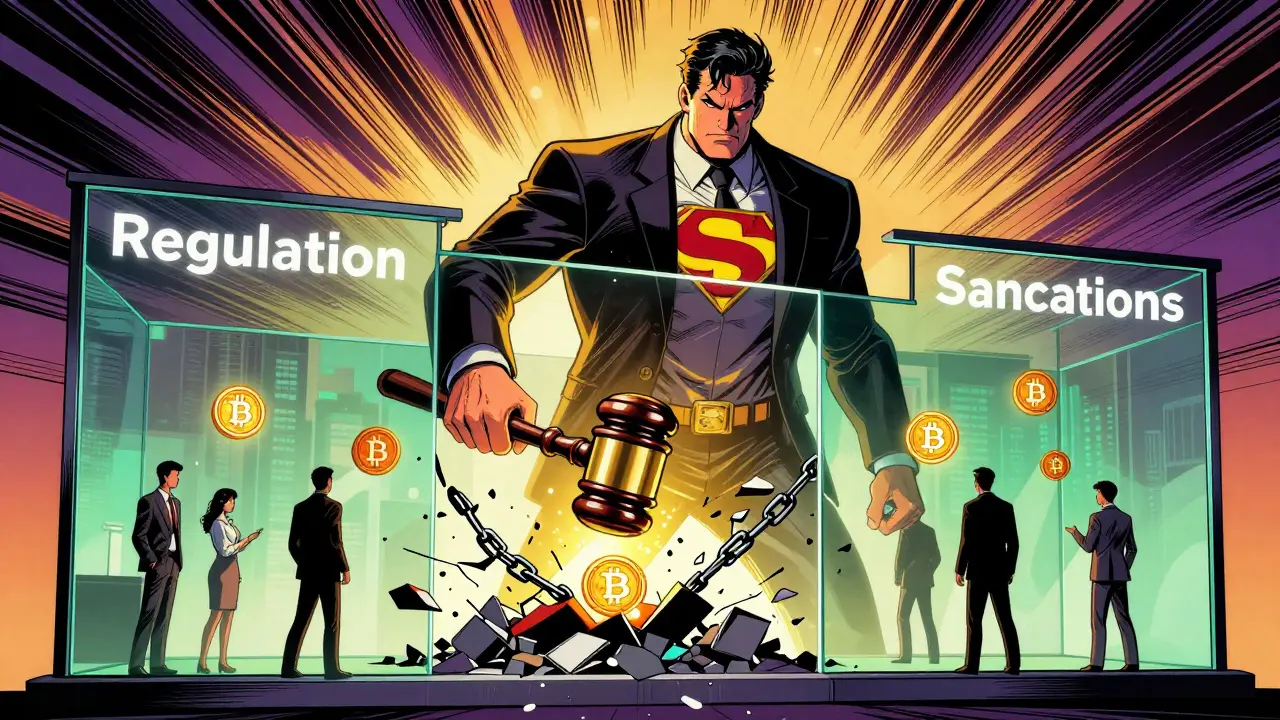
This is where things get tricky. You can own crypto, but you can’t use it as money. The Federal Law "On Digital Financial Assets" (No. 259-FZ), effective since January 2021, explicitly prohibits using cryptocurrency to pay for goods and services. This creates a legal paradox: millions hold billions in crypto, yet merchants can’t accept it. Less than 0.5% of Russian businesses accept crypto directly, compared to 3.5% globally.
However, the wind is changing. In October 2025, Vladimir Chistyukhin, an official at the Bank of Russia, announced plans to allow banks to handle cryptocurrency transactions under "strict capital and reserve requirements." This is a huge deal. It signals a shift from resistance to regulation. The goal? To bring crypto into the formal financial system, protect users from fraud, and capture tax revenue. A comprehensive survey of crypto investments is scheduled for early 2026 to shape these new rules.
| Feature | Russia (2026 Context) | Global Average |
|---|---|---|
| Primary Driver | Sanctions evasion & cross-border trade | Investment & speculation |
| Mechanism | P2P networks & domestic exchanges | Centralized exchanges (CEX) & DeFi |
| Merchant Acceptance | < 0.5% (Legally prohibited) | ~3.5% |
| Institutional Role | High (#4 Global Rank) | Moderate |
| Regulatory Status | Ownership allowed, payment banned | Varies by jurisdiction |
How Russians Actually Trade Crypto
Since major global exchanges like Binance have restricted services, and local platforms like Garantex were shut down by U.S. sanctions in 2022, users had to adapt. The ecosystem relies heavily on two methods:
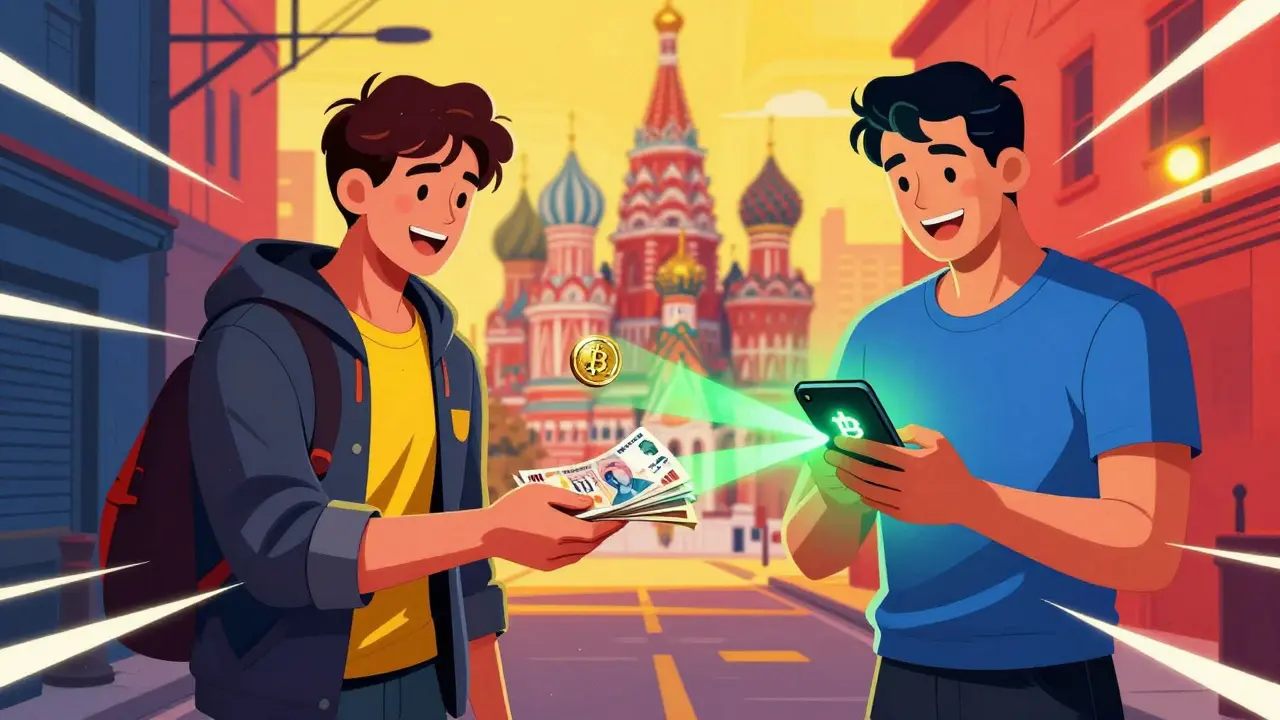
- Peer-to-Peer (P2P) Trading: This is the backbone of Russian crypto adoption. Users buy and sell directly with each other through escrow services on platforms like EXMO or BitPrepay. You transfer rubles via bank card, and the seller releases crypto. It’s efficient but carries counterparty risk.
- Domestic Exchanges: Platforms like Kuna.io and EXMO remain popular. However, support quality varies. Trustpilot reviews show a 3.8/5 average rating for customer support, but complaints about account freezes during compliance checks are common. One user reported losing 250,000 rubles in opportunity cost after a three-week verification freeze.
Security is a major concern. With fewer regulated options, scams and hacking incidents occur. Experts recommend using multi-wallet strategies and verifying counterparties thoroughly before large P2P trades. The learning curve is moderate; a study from Moscow State University suggests new users need 15-20 hours to grasp wallet security and regulatory basics.
Risks and Future Outlook
Is this sustainable? Statista projects Russia’s crypto market revenue will hit $2.3 billion in 2025, growing to potentially more by 2026. User numbers are expected to rise to 23.5 million by the end of 2026. However, risks remain high.
First, regulatory uncertainty. Policies change frequently-averaging 2.3 times per quarter in 2025. A sudden ban on P2P transfers could disrupt the entire ecosystem. Second, international pressure. The U.S. Treasury has signaled heightened scrutiny of Russian crypto activities, threatening further sanctions on infrastructure providers. Finally, there’s the technical risk. Russia lags in DeFi adoption (ranked #52 globally), meaning users miss out on the benefits of decentralized lending and yield farming available elsewhere.
Despite these hurdles, the momentum is undeniable. Crypto has become embedded in the Russian economic fabric as a workaround for geopolitical constraints. As the Bank of Russia moves toward integrating banks into the crypto space, expect a more controlled, but perhaps more stable, environment in the coming years.
Can I legally own cryptocurrency in Russia?
Yes. Under the Federal Law "On Digital Financial Assets," owning cryptocurrency is legal. However, you cannot use it as a means of payment for goods or services within the country. It is treated as a digital asset, similar to property or stocks, rather than currency.
Which crypto exchanges work in Russia?
Major global exchanges like Binance have limited availability. Most Russians use domestic platforms such as EXMO, BitPrepay, or Kuna.io. Peer-to-peer (P2P) sections on these platforms are the most active due to restrictions on direct fiat-ruble pairs on some international services.
Is Bitcoin used for everyday purchases in Russia?
No. It is illegal to use cryptocurrency for payments. Less than 0.5% of merchants accept it, mostly operating in a legal gray area. Most usage is for saving value, cross-border transfers, or speculative trading.
Will banks start accepting crypto soon?
Likely yes, but with strict conditions. In late 2025, the Bank of Russia announced plans to allow banks to handle crypto transactions under rigorous capital requirements. A survey planned for early 2026 will help shape these regulations, aiming to integrate crypto into the formal financial system rather than ban it entirely.
What are the biggest risks for crypto users in Russia?
The main risks include sudden regulatory changes, account freezes during compliance checks, and fraud in P2P transactions. Additionally, international sanctions may target specific platforms or wallets, limiting access to global liquidity.