
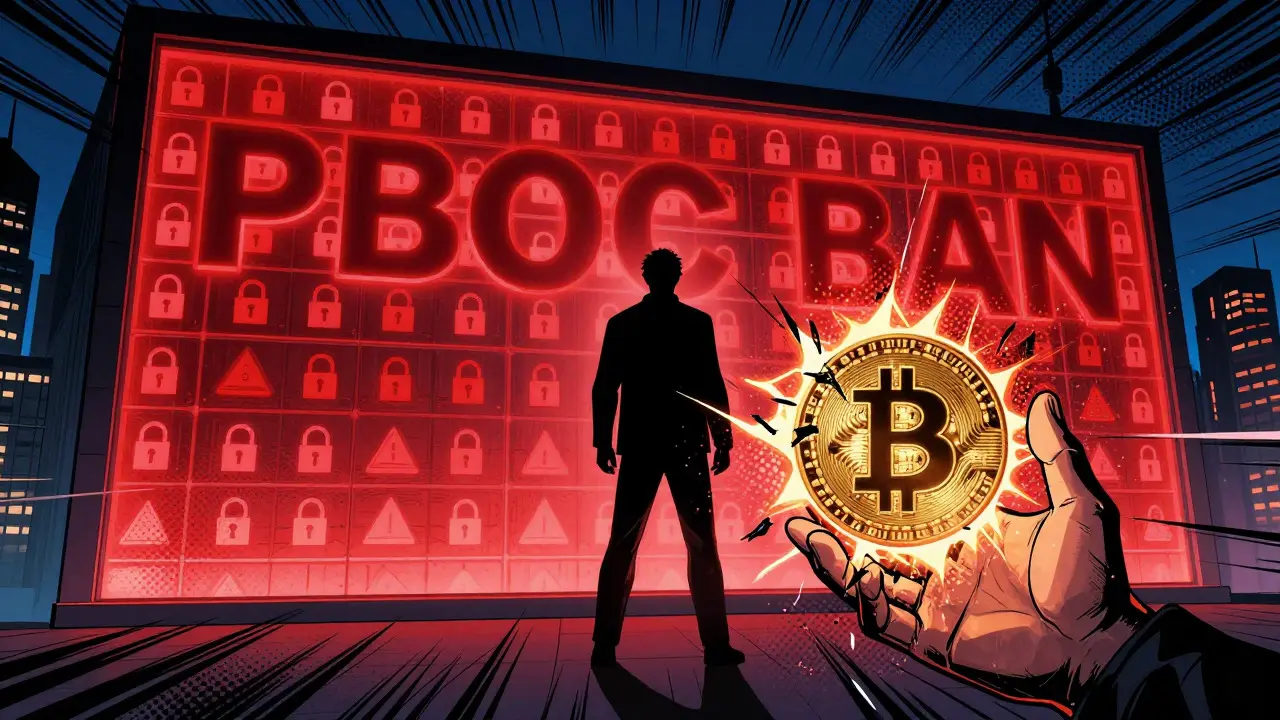
You want to send Bitcoin from China to a wallet overseas. It sounds like a simple transaction-click send, wait for confirmation, done. But if you are sitting in Shanghai or Beijing right now, that simple click carries a heavy weight. As of mid-2026, moving cryptocurrency out of mainland China is not just difficult; it is legally classified as an illegal financial activity.
The landscape changed dramatically on June 1, 2025. The People's Bank of China (PBOC) issued a comprehensive ban that went beyond previous restrictions on mining and exchanges. This new rule targets individual ownership and cross-border transfers directly. If you are trying to figure out how to move your assets today, you need to understand that the legal door is closed. However, understanding cross-border crypto transfers requires looking at the enforcement mechanisms, the technical realities, and the few narrow exceptions that might apply depending on your residency status.
The Legal Wall: What Changed in 2025?
To understand why moving Bitcoin abroad is so hard, you have to look at the regulatory shift. For years, China had a 'grey area' approach. You could own Bitcoin, but you couldn't trade it on local exchanges. Banks would freeze accounts if they detected crypto transactions, but possession itself wasn't always criminalized.
That ended with the May 30, 2025 directive. The government reclassified all virtual currency activities as illegal financial operations. This includes:
- Trading cryptocurrencies on any platform, domestic or foreign.
- Mining operations.
- Providing payment services using crypto.
- Individual ownership of significant amounts intended for speculation or transfer.
The key here is the definition of "illegal financial activity." By labeling it this way, authorities can use anti-money laundering (AML) statutes to prosecute violations. This means the Ministry of Public Security isn't just watching bank accounts; they are coordinating with internet companies to block access to overseas exchanges and track peer-to-peer (P2P) communication channels.
If you try to use a traditional bank wire to buy Bitcoin and send it out, the money stops at the first checkpoint. Chinese banks are forbidden from processing these transactions. They will freeze the funds and report the account holder. So, the old method of "buy with RMB, sell for USD abroad" is dead.
Why Is China So Strict? The Monetary Threat
It helps to ask: why did the government tighten the screws so much? It’s not just about controlling capital flight. It’s about monetary sovereignty.
Chinese regulators view dollar-backed stablecoins like USDT or USDC as a direct threat to the Renminbi (RMB). When people use Tether to move value out of China, they are bypassing the state-controlled banking system. This undermines the central bank's ability to manage interest rates and money supply.
In September 2021, regulators declared that crypto-related activities were illegal. In 2025, they escalated this because decentralized finance (DeFi) and stablecoins made circumvention easier. The goal is to force all digital transactions into the Digital Yuan (e-CNY) ecosystem.
The e-CNY is a Central Bank Digital Currency (CBDC). Unlike Bitcoin, which is permissionless, the e-CNY is fully traceable. The government can set expiration dates on wallets, limit spending categories, and even restrict geographic usage. By banning private crypto, they create a vacuum that only their own digital currency can fill.
Technical Realities: Can You Actually Move It?
Legally, you shouldn't. Technically? It’s complicated. Blockchain networks don’t care about borders. Bitcoin lives on a distributed ledger. If you have private keys, you control the coins. But getting those coins *out* of the Chinese network perimeter is the challenge.
Here is how the monitoring works:
- IP Tracking: Internet service providers (ISPs) in China monitor traffic patterns. Accessing known exchange domains triggers blocks. Using a Virtual Private Network (VPN) is technically restricted to licensed providers, and unlicensed VPNs are frequently throttled or blocked.
- On-Chain Analysis: Global blockchain analytics firms like Chainalysis provide data to Chinese authorities. They flag wallets associated with Chinese IP addresses or KYC (Know Your Customer) data from offshore exchanges that still serve Chinese users.
- P2P Surveillance: Many users turn to Telegram or WeChat groups to find buyers. These platforms are under intense scrutiny. Messages containing keywords like "Bitcoin," "USDT," or specific wallet addresses can lead to account bans and police visits.
So, while you *can* technically broadcast a transaction from a node in Shenzhen, the risk of detection is high. If authorities link your identity to a wallet sending funds abroad, they can seize the assets and pursue criminal charges under AML laws.

The Hong Kong Exception: A Narrow Path?
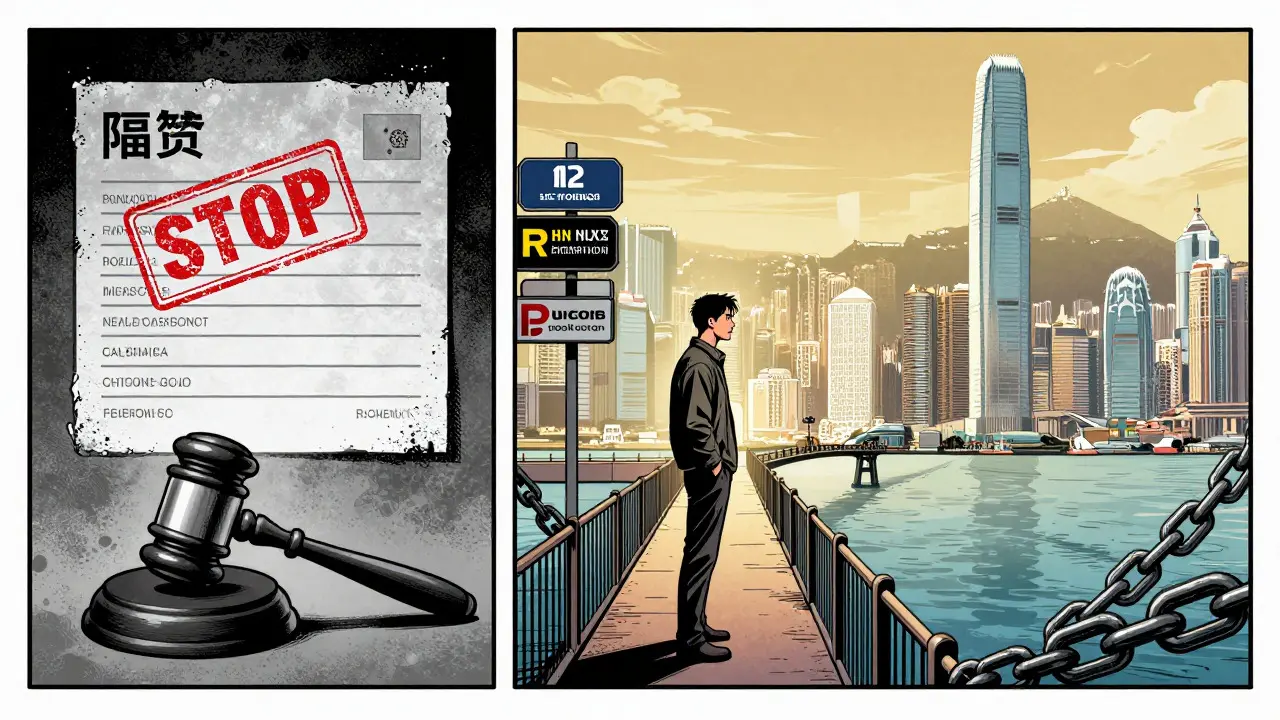
Not all of China is under the same rules. Hong Kong operates under a different legal framework. Since late 2022, Hong Kong has been positioning itself as a global crypto hub. They have licensed crypto exchanges and allowed spot trading.
For some Chinese residents, moving assets to Hong Kong seems like a loophole. Here is the reality:
| Feature | Mainland China | Hong Kong |
|---|---|---|
| Crypto Ownership | Banned (as of 2025) | Legal & Regulated |
| Exchanges | All banned | Licensed exchanges allowed |
| Cross-Border Transfer | Illegal | Allowed with compliance |
| Bank Support | Forbidden | Supported by major banks |
However, there is a catch. Mainland Chinese citizens face strict capital controls when moving money to Hong Kong. The annual quota for converting RMB to HKD is $50,000 per person. If you try to move large amounts of crypto-equivalent value through this channel, you trigger red flags.
Furthermore, Hong Kong exchanges require rigorous KYC. If you are a mainland resident, you must prove the source of your funds. If the funds originated from a banned crypto activity in mainland China, you could be rejected-or worse, reported back to mainland authorities.
Risks of Circumvention: What Could Go Wrong?
If you decide to ignore the ban, you need to know what you are risking. This isn't just a fine. It’s potential imprisonment.
Asset Seizure: The 2025 regulations explicitly allow for the seizure of crypto assets held by individuals deemed to be engaging in illegal financial activities. If your wallet is flagged, you lose the Bitcoin. Period.
Criminal Liability: Under Article 171 of the Criminal Law (amended), illegal business operations can lead to up to five years in prison. If the amount involved is "huge," it can go higher. Authorities define "huge" loosely, often including sums over $1 million RMB.
Social Credit Impact: Violations can affect your social credit score. This impacts your ability to get loans, buy plane tickets, or even enroll children in certain schools. The collateral damage extends far beyond the crypto loss.
Alternatives for Moving Value Abroad
If your goal is simply to move wealth out of China, crypto might not be the best tool anymore. Here are safer, legal alternatives:
- Qualified Domestic Institutional Investor (QDII): Use licensed investment products that allow you to invest in overseas markets. This is slow, but legal.
- Personal Remittance Quota: Use the $50,000 annual forex quota for legitimate purposes like tuition or medical expenses. Documentation is key.
- Offshore Business Structures: If you own a business, setting up a legitimate offshore entity with proper tax filings can facilitate international payments. This requires professional legal advice.
Each of these methods keeps you within the law. The cost is time and paperwork, but the reward is peace of mind.
Future Outlook: Will the Ban Lift?
There are whispers of change. Some experts, like Wang Yongli, former vice president of the Bank of China, argue for an offshore Renminbi stablecoin. The idea is to compete with USDT by offering a state-backed digital currency for international trade.
In July 2025, meetings in Shanghai discussed strategic responses to digital assets. While no policy reversal has happened, the tone suggests China wants to control the narrative rather than just block it. An offshore stablecoin could allow Chinese companies to engage in global crypto markets without letting individuals hold Bitcoin.
Until then, the ban stands. The window for easy, anonymous cross-border crypto transfers from mainland China is closed.
Is it illegal to own Bitcoin in China in 2026?
Yes. As of June 1, 2025, the People's Bank of China banned individual ownership of cryptocurrencies, classifying it as an illegal financial activity. While small amounts for personal collection might fly under the radar, significant holdings or attempts to trade them carry legal risks.
Can I use a VPN to trade crypto in China?
Technically, yes, but it is risky. Unlicensed VPNs are restricted. More importantly, accessing overseas exchanges doesn't make the transaction legal. Chinese authorities use blockchain analytics to trace transactions regardless of your IP address.
What happens if my bank finds crypto transactions?
Your bank account will likely be frozen. The bank is required to report suspicious activities to the authorities. You may face asset seizure and potential criminal investigation under anti-money laundering laws.
Is Hong Kong a safe place to move crypto from mainland China?
Hong Kong has a more open regulatory environment, but moving funds from mainland China is still subject to strict capital controls. You must declare the source of funds, and if it originates from banned mainland crypto activities, you risk rejection or reporting.
Will China lift the crypto ban soon?
Unlikely in the short term. The focus is on the Digital Yuan (e-CNY). Discussions about an offshore Renminbi stablecoin suggest China wants to control digital assets, not liberalize them. Expect the ban on private crypto to remain until the e-CNY ecosystem is fully mature.
Joy Kwant
July 28, 2026 AT 06:25Billy Cunningham
July 29, 2026 AT 14:32Erica Johnson
July 30, 2026 AT 07:25Matthew Smith
August 1, 2026 AT 06:05Prudence Flemming
August 2, 2026 AT 05:15Carl Michaud
August 3, 2026 AT 09:03Matt Kay
August 4, 2026 AT 02:15Dave Kjendal
August 5, 2026 AT 12:11Kat Bennett
August 5, 2026 AT 19:05Candice Cornett
August 7, 2026 AT 13:19Lance Jantz
August 7, 2026 AT 16:11Don Fizy
August 9, 2026 AT 13:36Phil Babb
August 9, 2026 AT 22:43Dominic Greco
August 11, 2026 AT 18:47Sean Rowland
August 12, 2026 AT 08:24Sus Sawyer
August 12, 2026 AT 17:35Aryan MISHRA
August 13, 2026 AT 19:50