
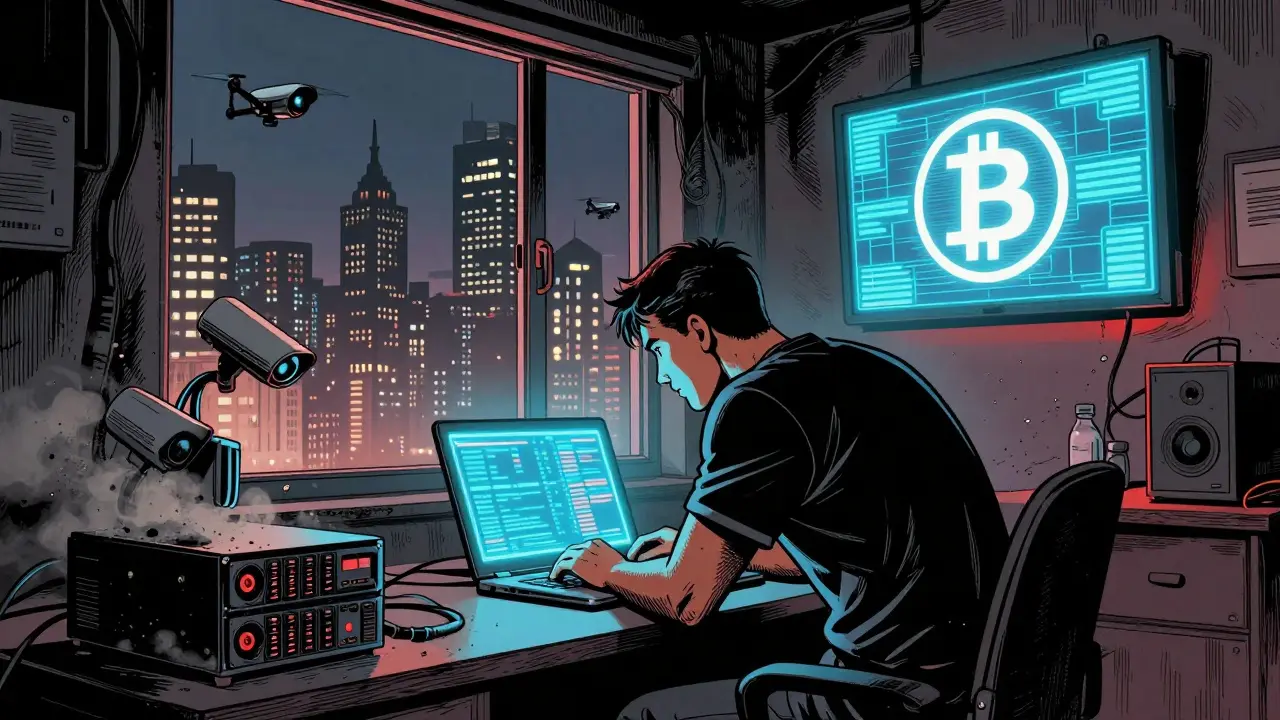
China doesn’t just regulate cryptocurrency-it banned it. Fully. Completely. Since 2021, every form of crypto trading, mining, and exchange service has been illegal on Chinese soil. If you hold Bitcoin in China, you’re not just operating in a gray area-you’re breaking the law. And yet, millions still do.
What Exactly Is Banned?
The Chinese government didn’t just slap a fine on crypto. It shut down the entire infrastructure. Financial institutions can’t open accounts for crypto users. Banks can’t process payments tied to Bitcoin. Payment apps like Alipay and WeChat Pay are legally required to block any transaction linked to digital assets. Even internet companies must scan and report crypto-related content on forums, social media, and messaging apps. Mining? Banned. Exchanges? Banned. ICOs? Banned. Derivatives? Banned. Even offering crypto-related financial advice from within China is now illegal. The rules aren’t vague-they’re absolute. And enforcement isn’t optional. The People’s Bank of China, the Ministry of Public Security, and the National Development and Reform Commission work together to track, shut down, and punish violations.What Happened to Bitcoin Mining in China?
In 2021, China accounted for over 65% of global Bitcoin mining. Then, overnight, it vanished. The government ordered all mining farms to shut down, citing excessive energy use and threats to national power grids. Thousands of machines were unplugged. Factories that once ran 24/7 with industrial cooling systems became silent warehouses. Some miners relocated to Kazakhstan, the U.S., and Canada. Others hid their rigs in remote areas, running them on illegal power connections. But enforcement got tighter. In 2023, authorities started using satellite imagery and power consumption analytics to spot hidden farms. By 2024, over 98% of China’s mining capacity was gone. The country that once powered Bitcoin’s growth now has almost none left.Can You Still Hold Bitcoin in China?
Technically, yes. The government doesn’t ban holding Bitcoin in a personal wallet. But that’s where the freedom ends. You can’t buy it legally. You can’t sell it through any official channel. You can’t convert it to yuan without risking your bank account being frozen. Most Chinese Bitcoin holders use peer-to-peer (P2P) platforms or offshore exchanges accessed via VPNs. But even that’s risky. In 2024, the PBOC tightened rules requiring banks to flag any account receiving funds from known P2P crypto traders. If your bank account shows unusual transfers from overseas wallets, you could be investigated for money laundering. And here’s the catch: if you’re caught, there’s no legal recourse. Chinese courts won’t hear cases about lost Bitcoin, stolen wallets, or disputed trades. Your digital assets have zero legal protection under Chinese law.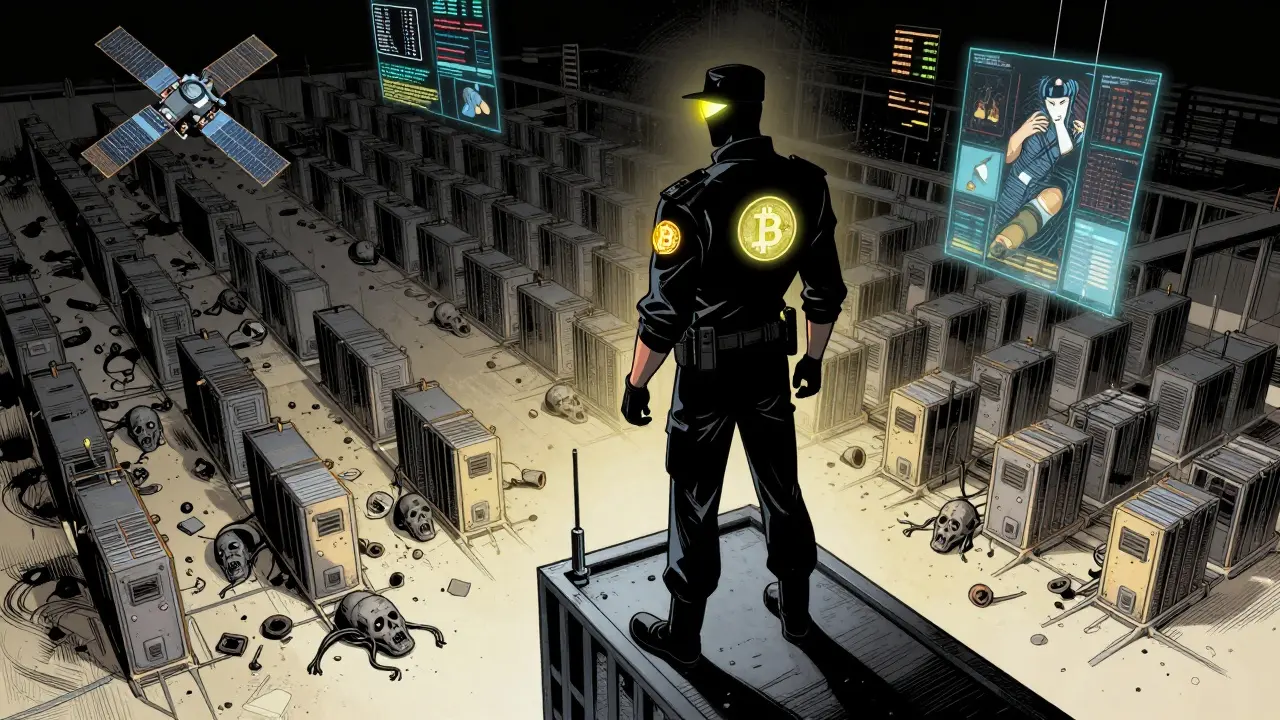
The Real Problem: Surveillance and Banking Risks
The biggest threat to Bitcoin holders in China isn’t the ban-it’s the surveillance. Every bank transfer, every online payment, every ATM withdrawal is monitored. The government’s financial monitoring system tracks patterns: sudden deposits from unknown foreign accounts, frequent small transfers to crypto wallets, or even purchases of hardware wallets through domestic retailers. In 2023, a man in Shenzhen was fined 50,000 yuan and had his bank account frozen for six months after his bank flagged a series of transfers to a Binance wallet. He claimed he was just “investing,” but regulators didn’t care. Under Chinese anti-money laundering rules, any link to crypto is treated as high-risk by default. Even using a VPN to access Coinbase or Kraken isn’t safe. In 2024, the government started blocking domains used by major exchanges. If you’re using a VPN to trade crypto, you’re not just violating policy-you’re violating cybersecurity laws.What About the Digital Yuan?
While Bitcoin is banned, China is aggressively pushing its own digital currency: the e-CNY, or Digital Yuan. Launched in 2020, it’s now used by over 300 million people. Unlike Bitcoin, the Digital Yuan is fully controlled by the central bank. Every transaction is tracked. Every user is identified. Every payment leaves a digital trail. This isn’t a coincidence. China doesn’t want decentralized money. It wants money it can monitor, control, and restrict. The Digital Yuan lets the government freeze payments to dissidents, limit spending in certain regions, or even set expiration dates on cash. Bitcoin’s anonymity is the exact opposite of what Beijing wants. So while Bitcoin holders face crackdowns, the state is building a financial system where privacy is impossible. The message is clear: if you want digital money in China, it has to be theirs.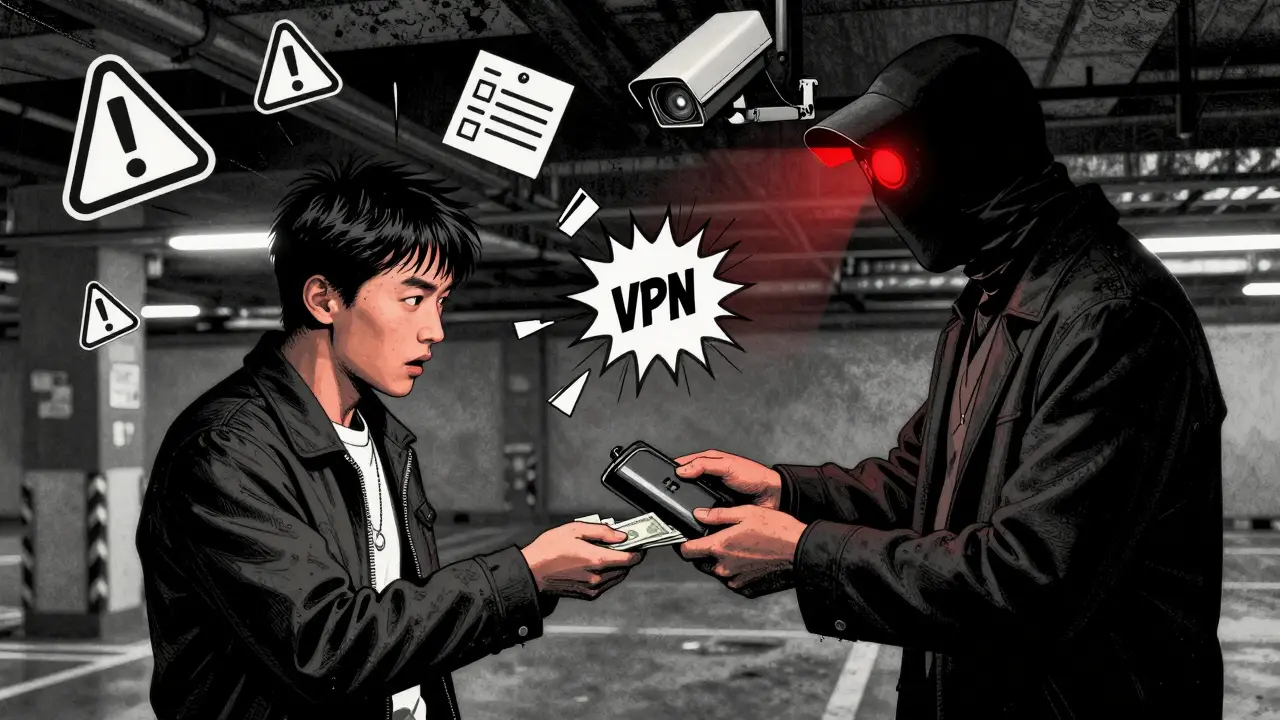
Is There Any Hope for Change?
Every year, rumors swirl that China is about to lift the ban. In early 2025, fake news spread across social media claiming Beijing had approved a state-backed crypto exchange. Elon Musk even briefly retweeted it. It was false. Again. These rumors aren’t accidents. They’re market manipulation tactics. Traders outside China use them to spike prices, then sell off when panic hits. But inside China, the government shows no sign of backing down. The 2024 Financial Stability Report explicitly stated that “virtual currencies remain a systemic risk” and that “the current regulatory framework remains fully effective.” Experts agree: a full reversal is unlikely. The state has too much invested in the Digital Yuan. Too many banks have been restructured around it. Too many officials have built careers enforcing the ban. The only possible shift? A limited relaxation for institutional investors-like allowing state-owned enterprises to hold Bitcoin as a reserve asset. But even that’s speculative. No official talks, no leaked documents, no signals. Just noise.What Should Bitcoin Holders Do?
If you’re in China and you own Bitcoin, your options are narrow and risky:- Don’t link your crypto to your bank account. Keep funds separate. Use cash-based P2P trades if you must convert.
- Avoid using domestic apps. Don’t buy hardware wallets from JD.com or Taobao. They’re monitored.
- Don’t brag about it. Social media posts about crypto holdings have led to investigations.
- Understand the legal void. If you’re hacked, scammed, or locked out of your wallet, China’s courts won’t help you.
- Consider moving assets offshore. If you can legally leave China, transfer your Bitcoin to a wallet outside the country before you go.
What About People Outside China?
If you’re not in China, the ban doesn’t directly affect you. But it still matters. China’s crackdown removed one of the largest sources of Bitcoin mining and trading demand. That helped push prices down in 2021-2022. If China ever relaxes its rules, even slightly, it could trigger a massive surge in demand. Analysts estimate that if just 5% of China’s 1.4 billion population re-entered the crypto market, Bitcoin could jump over $150,000 in under 90 days. That’s why global investors watch China’s policy like a weather system-silent until it breaks. For now, the storm is still over China. And if you’re holding Bitcoin inside its borders, you’re standing in the eye of it.Is it illegal to own Bitcoin in China?
No, owning Bitcoin in a personal wallet isn’t explicitly illegal. But using it to buy, sell, or trade within China is. The government doesn’t punish you for holding it-but it will punish you for moving it, converting it, or using it to pay for anything.
Can Chinese banks freeze your account for holding Bitcoin?
Yes. Banks are required to flag accounts with transactions linked to crypto. If you deposit money from a P2P crypto trade, or receive funds from a known exchange wallet, your account can be frozen for investigation. You won’t be charged with a crime, but you’ll lose access to your money for weeks or months.
Why did China ban Bitcoin mining?
China banned mining because it consumed too much electricity-over 100 terawatt-hours annually at its peak. The government saw it as wasteful, especially during energy shortages. Mining also lacked economic value to the state. Unlike the Digital Yuan, Bitcoin doesn’t generate tax revenue or give the government control.
Can I use a VPN to trade Bitcoin from China?
Technically yes, but it’s risky. Using a VPN to access foreign exchanges violates China’s cybersecurity laws. The government actively blocks known exchange domains and tracks VPN usage patterns. If caught, you could face fines, account freezes, or even criminal charges for circumventing state controls.
Is there a chance China will legalize Bitcoin in the future?
Unlikely. China is betting everything on its own digital currency, the e-CNY. Legalizing Bitcoin would undermine that project. The government wants control, not decentralization. Any future changes would likely be limited to state-approved institutions holding crypto as an asset-not allowing public trading.
What happens if I get caught trading Bitcoin in China?
You won’t go to jail for trading Bitcoin alone. But you’ll likely face fines, bank account freezes, and forced asset seizures. If regulators believe you’re involved in money laundering or evading capital controls, criminal charges are possible. Most cases end with financial penalties, not prison.
Can I send Bitcoin to someone in China?
You can send it, but they can’t legally receive or use it. If they cash out through a P2P trade, their bank account could be flagged. The sender isn’t breaking Chinese law-but the recipient is. Sending crypto to someone in China puts them at risk.
Do Chinese citizens still trade Bitcoin?
Yes. Despite the ban, an estimated 5-10 million Chinese citizens still hold Bitcoin. Most use offshore exchanges via VPNs and trade through P2P platforms. Enforcement is inconsistent, and many avoid detection by keeping small amounts and avoiding bank links. But the risk is growing every year.
Janet Combs
December 19, 2025 AT 13:40roxanne nott
December 20, 2025 AT 09:36Vyas Koduvayur
December 21, 2025 AT 19:18Jake Mepham
December 22, 2025 AT 15:03Sheila Ayu
December 23, 2025 AT 10:49Sarah Glaser
December 23, 2025 AT 22:52vaibhav pushilkar
December 24, 2025 AT 09:04SHEFFIN ANTONY
December 25, 2025 AT 13:52Craig Fraser
December 26, 2025 AT 08:04Sybille Wernheim
December 27, 2025 AT 01:46Shubham Singh
December 27, 2025 AT 07:18Jacob Lawrenson
December 27, 2025 AT 10:02Ellen Sales
December 28, 2025 AT 06:46Zavier McGuire
December 29, 2025 AT 10:21Cathy Bounchareune
December 31, 2025 AT 02:06Jordan Renaud
January 1, 2026 AT 00:50Lloyd Yang
January 2, 2026 AT 19:26Radha Reddy
January 4, 2026 AT 08:56Luke Steven
January 5, 2026 AT 12:24Ashley Lewis
January 6, 2026 AT 18:11