
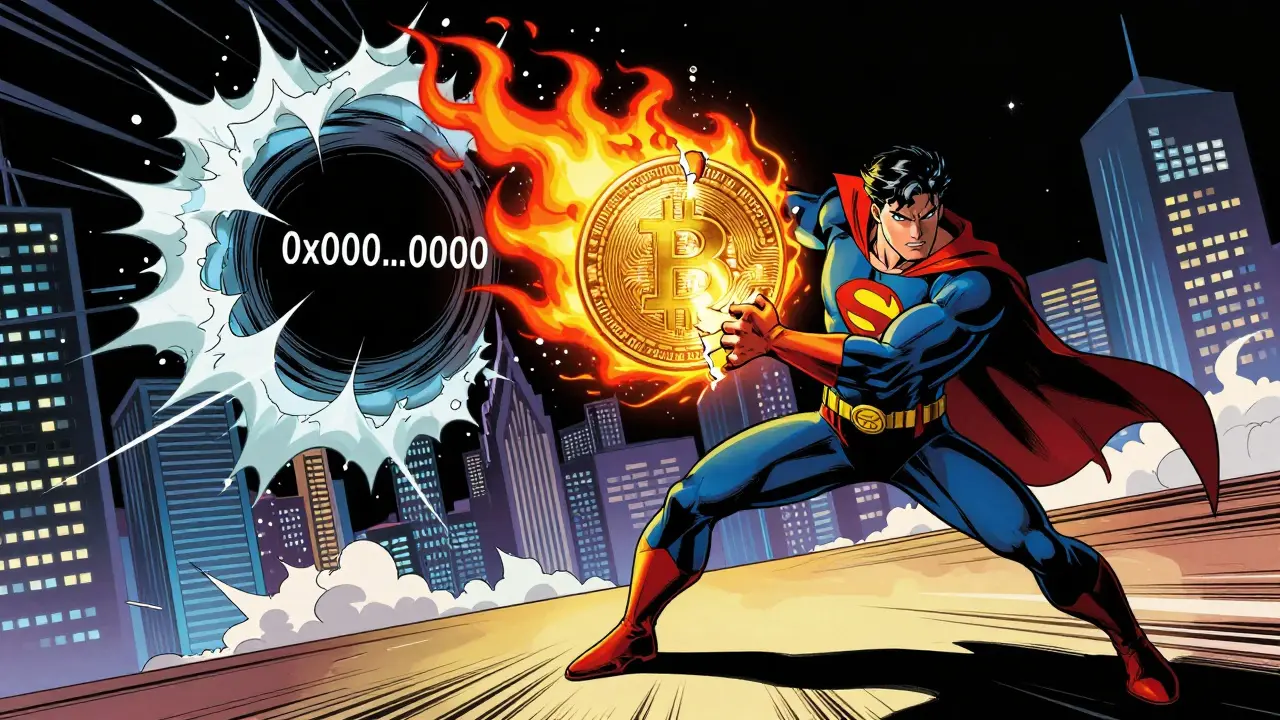
Token burning isn’t just a buzzword in crypto-it’s a real, irreversible action that removes coins from circulation forever. If you’ve heard about Binance burning BNB every quarter or Vitalik Buterin wiping out 410 trillion SHIB tokens, you’re not imagining things. These aren’t marketing tricks. They’re technical moves built into blockchain code. And they’re happening more than ever. As of 2023, 78% of the top 100 cryptocurrencies use some form of token burning. But here’s the catch: not all burns are created equal. Some move markets. Others do nothing. Some even backfire.
What Exactly Is a Token Burn?
A token burn is when cryptocurrency tokens are permanently taken out of circulation. It’s like tearing up cash-but digitally. The process involves sending tokens to a special wallet address that no one can access. On Ethereum, that’s usually 0x0000000000000000000000000000000000000000, also known as the null address. Once tokens land there, they’re gone forever. No private key exists. No one can recover them. The blockchain updates the total supply, and that’s it.
This isn’t magic. It’s math. If a project starts with 1 billion tokens and burns 100 million, the new circulating supply is 900 million. Less supply, all else being equal, can mean higher value. But that’s not guaranteed. Markets don’t react like vending machines. You drop in coins, you get candy. Token burns are more like planting seeds-you don’t know if they’ll grow until you wait, watch, and see what else is happening around them.
How Burn Mechanisms Work: The Main Types
There are five main ways tokens get burned. Each has its own logic, risks, and real-world examples.
- Scheduled burns: These happen on a set timetable. Binance burns BNB every quarter using a formula based on trading volume. Since 2018, they’ve burned over 40% of the original supply. Predictable. Transparent. Trusted. But markets often price them in ahead of time, so the actual price jump is usually small.
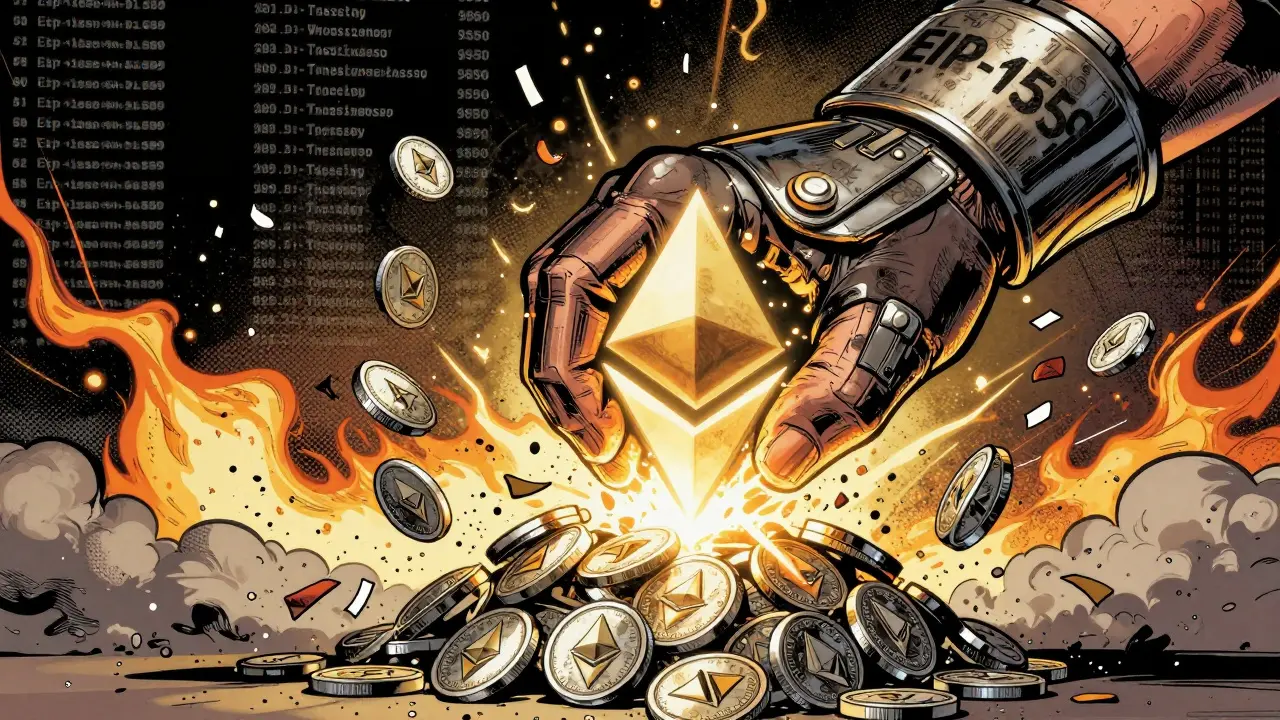
- Transaction fee burns: Ethereum’s EIP-1559, launched in August 2021, burns the base fee on every transaction. As of October 2023, over 2.5 million ETH-worth roughly $4.5 billion-have been burned. This makes Ethereum deflationary during high usage periods. No company decides when. The network does it automatically.
- Buyback and burn: Projects use profits to buy tokens from the open market, then burn them. MEXC did this with LUNA recovery funds, spending $10 million to buy and destroy tokens. It’s direct. It’s costly. And it only works if the project has real revenue.
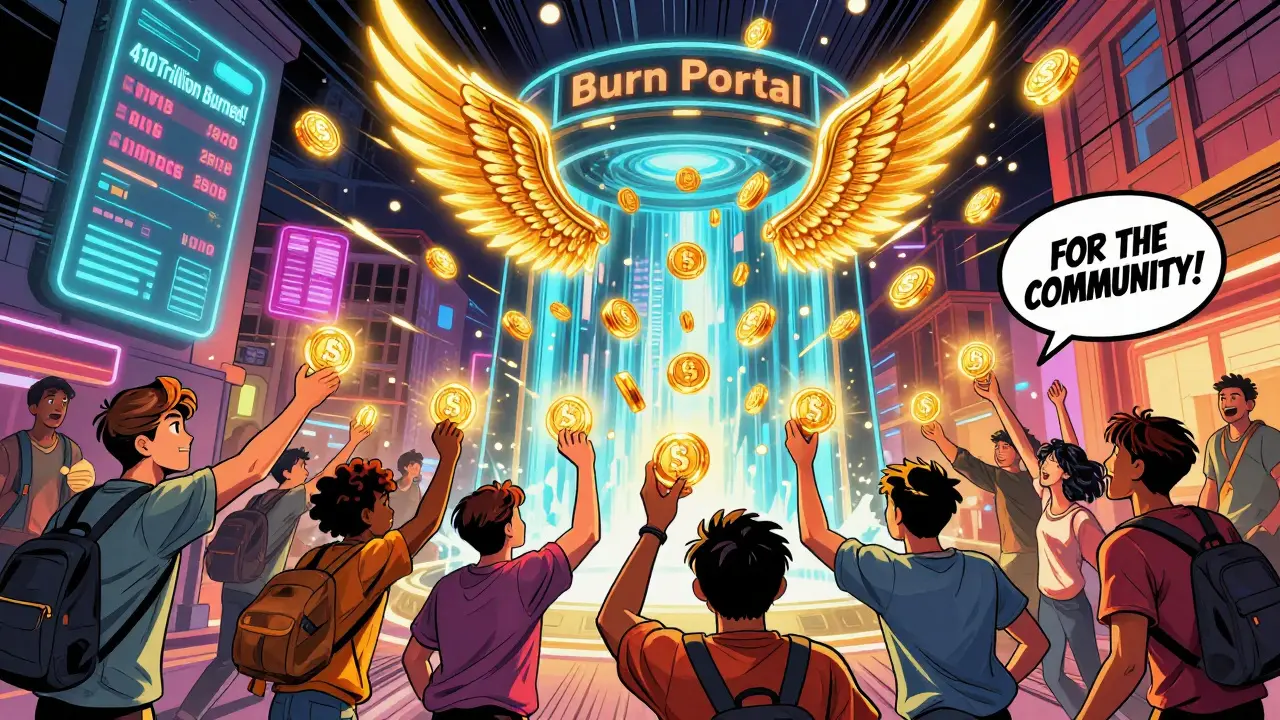
- Community-driven burns: Users voluntarily send tokens to burn addresses. Shiba Inu’s burn portal lets anyone burn SHIB and earn NFT rewards. Over 410 trillion SHIB have been burned this way-over 41% of the original supply. It builds community. But it depends on people caring enough to participate.
- Protocol-level burns: These are baked into the core rules of the blockchain. Think of them as built-in deflationary engines. Chainlink’s proposed burn-and-mint equilibrium model adjusts burns based on network demand. Polygon’s upcoming EIP-1559 upgrade will burn more for high-priority transactions. These are complex but powerful.
Why Some Burns Work-and Others Don’t
Not every burn causes a price surge. In fact, most don’t.
A 2021 University of Cambridge study looked at 127 burn events across major cryptocurrencies. Only 32% led to a statistically significant price increase within seven days. That means two out of three burns had no measurable impact. Why?
Because price isn’t just about supply. It’s about demand. If a token has no real use-no DeFi protocols, no NFT integrations, no merchant adoption-burning tokens won’t make people want it more. You can burn 90% of a useless coin, and it’ll still be worthless.
Take TerraUSD (UST). In early 2022, it burned massive amounts of its sister token, LUNA, trying to stabilize its peg. But the underlying mechanism was broken. The burn didn’t fix the flaw-it just made the collapse faster. When UST de-pegged, it lost $40 billion in value in days. The burns didn’t save it. They made the panic worse.
On the flip side, Binance’s quarterly BNB burns have been consistent for six years. Each one is announced in advance. The numbers are public. The burn address is verified. That transparency builds trust. People know Binance is serious about reducing supply. That’s not hype. That’s reliability.
How to Implement a Burn Mechanism (Technically)
If you’re a developer trying to add a burn function to your token, here’s how it’s actually done.
- Choose your burn address: Use a well-known null address like Ethereum’s
0x000...0000or the slightly modified0x000...dEaD(which has burned over 1.2 million different tokens). Don’t invent your own. If the address is recoverable, you’ve failed. - Write the smart contract function: In Solidity, you’d use something like
burn(address, uint256 amount). The function subtracts the amount from the sender’s balance and reduces the total supply. Simple. But dangerous if not tested. - Add access controls: Who can burn tokens? Only the owner? A multisig wallet? The community via DAO vote? If anyone can trigger a burn, someone might accidentally-or maliciously-wipe out half your supply.
- Set triggers: Will it burn on every transaction? Every week? When trading volume hits a threshold? EIP-1559 burns fees automatically. Binance burns based on quarterly revenue. Define the rule clearly.
- Test and audit: OpenZeppelin’s burn template is widely used because it’s been audited. Don’t skip this. In 2022, $2.3 million in user funds were accidentally burned because a wallet interface sent tokens to the wrong address. That’s not a burn-it’s a bug.
- Integrate with user interfaces: If users can’t easily burn tokens, they won’t. Add a burn button in your wallet or dashboard. Show them how many tokens have been burned so far. Transparency builds participation.
Simple burns can be coded in 2-3 days by someone with basic Solidity skills. Complex, protocol-level burns-like those tied to network fees or DAO votes-can take 6-8 weeks and require a team of security experts.
The Risks: When Burns Go Wrong
Token burns sound safe. But they’re not risk-free.
One common mistake: using a burn address that’s not truly unreachable. Some projects used addresses with private keys that were accidentally leaked. Tokens weren’t burned-they were stolen.
Another: burning too much, too fast. Safemoon burned 2% of every transaction. The idea was to reduce supply and increase value. But the high transaction cost scared users away. Trading volume dropped. The price collapsed from $0.000003146 to near zero. Users sued, claiming the burn was designed to inflate the price while draining their holdings.
Regulators are watching. The U.S. SEC warned in February 2023 that token burns could be considered unregistered securities transactions if used to manipulate prices. Ripple adjusted its burn strategy after SEC scrutiny. The European Securities and Markets Authority (ESMA) called burn mechanisms “potential market manipulation vectors.”
And then there’s the psychological trap. Projects burn tokens hoping for a price spike. When it doesn’t happen, they burn more. And more. And more. That’s not sound economics. That’s desperation.
What’s Next for Token Burning?
Burn mechanisms are evolving. The next wave isn’t just about reducing supply-it’s about linking burns to real utility.
Projects like STEPN are testing “burn-to-access” models. Burn 100 tokens, unlock a premium feature. Burn 500, get early access to a new game mode. This turns burning from a passive supply cut into an active user incentive.
Chainlink’s proposed burn-and-mint equilibrium model adjusts burns dynamically based on network usage. More demand? More burns. Less demand? Fewer burns. It’s a feedback loop designed to stabilize value.
Polygon’s EIP-1559 upgrade in Q1 2024 will introduce tiered burning: higher fees for priority transactions mean more tokens burned. It rewards users who pay more and makes the network more efficient.
By 2025, Galaxy Digital predicts 68% of new token launches will use multi-dimensional burn strategies-not just one type, but a mix. Scheduled burns for stability. Fee burns for network health. Community burns for engagement. Buybacks for liquidity support.
The future isn’t about burning for the sake of burning. It’s about burning as part of a larger, smarter economic system.
Final Thought: Burning Isn’t Enough
Token burning is a tool. Not a solution. You can’t burn your way to a valuable cryptocurrency. You need utility. You need users. You need a reason for people to hold the token beyond speculation.
Binance’s BNB works because it’s used to pay fees, access launchpads, and earn rewards. Ethereum’s ETH works because it powers the world’s largest smart contract platform. SHIB’s burn portal works because the community believes in it.
But if you’re just burning tokens to make the chart go up? You’re not building value. You’re just playing with numbers.
Real tokenomics isn’t about tricks. It’s about balance. Supply. Demand. Utility. Trust. Burning is one lever. Use it wisely.
Can you recover tokens after they’re burned?
No. Once tokens are sent to a true burn address-like Ethereum’s null address (0x000...0000)-they are permanently destroyed. These addresses have no private key, so no one can access or move the tokens. Any claim that burned tokens can be recovered is false.
Do all cryptocurrencies burn tokens?
No. As of 2023, 78% of the top 100 cryptocurrencies by market cap use some form of burning, but many others don’t. Bitcoin, for example, has no burn mechanism. Whether a project burns tokens depends on its tokenomics design, not on technical necessity.
Does burning tokens always increase their price?
Not always. A 2021 University of Cambridge study found only 32% of burn events led to a statistically significant price increase within seven days. Price depends on demand, utility, and market sentiment-not just supply reduction. Burning without utility is like removing seats from a bus that no one wants to ride.
What’s the difference between burning and locking tokens?
Burning destroys tokens permanently. Locking locks them in a wallet that can’t be accessed for a set time-like a vault. After the lock period ends, the tokens can be released back into circulation. Burning reduces total supply forever. Locking just delays availability.
Are token burns regulated?
Yes. The U.S. SEC and ESMA have flagged token burns as potential market manipulation tools if used to artificially inflate prices. Projects must now disclose burn motivations and avoid deceptive practices. Some, like Ripple, have changed their burn strategies to comply with regulatory guidance.
How can I participate in a token burn?
If a project offers a community burn portal-like Shiba Inu’s-you can send tokens directly from your wallet to their burn address. Some exchanges also let you opt into burns through their platforms. Always verify the burn address with the official project website. Never send tokens to an address you don’t fully trust.
Harshal Parmar
January 27, 2026 AT 09:46Jen Allanson
January 29, 2026 AT 03:35Adam Lewkovitz
January 29, 2026 AT 14:57Dave Ellender
January 31, 2026 AT 07:58Clark Dilworth
February 1, 2026 AT 05:27Brenda Platt
February 1, 2026 AT 19:54Barbara Rousseau-Osborn
February 3, 2026 AT 18:15george haris
February 4, 2026 AT 21:39Mark Estareja
February 6, 2026 AT 06:14David Zinger
February 6, 2026 AT 11:54steven sun
February 7, 2026 AT 17:58Sara Delgado Rivero
February 8, 2026 AT 08:47Taylor Mills
February 9, 2026 AT 23:05Kevin Pivko
February 11, 2026 AT 01:24Mathew Finch
February 12, 2026 AT 12:42Jessica Boling
February 14, 2026 AT 10:56Deepu Verma
February 15, 2026 AT 09:26MICHELLE REICHARD
February 16, 2026 AT 01:28tim ang
February 18, 2026 AT 01:19MOHAN KUMAR
February 18, 2026 AT 04:50Darrell Cole
February 18, 2026 AT 05:58